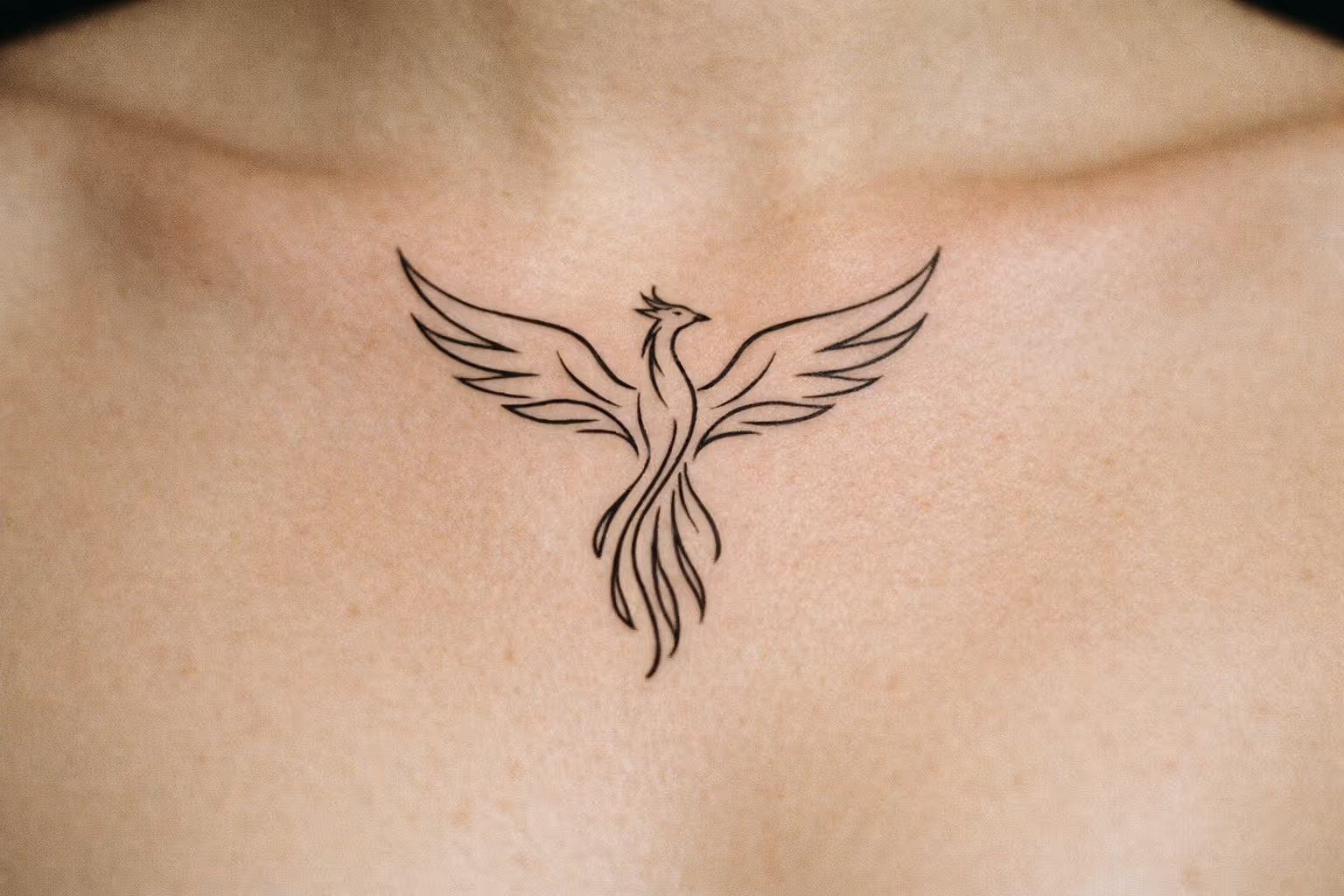
The first real decision a phoenix tattoo asks of you happens before line weight or placement: you pick the moment. The bird mid-burn with flames still eating its wings, the bird collapsed in ash at the bottom of the cycle, or the bird fully reborn and climbing. That single choice changes the whole story the piece tells, and it’s the thing most people skip past when they walk into a studio with a Pinterest screenshot. The phoenix carries more symbolic range than the “comeback bird” reputation suggests, drawing on Egyptian, Greek, Chinese, Persian, Jewish, and Christian traditions that don’t all say the same thing. This guide covers what those traditions actually mean, how the design reads for men and women, why the back is the natural canvas, the style trade-offs, and what to hammer out before you book.
✓ Pros
- Symbolically rich across multiple cultures; meaning can be tailored
- Scales from small fine-line to full-back composition
- Works in nearly every tattoo style (traditional, neo-traditional, blackwork, fine-line)
- Strong visual identity: the bird's silhouette is immediately recognizable
- Meaning evolves with the wearer; doesn't lock into a single reading
✗ Cons
- Large back and rib placements require multiple sessions and high pain tolerance
- Cultural nuance (fenghuang vs. Western phoenix) is easy to mishandle
- Heavily trending: social media versions can look derivative without customization
- Strong symbolic associations (recovery, faith, resurrection) can send unintended signals
- Fine-line versions may blur within 5-7 years without touch-ups
What a Phoenix Tattoo Symbolizes Across Cultures
A phoenix tattoo draws on six recurring themes (rebirth, resilience, transformation, hope, immortality, and renewal), but the emphasis shifts depending on which mythic tradition you’re leaning on. That’s the part most symbol glossaries flatten. Rebirth and renewal come from the burn-and-return cycle. Resilience and transformation attach to surviving destruction. Hope and immortality tie to the bird’s long life and its refusal to stay dead. None of these is wrong, but which one dominates your piece depends on the culture you’re drawing from and the design choices you make with your artist.
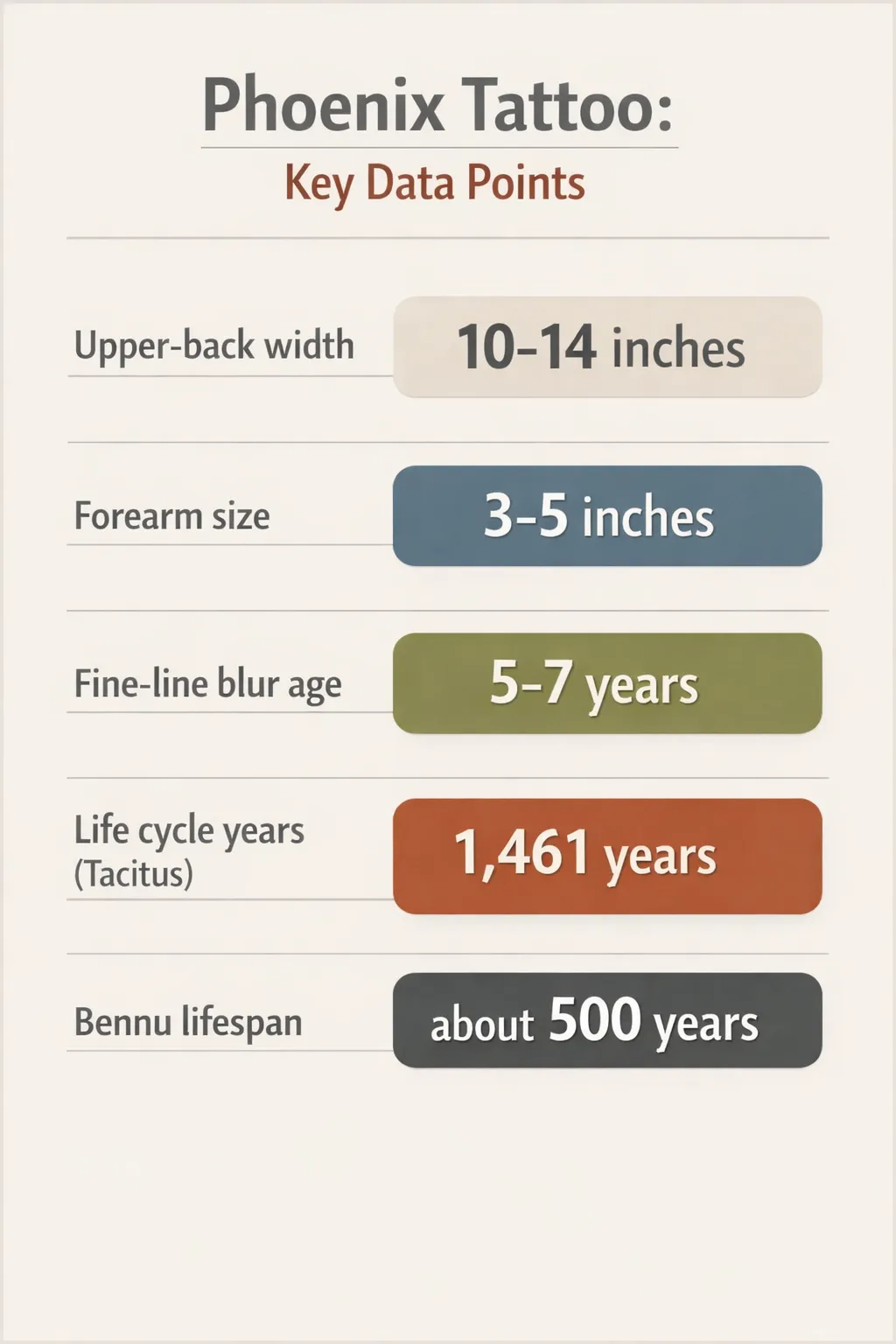 Phoenix tattoo data snapshot: upper-back width 10-14 inches; forearm size 3-5 inches; fine-line blur age 5-7 years; life cycle years 1,461 years; Bennu lifespan about 500 years.
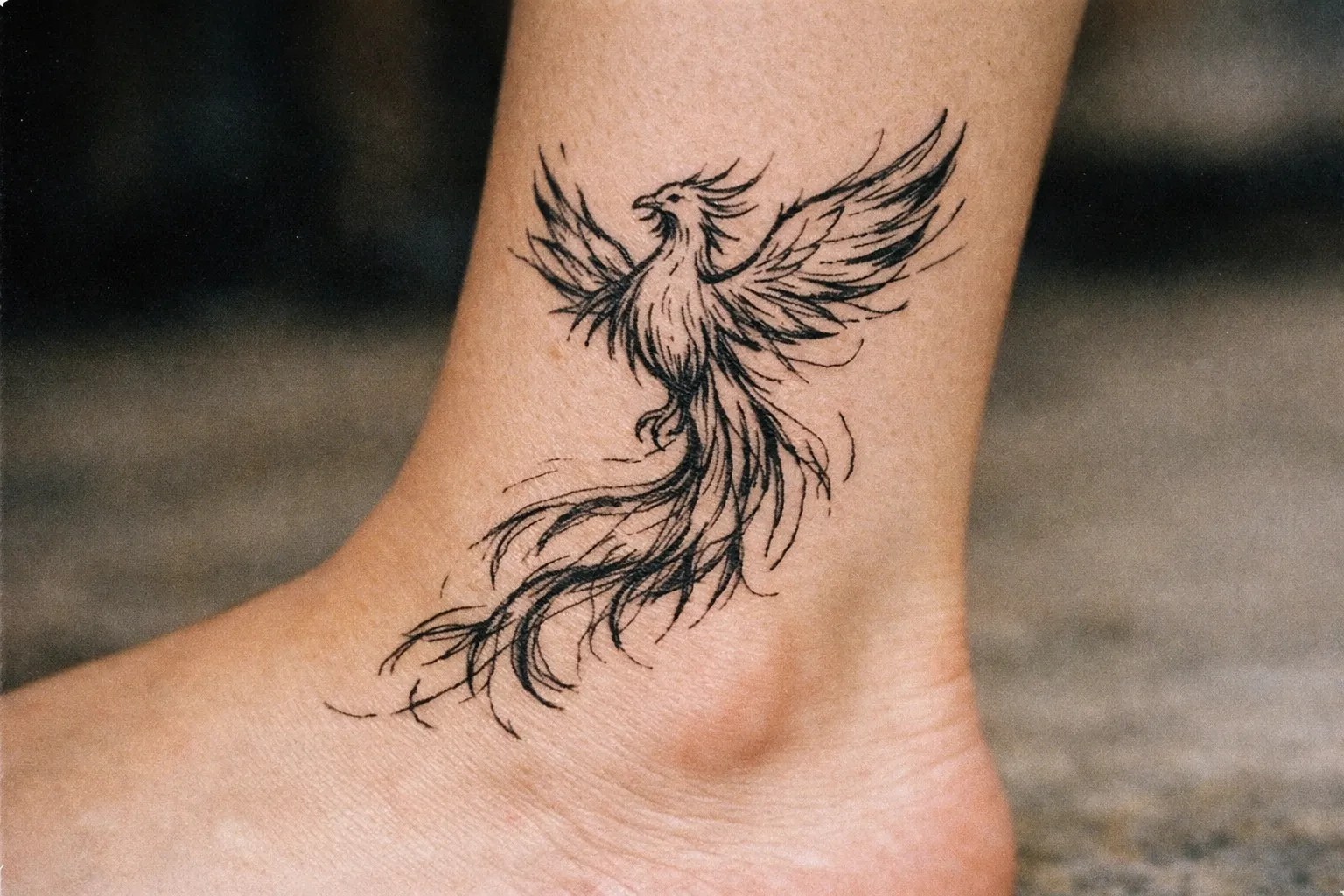
The 2025-2026 shift worth knowing: newer readings emphasize accepting destruction as part of existence rather than simply conquering adversity. The ashes aren’t just a low point to escape: they’re part of the cycle you’re choosing to honor.
The Egyptian, Greek, and Persian Roots
The Egyptian Bennu bird, associated with the sun god Ra, was believed to live about 500 years before renewing itself, tying the phoenix to long solar cycles and eternal return rather than a single heroic comeback (1). Designs drawing on Bennu often incorporate sun discs and radiating light. The Roman historian Tacitus recorded the phoenix’s life cycle as either 500 or 1,461 years, reinforcing its link to endurance and cosmic cycles rather than short-term change.
In Greek mythology the phoenix lives 500 years, builds a nest of aromatic woods, is consumed by flames, and rises from its ashes. This is the version that anchors most Western associations: immortality, resilience, and transformation through destruction. When people picture “the phoenix,” this is usually the bird they mean.
The Persian and Iranian tradition is less common but worth flagging for anyone drawn to intellectual symbolism: the phoenix here represents wisdom, intelligence, and breaking limitations, sometimes described as having witnessed the end of the world three times. It’s a reading that suits wearers who want the bird to mean something other than survival.
Chinese Fenghuang and the Virtue Tradition
The Chinese fenghuang is a different creature with a different job. It symbolizes virtue, harmony, and yin-yang balance, and it’s tied to prosperity and moral order rather than burning or destruction. The fenghuang is often associated with the empress, which is part of why fenghuang-inspired designs read as graceful and ornamental. This matters for a practical reason: if you want the fenghuang’s meaning, you’ll design toward flowing tail feathers, clouds, and peonies, not flames and ash. Assigning the fenghuang a purely Western “rising from the ashes” reading overlooks what the motif actually stands for and produces a piece with mixed signals.
A discrete spiritual angle exists too. Christian tradition appropriated the phoenix as a symbol of Christ’s resurrection and being born again, which makes it a quiet faith-adjacent option without overt religious imagery. Jewish tradition frames the phoenix as the only creature that resisted the forbidden fruit, turning to flame and reviving after three days, a reading centered on integrity rather than comeback. If either of those associations matters to you, say so. If you’d rather avoid them, that’s worth knowing before you commit.
Phoenix Rising from the Ashes: What That Specific Design Communicates
A phoenix rising from the ashes is the single most requested variant, and it’s the design most explicitly tied to personal comeback stories: recovery from illness, addiction, divorce, grief, or major upheaval. But “rising from the ashes” isn’t one image. It’s three possible stages, and choosing the wrong one for your story is the most common communication failure in the consultation.
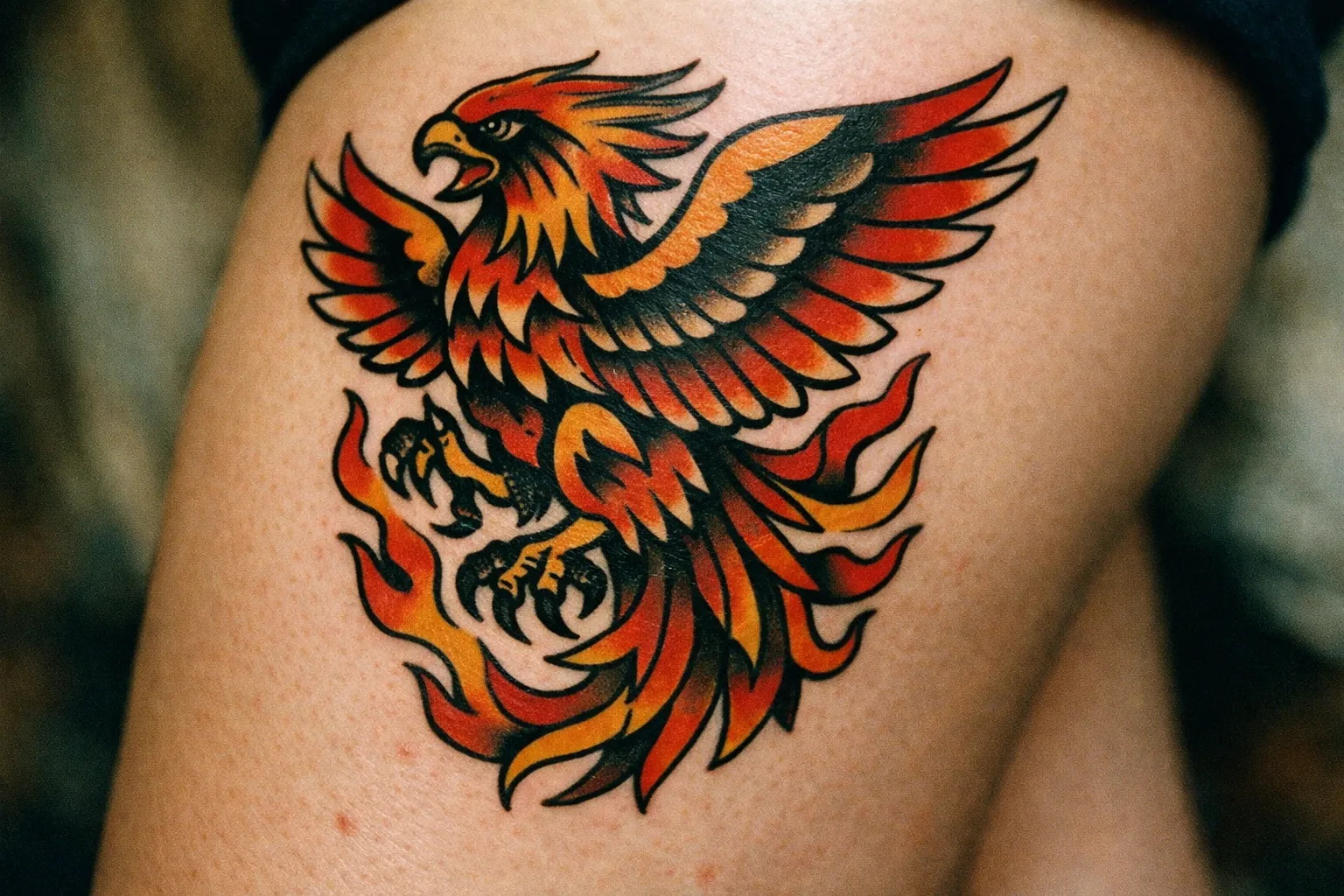
Mid-Flame, In Ash, or Fully Reborn: Choosing Your Stage
The three stages read differently to both you and anyone looking at the piece:
- Mid-flame: the bird still in the burn, wings catching fire. This reads as “still in it.” Good for someone in the middle of the process, not past it.
- In ash: the bird at its lowest point, collapsed among embers. Increasingly chosen to represent acceptance of endings rather than triumph: cyclical non-attachment rather than a heroic victory.
- Fully reborn: the bird ascending with ash and debris below it. The strongest “past the crisis” reading, because in the Greek-derived myth the rebirth happens after the bird has burned completely to ashes.
Your artist needs to know which stage you want before sketching, because it changes the pose, the background, and the emotional tone. A vague brief here is why people end up with a generic bird that doesn’t match what they came in for.
Design Elements That Reinforce the Rising Narrative
Flames and ash clouds are the elements that sell the “rising” story, and they’re also the ones that go wrong most easily. Dense reds, oranges, and blacks merge visually within a few years as lines and colors soften, so the composition needs deliberate negative space planning: uninked skin around the fire to suggest light and motion without packing solid saturation. Discuss your color palette against your skin tone before committing, because fiery gradients heal differently on lighter versus darker skin.
Paired elements that reinforce the narrative without crowding the bird: clocks for time and cycles, lotus flowers for spiritual rebirth from murk, skulls for death preceding new life, and short script (a date or the coordinates of a turning point) tucked near the ashes.
Phoenix Meaning for Men: Strength, Endurance, and Solar Symbolism
For men, the phoenix leans on Greek and Egyptian traditions: immortality, solar power, endurance, and courage rather than “strength” as a vague concept. The Egyptian Bennu, called the soul of Ra and linked to the rising sun, gives designs that use sun discs and radiating light a strong association with solar power and vitality. The Greek reading (live hundreds of years, die in fire, return) underpins masculine themes of persistence through suffering and long-term endurance, not short bursts of force.
Style and Line Choices That Read as Bold and Dynamic
The design choices that skew masculine are about weight and contrast, not the bird itself. Strong contrast, broader linework, an extended wingspan, and a dynamic ascending pose all push the piece toward a bolder read. Sun motifs worked into the background reinforce the solar symbolism.
Three styles suit these compositions well:
- American traditional: thick black outlines, a limited bright palette of reds, oranges, and yellows, simplified flames. Ages predictably and reads clearly from a distance.
- Neo-traditional: complex shading and stylized feathers for a more illustrative, narrative piece.
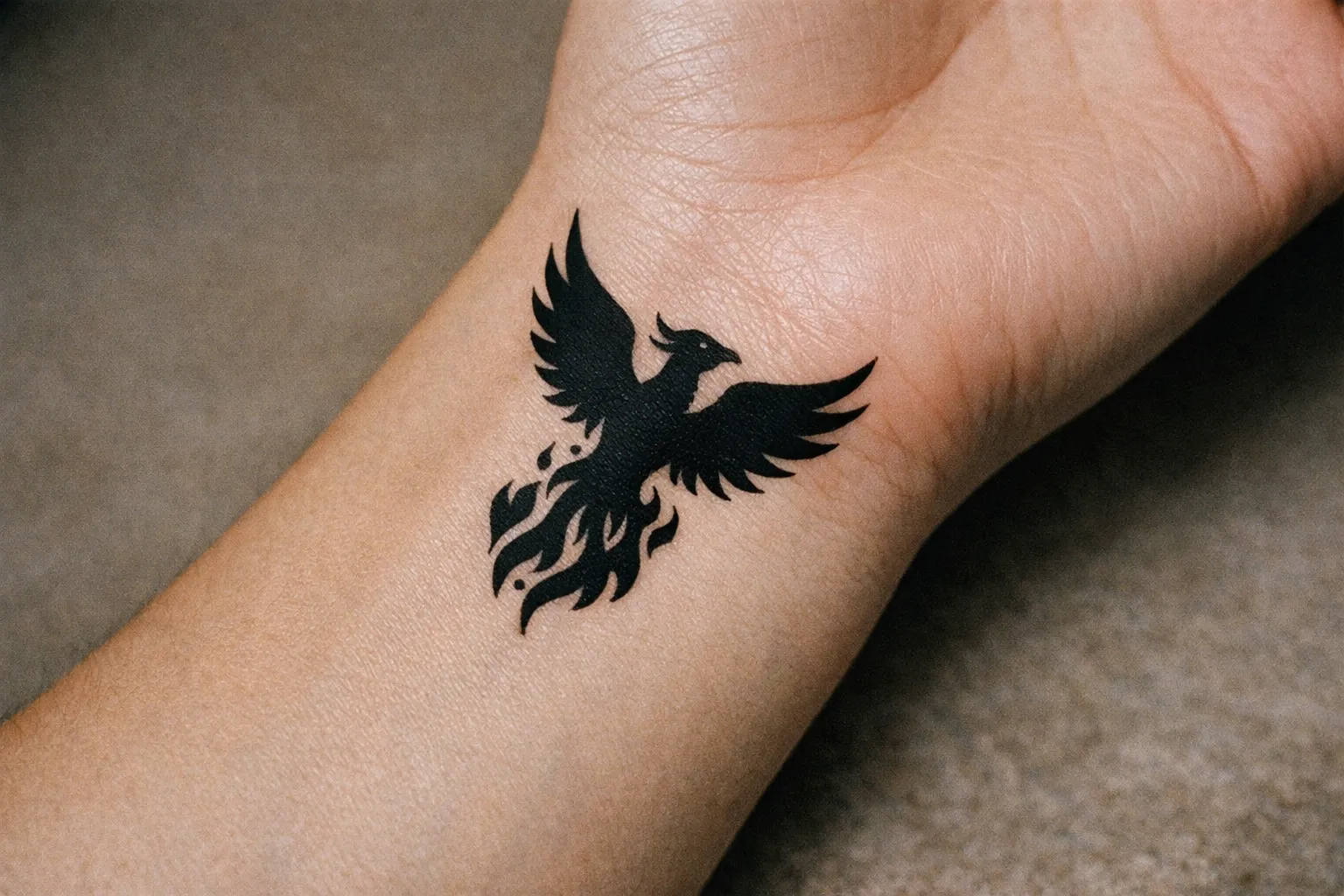
- Blackwork: high contrast, no color, bold silhouette, with negative space doing the work color would otherwise do.
Placement Options: Back, Chest, and Sleeve Compared
Common placements for men run large: full back, chest, upper arm, half-sleeve, or full sleeve. A full back or full sleeve almost always requires multiple sessions and can represent dozens of hours under the needle, endurance that becomes part of the symbolism for some wearers. The chest suits an ascending pose but the sternum is painful; upper chest near the collarbone is more manageable. The upper arm is one of the more forgiving placements if pain is a concern.
One honest note: the phoenix is not inherently masculine. The masculine coding comes from which tradition you draw on and which design choices you make, not from the bird. Plenty of men choose delicate fenghuang-influenced pieces, and plenty of women choose bold blackwork.
Meaning for Women: Grace, Virtue, and Intellectual Independence
For women, the primary symbolic source is the Chinese fenghuang tradition: balance, virtue, harmony, and prosperity rather than destruction. Unlike the Western phoenix, the fenghuang isn’t destruction-focused: it symbolizes auspiciousness and the union of yin and yang, which makes it a natural fit for someone choosing the bird to represent balanced independence rather than survival from crisis. Recent feminist readings have expanded that further, emphasizing intellectual autonomy and creative renewal, repeatedly reinventing your life and work rather than surviving one dramatic event.
Fenghuang Motifs: Clouds, Peonies, and Ornamental Linework
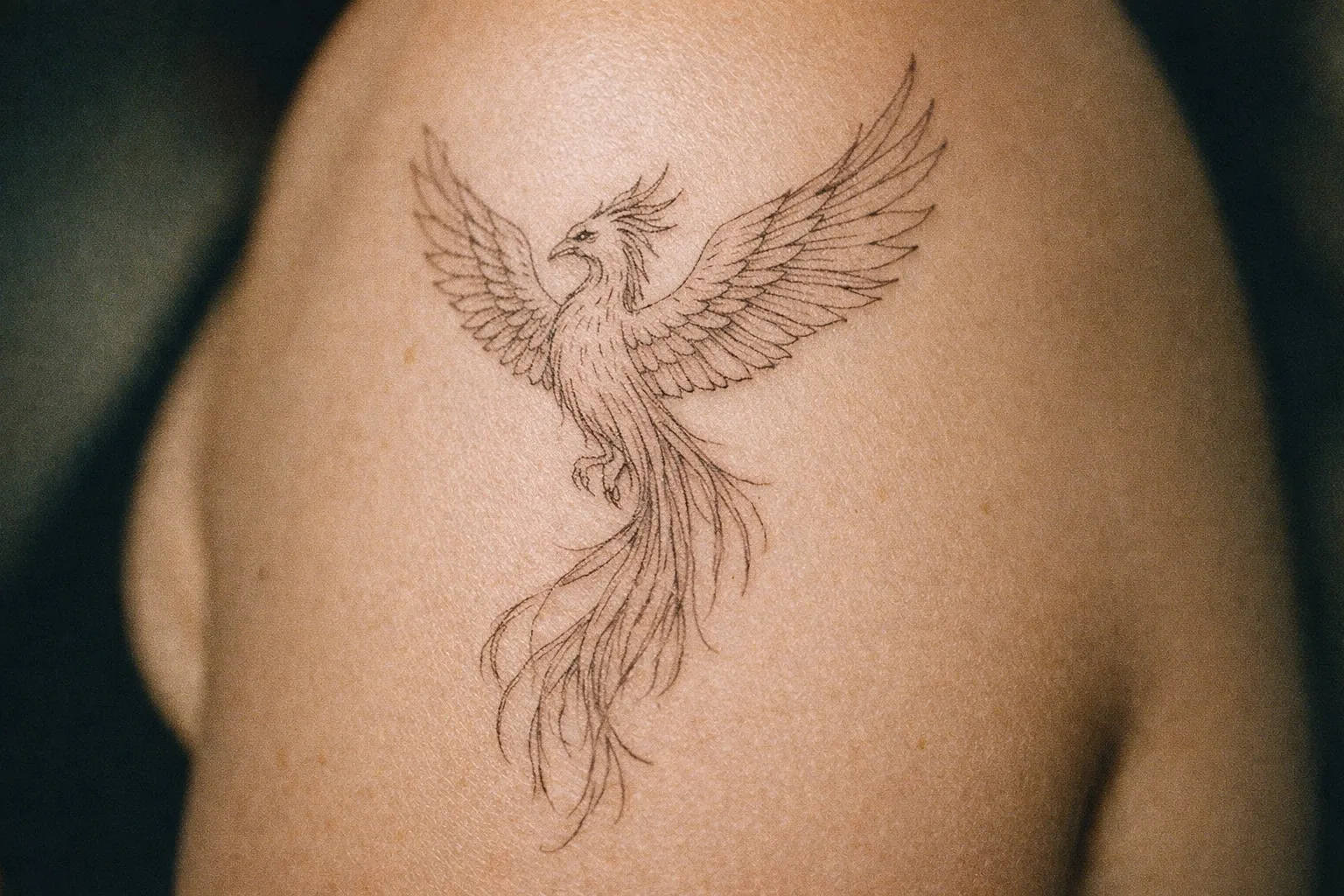
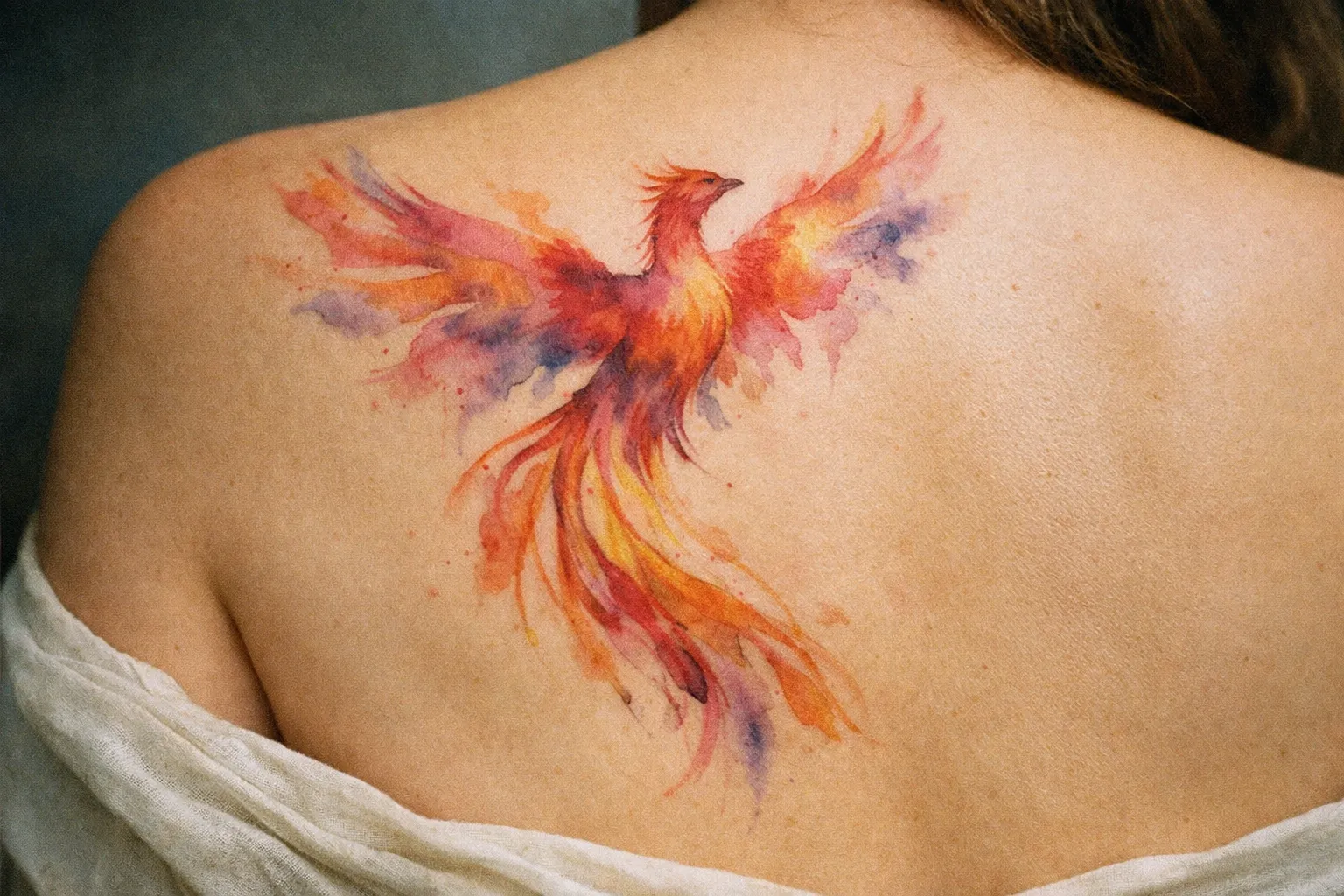
The design hallmarks that skew feminine are about detail and flow: finer linework, elongated tail feathers, floral integration (peonies, cherry blossoms), and ornamental detailing that gives the bird a flowing silhouette. Fine-line, neo-traditional with decorative elements, and watercolor-adjacent color gradients all suit this direction. If the fenghuang tradition resonates, lean into traditional motifs (auspicious clouds, peonies, geometric patterns) that signal virtue and prosperity rather than the burn-and-rebirth cycle.
Placement Realities: Ribcage, Thigh, and Sternum
Common placements for women include the ribcage, thigh, shoulder blade, sternum, and forearm, and the pain varies considerably across them. The ribcage and sternum sit close to bone with thin skin over them, which is why they rank among the more painful placements. The thigh and upper arm are considerably more tolerable and heal well, which makes them good candidates for detailed mid-size pieces.
So, is a phoenix a feminine tattoo? Not inherently. The bird is gender-neutral. The fenghuang tradition and ornamental design choices have made it a natural fit for many women’s designs: the femininity is in the linework and the motif tradition, not the creature.
Phoenix Back Pieces: Why the Spine and Shoulder Blades Are the Natural Canvas
The back is the most requested large-format placement for a phoenix because the anatomy supports the bird’s natural posture: a full wingspan can run shoulder blade to shoulder blade, and the tail can follow the spine or fan across the lower back. Nowhere else on the body gives the bird room to sit the way it wants to.
Upper Back vs. Full Back: Scope and Session Planning
There are two realistic scopes for a phoenix back piece, and they’re very different commitments. An upper-back phoenix spanning both shoulder blades typically measures around 10-14 inches wide, and a wings-out design at that scale is achievable in one or two long sessions. A full-back composition with detailed feathers, flame gradients, and background elements like ash clouds or sun motifs is a multi-session project, often spread over several months to allow healing between sittings.
It is almost never finishable in a single appointment. Rushing it compromises exactly the feather and flame detail that makes the piece worth doing.
Body-Flow Principles for Wings, Spine, and Tail
Good back planning is about how the design reads in motion, not just standing still. Wings should follow the curve of the shoulder blades and the tail should track the spine or hip, so the bird looks dynamic when you move. This is where an artist’s body-flow approach earns its keep, so ask to see how they handle it.
Two practical realities to plan around. First, pain: the spine and ribs are among the most painful torso areas because there’s minimal soft tissue over bone, so a tail that tracks the spine line will sting more than wings sitting over the shoulder blades. Second, body changes: detailed feather and flame patterns on the torso can visibly distort with significant weight shifts, muscle gain, or pregnancy, so it’s worth talking through likely physique changes during the design phase. Bring 2-3 reference images showing your preferred feather style, bird posture, and level of realism, and decide on the stage of the cycle before the consultation.
Styles: From American Traditional to Fine-Line
The style you choose determines how the piece ages, how it reads from a distance, and how much of your artist’s specialty it demands. Here’s what separates the main options.
American Traditional and Neo-Traditional: Bold vs. Decorative
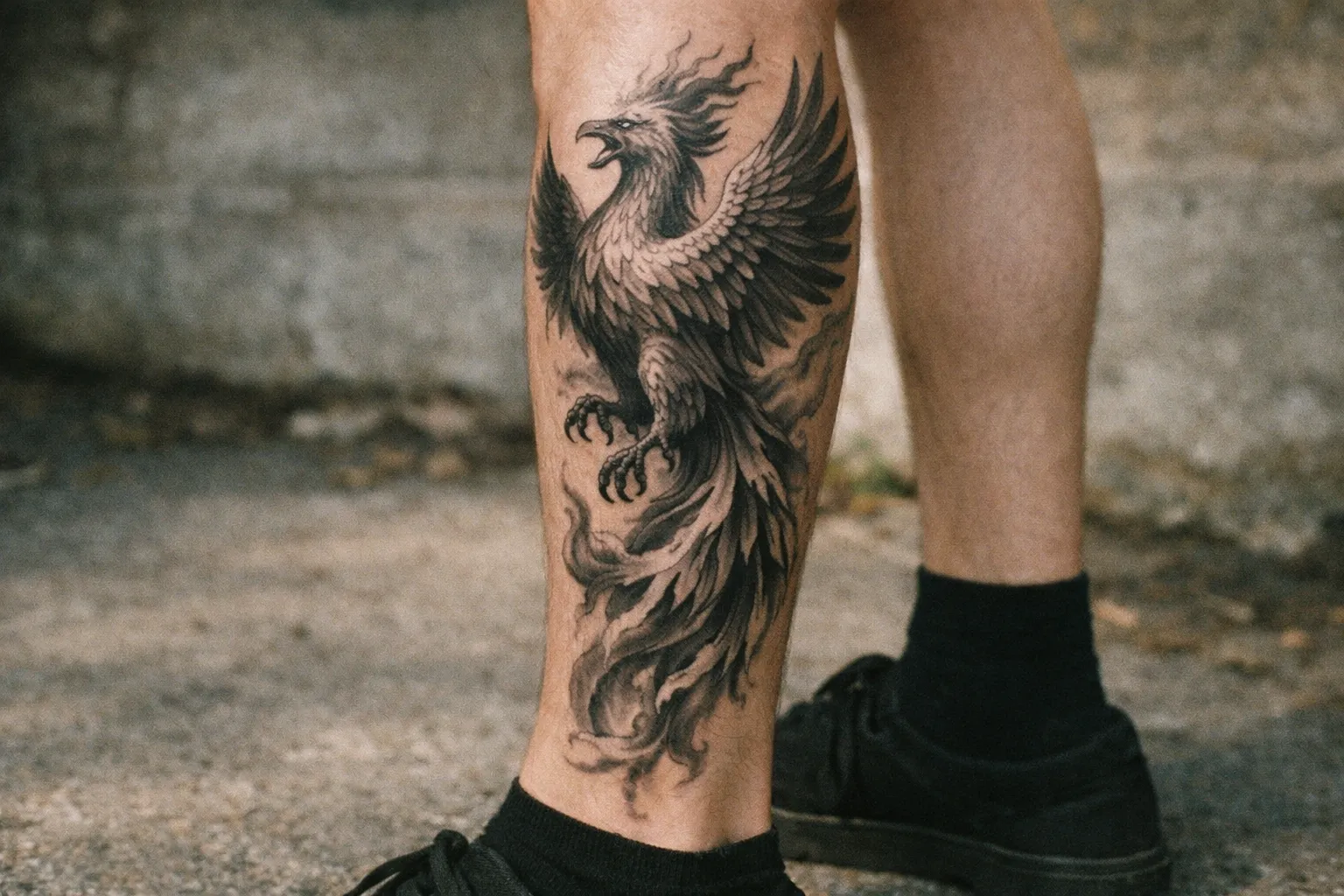
American traditional uses thick black outlines and a limited bright palette (reds, oranges, yellows) with simplified flames. It ages predictably and stays legible from a distance, which is exactly why it holds up: bold lines and high contrast survive the softening that blurs finer work. It suits anyone who wants a classic tattoo look.
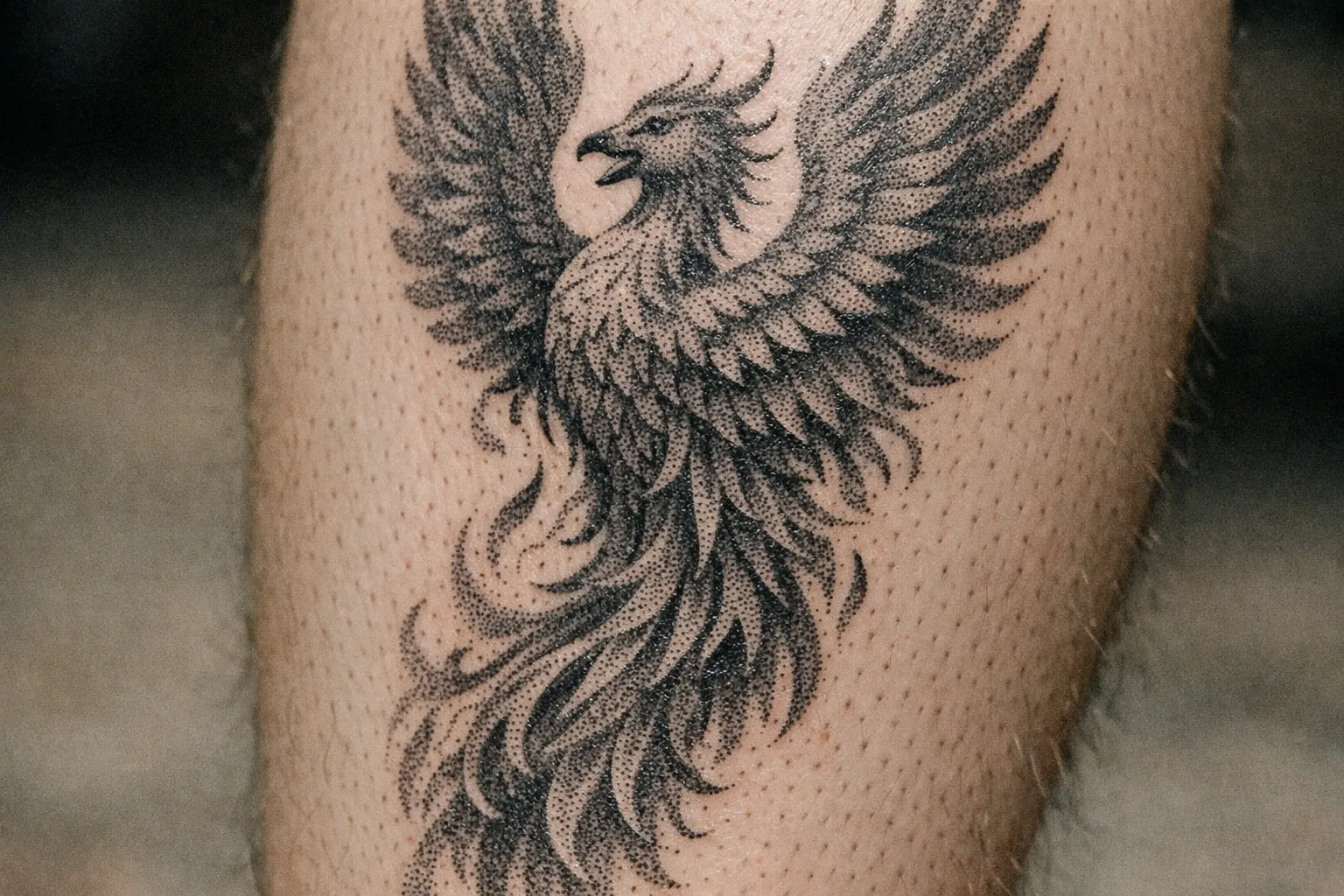
Neo-traditional and illustrative styles go the other way: complex shading, stylized feathers, decorative backgrounds. This is the most popular current choice for narrative phoenix pieces, but it requires more hours per square inch and an artist with a genuinely strong illustrative portfolio. Don’t hand this to a generalist.
Blackwork and Fine-Line: When You Want the Symbol Without the Spectacle
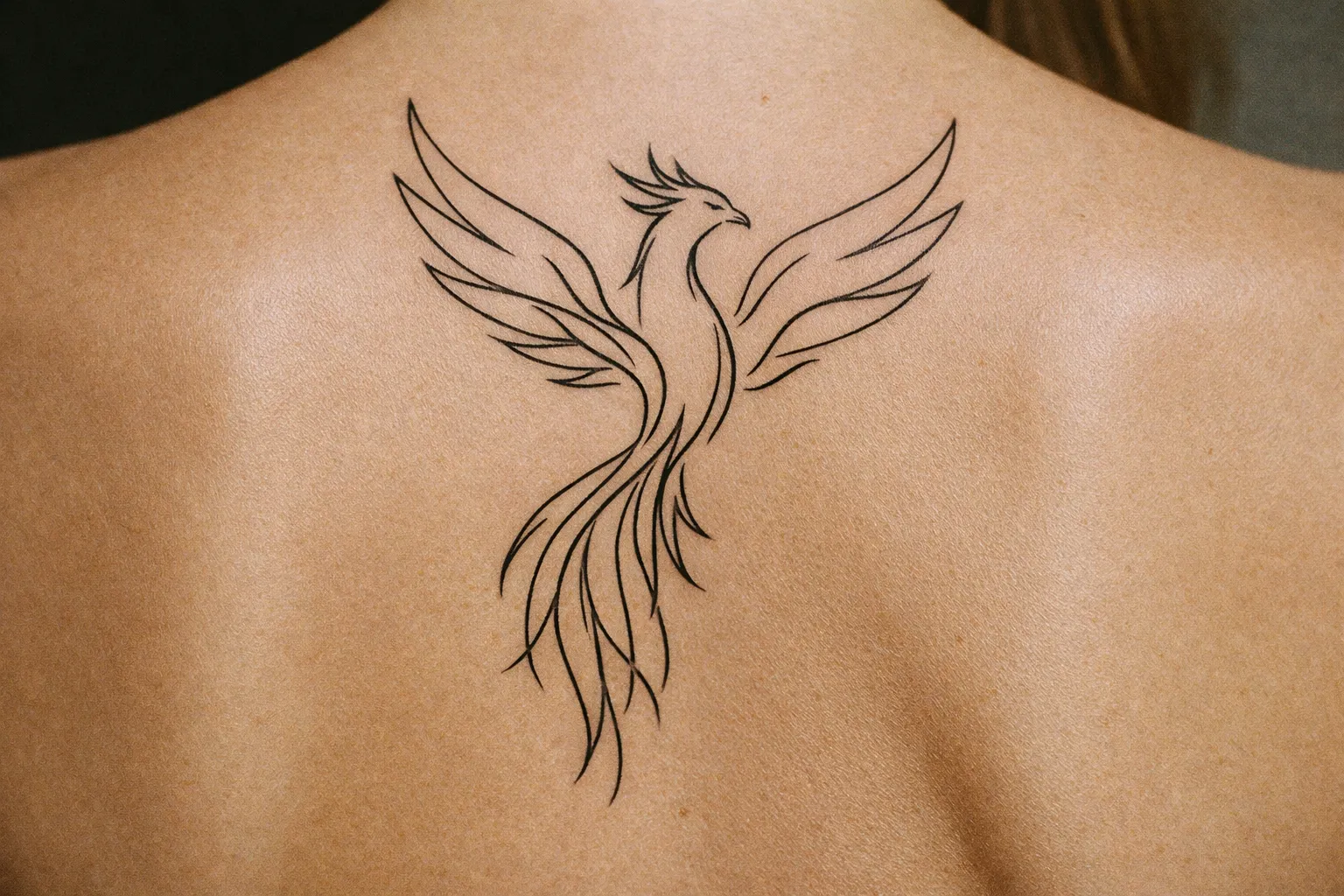
Blackwork strips the fiery palette entirely: solid black fill and negative space carry the design, and heavy black ages more durably than saturated reds and oranges. It’s a strong pick if you want the symbolism without the color commitment.
Fine-line and minimalist phoenixes go small, 3-5 inches on the forearm or shoulder, with simple outlines and subtle symbolism. They’re logistically simpler, but the trade-off is real: narrow lines are prone to visible blurring within 5-7 years, especially on high-friction or sun-exposed placements. This style demands precise needle control and a plan for eventual touch-ups.
Cultural Variants: Bennu, Fenghuang, and Christian Phoenix
Each cultural variant comes with its own visual vocabulary. The Egyptian Bennu pairs with sun discs and pyramids. The Chinese fenghuang works with clouds, peonies, and yin-yang motifs. The Christian phoenix leans on crosses or rays. Each one asks you to clarify your symbolic intent with your artist and to consider cultural sensitivities, especially with the fenghuang, where the motifs carry meanings that clash with a purely Western burn-and-rebirth reading.
A palette note that applies across styles: the fiery gradients central to “rising from the ashes” imagery (reds, oranges, yellows, sometimes blue for contrast) interact with skin tone, and color fades faster than black. Ask to see healed color work, not just fresh photos, before you decide.
Phoenix Tattoo Styles Comparison
| Classic American Traditional | Decorative Neo-Traditional | Durable Blackwork | Minimalist Fine-Line | |
|---|---|---|---|---|
| Aging & Longevity | Ages predictably, bold lines last | Requires touch-ups, complex shading | Highly durable, minimal fading | Blurs in 5-7 years without touch-ups |
| Pain Level | Moderate | Moderate to high | Moderate | Low to moderate |
| Session Length | Medium | Long | Medium | Short |
| Best Placement | Back, chest, upper arm | Back, sleeve, thigh | Back, arm, chest | Forearm, shoulder, wrist |
Placement Beyond the Back: Sleeve, Forearm, Chest, and Thigh
The back isn’t the only option, and several placements suit smaller or differently-shaped compositions better.
Sleeve and Half-Sleeve: Wrapping the Bird Around the Arm
A sleeve wraps the wings and tail around the arm: shoulder to elbow for a half-sleeve, shoulder to wrist for a full one. These require advanced body-flow planning and usually multiple design consultations, because the bird has to integrate with secondary elements like smoke, flowers, or script into a continuous narrative that reads correctly from every angle. Plan for several sessions.
Smaller Placements: Forearm, Wrist, and Thigh Trade-offs
The forearm is one of the most practical placements, especially for fine-line or minimalist work at 3-5 inches. It’s visible daily, which many people marking recovery specifically want because they want to see it, and the pain is moderate compared to the ribcage or sternum.
The rest of the field:
- Chest: strong for an ascending pose. The sternum is painful but creates a dramatic centerline composition; upper chest near the collarbone is more manageable.
- Thigh: large surface area, heals well, lower pain than the ribcage. Good for detailed mid-size pieces of 6-10 inches that don’t need the full back.
- Small placements (inner wrist, behind the ear, ankle): fine-line or silhouette phoenix at 2-3 inches. Subtle, but these high-friction, sun-exposed areas fade faster, so expect touch-ups within 5-7 years.
If you’re marking recovery from surgery or injury, wait for full medical clearance and scar stabilization before tattooing over or near affected tissue, often around 12 months after major surgery, to reduce the risk of complications and ink distortion.
Design Mistakes That Undermine a Phoenix Tattoo
Most phoenix regrets trace back to a handful of avoidable errors. Here are the ones worth guarding against.
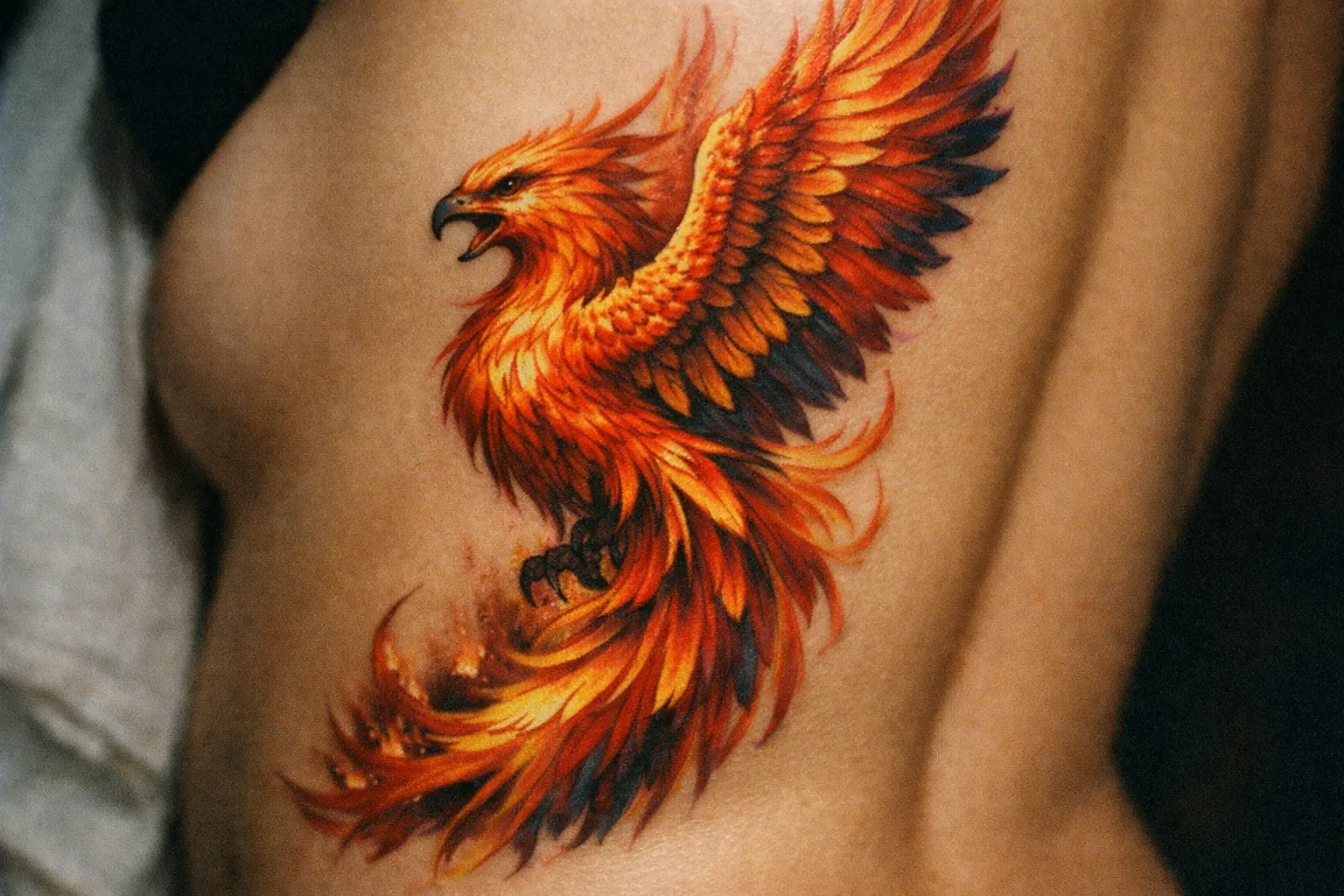
Overcrowding. Too many elements (flames, clouds, script, secondary animals) obscure the bird’s silhouette and merge into mud as the tattoo ages. The phoenix needs breathing room.
Ignoring the stage of the cycle. Not telling your artist whether you want mid-flame, in ash, or fully reborn is the most common communication failure. The stage changes the pose and the tone; leave it unspecified and you may not get your story.
Misreading cultural motifs. Using fenghuang elements (peonies, auspicious clouds) while assigning purely Western “rising from the ashes” meaning overlooks the fenghuang’s focus on virtue and harmony, and the result sends mixed signals.
Timing it too close to the crisis. Tattoos gotten immediately after a traumatic event are more likely to feel misaligned with your self-image years later. A reflective gap before committing to something this symbolic is worth it.
Underestimating the back and rib commitment. Pain and session length for large pieces catch people off guard, and rushed or incomplete sessions compromise feather and flame detail.
Chasing social media trends without adapting them. Replicating a trending composition wholesale produces a derivative piece that lacks the individualized meaning that makes a phoenix worth its weight.
Ignoring body changes. Detailed feather and flame patterns on the torso distort with significant weight shifts, muscle gain, or pregnancy, so factor probable changes in during planning.
What to Bring to Your Phoenix Tattoo Consultation
A good consultation shortens the road to a design you’ll still like in twenty years. Walk in with these ready:
Preparing for Your Phoenix Tattoo Consultation
30 minutesKey steps to ensure your consultation leads to a meaningful and well-planned phoenix tattoo.
- 1
Gather Reference Images
Bring 2-3 images showing feather style, bird anatomy, line quality, and composition or placement to clarify your vision.
- 2
Choose the Stage of the Cycle
Decide if you want the phoenix mid-flame, in ash, or fully reborn, and be ready to explain why.
- 3
Clarify Symbolic Tradition
Identify if your design draws from Greek/Western, Chinese fenghuang, Egyptian Bennu, or Christian resurrection symbolism.
- 4
Discuss Color and Skin Tone
Talk about color vs. blackwork and ask to see healed examples to understand how the tattoo will age on your skin.
- 5
Ask About Body-Flow Planning
For back and sleeve pieces, understand how the artist plans wings, tail, and movement integration.
- 6
Confirm Medical Clearance if Needed
If marking recovery from illness or surgery, ensure full clearance and scar stabilization before tattooing.
Frequently Asked Questions
- What does a phoenix tattoo symbolize?
- A phoenix tattoo symbolizes rebirth, resilience, transformation, hope, immortality, and renewal, with emphasis varying by cultural tradition.
- Is a phoenix tattoo masculine?
- No, masculinity comes from design choices and traditions like Greek or Egyptian, not the bird itself; both men and women wear phoenix tattoos.
- Is a phoenix a feminine tattoo?
- Not inherently; the Chinese fenghuang tradition and ornamental design choices make it popular for feminine designs, but the bird is gender-neutral.
- What does the phoenix mean for a woman?
- For women, meanings include balance, virtue, harmony, prosperity, intellectual independence, and creative renewal, depending on the tradition.
- How many sessions does a full-back phoenix tattoo take?
- Full-back phoenix tattoos usually require multiple sessions over months; upper-back pieces may be done in 1-2 long sessions.
- Can I get a phoenix tattoo to mark recovery from illness or surgery?
- Yes, but wait for full medical clearance and scar stabilization before tattooing near affected tissue; inform your artist for placement advice.
- What's the difference between a phoenix and a fenghuang tattoo?
- The Western phoenix symbolizes death and rebirth; the fenghuang represents virtue and harmony; mixing motifs sends mixed cultural signals.
- Do phoenix tattoos age well?
- Blackwork and American traditional age best; fine-line blurs in 5-7 years; color fades faster; sun protection extends tattoo longevity.
Making the Decision
The phoenix rewards a specific brief more than almost any other motif. Three decisions determine whether the piece works long-term.
First, the stage of the cycle: mid-flame reads as “still in it,” in ash reads as acceptance, fully reborn reads as “past it,” and your artist can only build the right composition once you’ve chosen. Second, the symbolic tradition: Greek endurance, fenghuang virtue, and Bennu solar cycle each pull the design toward different motifs, palettes, and linework. Third, placement, which has to fit both your pain tolerance and your daily life: the back gives the bird room but demands sessions and a high tolerance, while a forearm piece stays visible and heals easily but blurs faster in fine line.
Vague briefs produce generic birds. Specific ones (a fenghuang in ornamental linework on the shoulder blade, a Greek phoenix ascending over ash in bold blackwork on the upper arm) produce something that still makes sense in twenty years. Decide the stage, the tradition, and the placement before you sit down, and plan for the touch-ups your chosen style will eventually need.