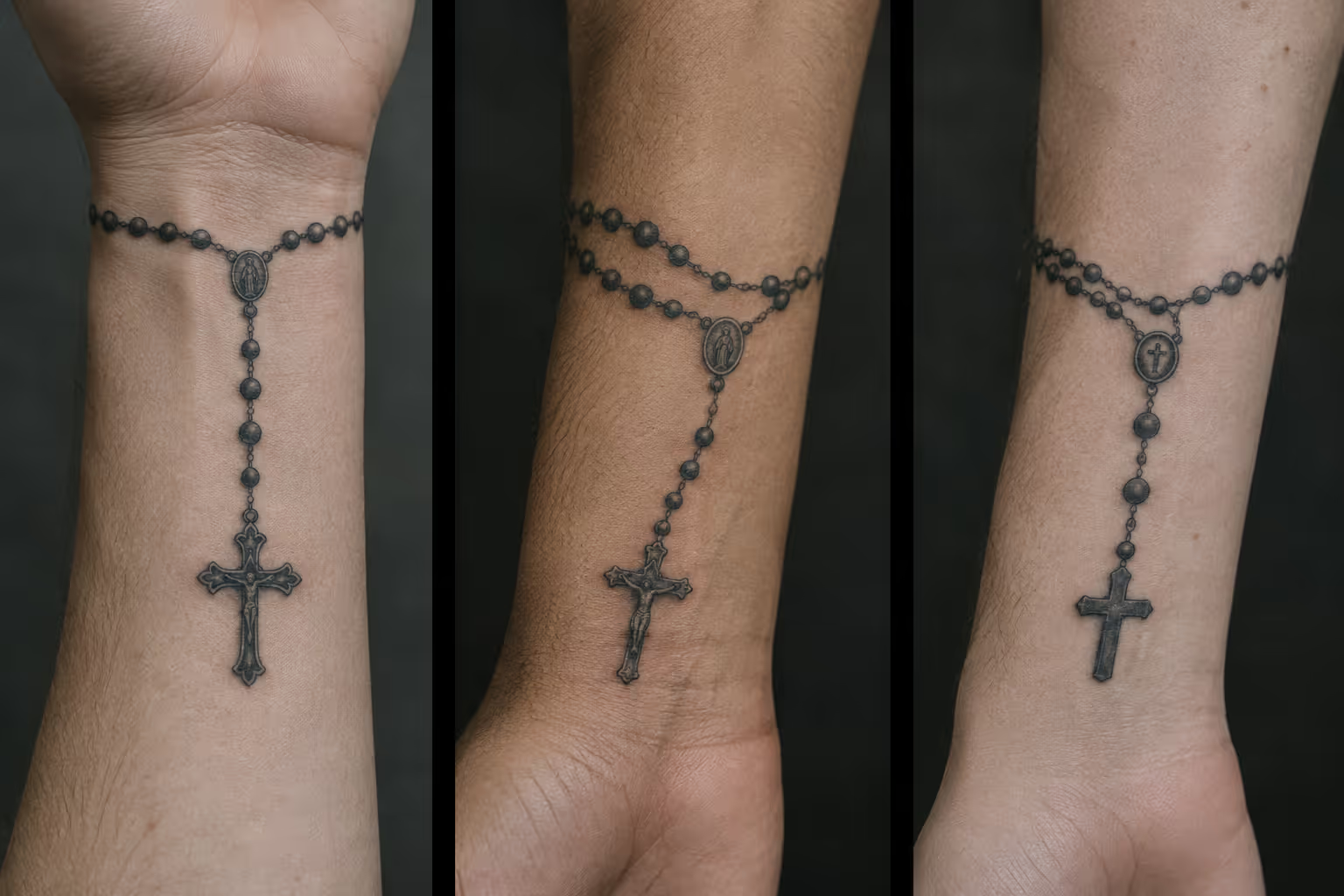
A rosary tattoo almost never copies the full prayer object. The rosary Catholics pray runs five decades of ten beads each (2), but many wrist and hand versions are partial, stylized fragments: a loop of beads around the wrist, a short drop across the back of the hand, a cross hanging just above the knuckles. Decide which version you want before you sit down. That choice changes what you ask your artist for, where the piece goes, and how it looks after years of sun.
Rosary Tattoo Meaning: Faith, Remembrance, or Just the Design
Rosary tattoo meaning usually falls into one of three intents: a devotional reference to Catholic prayer, a stylized bead-and-cross design, or a personal tribute to someone (5). Each intent leads to different design decisions. Settle on yours first, because it decides how many beads you need, whether the cross has to be a crucifix, and whether a date or initials belong in the piece.
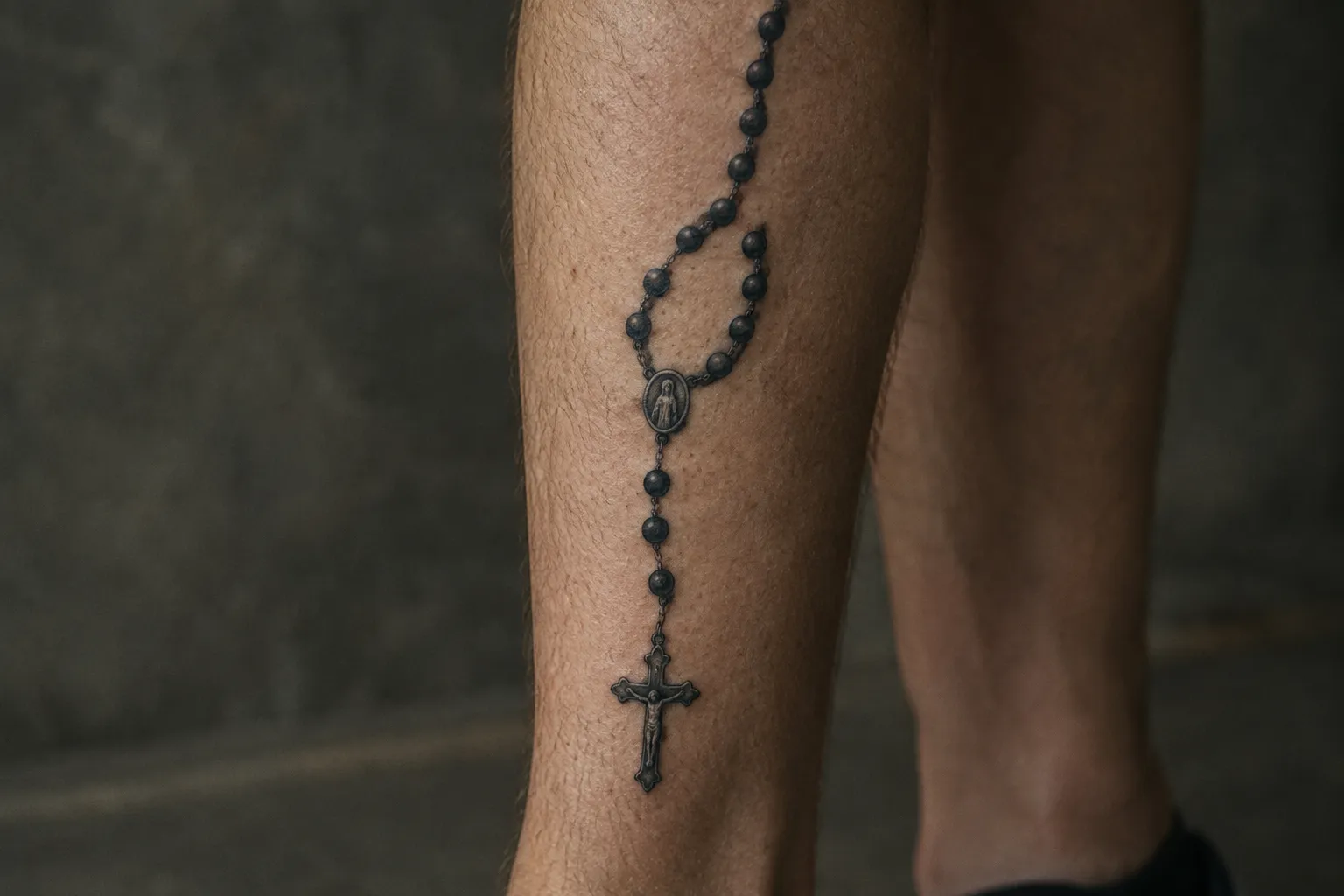
The symbolism comes from Catholic tradition. The U.S. Catholic bishops describe the rosary as a Scripture-based prayer whose Mysteries center on events in Christ’s life, with repetition meant to lead the person praying into restful, contemplative prayer (2). The beads keep the count: you finger each of the ten beads of a decade as you say a Hail Mary (2), so your attention can stay on the prayer instead of keeping score.
As a tattoo, the motif has spread well beyond devotion. One rosary design roundup describes it as standing for faith, protection, family, remembrance, or a personal connection to prayer (8), and plenty of people wear it because they like the way beads and a cross follow the body (5). No single meaning covers every wearer.
A quick disambiguation, because the word does double duty. A rosary as an object is a physical prayer string you hold and use. A rosary as a tattoo motif is an image of that object. You can’t pray on a tattoo the way you pray on beads, which is one reason so many tattooed versions drop the full count.
Is it okay to have a rosary tattoo?
There is no single Christian answer. Christians disagree about tattoos in general: some read Leviticus 19:28 as a standing prohibition, others tie it to the mourning and pagan practices of its time, and the New Testament does not address tattooing directly (10). If your parish or church community has a settled position, have that conversation before you book rather than after (10). Our cross tattoo guide covers how different Christian traditions read that verse. Plenty of wearers choose a rosary as an openly devotional piece (5).
If you are not Catholic, be honest with yourself about why you want it. Some faith communities are relaxed about outsiders wearing their symbols, others consider certain symbols inappropriate on skin, and a few object to particular placements, such as below the waist (11). A rosary chosen because you like the shape is a valid design choice, but you will get questions, and it helps to have an answer you are comfortable giving.
Devotional vs. Stylized Bead-and-Cross Design
A devotional piece aims for recognizable prayer structure. That usually means a crucifix (a cross with the figure of Christ) rather than a plain cross, a visible centerpiece medal, and enough beads that someone who prays the rosary would recognize the layout. You don’t need all five decades, but you should know what you are including and what you are leaving out.
A stylized design treats the rosary as jewelry. The beads can be any size, the cross can be plain, ornate, or Gothic, and the strand can loop and twist however it reads best on your body. One rosary design roundup notes that the same basic elements (beads, a centerpiece, chain, and cross) feel completely different depending on scale, shading, placement, and line weight (5). If this is your intent, say so to your artist. It frees them to compose for the body instead of counting beads.
Remembrance and Personal Tribute Ink
Remembrance is a personal layer you add, not part of the rosary’s formal symbolism. One approach is a rosary drawn as if it belonged to the person you lost: a grandmother’s rosary looped around your wrist, sometimes copied from a photo of the real one so the bead shape and medal match.
If the aim is to commemorate someone, add an explicitly personal element so the dedication reads as yours. A date, initials, or a name on a small banner works, and a pendant can carry dates or initials too (5). This keeps the tribute separate from the prayer symbolism, so nobody mistakes your grandmother’s initials for liturgical text.
Size that lettering to hold up. Block letters and numerals need a letter height of at least 6 mm (¼ inch); standard script needs at least 12-13 mm (½ inch), and fancy or ornate script needs about 25 mm (1 inch). On the wrist, only bold script or block lettering holds, so a dainty cursive date tucked between beads on the inner wrist is the first thing to blur.
The trade-offs at a glance
The rosary’s strength is flexibility. The meaning can be faith, tribute, or pure design. The layout scales from a compact bead-and-cross on the wrist to a full strand wrapping the arm, and the draped effect on a wrist or hand is hard to get from a static symbol. The costs are practical. Exposed placements fade faster without sun care, hand skin is harder to keep undisturbed while it heals, and a rosary that reads as complete to a Catholic viewer takes real planning with your artist.
✓ Pros
- The motif stays identifiable even when the design omits most of the prayer beads.
- Cross and centerpiece orientation give the artist clear focal points to compose around.
✗ Cons
- A visible hand design can invite questions about religious intent from people who read the symbol differently.
- A narrow wrap leaves little room to correct bead spacing or lettering after the design is placed.
The Anatomy of a Rosary Bead Design
A rosary bead tattoo built on the actual prayer has a crucifix, a short run of opening-prayer beads, and five decades of ten Hail Mary beads, each decade opened by an Our Father said on a single bead (2)(9). Knowing that sequence lets you tell your artist exactly which parts to include and which to cut on purpose.
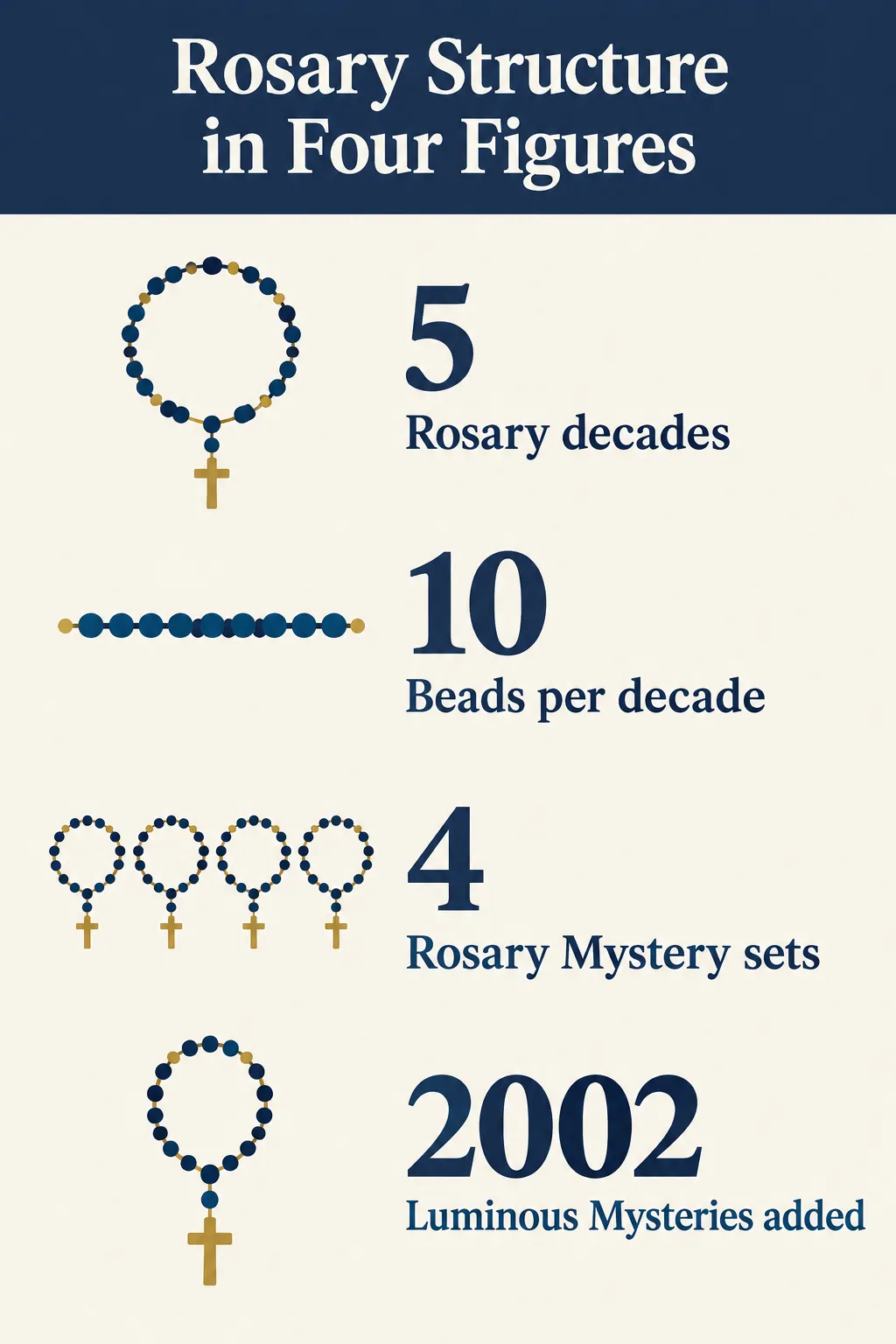 The standard rosary has 5 decades of 10 beads each, four Mystery sets, and Luminous Mysteries added in 2002, according to the USCCB.
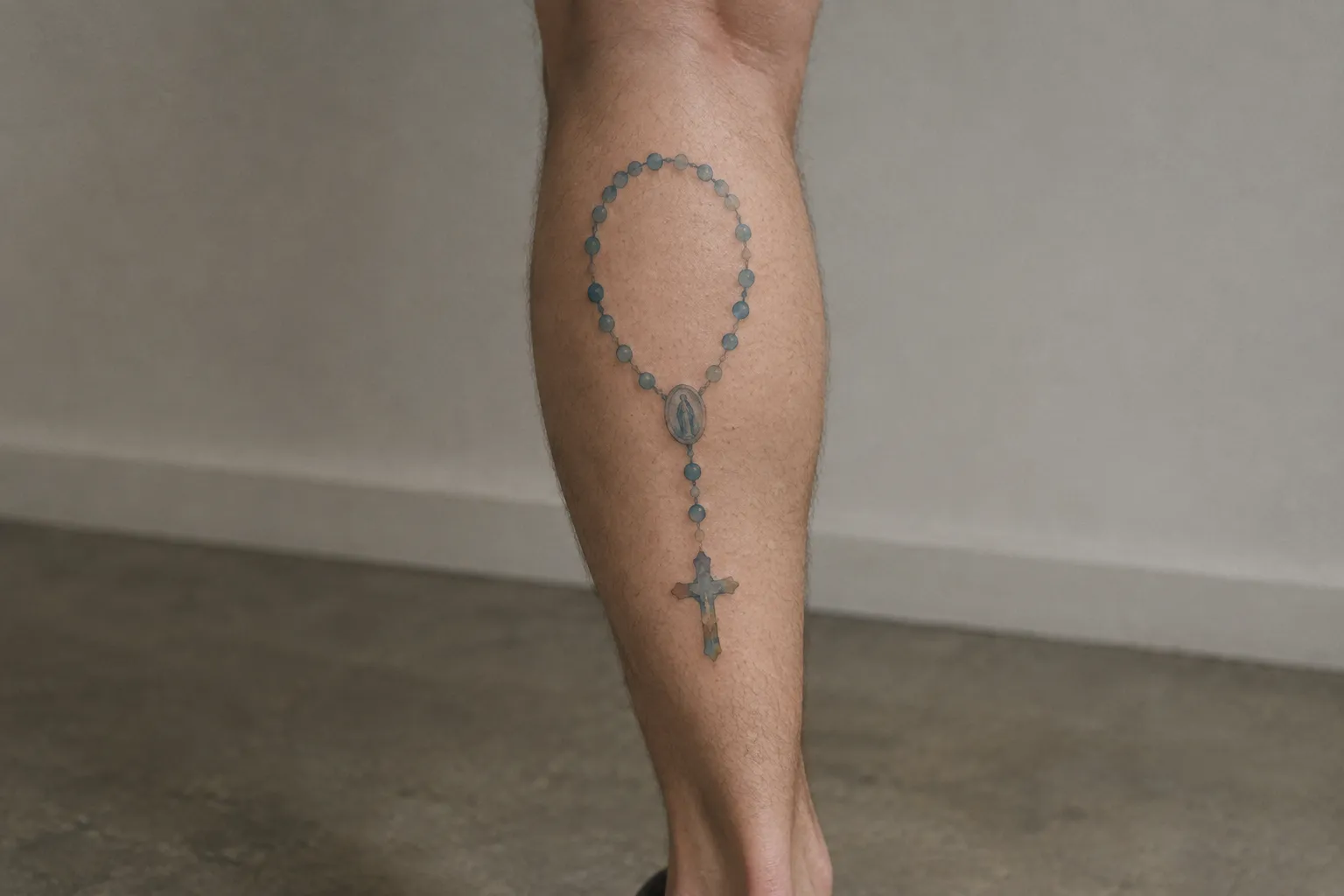
Crucifix, Opening Prayers, and Five Decades
Here is how the prayer moves along the object, according to the USCCB’s description (2):
- The crucifix: the prayer begins with the Sign of the Cross, then the Apostles’ Creed while holding the crucifix.
- The opening beads: one Our Father on the first bead, then one Hail Mary on each of the next three beads, followed by the Glory Be.
- The five decades: for each decade, the Mystery is announced, an Our Father is said, then ten Hail Marys follow, one per bead, while meditating on that Mystery. A Glory Be closes the decade.
On the physical object, the crucifix and the group of one plus three opening beads hang from the centerpiece as a short tail (9), and the decades form the loop. That centerpiece is where some designs place a religious medallion, such as a miniature Virgin Mary figure (5).
For a tattoo, this anatomy gives you clear editing points. A wrist bracelet can show part of the loop with the tail and crucifix dropping onto the back of the hand. A forearm piece can carry the full loop. A compact design might be the crucifix, the three opening beads, and the centerpiece, nothing more.
The common mistake is treating every rosary tattoo as a complete five-decade piece. The standard prayer has five decades (2), but a tattoo can be partial or stylized, and many wrist and hand wraps are. If yours is abbreviated, call it what it is: an artistic interpretation, not a complete rosary. Tell your artist up front so they don’t spend an hour trying to squeeze fifty-plus beads around a narrow wrist, and so you aren’t surprised when someone who prays the rosary points out the count is short.
The Four Mystery Sets and What They Represent
The Mysteries of the Rosary are the events from Christ’s life that the person praying meditates on during each decade. There are four sets: Joyful, Sorrowful, Glorious, and Luminous. Saint John Paul II added the Luminous Mysteries in 2002 (2).
The Mysteries matter for a tattoo when you want a specific intention woven into the design, usually through the centerpiece medal or a small image at the cross. The USCCB lists a “fruit of the mystery” for each one (2). Two examples worth knowing if you are planning a devotional piece: the Sorrowful Mysteries include the Crucifixion and Death, paired with the fruit “Sorrow for our Sins,” and the Glorious Mysteries include the Resurrection, paired with the fruit “Faith” (2).
Treat these as possible references, not requirements. A remembrance piece might lean toward the Resurrection and its fruit of faith. A purely stylized design doesn’t need a Mystery reference at all. Most rosary tattoos carry none, and that is fine, as long as you know the choice exists before your artist starts drawing.
Wrist Wraps and Rosary Hand Tattoo Placements
Both a wrist bracelet rosary and a rosary hand tattoo sit on skin that moves constantly, and hands get more sun, washing, and friction than an upper-arm piece (5)(8). Both placements produce the draped, jewelry-like look people want from this motif. The difference shows up in the healing weeks and in how the piece ages.
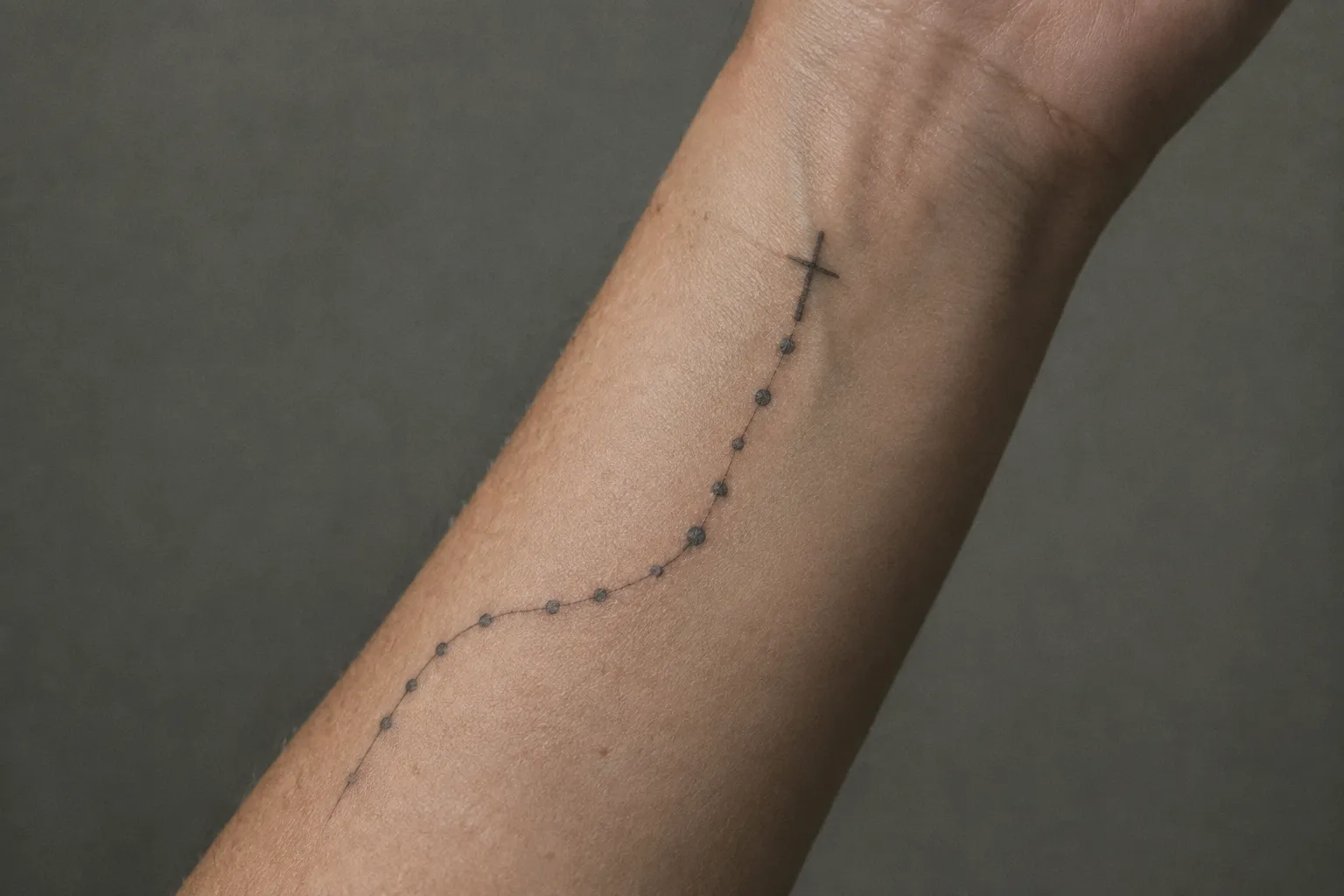
The main options for exposed placements:
- Inner wrist bracelet: a loop of beads circling the wrist, with the cross on the inner or outer face
- Full wrist wrap: beads circling all the way around, read like a bracelet from any angle
- Wrist-to-hand trail: a strand that starts at the wrist and drops across the back of the hand
- Hand-wrap with cross at the knuckle line: beads looping between thumb and index finger, cross hanging toward the fingers
On pain, these spots sit at different levels. Our tattoo pain scale puts hands and fingers among the most painful placements and the outer forearm among the gentlest, with the inner forearm getting sharper close to the wrist. The hand has thin skin stretched over bone and tendon with little padding.
Wrist Bracelet Rosary
A rosary loop around the wrist reads as permanent jewelry. Done well, it looks like the beads are resting against the skin, with slight shading under each bead to fake a shadow.
The cross is the part that needs deliberate positioning. Keep it off the crease where your wrist bends and away from the spot that rubs against a watch band, a desk edge, or a laptop. A cross sitting right on the wrist crease folds every time you flex, and repeated friction during healing is how you lose ink in patches. Two spots work better: the inner wrist, slightly above the crease toward the forearm, or the outer wrist bone area where the cross can hang like a charm.
Bead size is the other decision. Tiny beads in fine line look delicate fresh, but the inner wrist is a thin-skinned, high-movement spot, and lines spread a little over the years. Dark beads packed close together can gradually merge (8). Ask your artist to leave visible negative space between beads so each one still reads as a separate bead after the linework softens (5).
Hand-Trailing Rosary Design
A rosary hand tattoo usually trails from the wrist onto the back of the hand, sometimes looping around the thumb with the cross dropping toward the middle knuckles. It produces a prominent, body-following look, and it is hard to miss in daily life. Because a physical rosary is handled during prayer, a hand placement can add another layer of meaning (5).
Choose it knowing what you are signing up for. The back of the hand is exposed skin that needs sun protection for as long as you want the tattoo to look crisp, and it gets more sun, washing, and friction than an upper-arm piece (8). You wash your hands many times a day, you grip things, you stretch the skin every time you make a fist. Each of those motions works against a fresh tattoo. Fine connectors and small beads on a hand may need refreshing sooner (8), so ask your artist about their touch-up policy before you book.
Design for this placement with heavier lines than you would use on a forearm. Thicker bead outlines and a clear cross read more easily than intricate hand work (8). If you want dimensional, realistic beads, accept that hand placements tend to fade faster than many areas of the arm (8).
Ask for a mock-up with your wrist flexed and your hand relaxed before you approve anything. The rosary’s draped effect depends on how the chain follows the body (5). Have the artist place the stencil, then bend your wrist forward and back, make a fist, open your hand flat, and let it hang at your side. Look at it in a mirror and from above, the way you see it most of the day.
The mistake to avoid is approving a flat sketch without checking it in motion. A strand that looks perfectly curved on paper can kink across a knuckle or pull sideways when your thumb moves. Because the design is meant to follow your body, it has to be judged on your actual hand and wrist (5).
Forearm and Upper-Arm Rosary Options
A forearm or upper-arm rosary has room for the full five-decade structure, and the upper arm is easy to cover with a sleeve, while a hand gets more sun, washing, and friction (8). Since UV light can fade some tattoo inks (1), an arm placement is the better pick if long-term ink clarity matters more to you than the draped, body-following look of a wrist or hand design. You give up some of the jewelry illusion, and you gain room and longevity.
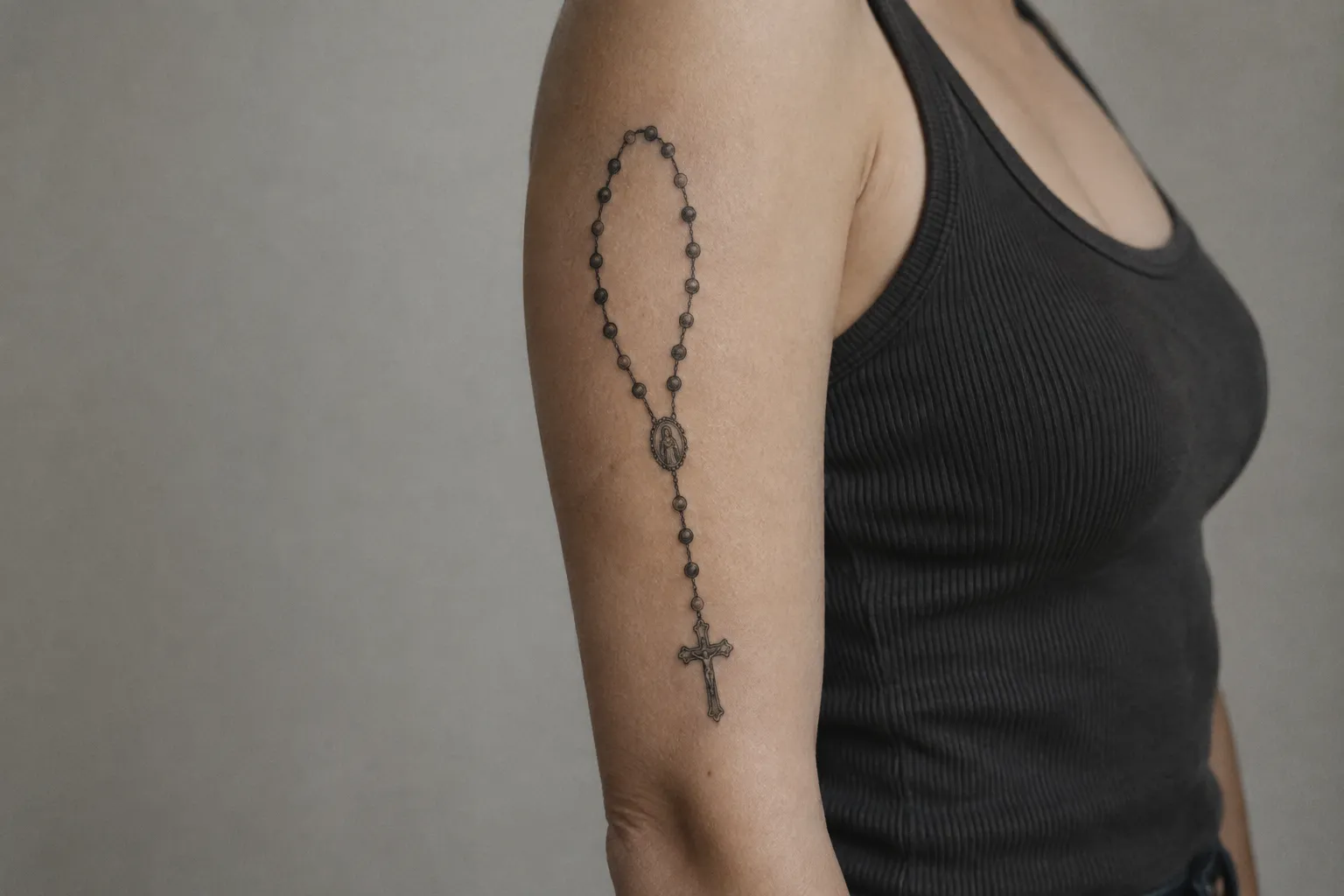
The inner forearm gives you a long, flat run of skin where a rosary can hang vertically with the crucifix pointing toward the wrist, or wrap diagonally around the arm. This is the best spot if you want something close to a complete strand, because there is enough length for all five decades without shrinking the beads until they blur. The outer forearm works too and tends to hurt less.
The upper arm is easy to cover: a sleeve hides it when needed (8), so it spends far fewer hours in direct UV than a hand or wrist. If you are planning a detailed, black-and-grey realistic rosary and want the shading to stay soft and readable for decades, the outer upper arm is a strong choice. It is also one of the gentler arm placements for pain, ranking well below the hand and inner wrist.
Compact vs. Full-Decade Layouts
A compact rosary focuses on the beads and cross. Think of the crucifix, the short tail of opening beads, and the centerpiece medal, laid out on a small area of the forearm or upper arm. It works when space is limited or when the tattoo sits alongside existing work.
A full-decade layout carries the whole loop. It needs a long canvas, so the forearm or upper arm, sometimes wrapping from one to the other. This is the version to pick if you want a rosary a Catholic viewer would recognize as complete.
Scale changes the technique. One rosary design roundup points out that scale, shading, and line weight change how a rosary looks (5), and that plays out in two style directions:
- Fine line and black-and-grey realism: thin, single-needle outlines and soft stippled or whip shading that make the beads look round and polished. This approach needs size. Shrink a realistic rosary too far and the shading turns into muddy grey.
- American traditional: thick black outlines, a limited palette, and solid fills. A traditional rosary might use bold black beads with a red or yellow accent on the cross. It holds up at smaller sizes and on exposed skin because the heavy outline survives the gradual spread of ink.
The pitfall in both styles is the same: cramming too many beads into too little space. When an artist forces a full five-decade count onto a small area, the beads crowd together, the gaps close up as the tattoo ages (8), and the strand reads as a dark rope instead of individual beads. If the space can’t fit the full count at a readable size, go partial on purpose rather than full by force.
Healing a Wrist or Hand Rosary and Keeping It From Fading
A wrist or hand rosary heals best with gentle washing twice daily, no scrubbing, no direct sun, and no picking at flakes or scabs, which is Cleveland Clinic’s core aftercare advice (4). Exposed, constantly moving skin turns each of those rules into a daily effort. You use your hands for everything, and the tattoo is in the way.
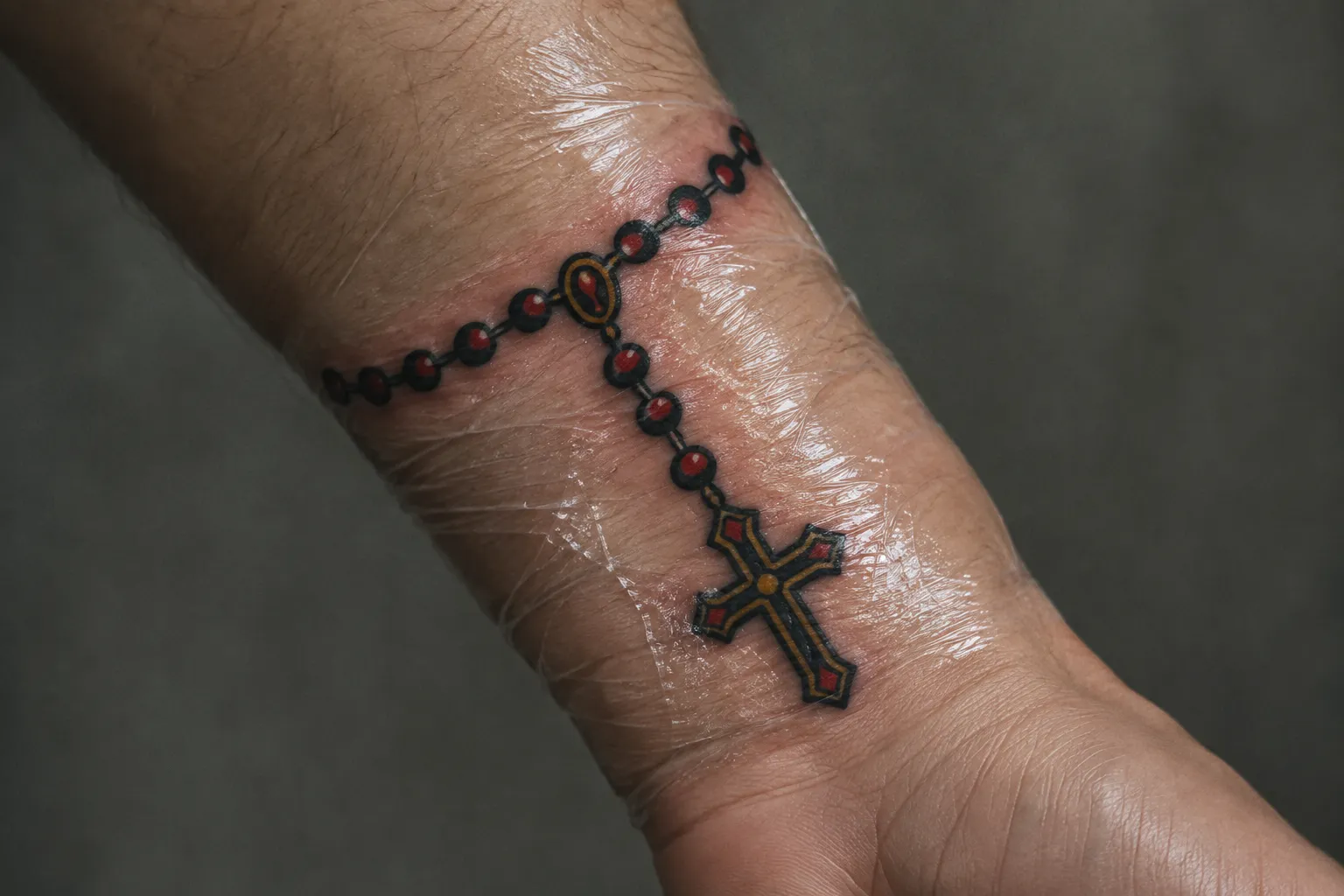
First Weeks: Washing and Flaking
Follow your artist’s specific instructions first, since wrap and film methods vary by studio. The general timeline, the same one our tattoo aftercare guide uses, looks like this:
- Day 1-3: Wash gently twice a day with clean hands, mild fragrance-free soap and warm water, then pat dry with a clean paper towel (4) and apply a thin layer of moisturizer. Keep your hand out of dishwater and away from rough work. Expect some redness, soreness, and a little oozing of blood and ink (4).
- Day 4-7: The tattoo tightens and starts to flake. Keep washing twice daily without scrubbing (4). Avoid soaking it in baths, pools, or hot tubs (4). On a hand piece, wear loose gloves for dirty jobs, but don’t seal a fresh tattoo inside a tight glove for hours.
- Week 2: Peeling and itching peak. Let flakes and scabs fall away on their own; picking or scratching irritates the tattoo (4) and can pull ink out with the scab, leaving pale spots in the beads. Pat or tap an itchy spot instead of scratching.
- Week 3-4: The surface looks healed, with a slightly shiny or cloudy layer still sitting on top, while the deeper skin keeps remodeling.
- Week 6 and beyond: The tattoo has settled in, but the bottom layers of skin can take several more months to heal completely (4).
Hand pieces are the hardest to get through this window cleanly. Every handwash strips moisturizer and softens scabs, every fist stretches the skin. If you have a choice in timing, book a hand rosary for a stretch when you can avoid heavy manual work, gardening, or a job with constant handwashing.
Sun Protection After It Looks Healed
UV exposure is one of the main reasons tattoo ink fades: the AAD advises protecting tattooed skin from the sun because UV light can fade some inks (1), and Cleveland Clinic notes that sunlight can make ink look washed out (4). For the first 4-6 weeks, keep the tattoo out of direct sun and cover it with clothing; sunscreen comes after that window.
The mistake is skipping sun protection once the tattoo looks healed. That healed look around weeks 3-4 is the surface. The bottom layers of skin can take several more months to heal (4), and that window is exactly when people stop being careful. A wrist or hand rosary sees more daylight than almost any other tattoo you can get: driving, walking, holding a phone, sitting near a window.
Once that 4-6 week window has passed, make a broad-spectrum, water-resistant sunscreen with SPF 30 or more part of your routine on the hand and wrist, reapplied at least every two hours (1) and after handwashing, which removes it. For long outdoor days, sun-protective clothing such as UPF sleeves or lightweight gloves adds cover. The payoff shows in the details: crisp bead outlines, readable highlights, and a cross that still looks black instead of soft grey-green.
Tattoo Laws and Studio Requirements Before You Book
Tattoo licensing rules differ by state: Texas requires the tattoo business itself to be licensed (7), while Oklahoma requires licensed tattoo artists to be at least 18 and to hold current bloodborne pathogen, first aid, and CPR certifications (6). Don’t assume the rules you know from one state travel with you. Check the regulations where you will be tattooed, especially if you are booking a guest artist or getting work done while traveling.
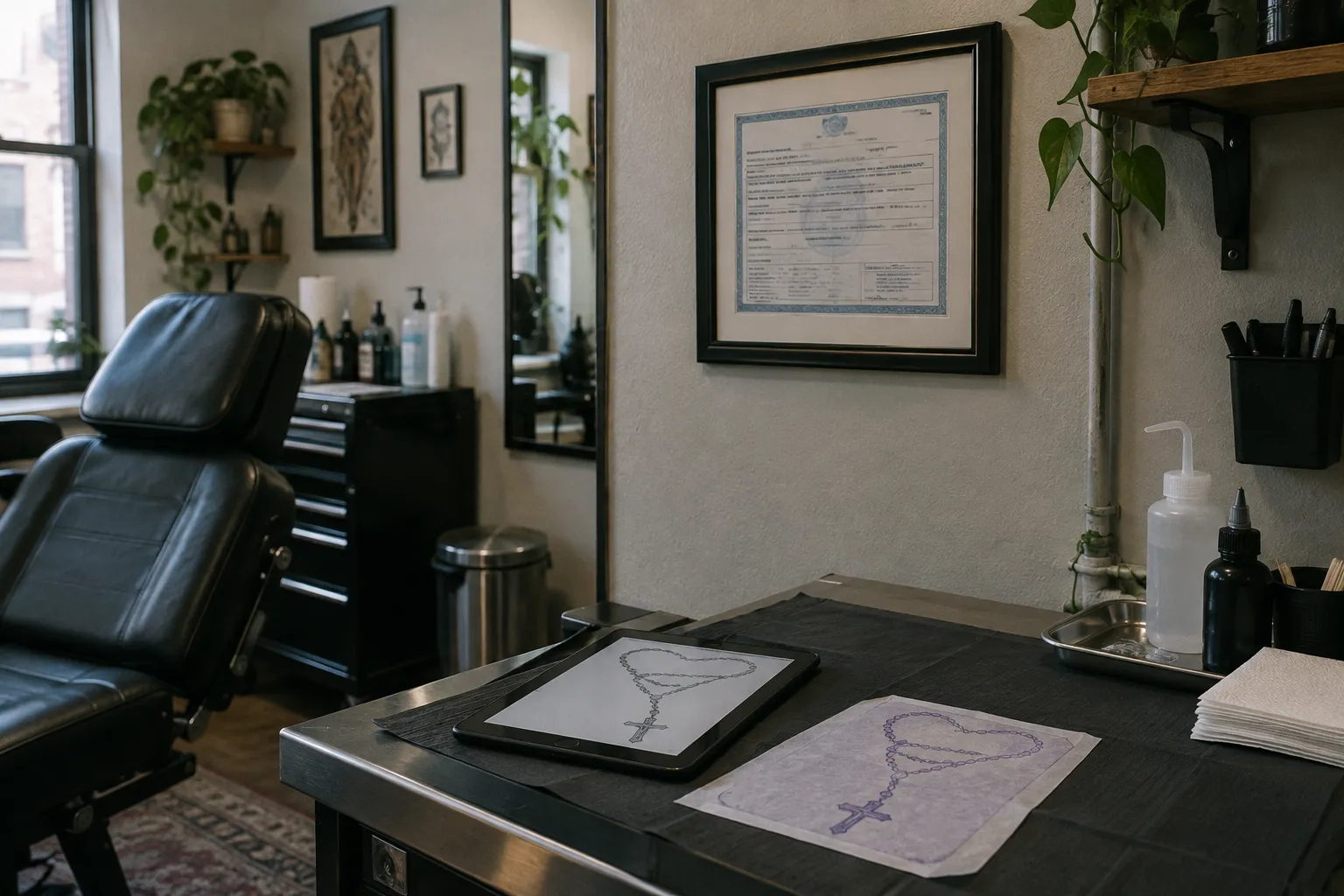
In practice, that means a quick check before you commit. Texas, for example, offers a public license search for tattoo studios (7) and requires a studio’s license to be displayed in a prominent place in the studio (12). Ask the shop if you can’t find it. A licensed shop will tell you without hesitation.
Once you’ve confirmed the studio, the consult is where the rosary gets planned. Bring:
- A placement photo: a picture of your actual wrist, hand, or forearm, so the artist can sketch onto your proportions instead of a generic arm
- Your intent: devotional, stylized, or tribute, and whether you want a full rosary, a partial decade, or a bracelet-like wrap
- Reference images: two or three rosary designs you like, plus any personal object you want copied, such as a family rosary
- Your orientation preferences: where the cross sits, which way the strand drops, and where the bead sequence should land when your wrist or hand moves
Agree on that last point explicitly. A rosary is a long, connected composition, and the cross’s position decides how the whole piece reads. Settle it at the consult, then confirm it again during the stencil check with your hand in motion.
Frequently Asked Questions
- Is it okay to have a rosary tattoo?
- There is no single Christian answer: some read Leviticus 19:28 as a ban on tattoos and others tie it to its era, so if your parish or church community has a settled position, ask before you book.
- What is the meaning of a rosary tattoo?
- A rosary tattoo can signal Catholic devotion, remembrance, or a preference for the bead-and-cross design; outside Catholic prayer, its meaning is personal rather than fixed.
- What tattoo mistakes should you avoid with a rosary design?
- Check the stencil while your hand moves, and reject bead spacing that looks crowded at your actual viewing distance; a flat drawing can hide both problems.
- Can a rosary tattoo be partial instead of the full five decades?
- Yes. A partial rosary tattoo can be an intentional design; decide which prayer elements matter to you before the artist simplifies the strand.
- How long before a hand or wrist rosary is fully healed?
- The surface usually looks healed around weeks 3-4, but the deeper skin keeps healing for months; keep it out of direct sun for the first 4-6 weeks, then use SPF 30 or higher.
- Do hand and wrist tattoos fade faster than forearm ones?
- Hand and wrist rosaries are more exposed to everyday sun and friction; an upper-arm placement is easier to cover with clothing during outdoor exposure.
- What are some tattoos to avoid?
- Avoid any design copied straight from someone else's custom work, lettering too small for the placement to hold its shape, and trendy motifs you can't explain the meaning of a year later. More generally, skip a design you haven't seen mocked up on your own skin in motion, since a flat sketch can hide spacing or legibility problems that only show up once it's placed.
Choosing Your Rosary: Intent First, Then Placement
Start with intent. A devotional rosary needs structure: a crucifix, the opening beads, and as many of the five decades as the space allows at a readable size. A stylized bead-and-cross design can loop and drop however it suits your body. A tribute needs a personal marker, such as a date or initials, sized to the letter-height floors so it doesn’t blur.
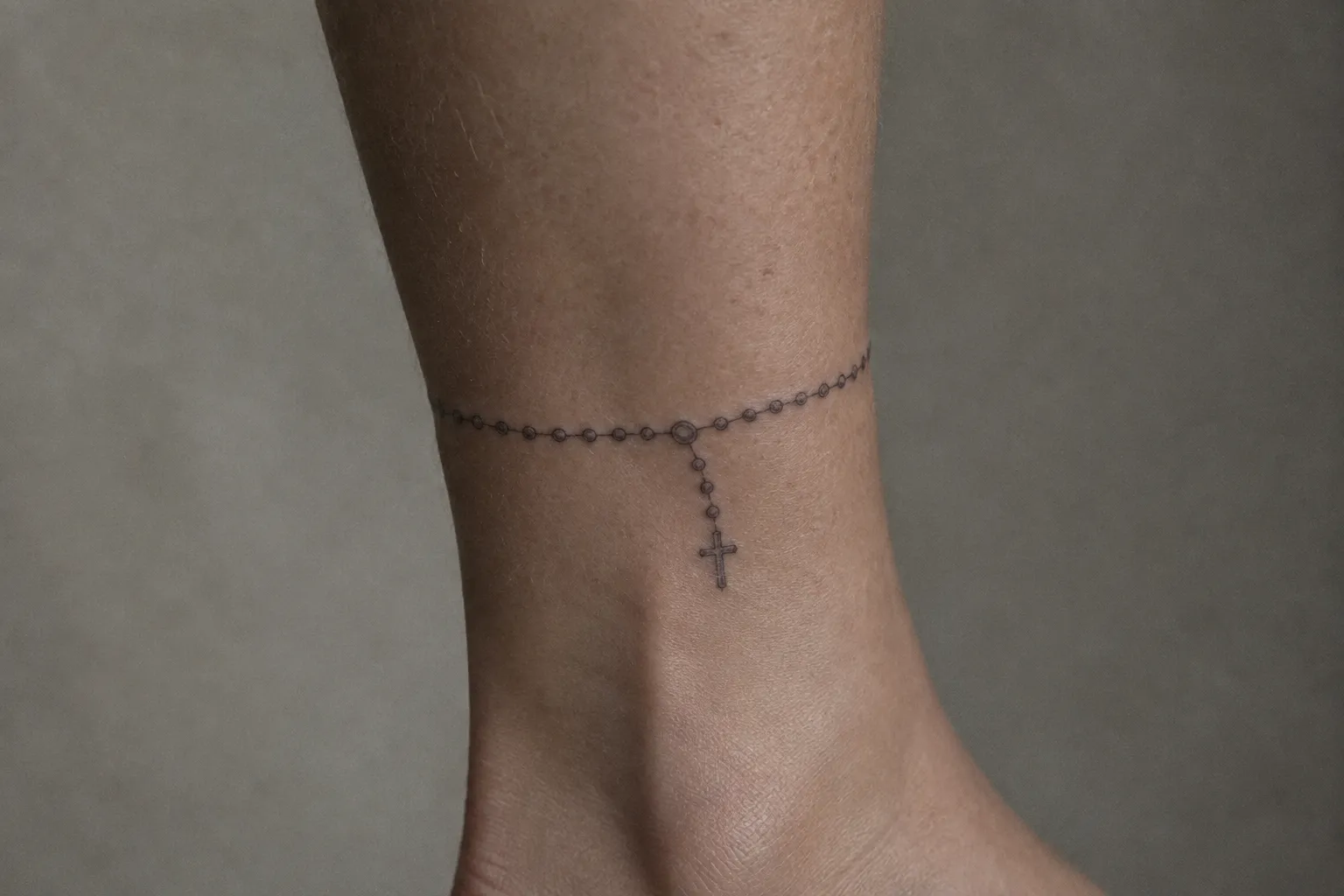
Then pick placement with that intent and the healing reality in mind. A wrist bracelet or hand trail gives you the draped, jewelry-like look, but it needs a motion check before you book, careful healing while you keep using your hands, and sunscreen on the hand and wrist for as long as you want the beads crisp. A forearm or upper-arm rosary fits the full structure and is easier to keep out of the sun than a wrist or hand piece, which helps it hold its color over time.
Before any of it, confirm the studio is licensed under the rules where you’re getting tattooed, bring a placement photo to the consult, and agree on exactly where the cross sits when your wrist bends.