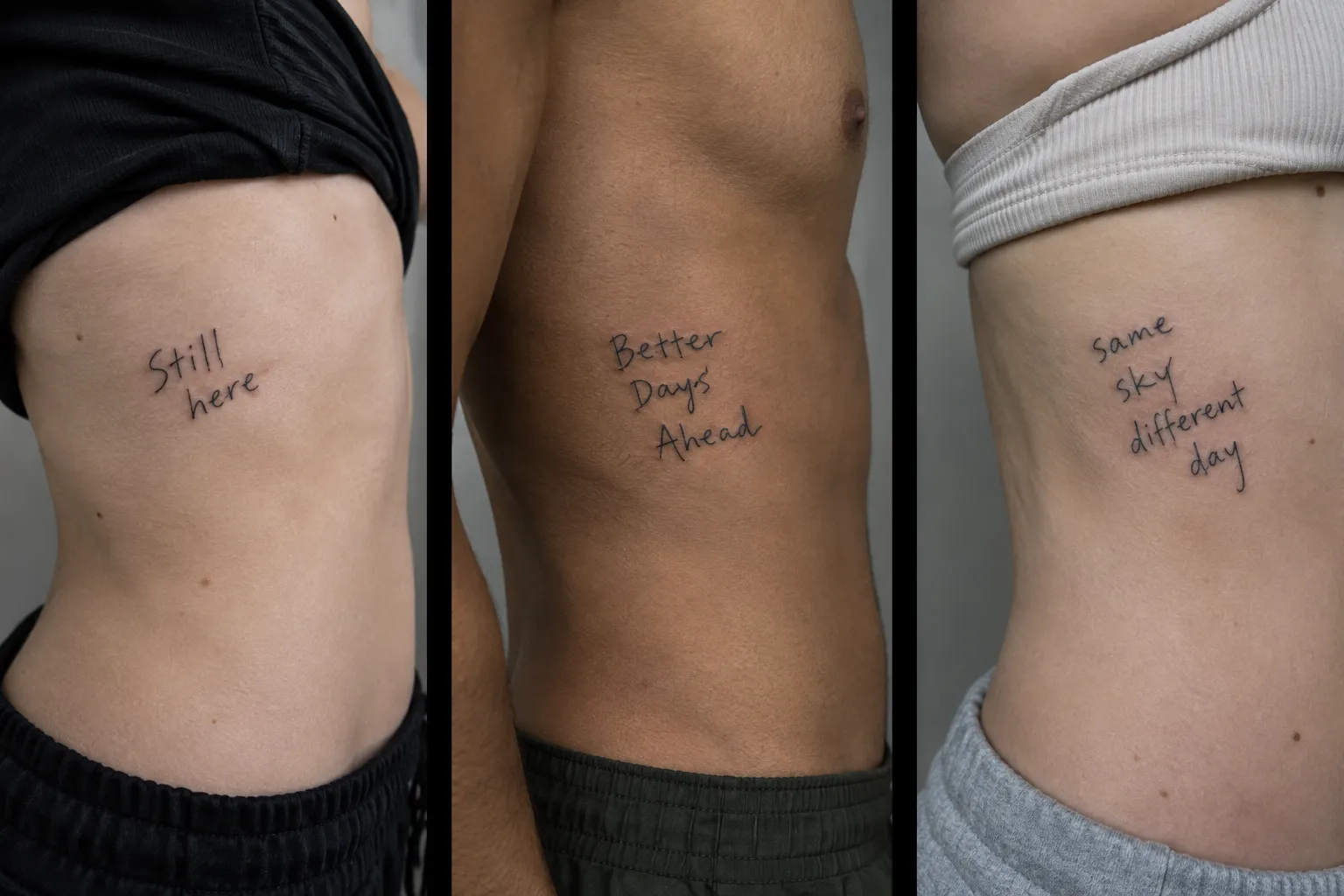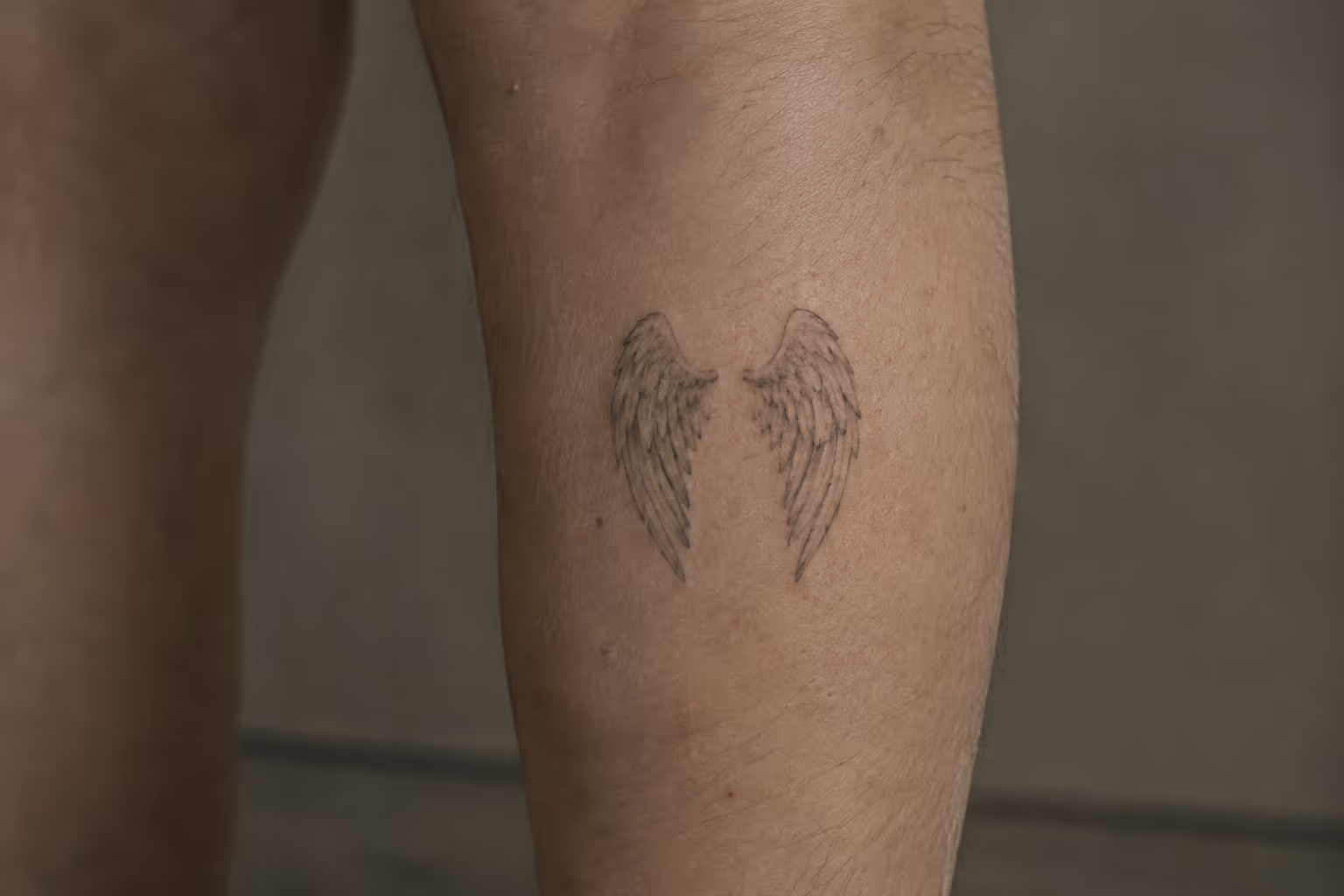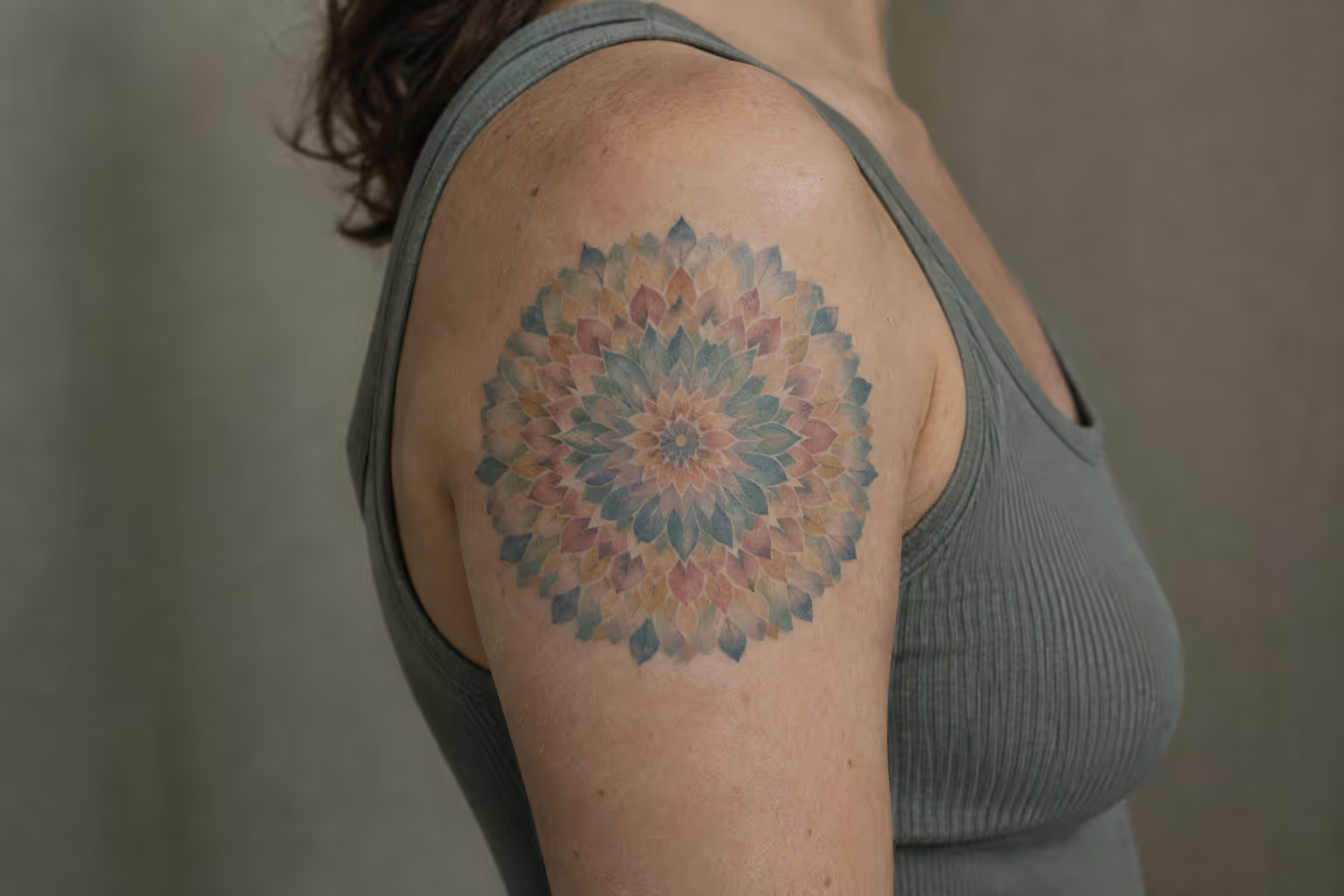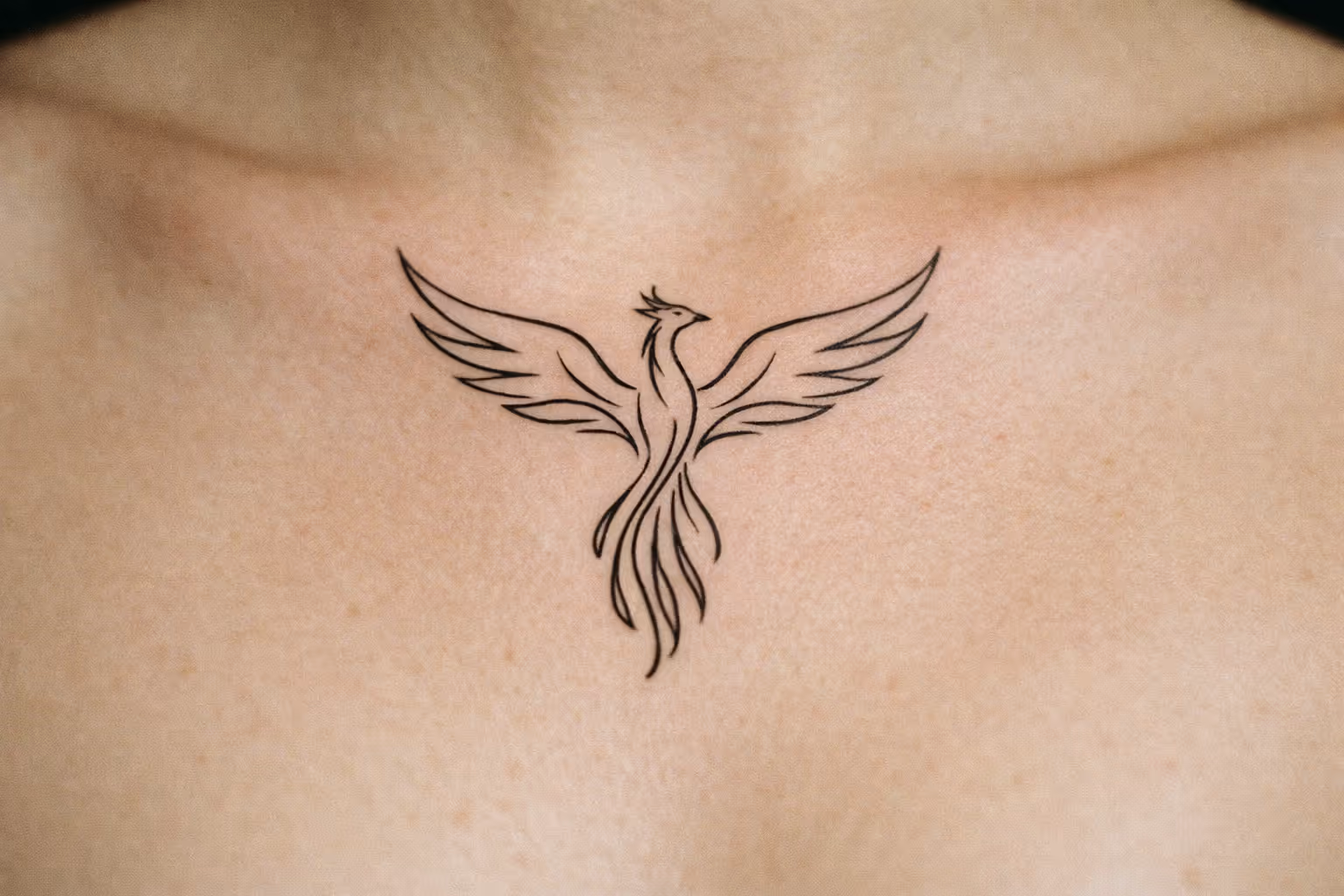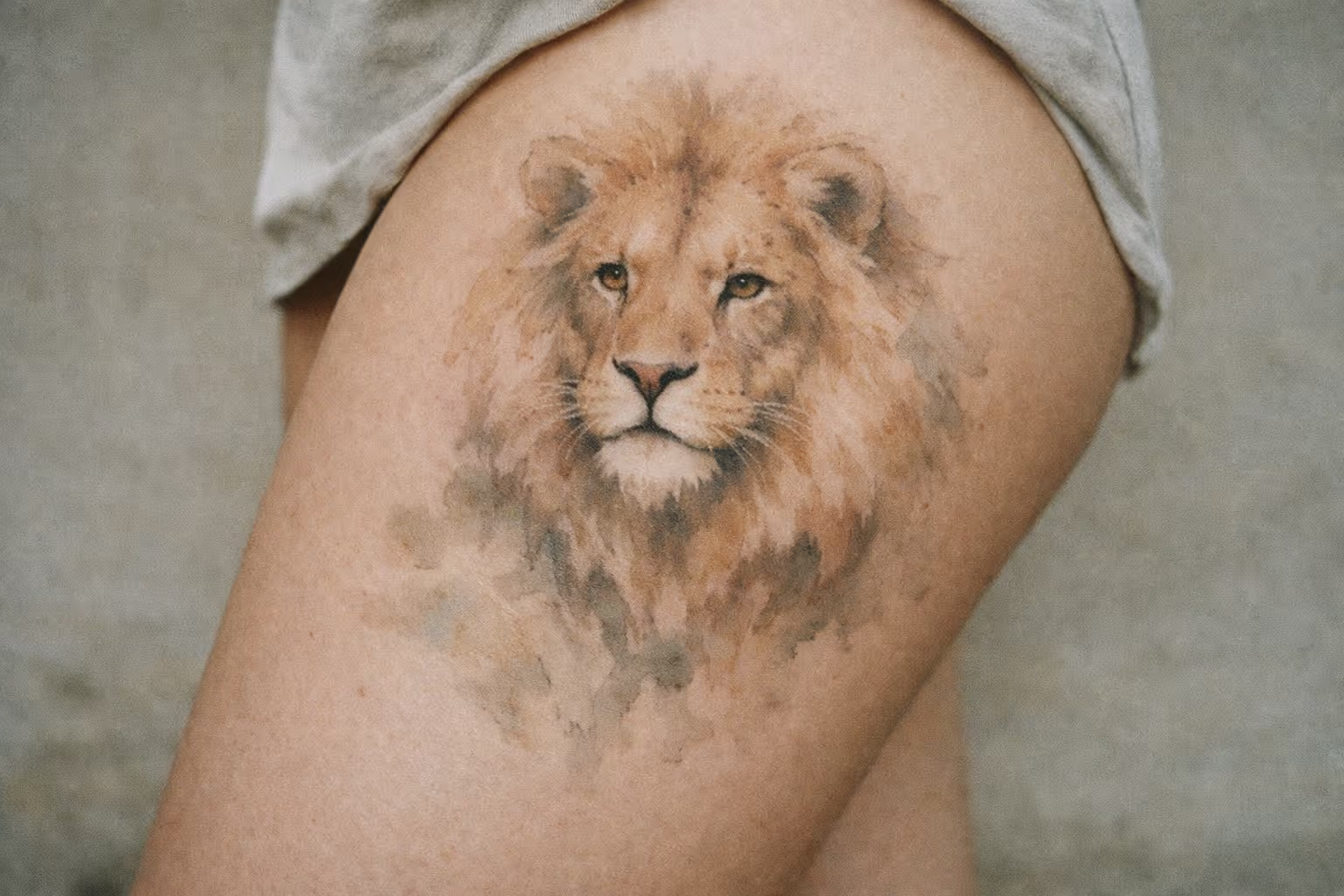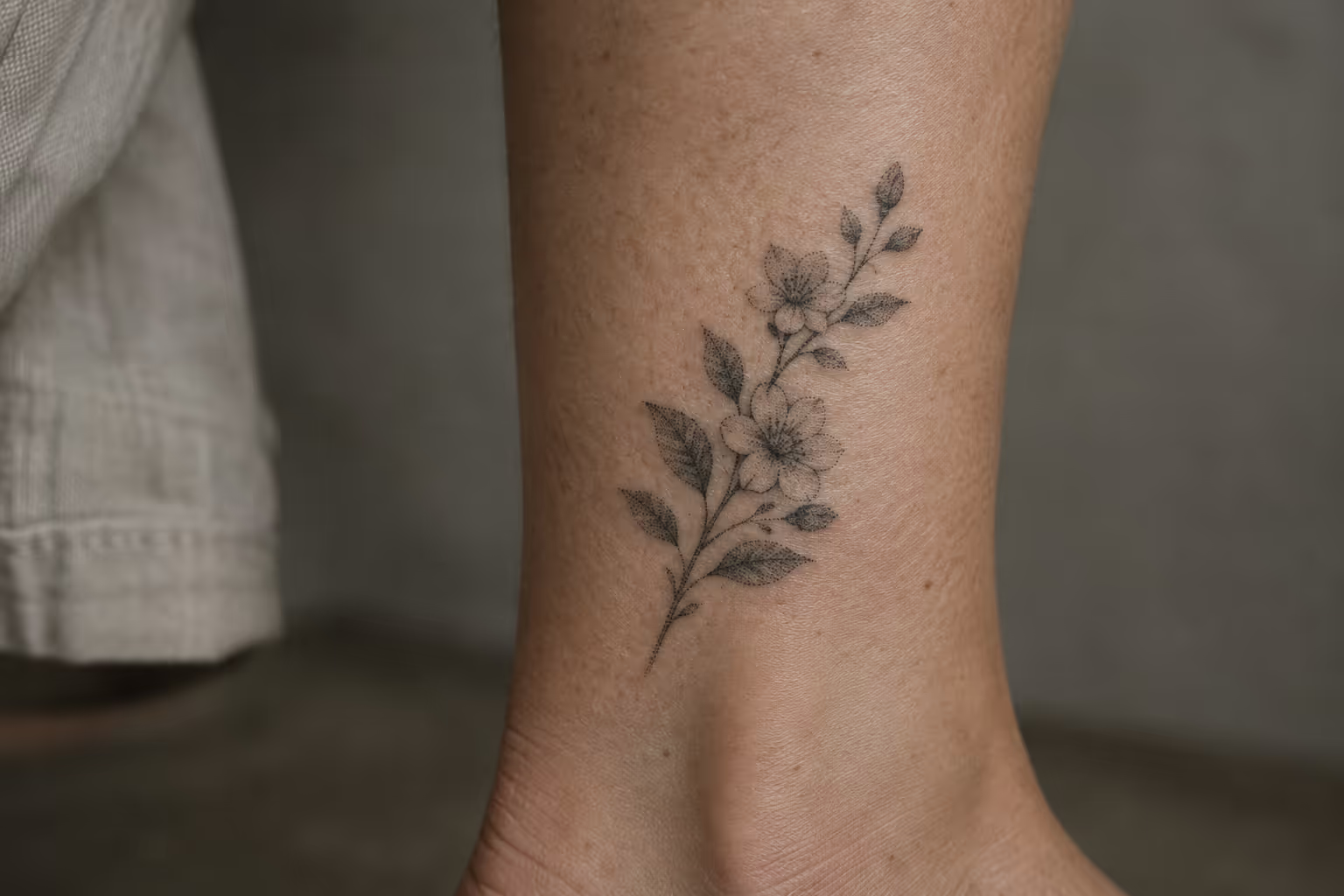
Meaningful tattoos start with a reason, and the symbol comes second. The semicolon shows how that works. It traces to Project Semicolon, a mental health nonprofit Amy Bleuel founded in 2013 in memory of her father, and the punctuation mark stands for a sentence the writer could have ended but chose to continue (1). A symbol’s public meaning and what it needs to mean to you are two different things. When people treat them as the same thing, they often end up regretting the tattoo.
✓ Pros
- A private reference can stay meaningful without needing strangers to recognize it.
- A clear symbol can give you a simple way to explain what you chose.
- A personal reason can guide design choices like scale, placement and line weight.
✗ Cons
- A symbol chosen mainly because it is trending may stop feeling personal.
- A familiar motif can carry cultural meanings beyond the one you intended.
- Fine details can merge as a small tattoo ages, changing what the design communicates.
- The symbolism does not remove the ordinary ink and infection risks of getting tattooed.
What makes meaningful tattoos work for you
A tattoo carries meaning for you when your own reason comes first and the symbol’s public reputation serves as a starting point. Strangers will read the public meaning. You are the one who will look at it every morning.
The tradeoffs are straightforward. On the plus side, a symbolic tattoo can mean something specific to you. It can stay private or be easy to read, and it gives you an easy answer when someone asks. On the minus side, a design picked because it’s trending carries more regret risk. Cultural motifs come with context you may not know. Fine detail blurs at small sizes. And every tattoo has ink and infection considerations that have nothing to do with meaning.
Personal meaning vs. a symbol’s public reputation
Meanings are often tied to particular traditions and communities, so the dictionary definition of a symbol may not match what it means where it came from (4). A Hamsa means something different to a family in Morocco than it does on a Pinterest board. The fix is simple. Write the meaning down in one sentence before you book. If you can’t say what the tattoo marks, the symbol isn’t doing that job yet.
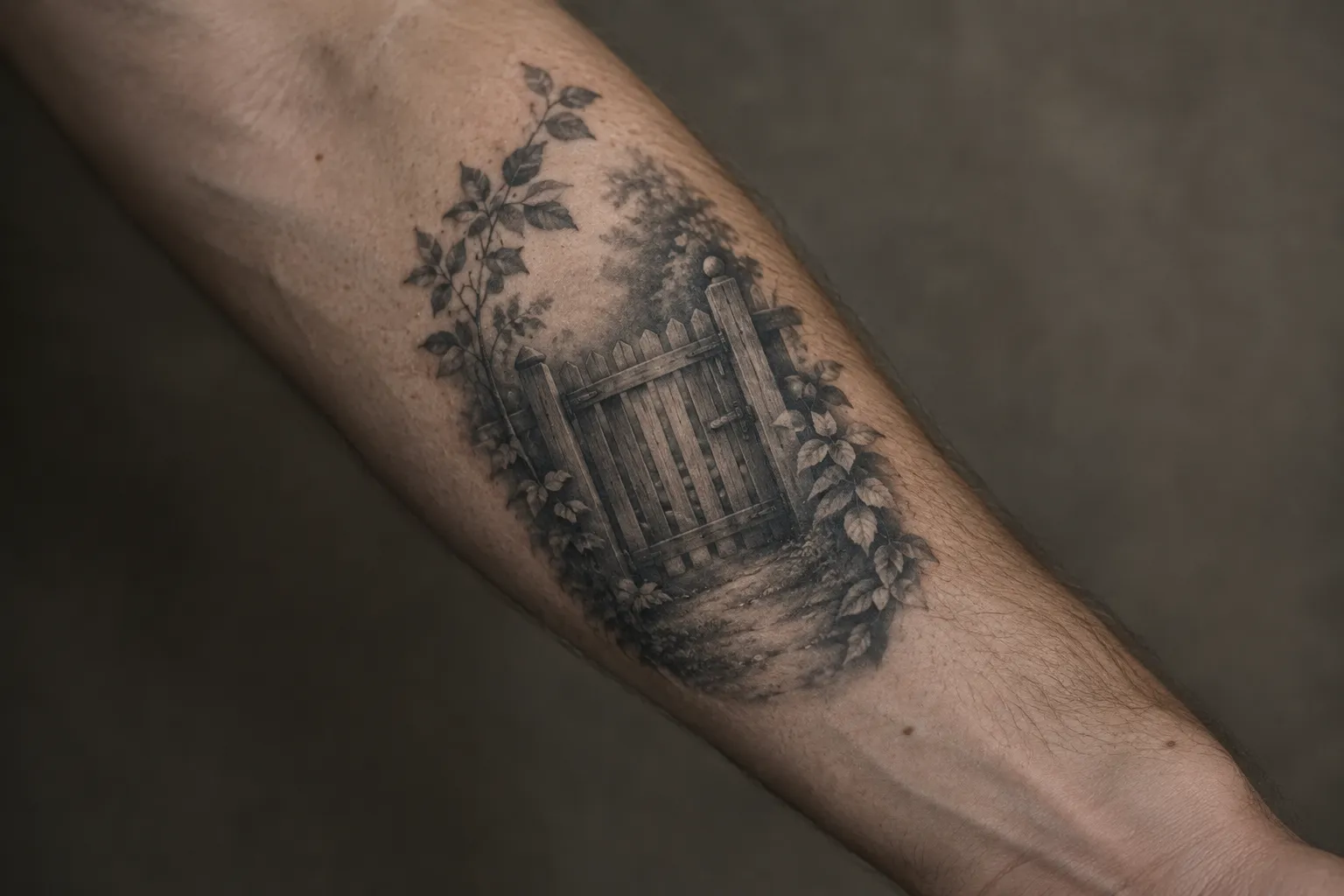
Then decide whether the design should be legible to others or private. A semicolon is widely recognized in mental health circles. An abstract line drawing of your grandmother’s garden gate means nothing to anyone but you. Both are valid choices, but they lead to different sizes and placements.
Why there’s no single ‘most powerful’ tattoo symbol
There is no single most powerful tattoo symbol. The lotus, the Hamsa and the semicolon each carry different public associations and different cultural depth, and nothing ranks them in any measurable way. A list that names a “most meaningful tattoo” is ranking popularity. A design gets its weight from what it marks for you and how well it’s executed.
Before you book the session, work through the steps below in order.
How to choose a meaningful tattoo
Work from your own reason to a design that fits its context, size and placement.
- 1
Write down the meaning
Put the reason you want the tattoo into one sentence you can still stand behind outside the moment.
- 2
Choose how public it should be
Decide whether strangers should recognize the symbol or whether its meaning can stay personal.
- 3
Check the symbol's context
Research its cultural origin and ask a knowledgeable artist or community member about meanings your sources may miss.
- 4
Test the design at actual size
Ask your artist to place a true-size mock-up on the intended spot and check that the details remain distinct.
- 5
Ask about studio practices
Confirm how ink is stored and dispensed, whether needles are single-use, and how reusable equipment is sterilized.
Semicolon, lotus and hamsa: tattoos with deep meaning explained
The semicolon, the lotus and the Hamsa come up again and again in guides to tattoos with deep meaning. Each comes from a different context: a 2013 nonprofit, two major religious traditions, and a protective charm from the Middle East and North Africa.
Semicolon tattoo meaning and its 2013 origin
The semicolon tattoo means choosing to continue. Bleuel built Project Semicolon around the image of an author who could have ended the sentence and didn’t. People now wear it for their own survival, for someone they lost, or as a mark of support (1).
The design is a dot over a comma, which makes it easy to tattoo and easy to tattoo badly. One semicolon guide warns that when the dot and the comma sit too close at too fine a line weight, they tend to merge as the ink settles over the years, and that slightly heavier linework or a few extra millimetres of size buys a lot of longevity (1). The same guide names the inner wrist, behind the ear, the inner forearm, the collarbone and the ankle as the most requested placements, and notes that the wrist takes more sun and friction than most spots (1).
Lotus tattoo symbolism in Buddhist and Hindu contexts
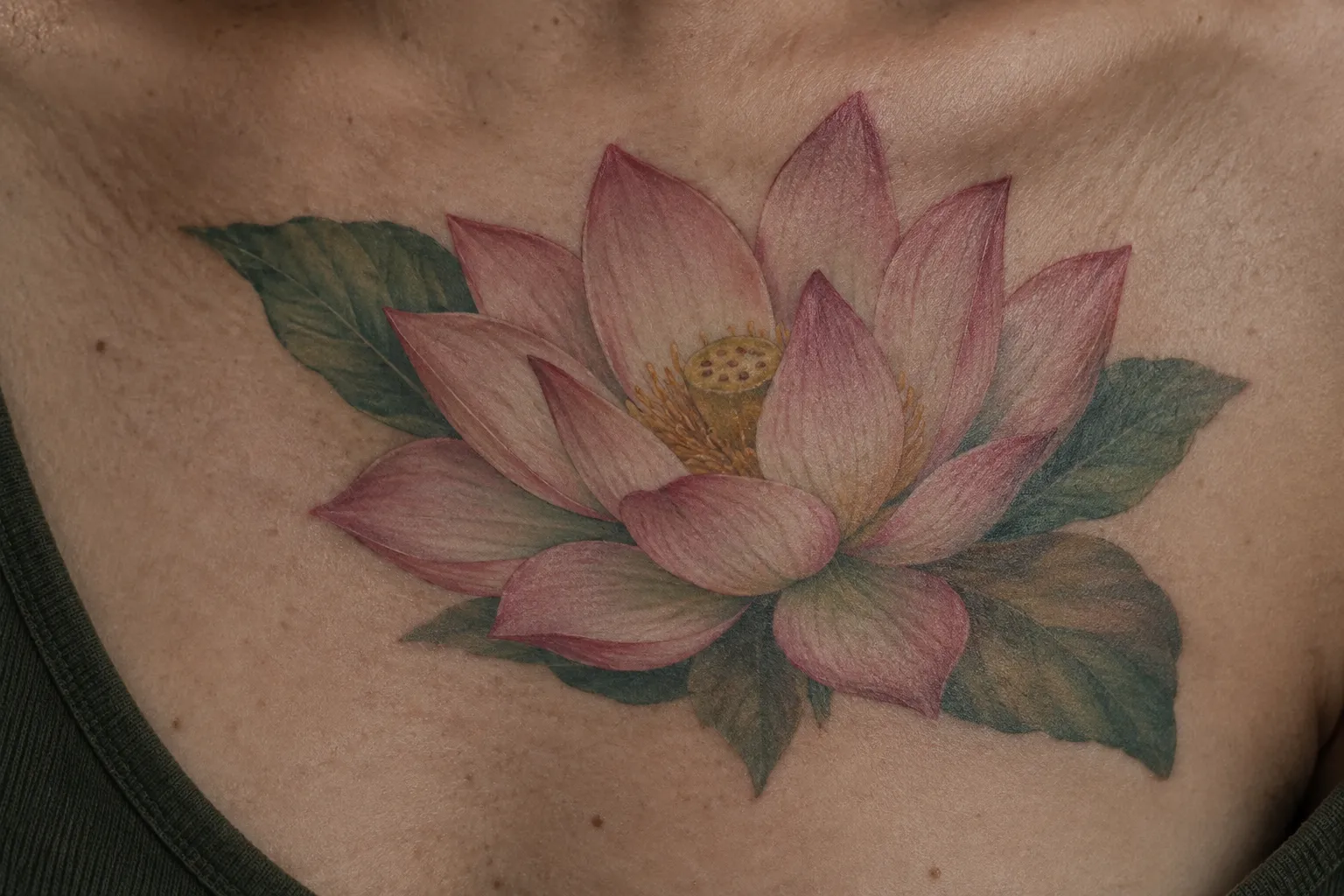
One meaningful-tattoo guide notes that the lotus is considered sacred in Buddhism and Hinduism, where it symbolizes peace and purity, and presents it as a reminder to seek spiritual awakening (3). The image comes from a flower rooted in mud that opens clean above the water. In Hindu iconography, deities such as Lakshmi and Vishnu are shown on or holding lotuses, and in Hindu and Buddhist art a stylized lotus throne is the usual seat for divine figures. Lotuses are also among the traditional flowers of Japanese irezumi, where Buddhist imagery is a classic subject.
Those summaries are not a complete account of either tradition. In modern Western tattooing, the lotus has drifted toward a general “recovery and growth” meaning, because it grows through mud and opens anyway (1). That’s fine as long as you know you’re using the drifted version. A petal-heavy lotus needs room on the forearm, sternum or upper back. At a small size, simplify it to a few clean petals, or it reads as a blob within a few years.
Hamsa hand protection and its Middle Eastern/North African roots
One meaningful-tattoo guide traces the Hamsa to Middle Eastern and North African cultures, where it is used as a talisman for protection and good luck (3). Also called the Hand of Fatima, it is believed to guard against the evil eye, and Sephardi and Mizrahi Jewish communities call the same hand the Hand of Miriam, so a single fixed religious reading would be wrong. In the West it often gets flattened into general good luck.
The Hamsa is symmetrical, and symmetry shows every distortion. Put it on flat, stable skin such as the outer forearm, the upper back between the shoulder blades, or the back of the neck, and size it so the fingers and any eye detail stay distinct. The ribcage stretches and twists, which warps a symmetrical hand. The ribcage also hurts more than the forearm.
Before you adapt any of these motifs, check the context. In Indigenous North American tattooing, for example, meanings are often tied to a specific nation, family, life stage or ceremonial context, and some designs are not meant for outsiders at all (4). Ask your artist where a reference comes from and whether it resembles a protected cultural marking before you adapt a motif tied to ceremony (4).
Butterflies, flowers and animal symbols explained
Nature motifs carry the oldest and most varied meanings in tattooing. A butterfly, rose or koi can mean different things in Japanese, American traditional and modern Western contexts.
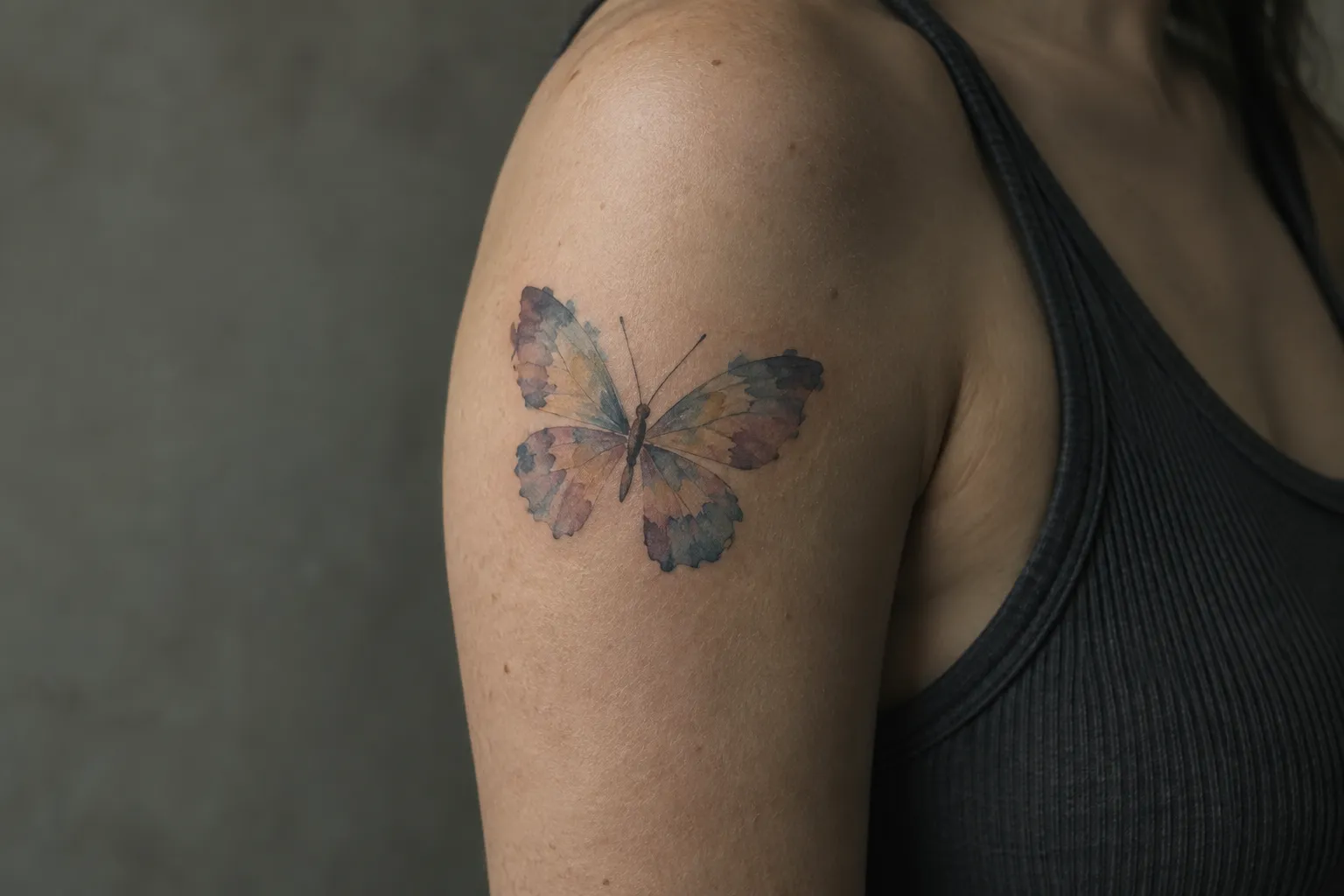
Butterfly tattoo transformation meaning
In modern Western tattooing, the butterfly stands for transformation, from caterpillar to chrysalis to wings. Older readings run deeper. The ancient Greek word psyche meant both soul and butterfly. In Japanese tradition, butterflies are linked with the souls of the living and the dead. No single butterfly meaning holds across cultures.
Butterflies pair well with other symbols. One recent semicolon guide features designs where the semicolon forms the butterfly’s body (1). Fine wing veining needs room, so on a small butterfly ask for a clean silhouette instead. The shoulder blade or outer ankle both work.
What flower tattoos represent
Flower tattoos represent different things depending on the flower and the tradition:
- Rose (American traditional): love and devotion, usually done with thick black outlines and a limited red-green palette that holds up well as it ages.
- Cherry blossom (Japanese): the brevity of life, because the blossoms come and go so quickly.
- Peony (Japanese irezumi): nobility, courage and good fortune, which is why the peony is a staple of Japanese work.
- Birth-month flowers (modern Western): a personal reference to a person’s birthday, popular in fine line.
A common pitfall is tiny watercolor flowers with no black outline. They look soft when fresh and fade into faint stains once healed.
What animal and bird tattoos symbolize
Animal and bird tattoos symbolize traits borrowed from specific cultures. The koi in irezumi stands for perseverance, drawn from the Chinese legend of the carp that swims up a waterfall and becomes a dragon. The swallow is a staple of sailor-style tattooing and is popularly read as a safe return home, though many of these sailor “traditions” can’t be traced very far back (10). The eagle in American traditional reads as freedom and patriotism. Owls stand for wisdom in Greek tradition (Athena’s bird) and serve as death omens in others.
The wolf needs a flag. Its popular “spirit guide” meaning is often pinned on Native American traditions as a generic glossary entry. That approach strips the symbol from the nation, language and ceremony it came from (4).
When you combine motifs, ask for space between the elements. One semicolon guide warns that when paired elements crowd each other, the whole design reads as noise (1).
Tattoo ideas for life chapters, faith and relationships
Meaningful tattoo ideas fall into four working groups: life chapters, faith, numbers or ancient symbols, and relationships. Find the group that matches your reason, then narrow down.
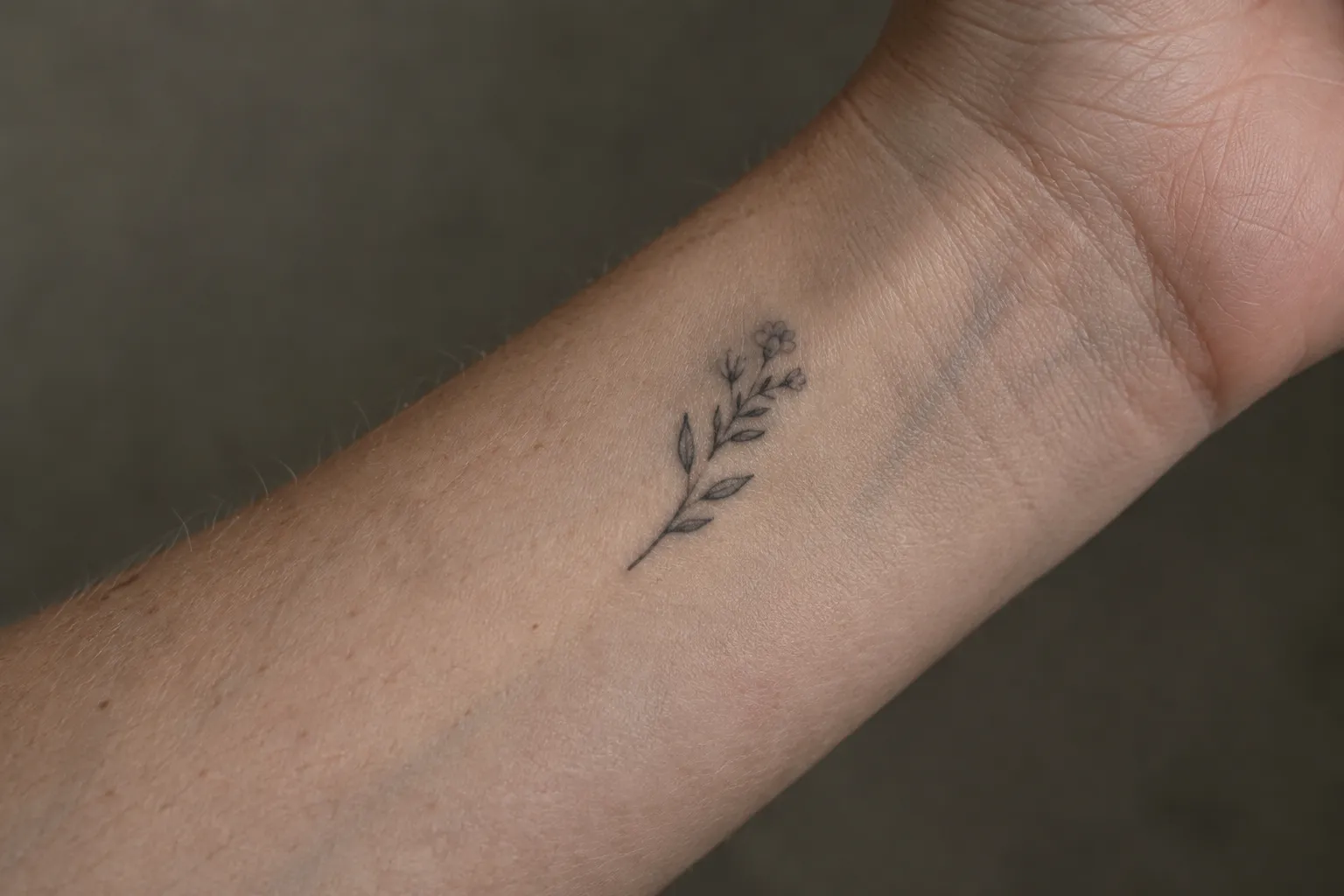
Marking a life chapter or survival story
The semicolon is the best-documented survival symbol, and it hasn’t spawned a formal catalog of “chapter” tattoos. That leaves you free to work from your own references:
- the coordinates of a hospital, hometown or finish line
- a date in Roman numerals
- a sunrise for a first day sober or a first day cancer-free
- a plant from a childhood home
- a loved one’s handwriting, scanned from a letter
Handwriting is ornate script, so size it at about 1 in (25 mm) letter height on the inner forearm or upper arm. Anything smaller fills in over time.
Religious and spiritual symbols
Religious tattoos include the cross, Om, the dharma wheel, the Star of David, rosaries and the lotus. Placement matters as much as the design. Buddha images were traditionally tattooed only on certain parts of the body, and in several Buddhist countries a Buddha tattoo shown outside those norms has led to barred entry or deportation. Judaism traditionally prohibits tattooing and Islam generally discourages it, though views vary within both (12). If the symbol comes from your own faith, ask someone in that community. If it doesn’t, ask twice.
Numbers and ancient symbols: 444 and Viking runes
A 444 tattoo comes from modern “angel number” numerology, where repeating 4s are read as protection, encouragement, or a sign you’re on the right path. This is a recent belief, popularized in the 2000s, not an old tradition. In Chinese, Japanese and Korean, the number 4 sounds like the word for death, so 444 can read badly to a large part of the world. Keep numerals at least 1/4 in (6 mm) tall. On the wrist, use a block font.
Inguz (ᛜ) is a rune from the Elder Futhark, named for Ingwaz, a name tied to the Germanic god Ing. Much of the esoteric meaning now attached to runes comes from 19th- and 20th-century writers such as Guido von List rather than from Norse sources, which is worth knowing before you trust a list of “Viking meanings”. Runes from List’s system were later used in Nazi symbolism, so check a design before it goes on your skin (11). Runes work on the forearm or behind the ear.
Ideas for men and for couples
Symbols aren’t gendered, but men often ask for compasses, koi, eagles, runes and bold American traditional pieces on the forearm or chest. Those placements give heavy outlines room and age well. Pain on the chest is higher than on the outer forearm, and the sternum is higher still.
For couples, a shared reference beats a name: the place you met, two halves of one design, or a symbol from an inside joke. Names are a classic cover-up request.
Small tattoo placement, size and legibility
Meaningful small tattoos stay legible only when they’re sized to their finest detail. That rule matters most when two symbols are combined in a small space.
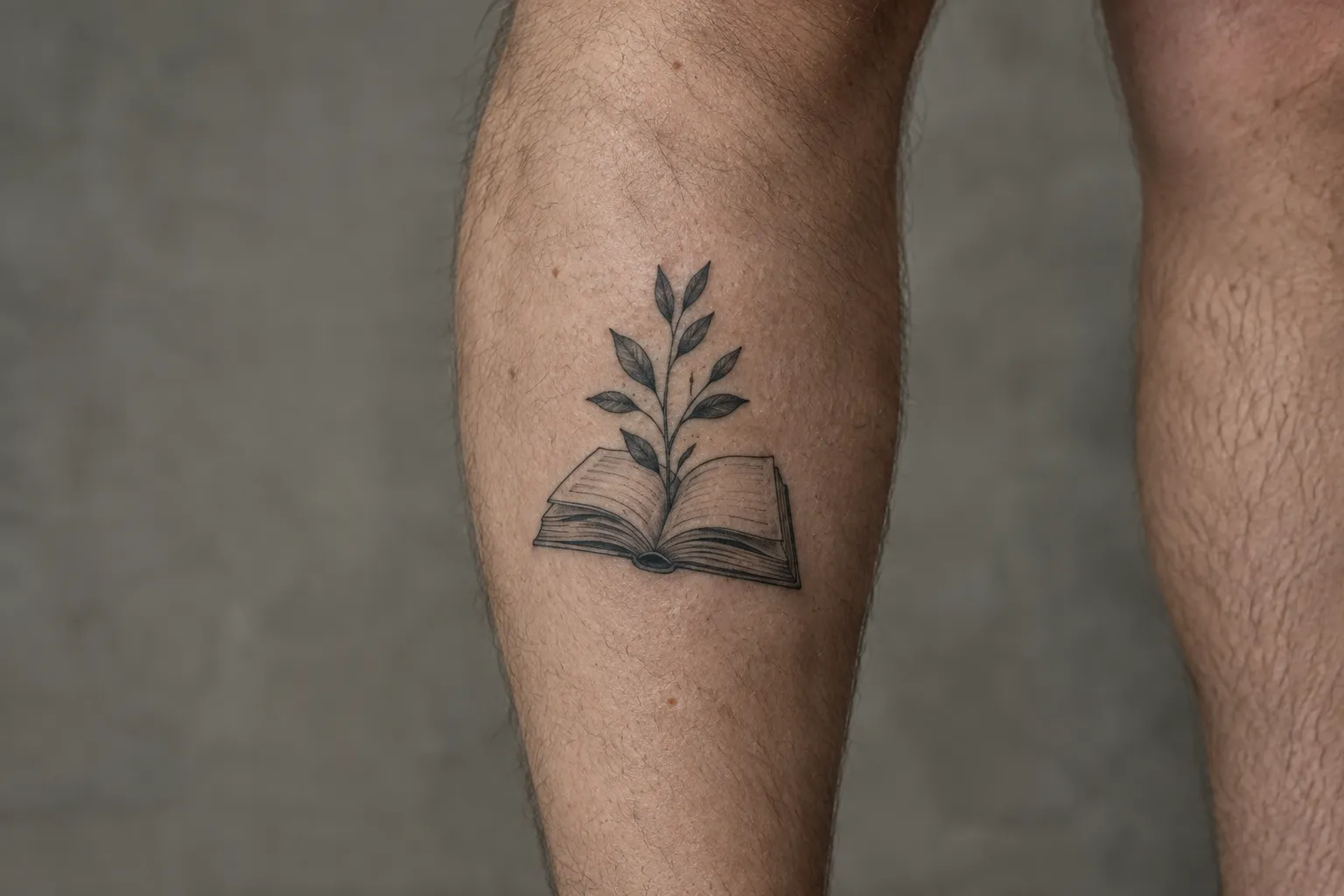
Testing size and placement before you commit
Ask your artist for a mock-up at the actual intended size and placement. Legibility and spacing decide whether a combined symbol stays distinct or blurs together (1). Have the stencil applied and look at it in a mirror from across the room. If you can’t tell what it is from there, the healed tattoo will be worse, because lines spread as the ink settles over the years (1).
Placement ages differently, too. Wrists, fingers and feet blur fine line fastest. The inner forearm, upper arm and back of the shoulder hold detail longer. On the wrist, only bold script or block lettering holds. Standard script needs at least 1/2 in (12 mm) of letter height everywhere.
Small symbol vs. narrative/custom design: which to pick
The choice comes down to privacy versus specificity (1):
- Small, discreet symbol. It keeps the message private but loses fine detail at tiny scale.
- Narrative or custom design. Adding a date, initials or a short phrase makes the reference more specific, but it needs extra space to stay legible.
Pick based on which matters more to you.
A third approach, a shared cultural or spiritual motif, also needs context work (4). The tradeoffs across all three are laid out below.
Compare meaningful tattoo design approaches
| Small, discreet symbol | Narrative or custom design | Shared cultural or spiritual motif | |
|---|---|---|---|
| Privacy | High | Lower | Variable |
| Legibility risk at small size | High | Moderate if sized properly | Lower when sized for detail |
| Space needed | Low | More space for text and details | More room for detail |
| Cultural-context care | Check whether the symbol has a specific cultural meaning | Depends on the references used | Research the origin and whether the design is appropriate to adapt |
Tattoo safety: ink, aftercare and when to call a doctor
The FDA reports that even unopened, sealed tattoo ink can carry bacteria and other microorganisms that cause infections. A sealed bottle is not proof that the ink is safe (6).
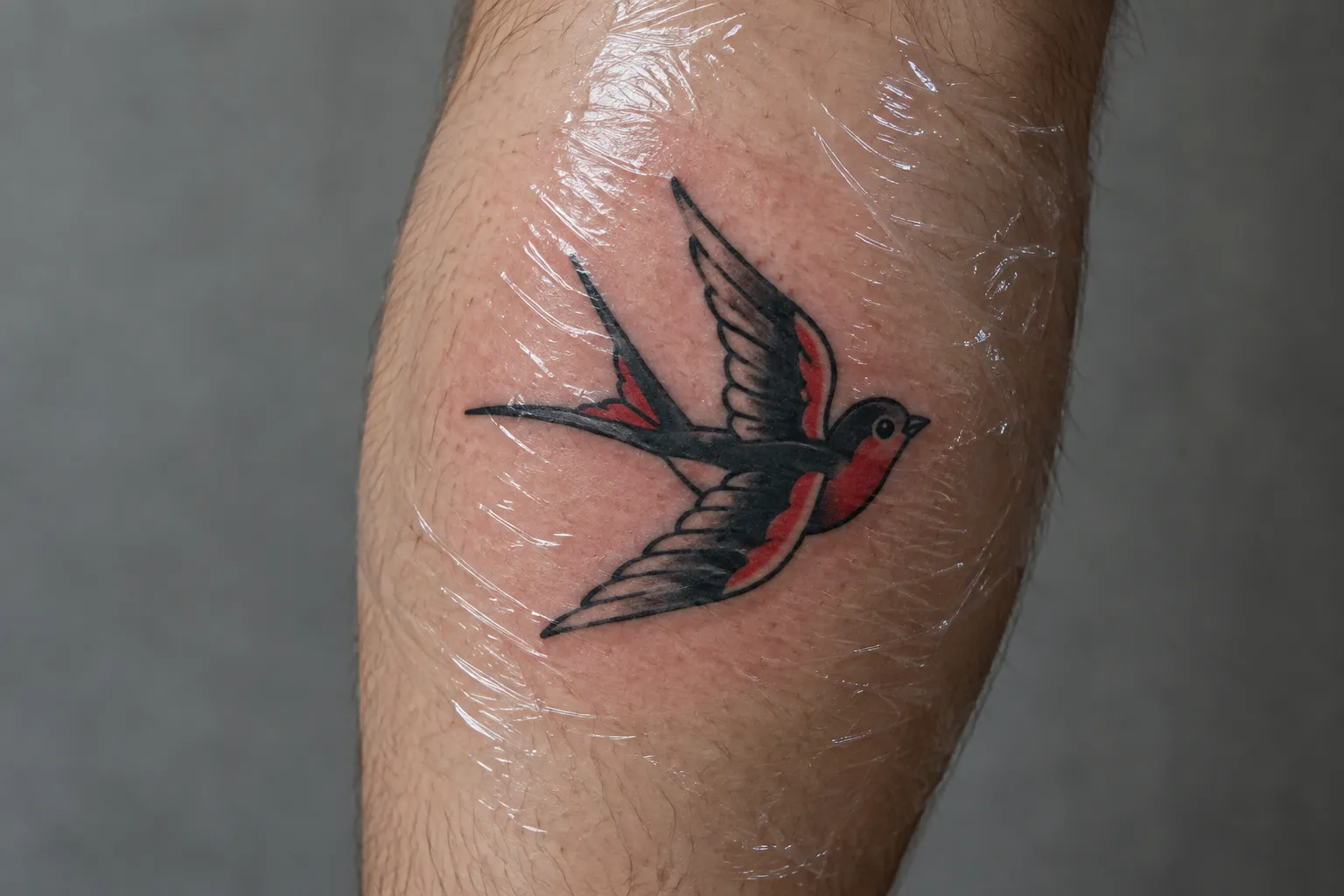
Why sealed ink isn’t proof of safety
Tattoo infections can come from contaminated ink, nonsterile equipment, or non-sterile water used to dilute pigments (6). Tattoo inks fall under FDA oversight as cosmetics, while state and local authorities regulate the tattooing itself (6). Because packaging alone proves nothing, ask the studio directly:
- How do you store and dispense ink?
- Do you dilute with sterile water?
- Are needles single-use and opened in front of me?
- How do you sterilize reusable equipment?
Also tell your artist about any medications you take. Anticoagulants reduce the blood’s ability to clot, and the NHS advises stopping them only on the advice of your GP or another healthcare professional (8), so talk to your prescriber before a session rather than skipping a dose on your own.
The artist should explain aftercare and the local discomfort to expect (6). A typical timeline looks like this:
- Days 1-3: keep the tattoo clean and covered as directed.
- Days 4-7: the skin tightens and starts to flake. Wash gently and apply a thin layer of fragrance-free moisturizer. Don’t pick at any flaking.
- Week 2: peeling and itching. Let the flakes fall off on their own.
- Weeks 3-4: the surface looks healed while the skin underneath keeps settling, until it integrates around week 6. Keep the tattoo out of direct sun with sun-protective clothing for the first 4-6 weeks.
Signs you should contact your artist or a doctor
Get medical advice if healing stalls, a rash or bumps appear, or you develop a fever (6). Then ask the studio for the ink’s brand, color, and lot or batch number. The FDA notes this information can help identify the cause and guide treatment (6).
What the regret statistics say before you commit
A 2024 cross-sectional survey of 181 tattooed people in Saudi Arabia found that 58% regretted their tattoo and 42.5% had tried to remove one (9). That isn’t a general-population rate: 95.6% of the participants were women, the eyebrows were the most common site, and the top reasons for removal were cultural causes, poor tattoo art and getting the tattoo young (9). Poor work and a choice you might outgrow are exactly what the checks above are meant to catch.
Frequently Asked Questions
- What makes a tattoo meaningful to the person wearing it?
- A tattoo feels meaningful when its wearer can name the personal reason behind it, whether or not strangers recognize the symbol.
- Can the same tattoo symbol mean different things to different people?
- Yes; a motif can carry different meanings across families, communities and traditions, while modern Western tattoo use may give it another reading.
- Does 444 have the same meaning everywhere?
- No; 444 is used as a protection or encouragement sign in modern angel-number numerology, but the sound of four is associated with death in several East Asian languages.
- Is there an objectively most powerful tattoo symbol?
- No symbol is objectively the most powerful; popularity rankings do not measure personal significance or the quality of the tattoo's execution.
- How should I check a symbol from another culture before choosing it?
- Identify the community and tradition it comes from, then ask a knowledgeable practitioner or community member whether its use is restricted or ceremonial.
- What should I do if a rash or bumps appear around a tattoo?
- Contact a doctor about a persistent rash, bumps, fever or stalled healing, and ask the studio for the ink's brand, color and batch number.
- How can I tell whether a small tattoo will stay readable?
- Check the finest detail at the intended size and placement; if the parts merge on a true-size stencil, simplify the design or give it more room.
Before you book: write it, test it, check the studio
A symbol’s public meaning gets you started, but your own reason is what makes the tattoo worth having. Write that reason down in one sentence. Have your artist mock up the design at true size on the actual placement, and walk away from anything that blurs from across the room. Then ask the studio how it handles ink and sterilizes equipment before you sit down. Those three checks will keep the tattoo legible as it ages.