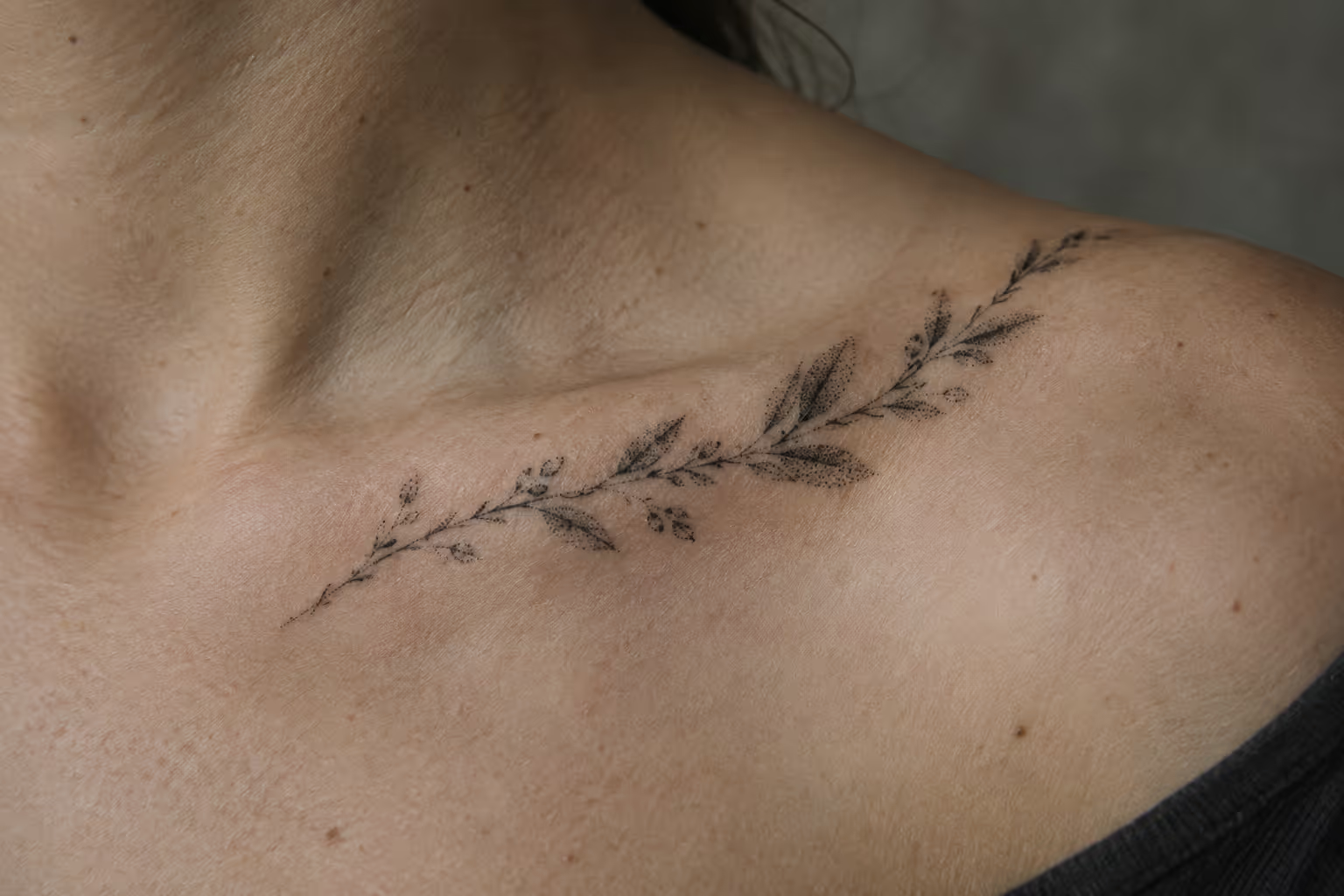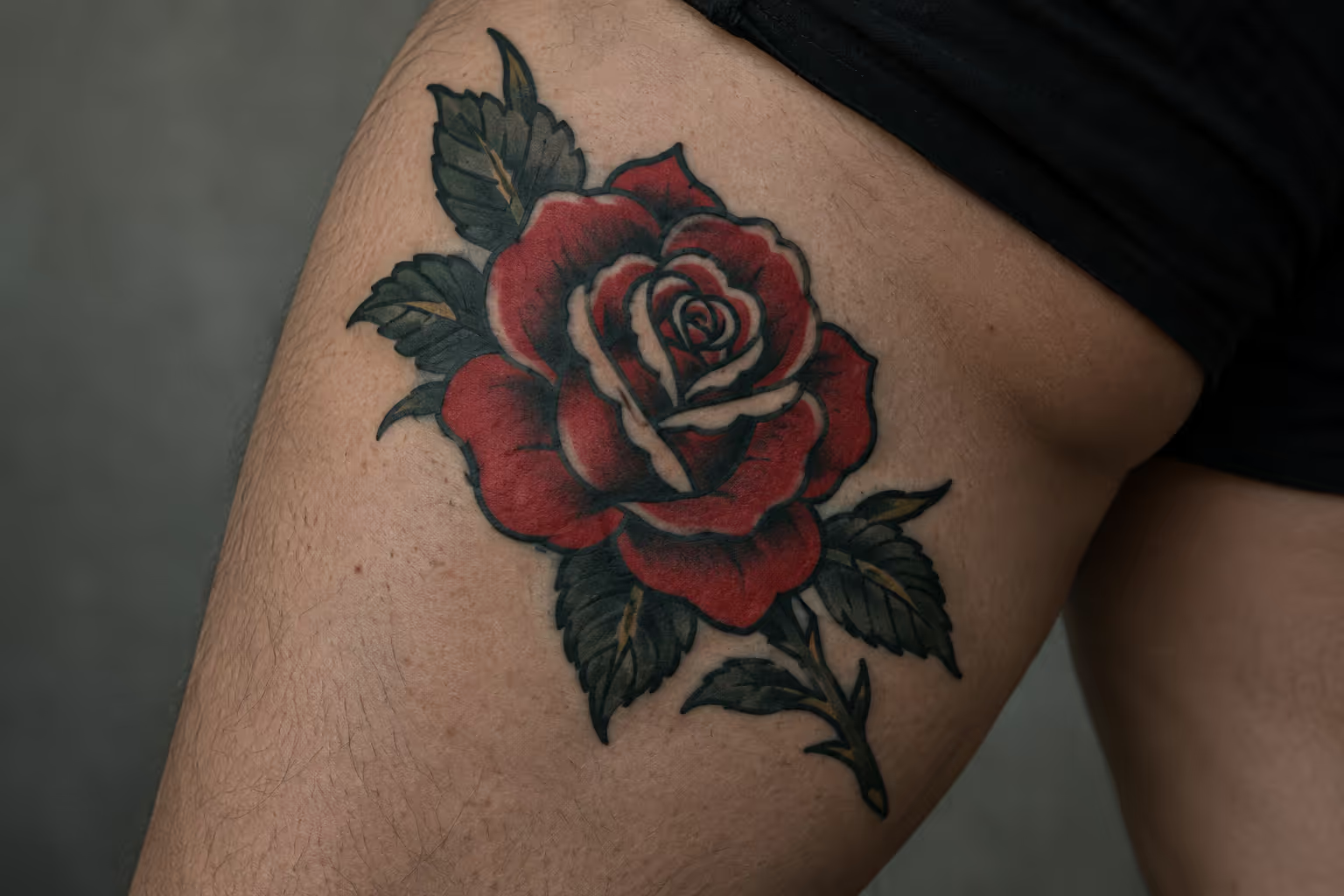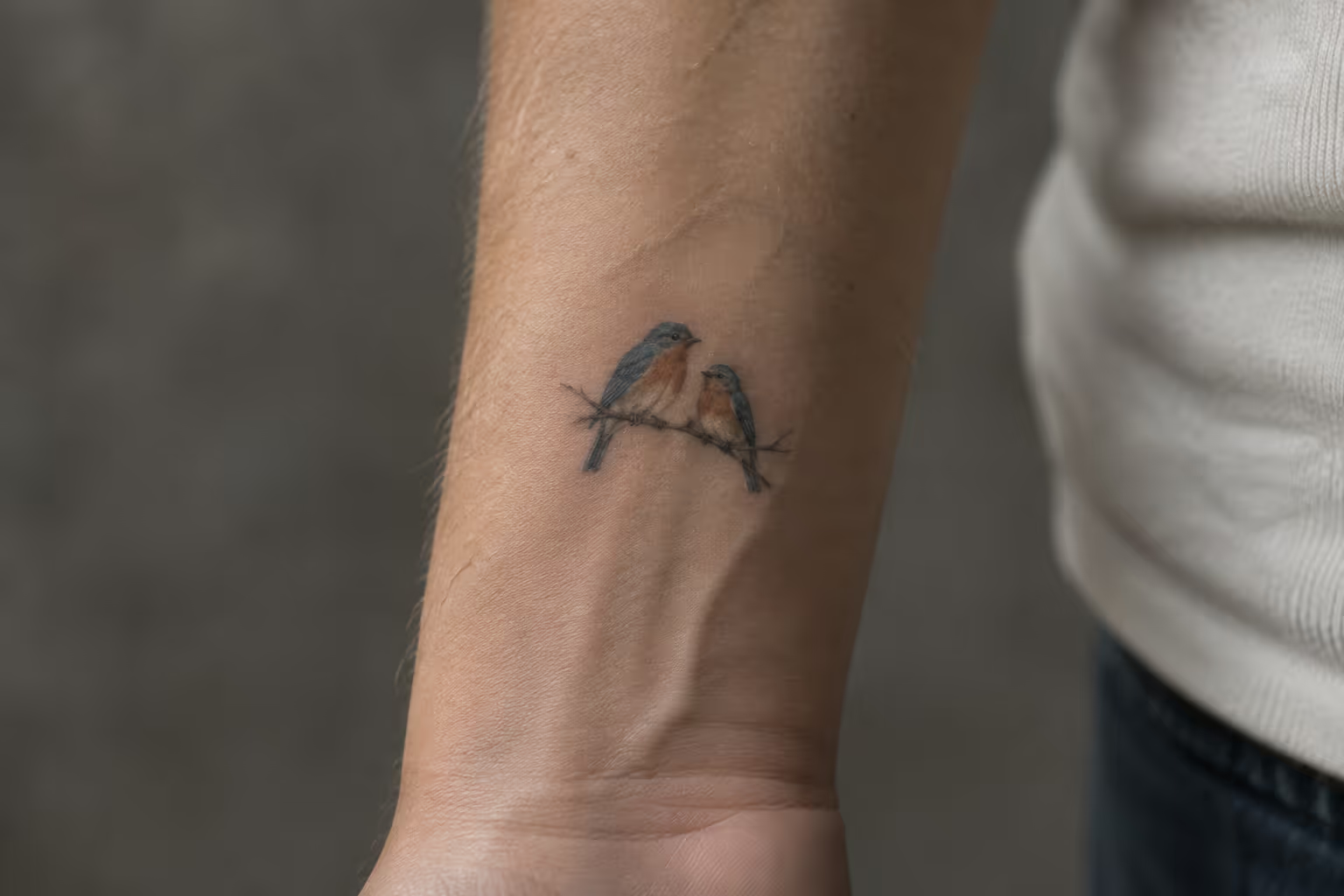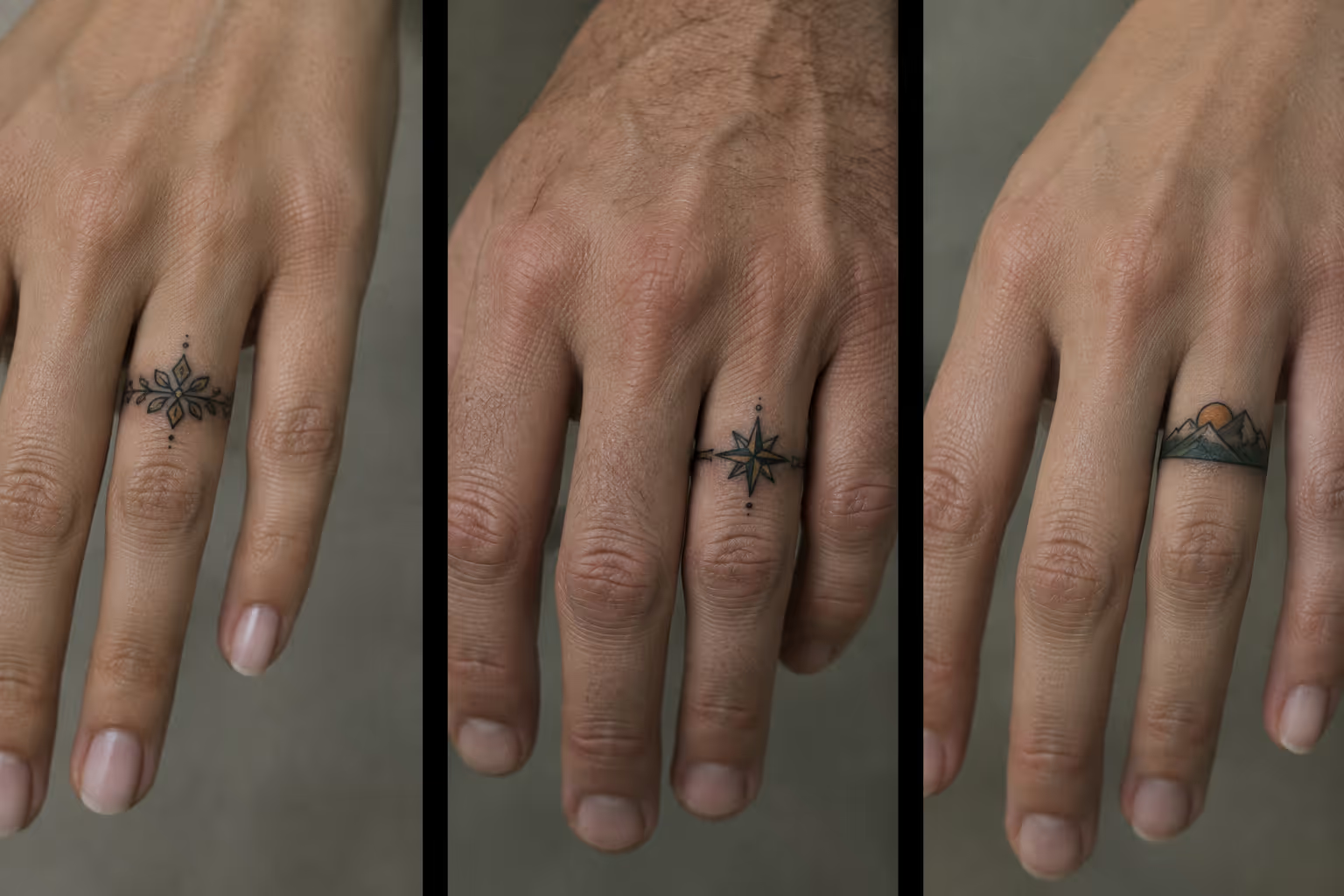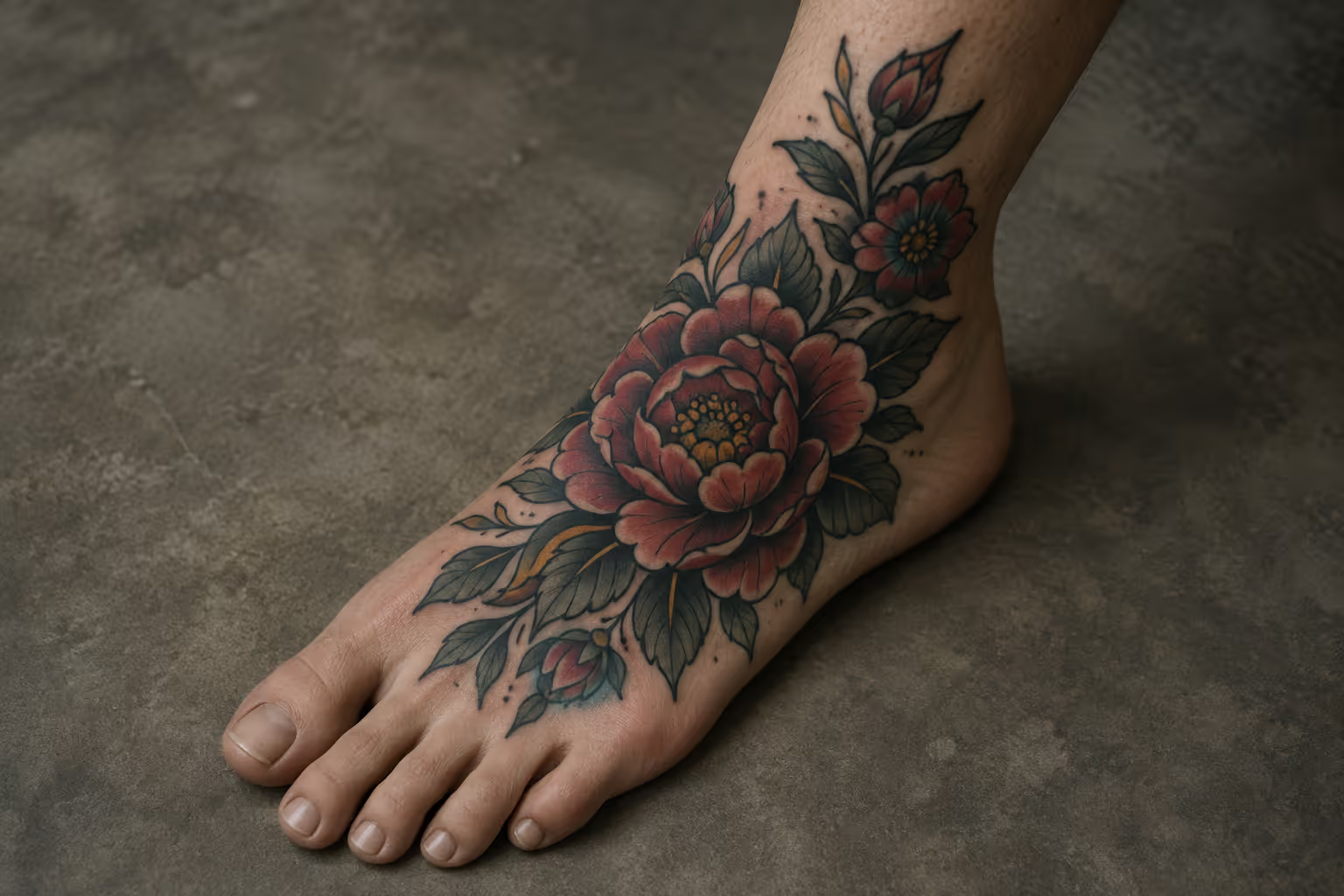
A foot tattoo works best when the design matches the zone. The top of the foot gives you a broad, flat surface for detail, while the side only suits slim text or minimal linework. Shoe friction and sun, more than time, are what fade the ink. Decide on placement, footwear and sun protection before you book. For how the foot compares with other spots on pain, visibility and aging, see our tattoo placement guide.
✓ Pros
- A compact, visible canvas can make a small motif feel intentional without needing a large piece.
- Coordinated designs can build into a foot composition over several sessions.
✗ Cons
- Keeping the tattoo comfortable can mean planning shoes and activity around healing.
- Fine details may need more maintenance when repeated rubbing and sun exposure soften the lines.
Foot Tattoo Ideas: Top vs. Side Placement
Choose the top of the foot for detailed designs and patterns and save the side for text or minimalist motifs (11). Then fit the design to the foot’s curve, and test the placement on your own foot in a few positions, standing and sitting, before you commit (5).
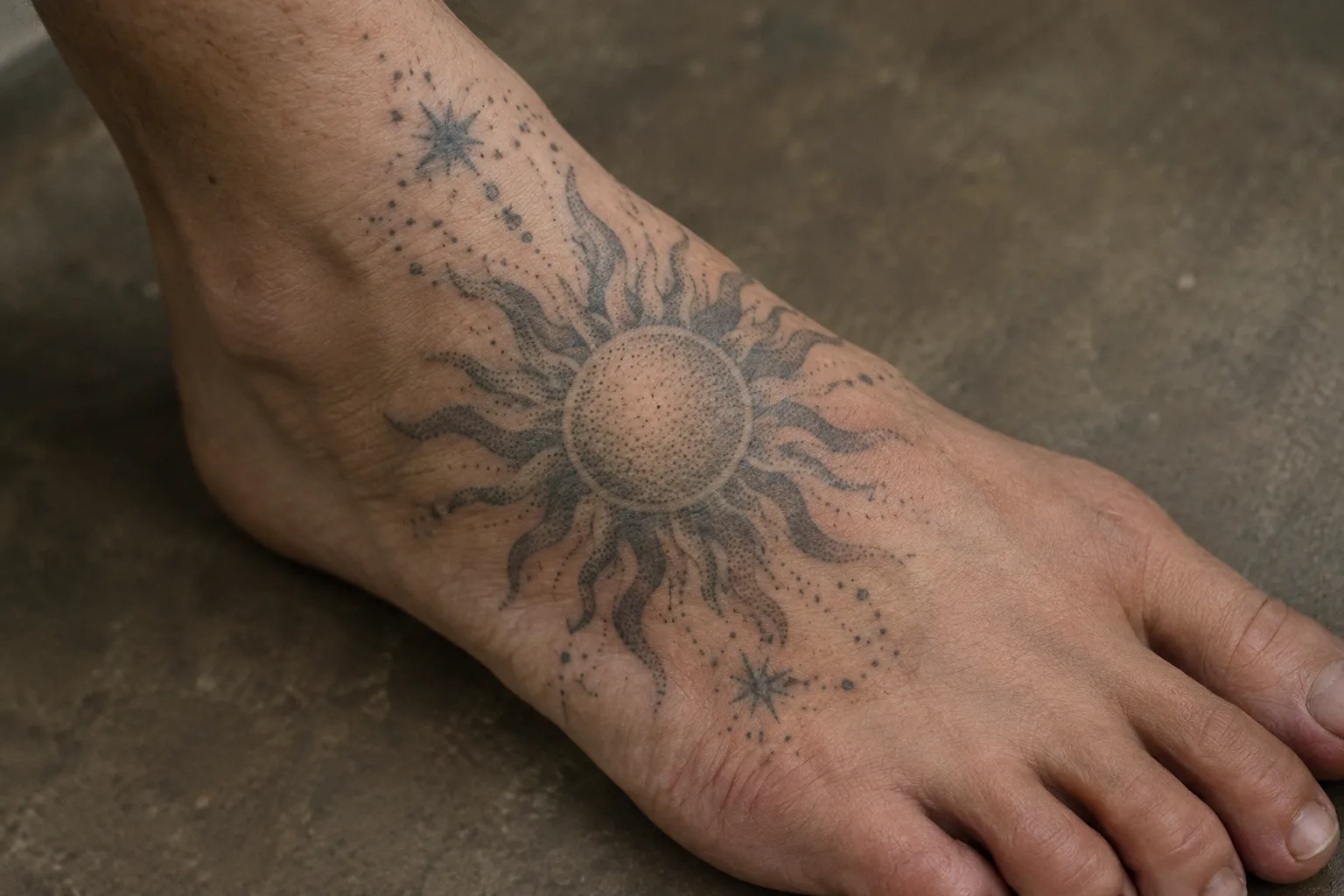
The designs that suit the foot best are simple: small florals, delicate script such as names or dates, and symbols like the moon, stars, arrows or geometric shapes (8). The current revival leans toward “footscaping”, several small tattoos built into one look across the foot, and larger pieces such as winding florals or rosary designs can creep up onto the ankle (6). The more intricate the detail, the more likely it is to blur over time (8).
Top of Foot: Room for Detail
A top-of-foot design can range from a small motif to a larger, more detailed piece, especially on a high-arched foot (5). Florals and mandalas are common choices here, and the relatively flat surface suits flowing designs (5)(11).
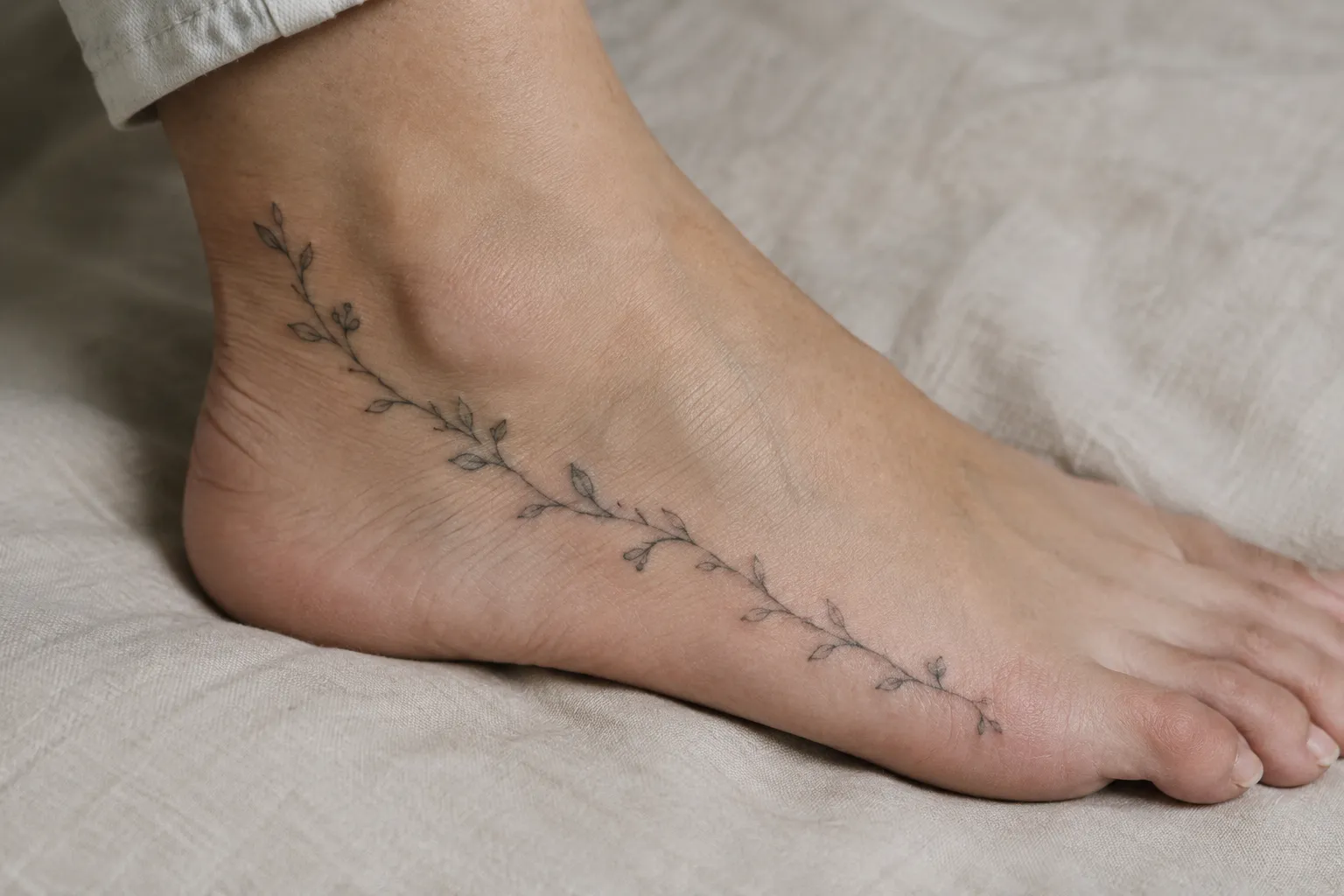
Side of Foot: Text and Minimalist Motifs
The side suits text or a minimalist design, such as a line of script or a few small symbols along the outer edge (8)(11). For script, hold the letter height at 12 mm (1/2 in) minimum, and use 25 mm (1 in) if the script is fine or ornate. Below that, the letters blur together as the ink settles. The side also takes more shoe rubbing than the top, so you trade a better fit for slim designs against a shorter life for the ink (12). The ankle and heel are a third popular zone for a delicate look (11), and ankle tattoo zones come with their own pain and rubbing trade-offs.
Foot placement carries no single fixed traditional meaning. The meaning comes from the motif you choose. In modern Western tattooing, the placement is tied to the Y2K era of stars, butterflies and swirly script peeking out of flip-flops (6).
Pain by Zone: Top vs. Side of the Foot
Pain in this zone tends to run higher than on fleshier areas, because the skin is thin and there is little padding over bone (6)(11). Both the top and the side of the foot usually hurt more than the arms or thighs (11), and our tattoo pain scale puts feet in the high-pain group with the ribs, spine and hands. The top feels sharp and bony, and the side is sensitive around the arch and ankle bone (8).
Which of the two hurts more is disputed. Black Hat Tattoo calls the top the most doable spot, and a Los Angeles artist quoted by Bustle finds clients have an easier time on the tops than on the sides (8)(12), while Holistic Ink rates the top as the most painful (5). Pain tolerance is personal, so don’t choose between the two on pain alone (8)(12). Expect the toes to hurt more still, with lots of nerves in a small space, and skip the sole: it is extremely painful and most tattoos won’t heal or hold up there (8).
Fading, Friction, and Sun Protection
Fading happens faster mainly because of shoe friction, repeated movement and UV exposure, not because the placement itself is doomed (8)(12). A design kept away from rubbing seams and protected from sun keeps its definition longer than one exposed to both (8)(12)(13).
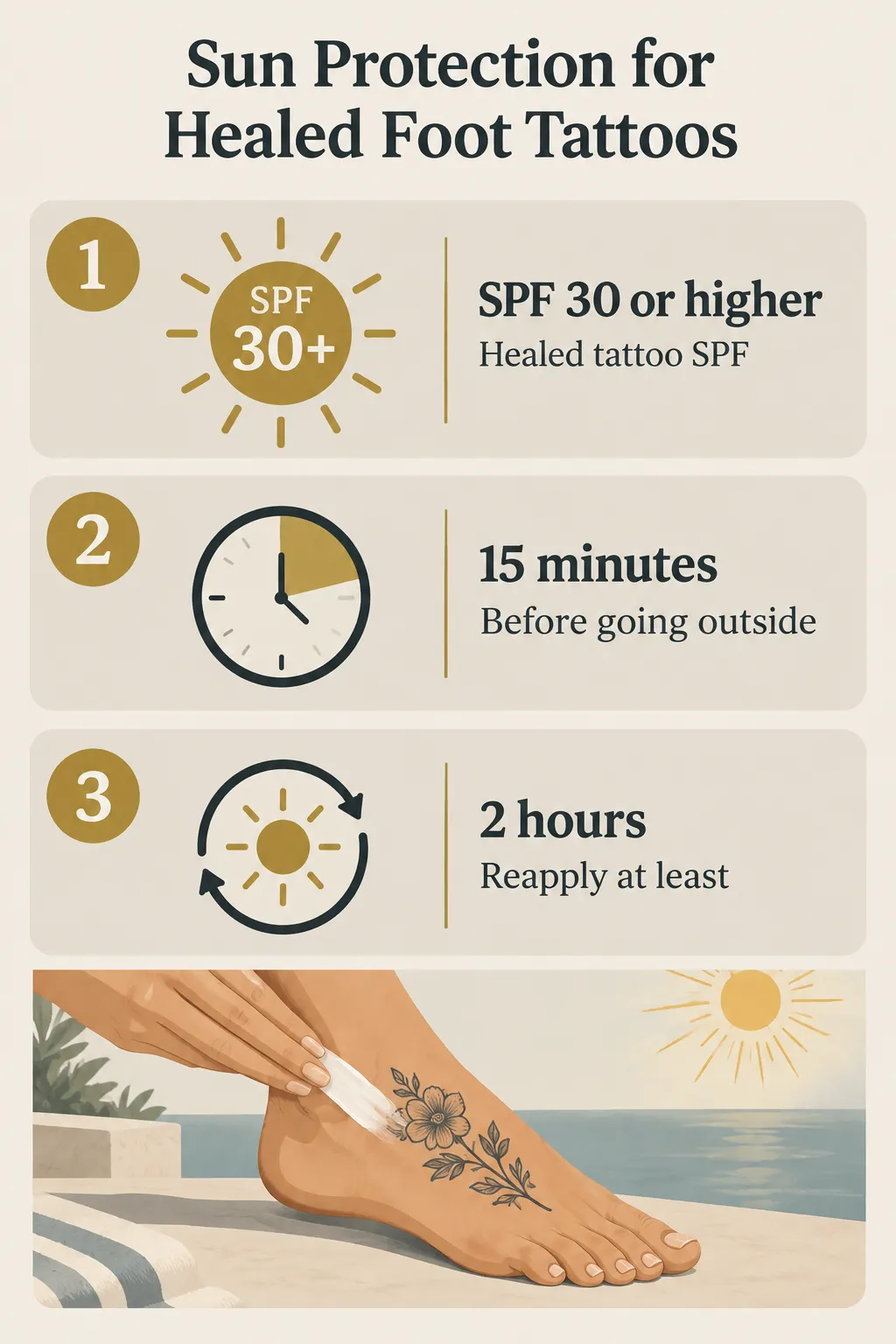 For healed tattoos, the AAD recommends SPF 30 or higher, applied 15 minutes before going outside and reapplied at least every 2 hours.
The AAD recommends a broad-spectrum, water-resistant SPF 30 or higher on tattooed skin. Apply it 15 minutes before going outside and reapply at least every 2 hours (13). That routine starts once the tattoo has healed; until then, keep it out of direct sun for the first 4 to 6 weeks. Shoe friction matters before healing too: rubbing can interfere with healing and even pull ink out, so the loose, open shoes you wear in the first weeks protect the result as well as your comfort (6).
Healing Timeline, Footwear, and Aftercare
This placement needs a few low-activity days with no long walks, swimming or exercise, and with loose or open footwear to limit rubbing (6). Swelling is common, so keep the foot elevated when you can (6)(8). Don’t book it right before a week of heavy walking.
The foot follows the usual stages in our week-by-week tattoo aftercare guide: weeping and swelling on days 1-3, tightness and flaking on days 4-7, peeling and itching in week 2, and a surface that looks healed by weeks 3-4 while the skin underneath keeps settling until about week 6. Wear shoes that don’t rub the tattoo for roughly the first two weeks, and avoid soaking it for at least that long (12). The steps below cover dressing, washing, elevation and the return to normal shoes and sun exposure.
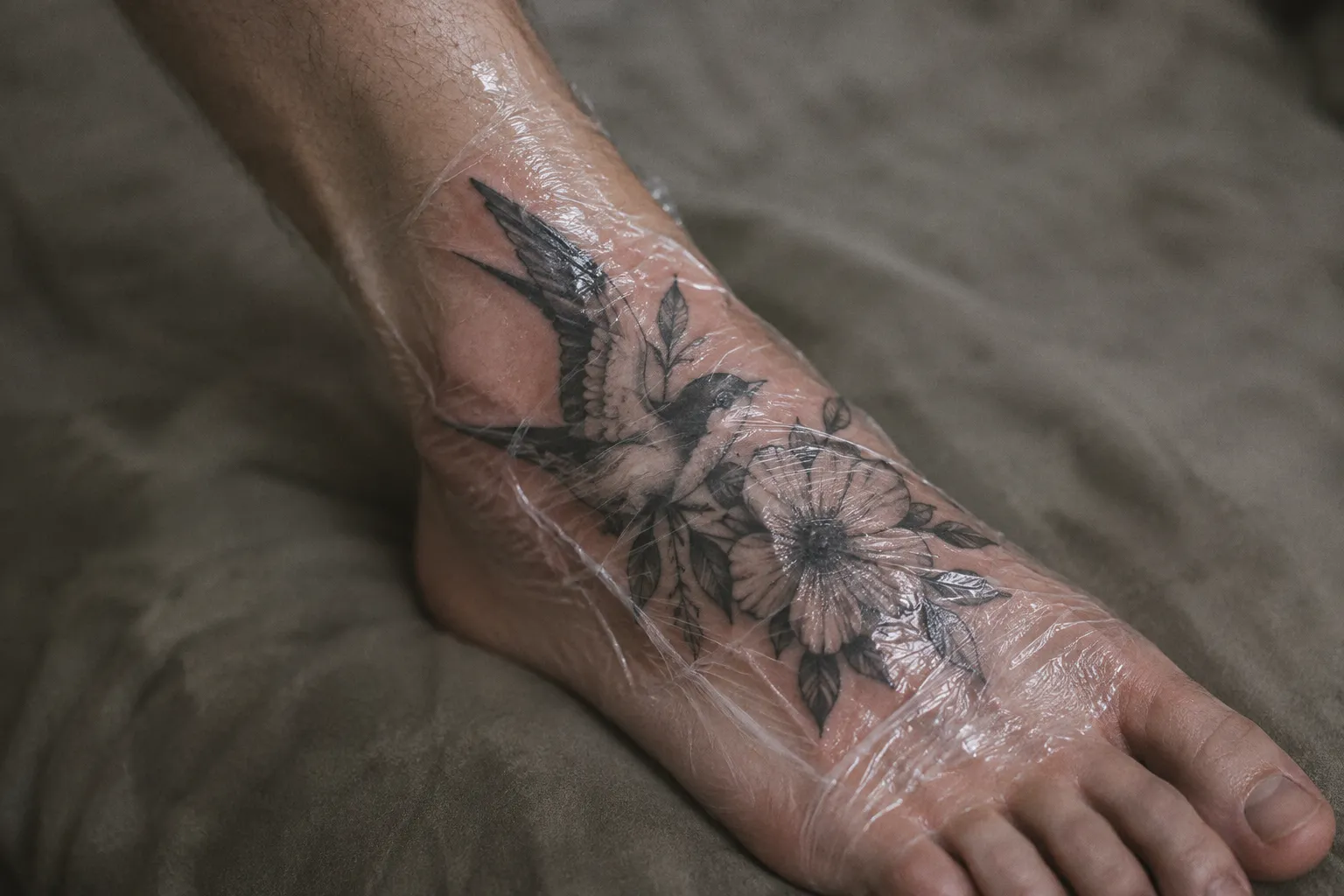
How to Care for a Healing Foot Tattoo
Follow your artist's dressing instructions, keep the area clean and dry, and limit pressure and rubbing while it heals.
- 1
Follow the dressing instructions
Leave the initial dressing on for the period your artist recommends; some adhesive dressings are designed to stay on for several days.
- 2
Wash gently and pat dry
Use warm water and fragrance-free soap, then pat the tattoo dry without rubbing.
- 3
Reduce pressure and friction
For the first few days, keep activity light, elevate your foot when possible, and choose loose or open footwear.
- 4
Moisturize without picking
During flaking, let flakes and scabs come off on their own and apply a thin layer of the fragrance-free moisturizer your artist recommends.
- 5
Resume shoes and sun protection carefully
Wear shoes that don't rub the tattoo for about the first two weeks, then return to normal shoes once nothing presses on healing skin; use SPF 30 or higher only once it is fully healed.
Infection Risks and Warning Signs
Some redness, swelling and soreness is normal at first. Redness that darkens or spreads, or pain that worsens instead of easing, is not (1). Foot tattoos are also more prone to infection than most, because they sit low to the ground near dirt and germs (12). NHS guidance from Norfolk says to go back to your tattooist or see a GP if the tattoo becomes more red or swollen (2). The AAD also lists fever, pus, open sores, chills and shivering as possible signs of infection (1). If you notice either local symptoms that are getting worse or a whole-body sign like chills, see a doctor or a board-certified dermatologist promptly instead of waiting it out (1)(2).
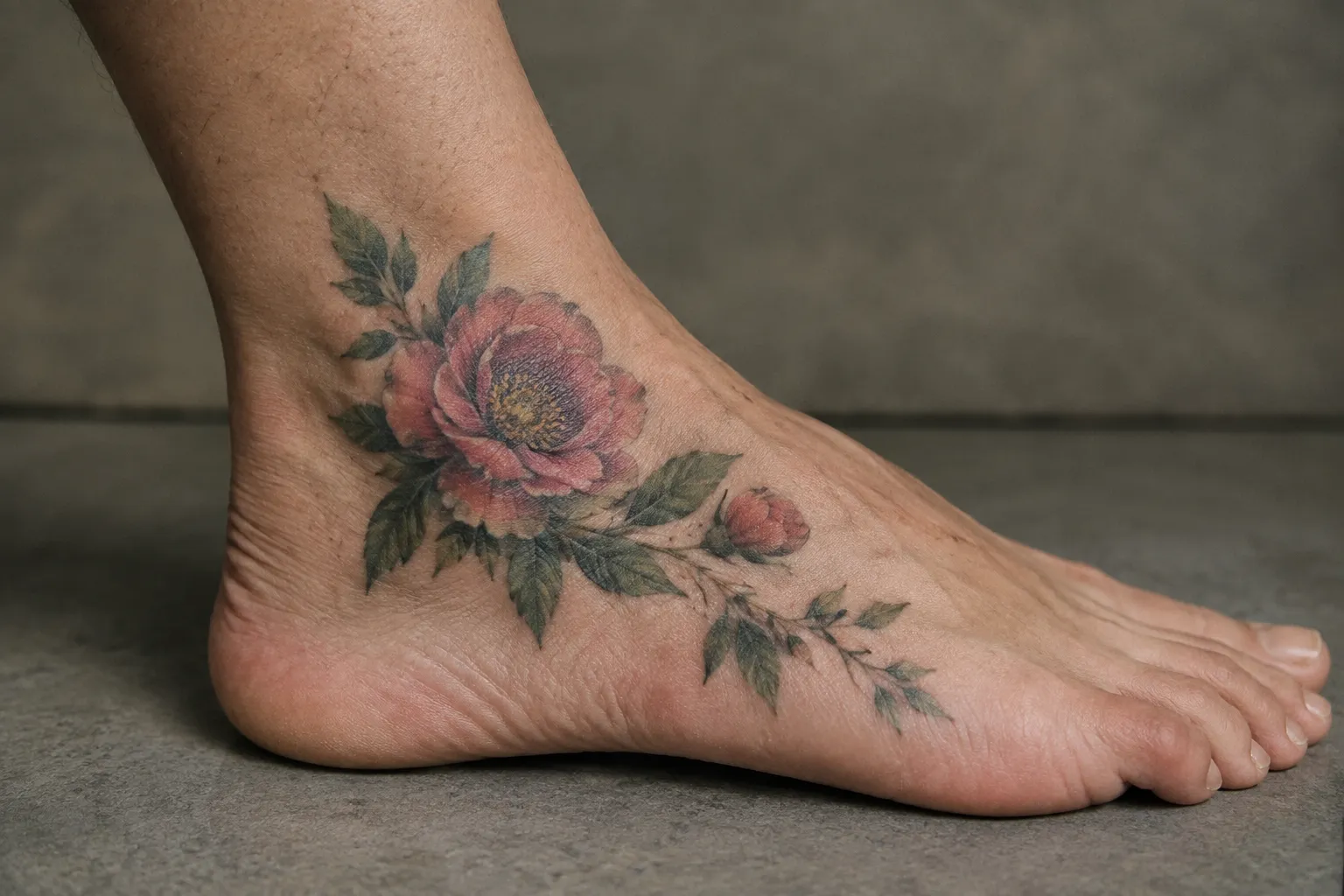
Finding an Artist and Planning Your Session
Look for an artist with a solid portfolio of foot tattoos, since not every artist has experience with this placement (11). Some decline foot work altogether because of the infection and fading risks, so discuss your idea with an artist or two before booking (12). Most foot tattoos are short sessions: 30 to 60 minutes for a small design, and up to about 2 hours for something more detailed (8). A foot tattoo is a good fit if you can manage a few quiet days, choose your shoes around the placement, and accept that it may need a touch-up down the line (6).
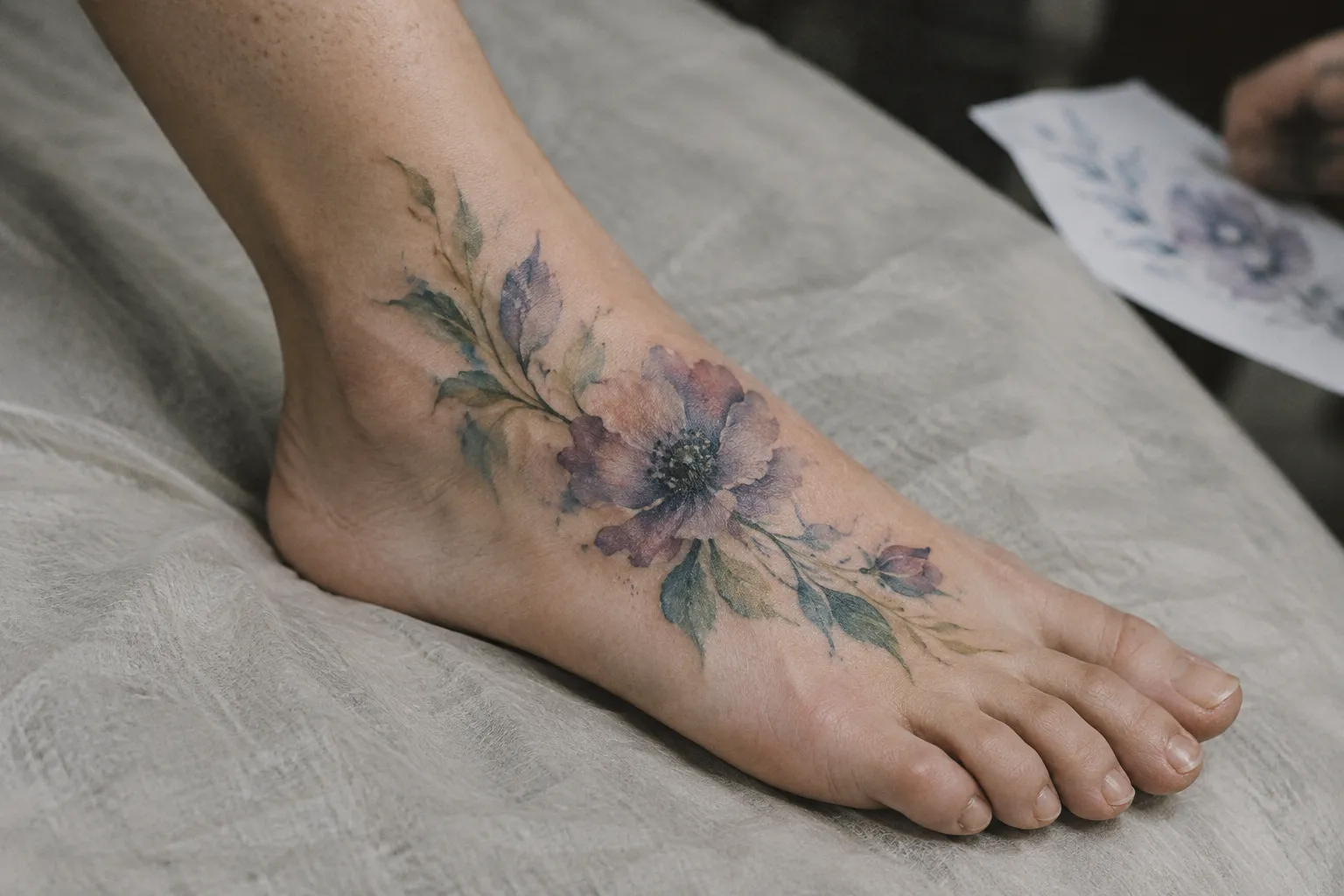
When you brief your artist, show them the shoes you wear most and ask where the seams sit. If you plan multiple pieces, sketch the full layout first so each new addition fits the composition.
Frequently Asked Questions
- How painful is a foot tattoo compared with an arm tattoo?
- It's usually more intense than an arm tattoo because thin skin sits close to bone; most foot sessions are kept short, so ask your artist about splitting larger work.
- Are foot tattoos a good idea if I work on my feet?
- This placement is harder to manage when your job requires long hours in tight shoes, since pressure and rubbing can interfere with recovery.
- What does a foot tattoo symbolize?
- A foot tattoo has no single traditional meaning; its motif carries the symbolism, while modern Western foot placement can evoke Y2K-era tattoo fashion.
- Do foot tattoos fade faster than tattoos elsewhere?
- Foot tattoos can lose crispness faster where shoe seams repeatedly rub them, so placement away from those pressure lines matters when choosing a design.
- Should I tattoo both feet in the same session?
- Tattooing one foot at a time preserves a more usable side for walking and footwear while the other heals.
- When should I get medical help for a healing foot tattoo?
- Seek medical advice for spreading redness, worsening pain, pus, fever, chills, or shivering rather than trying to manage possible infection yourself.