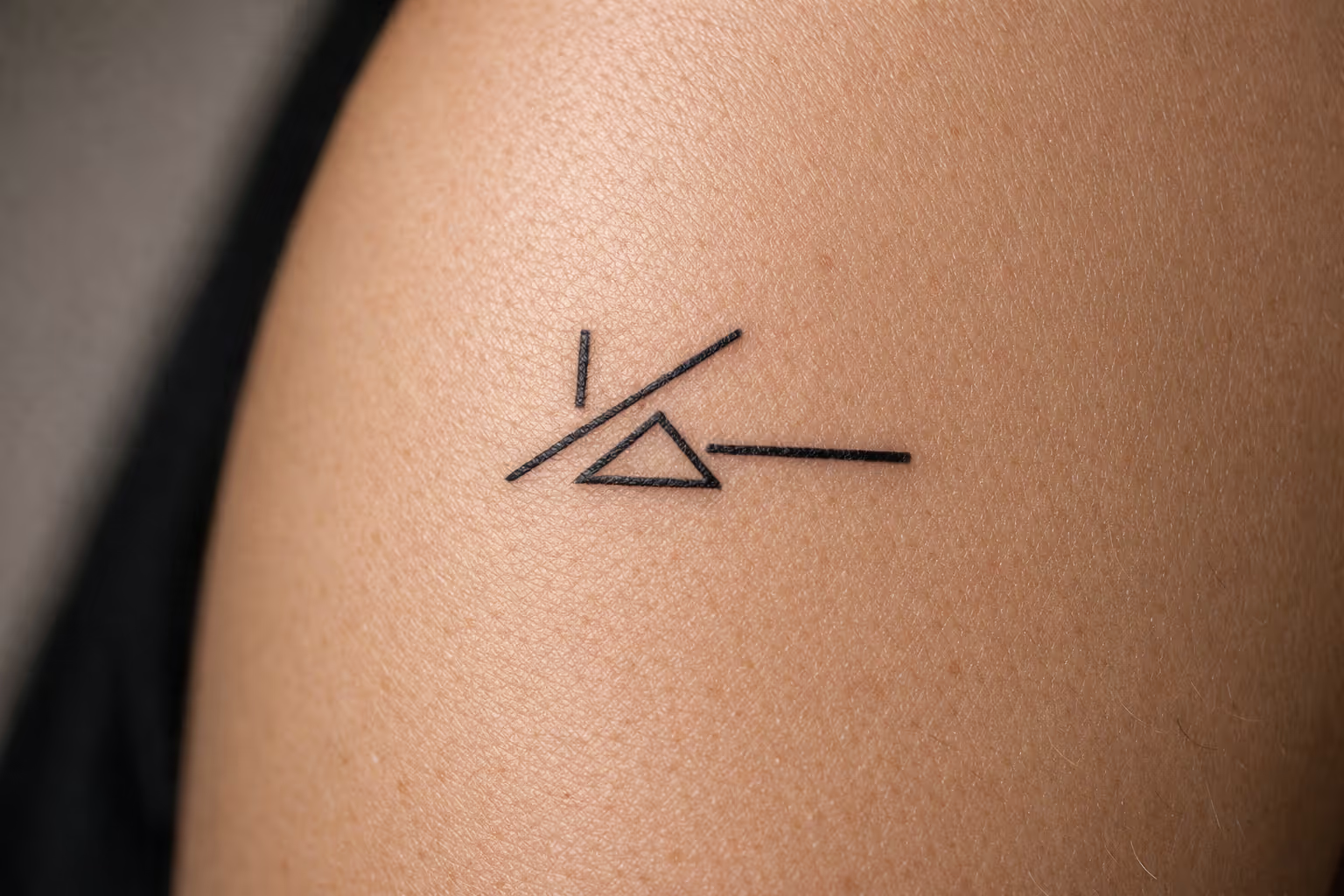
The outer bicep sits on roughly 4 to 6 inches of muscle-padded skin and consistently lands at the bottom of every pain chart. The inner bicep, just an inch or two away on the underside of that same arm, is one of the sharper spots on the body. That gap is why treating arm tattoos as one uniform placement is the most common planning mistake I see across the chair. This guide covers the upper arm, outer bicep, and inner arm as standalone pieces - distinct from forearm work and full sleeves - and walks through the pain reality, visibility trade-offs, design fit, cost, and aftercare for each zone before you book anything.
✓ Pros
- Outer upper arm is one of the lowest-pain placements on the body - noticeably easier than the ribcage or inner elbow
- Flexible visibility - T-shirt covers it; tank top reveals it
- Muscle padding makes the outer bicep forgiving for first sittings
- Medium pieces (4-6 inches) typically complete in one session
- Easy to extend into a half sleeve later if desired
✗ Cons
- Inner bicep pain spikes sharply - significantly harder to sit than the outer arm or forearm
- Upper arm edge near the T-shirt line gets frequent sun exposure, accelerating fade
- Designs placed without sleeve planning can create awkward composition gaps later
- Fine-line and micro work on muscular outer arms blurs faster as muscle shape shifts
- Elbow ditch proximity (if design extends down) is among the sharpest zones on the body
Understanding Arm Tattoos: Upper Arm, Outer Bicep, and Inner Arm Placement Guide
The arm above the elbow breaks into three zones that behave completely differently under the needle. An upper arm tattoo on the deltoid is a different decision from one on the inner bicep, and naming them precisely matters - the pain and design advice below only lands correctly once you know exactly which patch of skin you’re talking about.
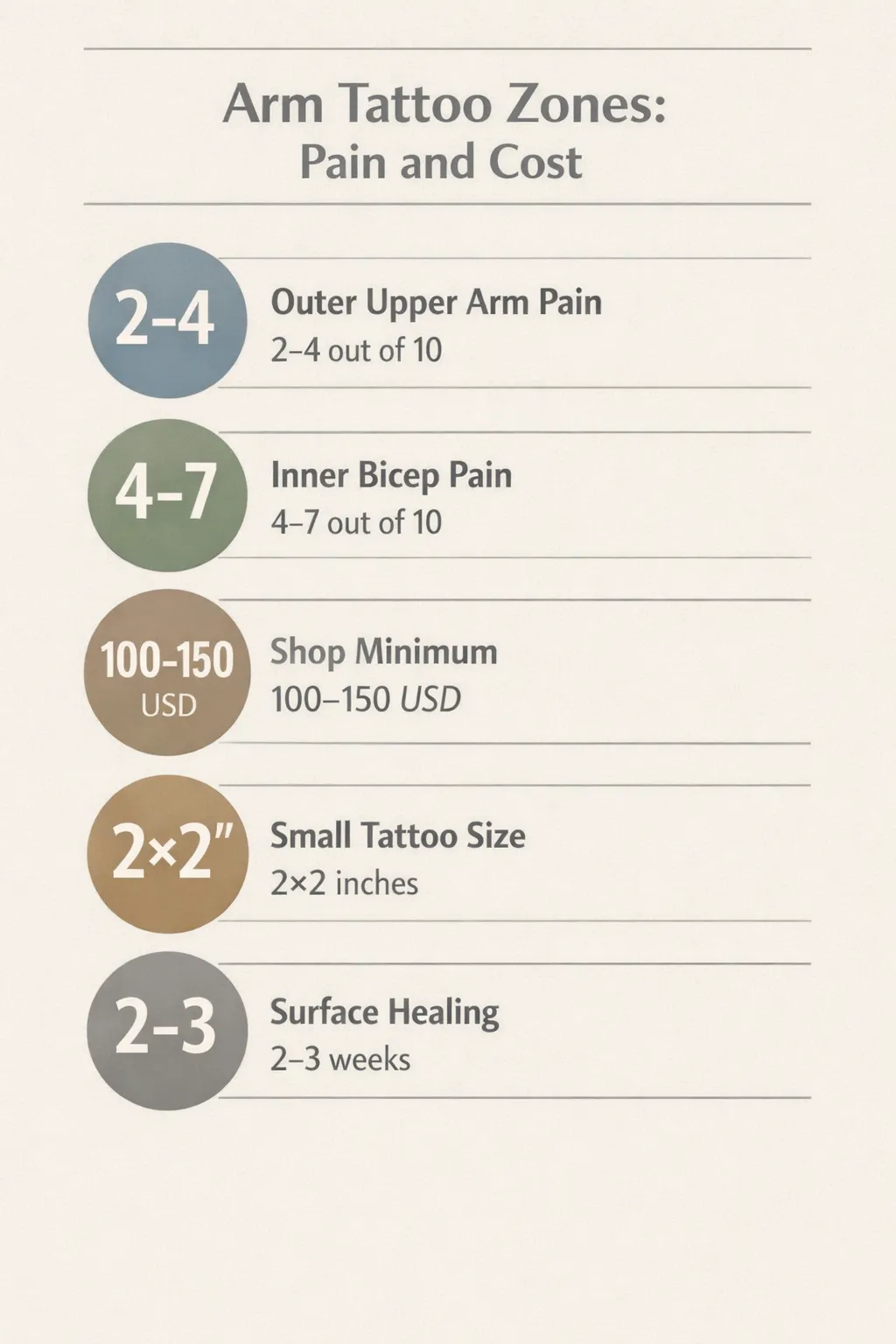 Arm tattoo zones compared: outer upper arm pain 2-4/10; inner bicep pain 4-7/10; shop minimum 100-150 USD; small size 2×2 inches; surface healing 2-3 weeks.
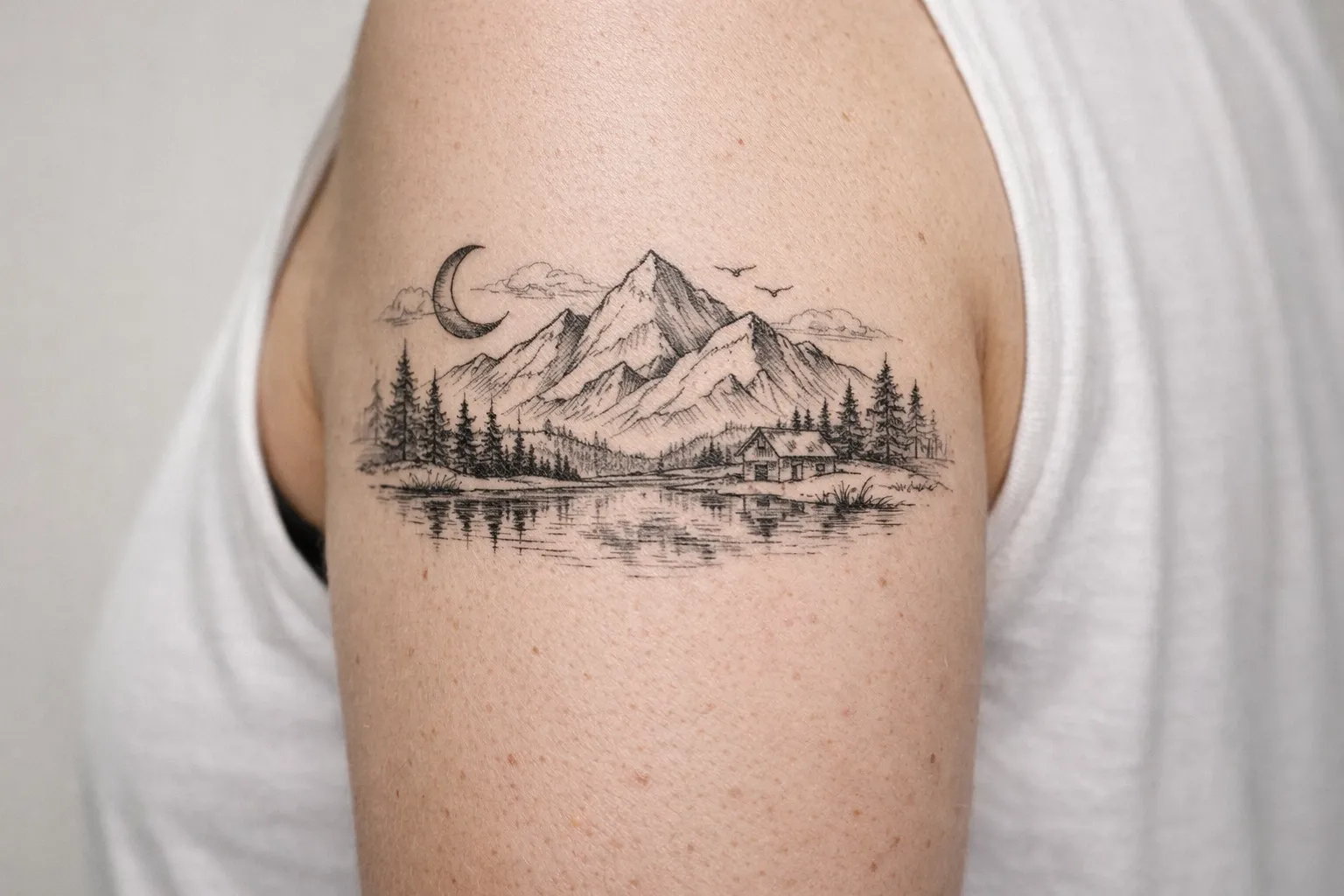
The outer upper arm / deltoid zone runs from the shoulder cap down to mid-bicep - roughly 4 to 8 inches (10 to 20 cm) of muscle-padded real estate. It’s the most forgiving surface on the arm and the one I point first-timers toward without hesitation.
The outer bicep is the front-facing muscle belly, most visible when your arm hangs naturally at your side. It curves, which you can use as a compositional asset if the design is planned for it.
The inner bicep is the soft, nerve-dense underside. Anatomically it’s inches from the outer bicep, but as a tattoo experience it’s a different animal - thin skin, no muscle mass directly beneath, and skin that moves and stretches while the needle works.
The inner arm / triceps side is the back-facing surface. Semi-hidden, moderate in pain, sitting between the outer arm and the inner bicep on both counts.
This guide does not cover the forearm (wrist to elbow crease) or full sleeves. Those are separate canvases with their own rules.
How these zones differ from the forearm
Anatomically, the forearm runs from the elbow crease to the wrist; the upper arm sits above that crease, between shoulder and elbow. The two can connect into a sleeve, but they function independently as standalone placements. If you can handle a forearm piece, the outer bicep will feel similar or easier. The inner bicep will feel noticeably harder.
Sizing benchmarks for each zone
- Outer upper arm: 4 to 8 inches (10 to 20 cm) comfortably - enough room for bold, detailed work.
- Inner bicep: 2 to 5 inches (5 to 13 cm). Keep it smaller and simpler; the pain and skin movement work against dense pieces.
- Inner arm (triceps side): 3 to 6 inches (8 to 15 cm), depending on your arm circumference.
Arm Tattoo Zones Comparison
| Outer upper arm / outer bicep | Inner bicep | Inner arm (triceps side) | |
|---|---|---|---|
| Pain Level | Low - easier than forearm or ribcage | High - sharper than inner arm, closer to inner elbow | Moderate - harder than outer bicep, easier than inner bicep |
| Visibility | High (covered by T-shirt) | Low (arm raised only) | Medium |
| Best Design Size | 4-8 inches | 2-4 inches | 3-6 inches |
| Typical Session | 2-4 hrs, 1 session | 2-3 hrs + breaks | 2-4 hrs, 1 session |
| UV Exposure Risk | High (T-shirt edge) | Low | Moderate |
| Recommended For | First tattoos, bold pieces | Personal/private designs | Semi-hidden mid-scale pieces |
Pain Levels on the Arm: Outer Bicep, Inner Bicep, and Inner Arm Compared
The outer upper arm is one of the most forgiving spots on the body - thick muscle padding, few nerve clusters near the surface, and a sitting experience that most people describe as a dull scratch rather than anything sharp (1). Healthline groups the upper arm and shoulder among the less painful areas for exactly this reason (2). It’s the zone I point first-timers toward without hesitation.
The inner bicep is the outlier. Pain here is noticeably sharper than the outer arm - the pain chart that scores both rates the outer bicep 2 and the inner 5 for men, and 5 against 7 for women (3). Gender data shows a split: men tend to report a milder experience, women a sharper one. If you’ve read a friend’s account, adjust for that. The single word “arm” tells you almost nothing about what a session will actually feel like.
The inner arm (triceps side) lands in the middle - harder than the outer bicep, easier than the inner bicep. Think of it as the forearm’s quieter cousin: moderate, manageable, but not a walk in the park.
Two boundary warnings. The elbow ditch - the inner bend of the elbow - is among the sharpest zones on the body, sharper than even the inner bicep, so keep the main composition above it. And if an inner arm piece extends up toward the armpit, pain climbs sharply. Plan the upper boundary of any inner arm design carefully.
Why inner bicep hurts more than the rest of the arm
Three things stack up. The skin is thin, the nerve density is high, and there’s no muscle mass directly beneath to absorb the vibration. On top of that, the skin moves and stretches during the session, which makes clean linework harder and the sensation rawer. It’s the same reason the armpit and inner elbow rate among the worst spots on the body (2).
I’ve had clients sail through a 4-hour outer bicep session and then tap out 45 minutes into an inner bicep piece. Same arm, completely different experience.
Managing a high-pain inner arm session
Cap inner bicep sessions at 2 to 3 hours and build in 5 to 10 minute breaks. High-pain zones stretch total session time simply because you need to stop more often. Breathing steadily through the sharp passes helps more than gritting your teeth. Choose the design for the zone too: simpler linework over dense shading reduces the number of needle passes over sensitive nerves, which is both faster and easier to sit through.
Visibility and Concealment: Choosing Your Exposure Level
The outer upper arm gives you the most flexible visibility profile on the arm - covered by a T-shirt, revealed by a tank top. The inner bicep stays hidden unless you raise your arm. Matching the zone to your workplace and daily wardrobe is a practical decision, not an aesthetic one.
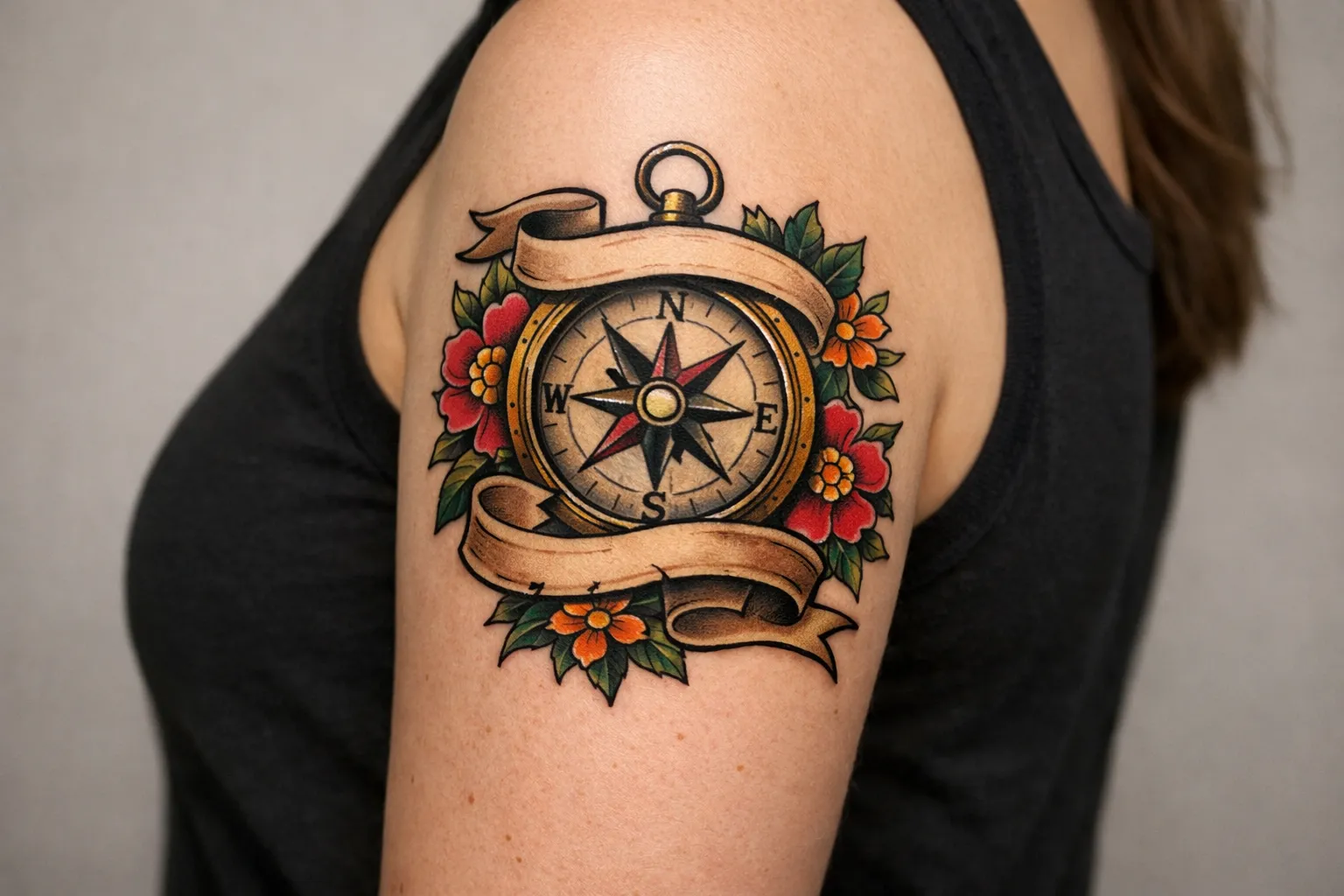
The outer upper arm is high-visibility in daily life. Standard short sleeves run about 6 to 8 inches from the shoulder seam, which covers most of the zone but leaves the lower bicep exposed if you place a design too low. The practical tip: position the design 1 to 2 inches below the T-shirt sleeve line. That keeps it covered in professional settings while a tank top or gym shirt reveals it.
The inner bicep is low-visibility - only seen when your arm is raised or you’re sleeveless. That’s why it’s a popular home for personal designs: script, dates, coordinates, small symbols. Things that mean something specific to you without being on display constantly.
The inner arm (triceps side) sits at mid-level. It shows from behind or when the arm is extended - more exposed than the inner bicep, less than the outer arm.
For workplace concealment, the outer arm is the hardest of the three to hide under short sleeves; the inner bicep is the easiest. A long-sleeve shirt covers all three zones completely, which remains the most reliable option for formal or client-facing settings.
Design Ideas for Men’s Arm Tattoos by Zone
Arm tattoos for men tend to sort cleanly by zone: bold work on the outer bicep, personal script on the inner bicep, mid-scale pieces on the semi-hidden inner arm. Gallup polling notes men are slightly more likely than women to carry upper arm tattoos, so this is well-trodden ground - which means the design needs to earn its place, not just fill space.
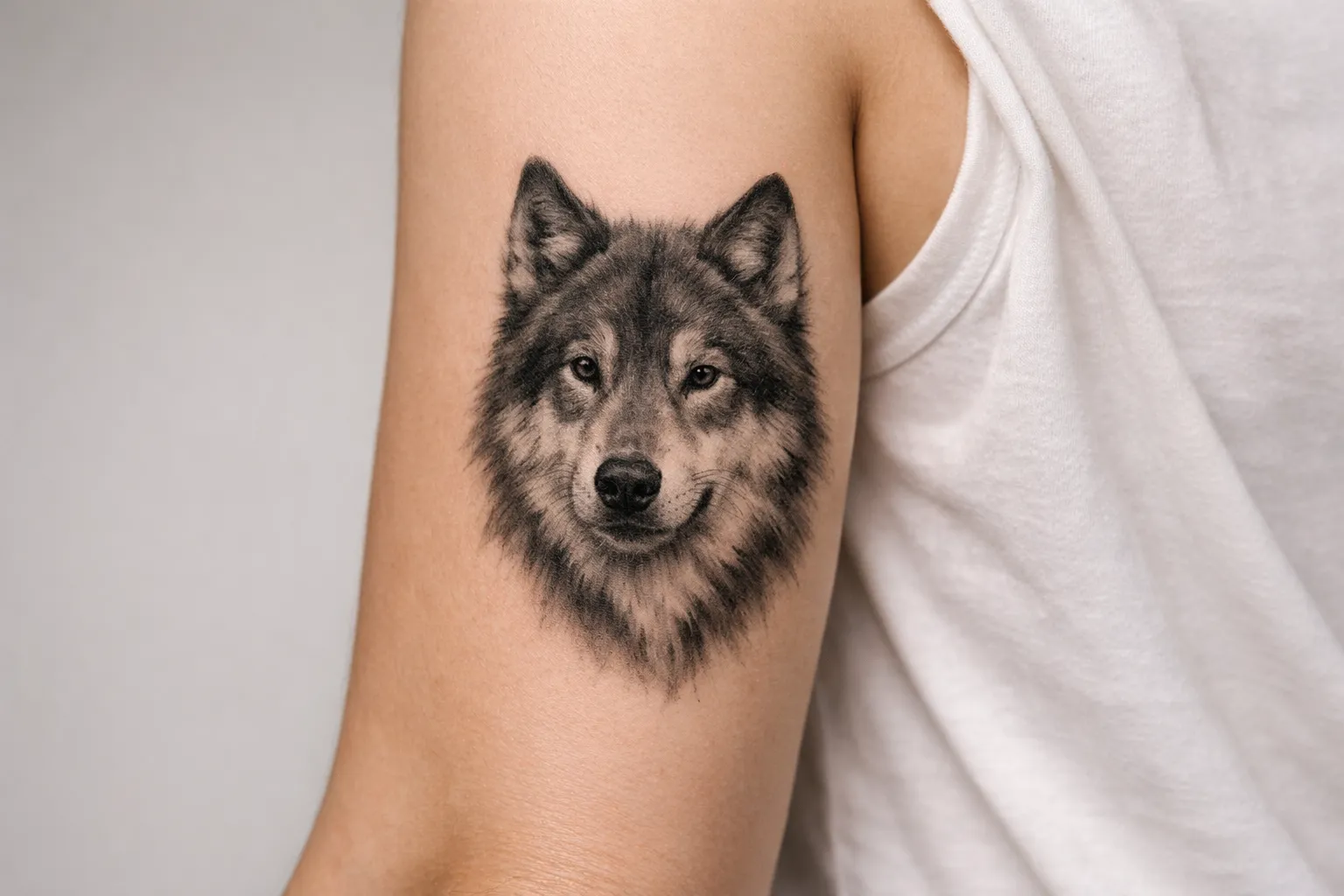
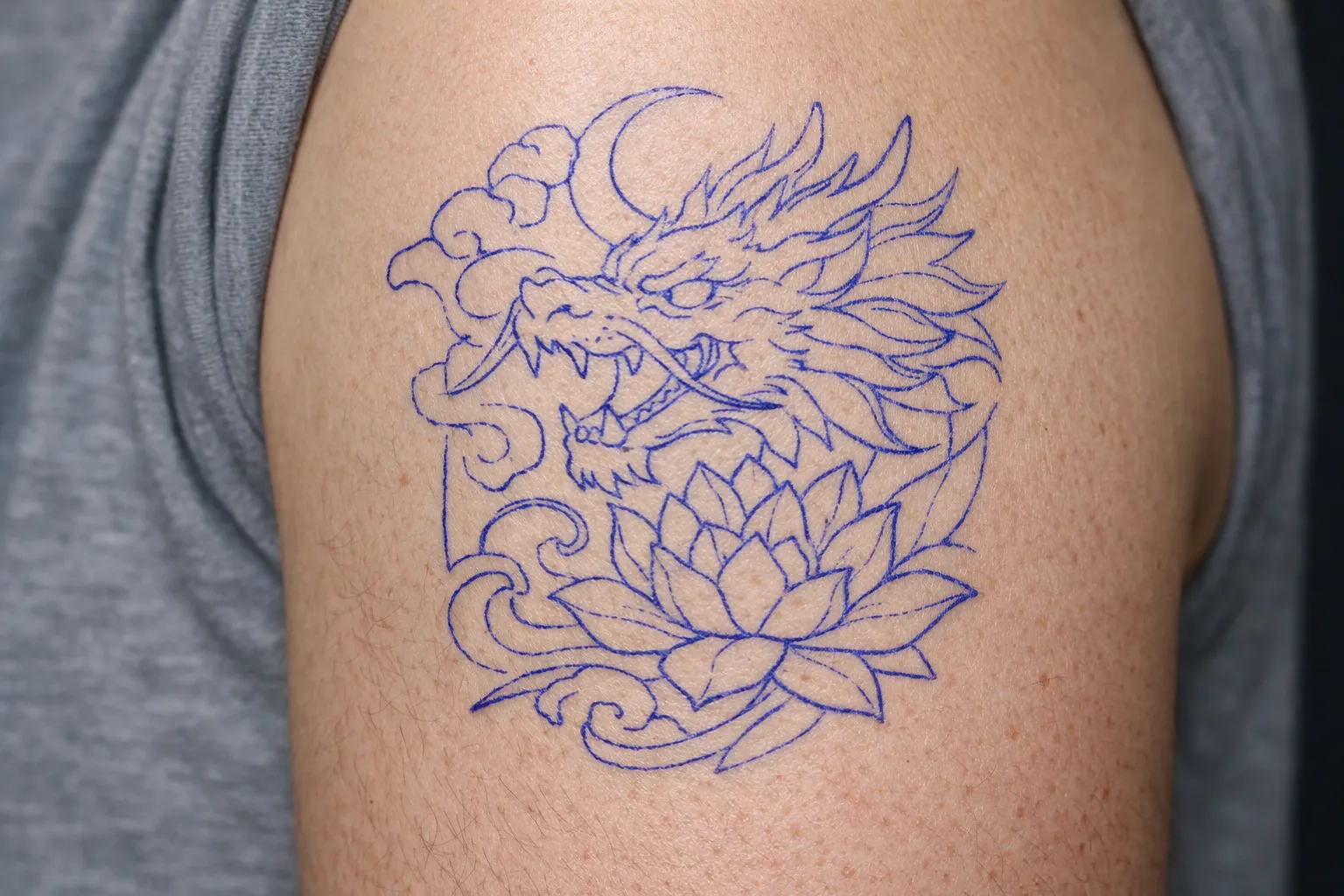
On the outer bicep and upper arm, the muscle curve is a compositional asset. Geometric bands, Japanese irezumi elements (waves, koi, hannya masks), biomechanical work, tribal and Polynesian wraps, and bold blackwork all use that curve rather than fight it. In Japanese irezumi tradition, these motifs are built for large limb compositions, which is why the upper arm anchors so many Western sleeves.
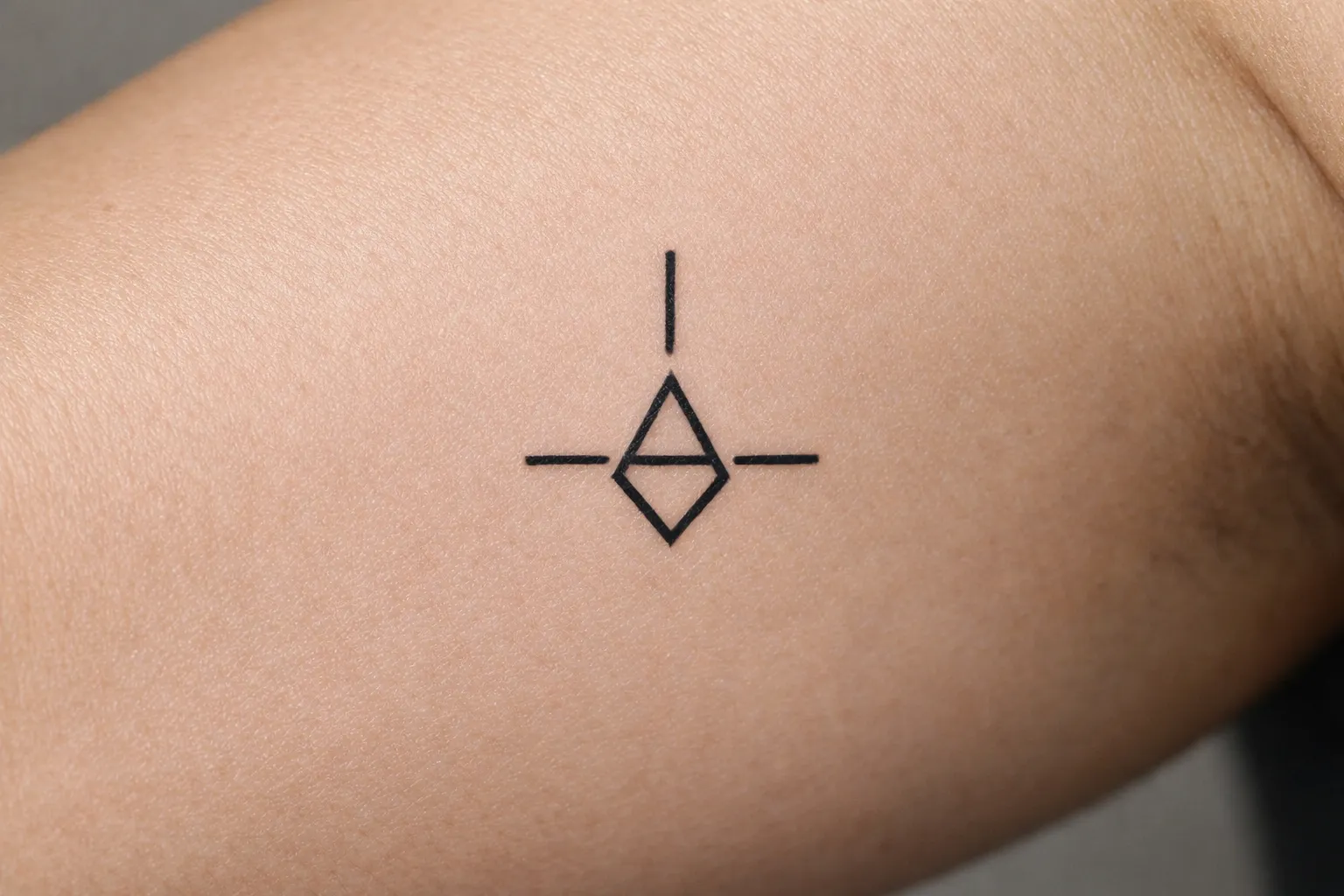
On the inner bicep, keep it clean: script (names, dates, coordinates, short phrases), symbolic icons (a compass, a dagger, small geometric shapes), simple linework. Dense shading here extends session time significantly for little payoff, given the pain.
On the inner arm (triceps side), mid-scale pieces work well - animals, religious imagery, ornamental panels that benefit from the semi-hidden placement.
One planning note that saves a lot of grief later: if a sleeve is a future possibility, discuss anchor placement with your artist before the first session. A standalone outer bicep piece placed without sleeve awareness can create gaps that are genuinely awkward to fill.
Bold outer bicep designs that hold up over time
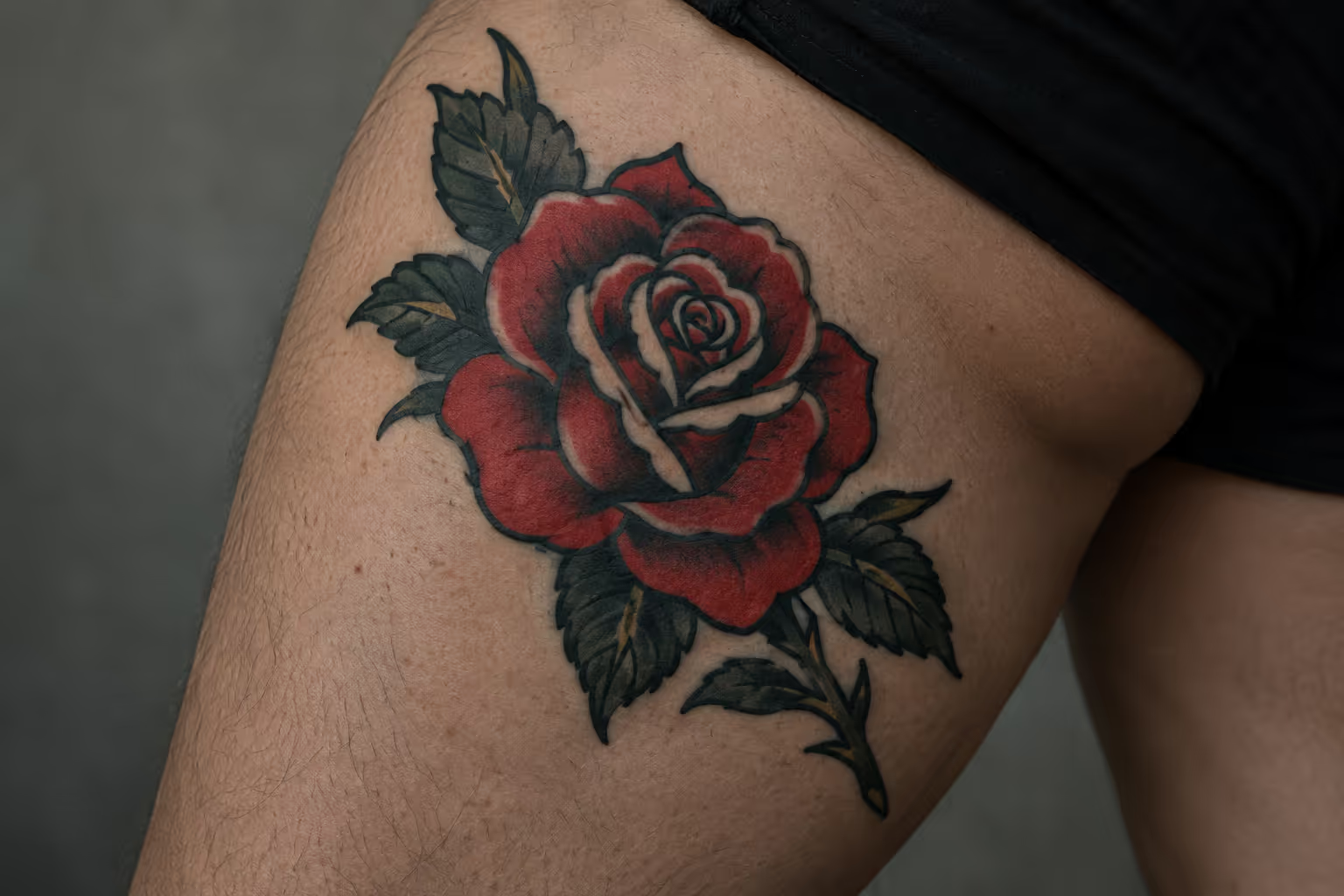
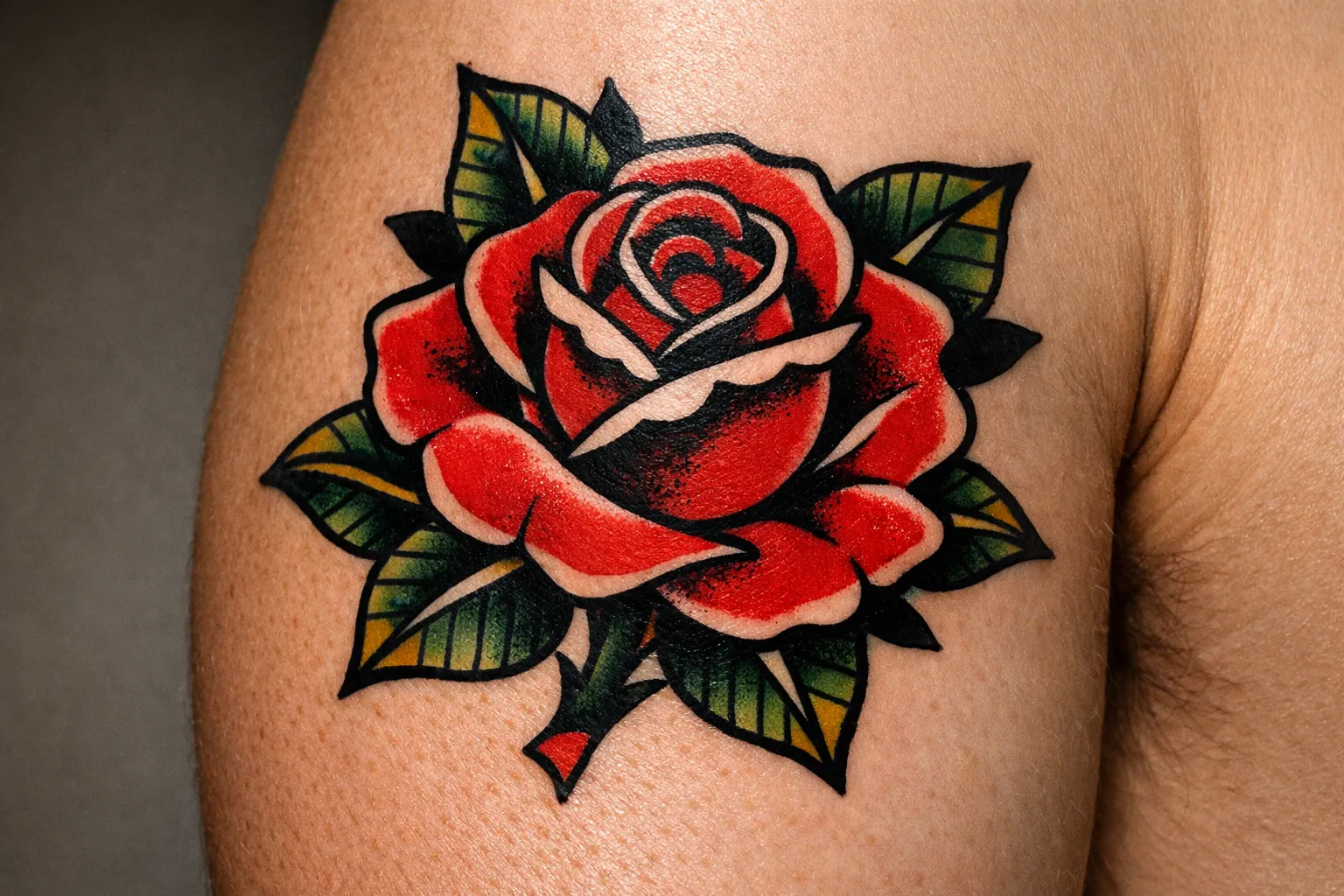
American traditional is the reliable choice here - thick black outlines and a limited color palette, a style built precisely so designs stay legible as they age and skin softens. Blackwork, geometric panels, and Japanese-influenced motifs all hold contrast over decades on muscle-padded skin. Give complex designs at least 4 inches (10 cm). Thick lines on the outer arm age far better than micro detail, which blurs as the muscle shifts.
The common pitfall when artists do American traditional badly: they lighten the outlines to look more “refined” and reduce the palette to grey wash. Ten years later, the piece reads as a smudge. Bold outlines and saturated fills are what make the style work - they’re not optional.
Small inner bicep tattoos for men
The inner bicep suits small arm tattoos for men built on script, symbols, and minimal linework, sized around 2 to 4 inches (5 to 10 cm). Simpler designs fit this high-pain zone because they need fewer passes. Avoid going too small though: micro tattoos under 1 inch (2.5 cm) on a muscular arm blur faster as the muscle changes shape and the skin stretches over the years. Fine-line single-needle work, with strokes often under 0.3 mm, is especially vulnerable on skin that moves this much.
Flower and Butterfly Arm Tattoos: Placement and Style Breakdown
Flower and butterfly designs are among the most requested arm work, and both behave differently across the three zones. The right placement depends as much on how the piece will age as on how it looks fresh.
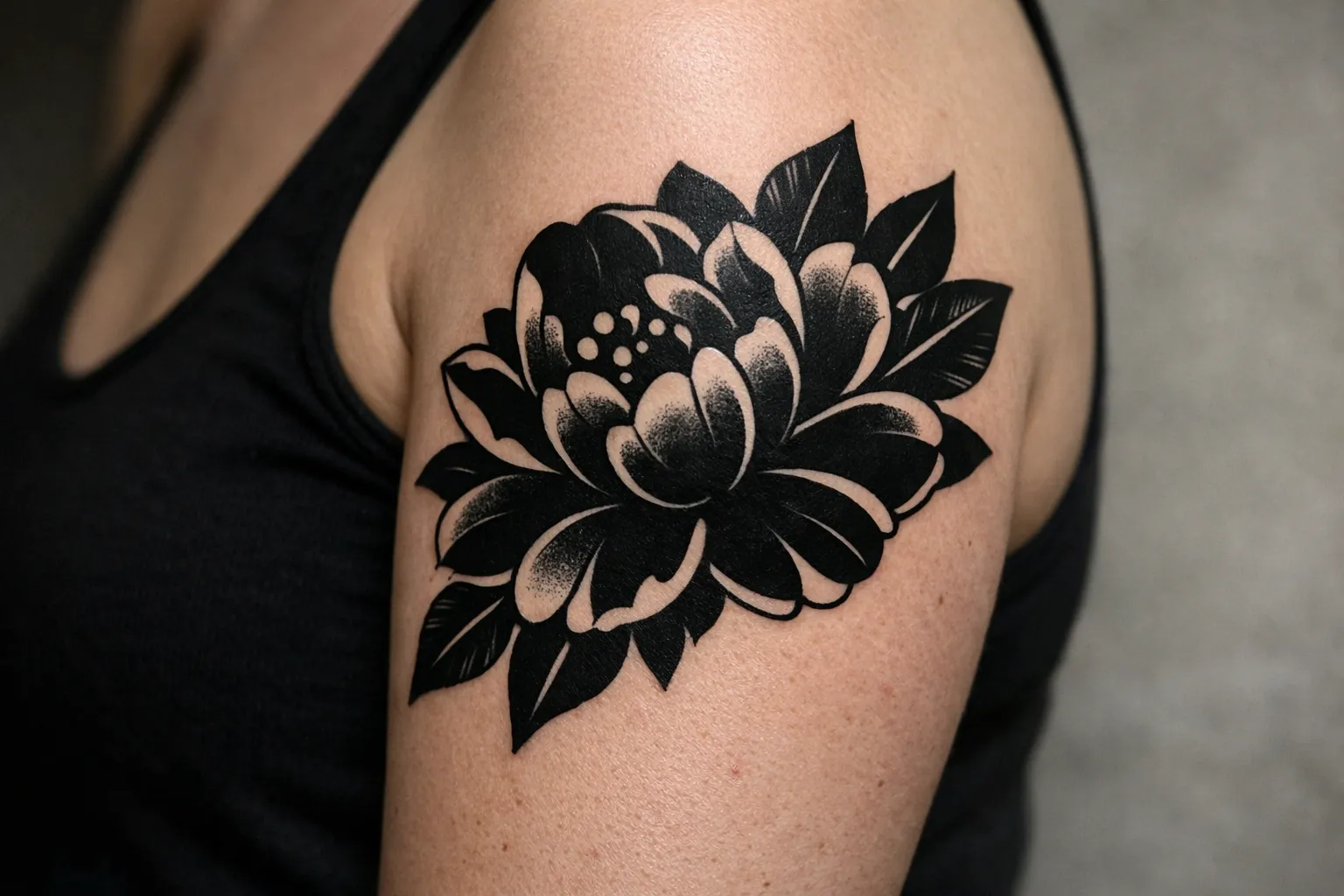
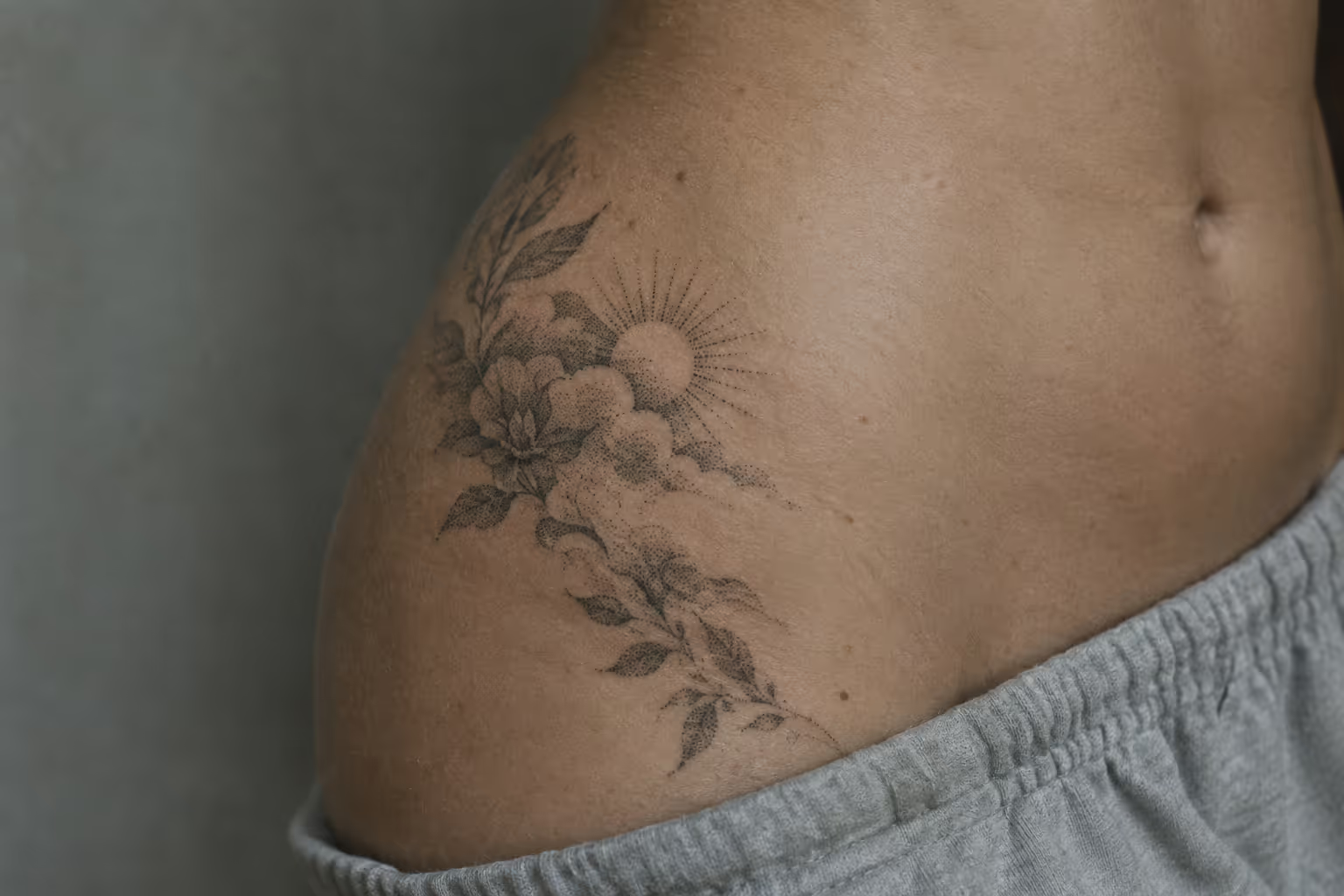
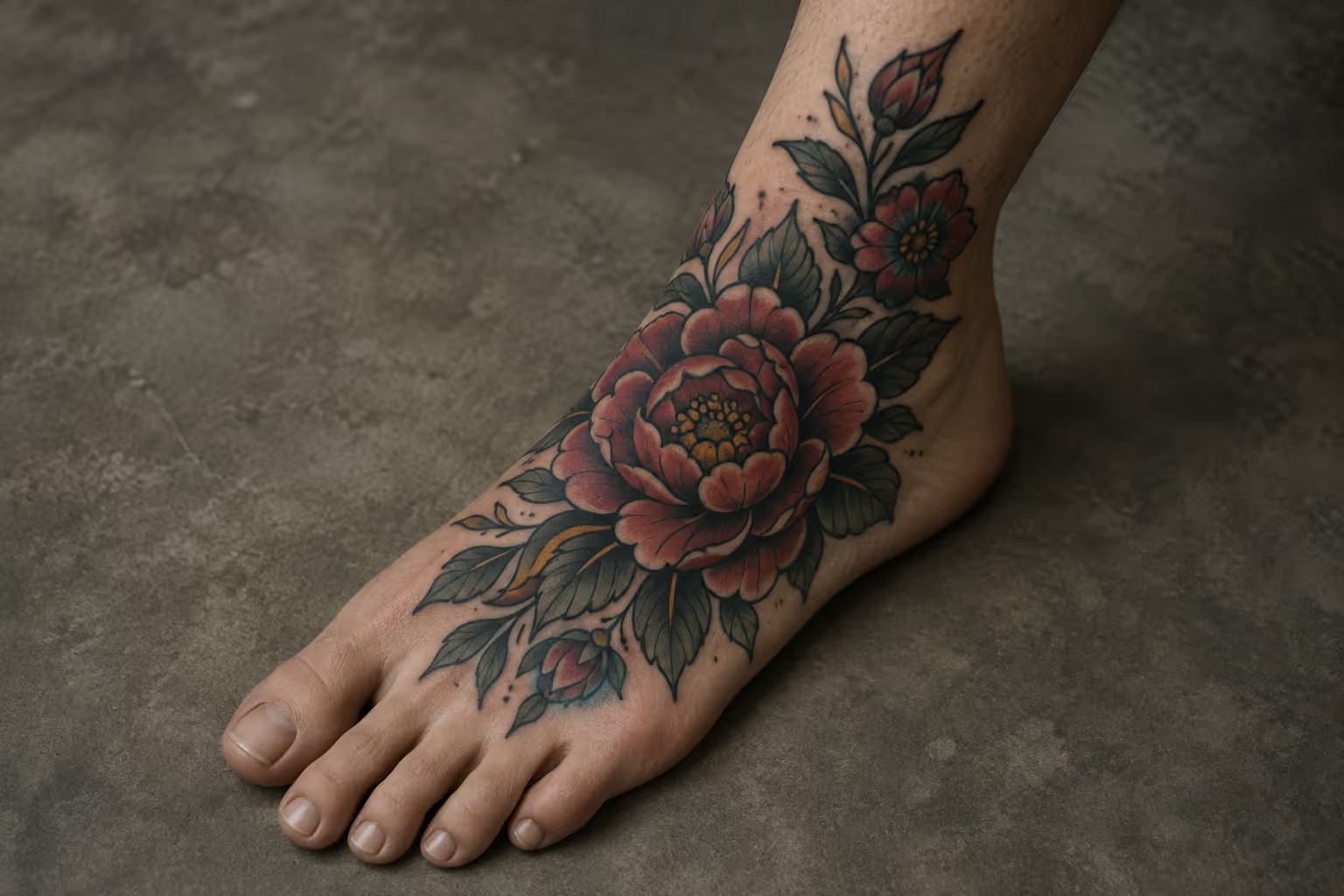
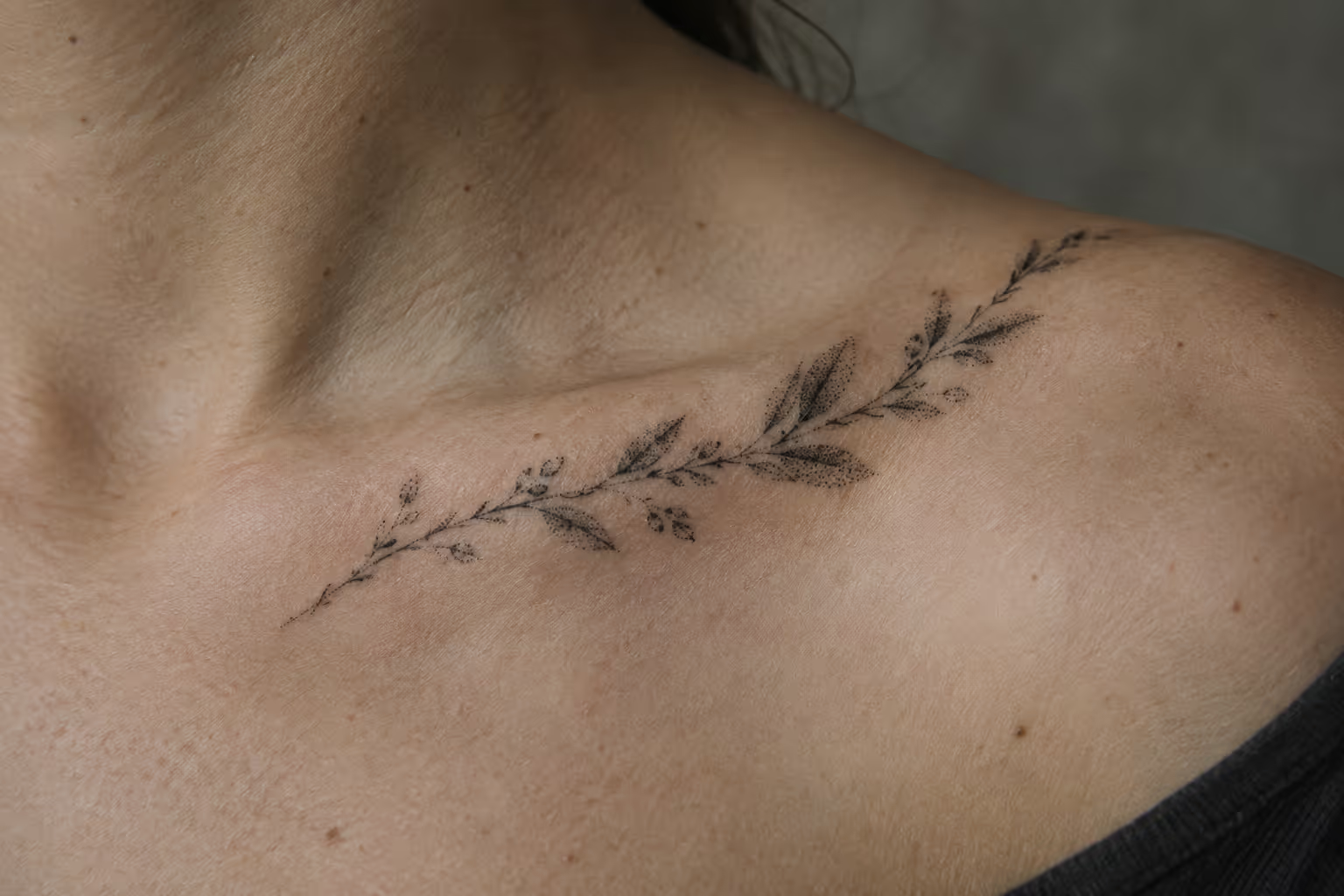
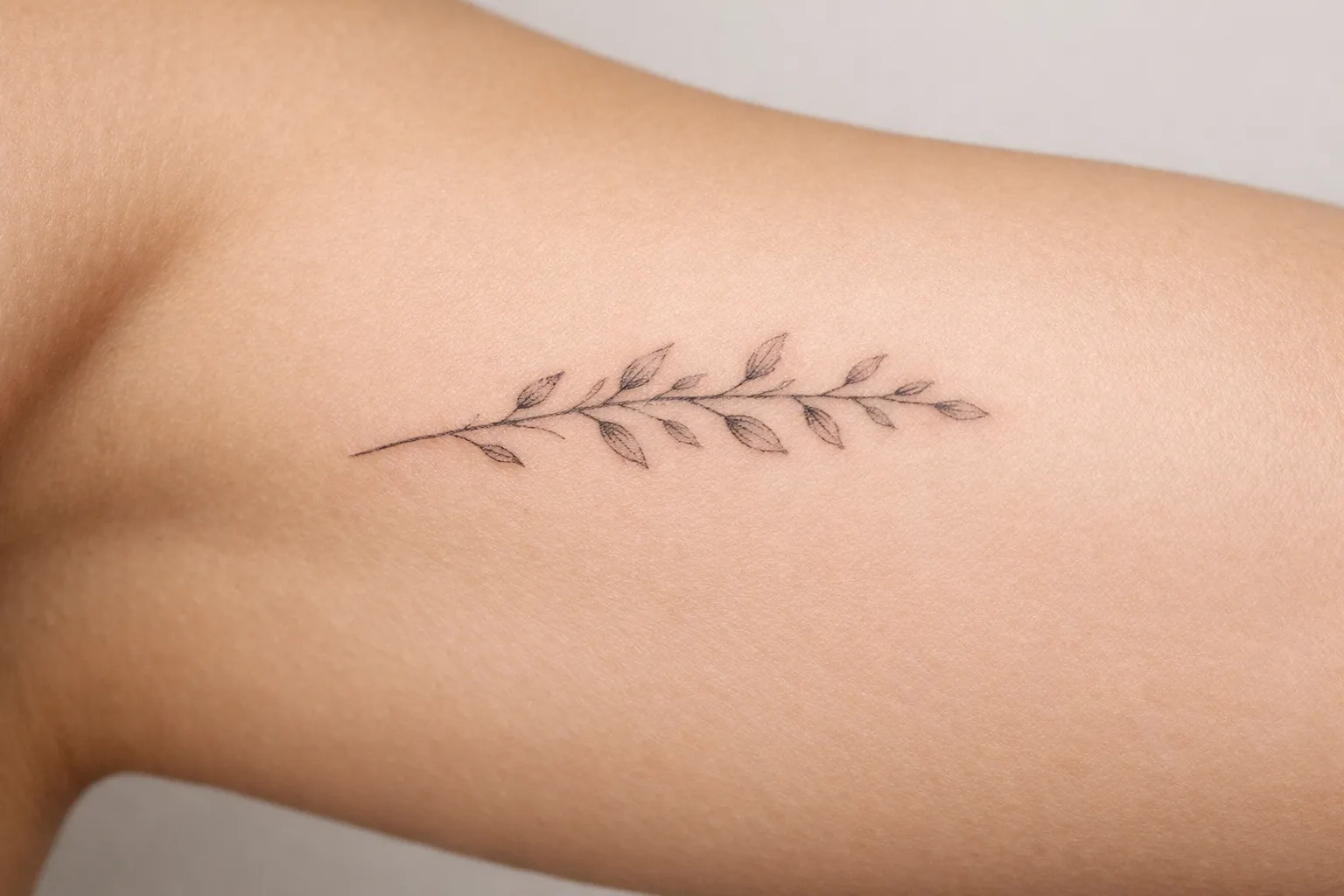
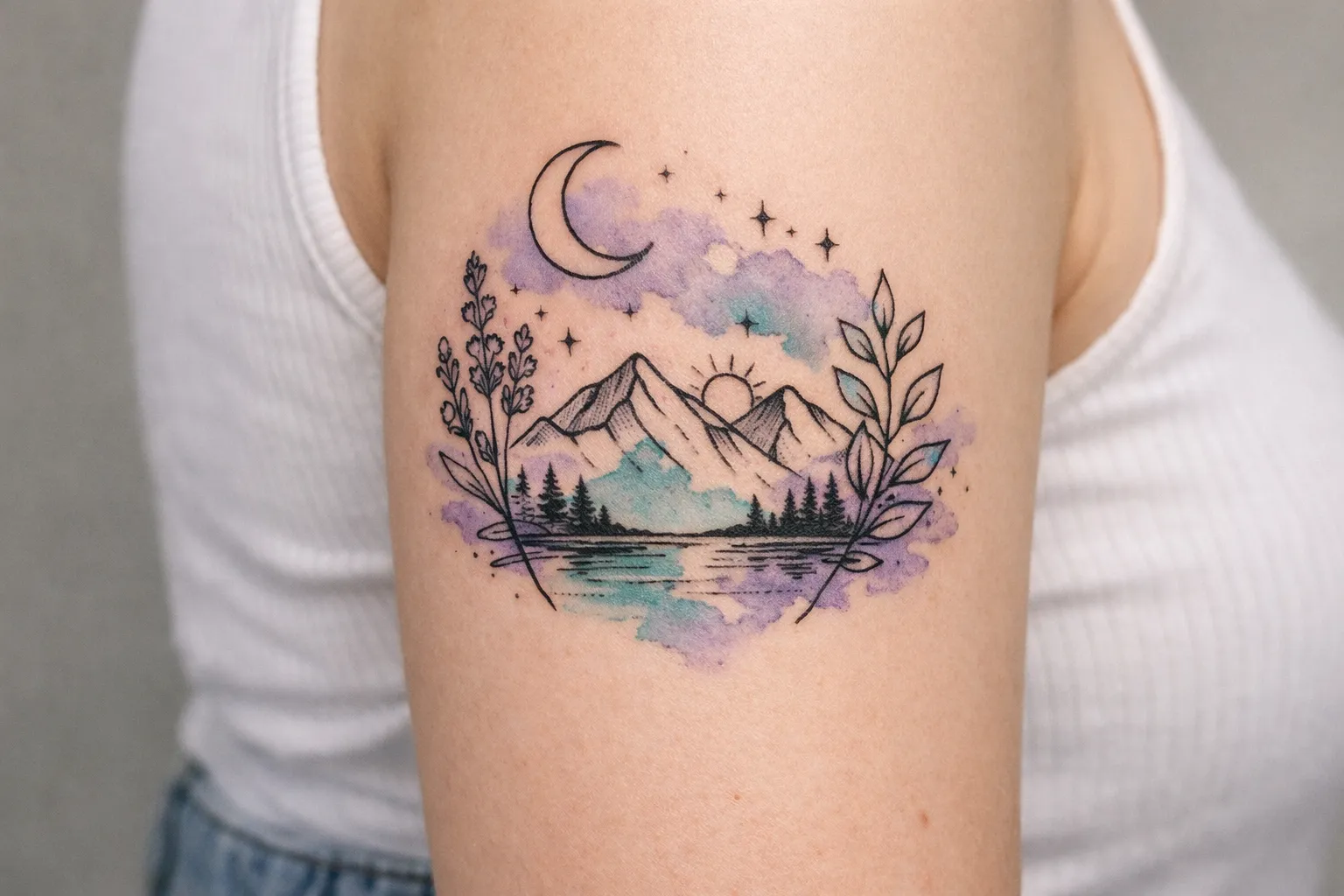
Flower arm tattoos work across all three zones but call for different handling in each. The outer upper arm suits bold blackwork florals or neo-traditional roses - thick outlines hold contrast on sun-exposed, muscle-padded skin. The inner arm suits fine-line botanicals (lavender, wildflowers, a single stem) but demands SPF discipline afterward. The inner bicep suits small floral clusters or a single bloom at 2 to 3 inches (5 to 8 cm), kept simple for the pain.
A butterfly arm tattoo follows the same logic. The outer upper arm handles larger, more detailed butterfly work at 4 to 6 inches (10 to 15 cm). The inner arm suits smaller, delicate butterflies at 2 to 3 inches (5 to 8 cm) in fine-line or blackwork. Skip micro butterflies under 1 inch (2.5 cm) on the outer arm - they blur as the muscle shape changes.
On symbolism, be precise about origin. In Japanese irezumi tradition, butterflies represent transformation and the soul, often appearing in women’s designs. In modern Western tattoo culture, they’re frequently decorative or tied loosely to personal change. There’s no single fixed meaning, so pick the reading that matters to you rather than assuming one.
Flower arm tattoos: which styles age best
Line weight is the variable that decides longevity. Bold blackwork florals and neo-traditional roses hold their read for decades. Fine-line botanicals lose contrast and can blur within 5 to 10 years without touch-ups as the ink spreads in the dermis.
If you want a delicate fine-line floral, ask your artist to anchor it with at least one area of stronger weight or shading. That single heavier element keeps the whole piece legible as the thin lines soften. I’ve seen beautifully executed fine-line botanicals from five years ago that now look like watercolor smears - not because the artist did anything wrong, but because the client skipped that anchor weight and didn’t keep up with SPF.
Butterfly arm tattoo placement: upper arm vs. inner arm
The upper arm gives you visibility and room for detail; the inner arm gives you a semi-hidden spot with less UV exposure, which suits delicate work better. An American traditional butterfly - bold outline, flat color - ages better than a watercolor-style piece on the sun-exposed outer arm, where bright color can fade noticeably within 2 to 3 summers without sunscreen. A fine-line butterfly on the inner arm lasts longer thanks to less UV, but it still needs that anchor weight to survive a decade without going soft.
What These Placements Cost: Size, Session Time, and Budget Ranges
A standalone upper arm, bicep, or inner arm piece typically runs well below sleeve pricing, with most medium designs falling in the low-to-mid hundreds rather than the thousands. Shop minimums in the US typically run about 75 to 150 USD depending on the studio, and experienced artists commonly charge somewhere between 150 and 300 USD per hour depending on reputation and city (10).
Here’s how that shakes out by size:
- Small pieces (about 2×2 inches / 5×5 cm): near the shop minimum, covering a simple butterfly, a small symbol, or short script on the inner bicep.
- Small-to-medium (up to 4×4 inches / 10×10 cm): most single inner arm or outer bicep designs land here.
- Medium (4 to 6 inches / 10 to 15 cm): the typical standalone upper arm or outer bicep piece, usually 2 to 4 hours and often one session.
For context, a half sleeve typically runs 1,000 to 3,000 USD and a full sleeve 2,000 to 5,000+ USD. Those are the next tier up, not what a standalone upper arm piece costs.
How pain level affects session cost on inner arm pieces
Because pain-sensitive zones need more breaks and slower pacing, an inner bicep piece of the same size as an outer bicep one can take noticeably longer. At an hourly shop, that extra time is billable time. If you’re budgeting for inner bicep work specifically, factor the pain tax into your estimate - the design isn’t larger, but the chair time is.
Design Longevity: How Arm Tattoos Age by Zone and Style
The single biggest factor in how an arm tattoo looks at ten years is UV exposure, and the outer upper arm at the T-shirt sleeve edge is one of the more sun-hit zones on the body. Without a broad-spectrum, water-resistant SPF 30 or higher after healing (11), color and fine lines lose definition faster. The American Academy of Dermatology is explicit that ultraviolet light fades tattoo ink, and that tanning beds and sunlamps do the same (11).
Style and line weight decide the rest. Bold blackwork and thick-line designs on the outer arm hold contrast as the skin softens. Fine-line and grey wash lose readability faster, blurring within 5 to 10 years without touch-ups. The inner bicep ages better for color retention because it sees less sun, but the soft, stretchy skin means fine lines can blur there too - keep those designs simple and well-spaced. The inner arm (triceps side) sits in between: moderate UV, similar aging profile to the inner bicep but slightly more exposed.
Two structural caveats. Micro tattoos under 1 inch (2.5 cm) placed directly over the outer bicep can distort as muscle mass changes; designs with generous negative space handle body changes more gracefully. And if a sleeve is anywhere on your horizon, leave negative space around a standalone piece and talk flow through at the consultation - a well-placed anchor keeps your options open, a poorly placed one becomes a cover-up problem.
Preparing for Your Arm Tattoo Appointment
Good preparation lowers your perceived pain and helps the skin take ink evenly. This matters more on the inner bicep than anywhere else on the arm. Work through this in order:
Preparing for Your Arm Tattoo Appointment
About 7 hours over several daysStep-by-step checklist to get your skin and body ready for an upper arm, bicep, or inner arm tattoo session.
- 1
The week before
Hydrate daily and moisturize the arm so the skin takes ink evenly. Avoid sunburn on the placement area. Skip blood thinners like aspirin and heavy alcohol 24 to 48 hours before.
- 2
The night before
Sleep 7 to 8 hours. Fatigue heightens perceived pain, especially important for inner bicep sessions.
- 3
The day of
Eat a full meal 1 to 2 hours before and drink water. Wear a loose short-sleeve or sleeveless top to avoid rubbing fresh linework.
- 4
At the studio
Bring water, a snack for longer sessions, and headphones. Arrive with clean, unmoisturized skin. Complete consent and confirm stencil placement before starting.
- 5
For inner bicep specifically
Discuss session length upfront and plan a 2 to 3 hour cap with breaks. Avoid booking a 5-hour inner bicep session as a first sitting.
Two logistics notes. In the US, you must be 18 to get tattooed without parental consent; many states allow 16 to 17 with parental consent and presence. Check your local laws. For multi-session work, allow 4 to 6 weeks between sessions for full healing.
Healing and Aftercare for Upper Arm and Inner Arm Tattoos
Arm tattoos heal on a standard timeline - about 2 to 3 weeks for the surface and 4 to 6 weeks for deeper integration. Sleeve friction, arm movement, and sun exposure at the T-shirt edge make consistency matter more here than on covered placements.
Day 1 to 3: Keep the initial bandage on as directed - 2 to 24 hours for a standard wrap, up to 5 days for a second-skin dressing. Wash gently 2 to 3 times daily with lukewarm water and fragrance-free soap, pat dry with a clean paper towel, and apply a thin layer of fragrance-free moisturizer. Avoid tight sleeves rubbing the fresh tattoo.
Week 1: Expect plasma, slight swelling, and peeling around day 4 to 6. Do not pick or scratch. Moisturize 2 to 3 times daily. No swimming, hot tubs, or heavy gym sessions that soak the area. For upper arm pieces, avoid heavy lifting for 3 to 5 days to minimize swelling in freshly tattooed tissue.
Week 2 to 4: Peeling finishes and the tattoo may look cloudy or dull - that’s the normal milky healing phase. Continue moisturizing once or twice daily. Light exercise is fine; keep direct sun off the placement.
Long-term (month 2 onward): Use a broad-spectrum SPF 30 or higher (11) whenever the outer upper arm is exposed. This is the single biggest factor in how the tattoo reads at 5 and 10 years. Re-moisturize regularly, and if a touch-up is needed it’s usually low-cost within 3 to 6 months at the original artist.
One clothing note worth repeating: wear loose short-sleeve or sleeveless tops for 5 to 7 days post-session. Tight fabric causes friction and can pull ink from healing skin.
Frequently Asked Questions About Arm Tattoos
Frequently Asked Questions
- How painful are arm tattoos compared to other placements?
- Outer upper arm and outer bicep pain rates are low (2-4/10), inner bicep is high (7-9/10), and inner arm is moderate (4-6/10).
- How big is a $500 tattoo on the arm?
- $500 typically covers a medium piece around 4-6 inches, enough for detailed butterflies, florals, or bold geometric designs on the outer bicep.
- What designs look best on the upper arm?
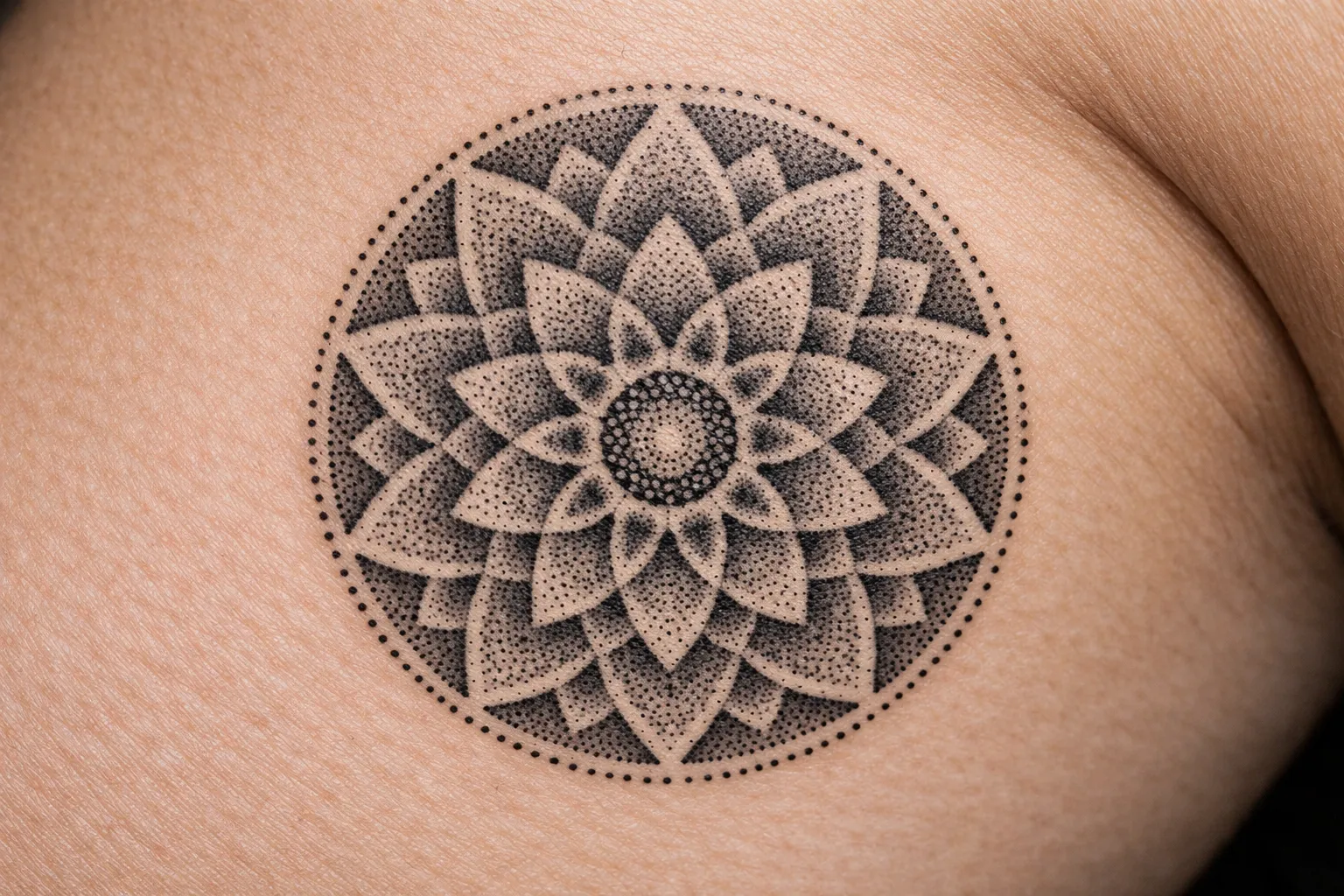
- Designs following muscle curves like mandalas, compasses, bold blackwork, geometric panels, and Japanese motifs age well on the outer upper arm.
- Is an inner arm tattoo worth the extra pain?
- Inner bicep tattoos offer semi-privacy and personal meaning but come with higher pain; outer arm tattoos offer similar canvas with less discomfort.
- Can I get a butterfly or flower tattoo on my upper arm if I'm planning a sleeve later?
- Yes, but discuss sleeve plans with your artist first to avoid awkward gaps and ensure the piece anchors future work.
- How long does an upper arm tattoo take to heal?
- Surface healing takes 2-3 weeks; deeper layers settle over 4-6 weeks; inner bicep may swell more but follows a similar timeline.
- Do arm tattoos fade faster than other placements?
- Outer upper arm tattoos at the T-shirt edge fade faster without daily SPF 30+; inner arm tattoos hold color longer due to less sun exposure.
- How painful are forearm tattoos?
- The forearm is one of the more manageable placements on the body - the outer forearm in particular has decent muscle and fat padding, making it easier than the inner elbow or ribcage. The inner forearm is slightly sharper than the outer side due to thinner skin and closer nerve proximity, but most people find it very sittable. As a rough comparison: outer forearm is easier than the inner bicep and roughly on par with the outer upper arm.
- What tattoos look best on forearms?
- The forearm is a long, relatively flat canvas that suits designs with a clear vertical or horizontal orientation - script, botanical stems, daggers, snakes, and banner-style American traditional work all read well there. Bold blackwork and neo-traditional pieces hold up best on the outer forearm given the UV exposure. Fine-line work is possible on the inner forearm, which sees less sun, but still benefits from anchor weight to stay legible over time.
- Is a forearm tattoo a good choice for visibility?
- The forearm is one of the highest-visibility placements on the body - it shows in short sleeves, rolled cuffs, and most casual settings. That visibility cuts both ways: it reads well as a design statement, but it is harder to conceal in formal or client-facing workplaces than an upper arm or inner bicep piece. A long-sleeve shirt covers it completely, which remains the most reliable option when concealment matters.
What Actually Determines How Your Arm Tattoo Turns Out
Three decisions do most of the work, and none of them is the design itself.
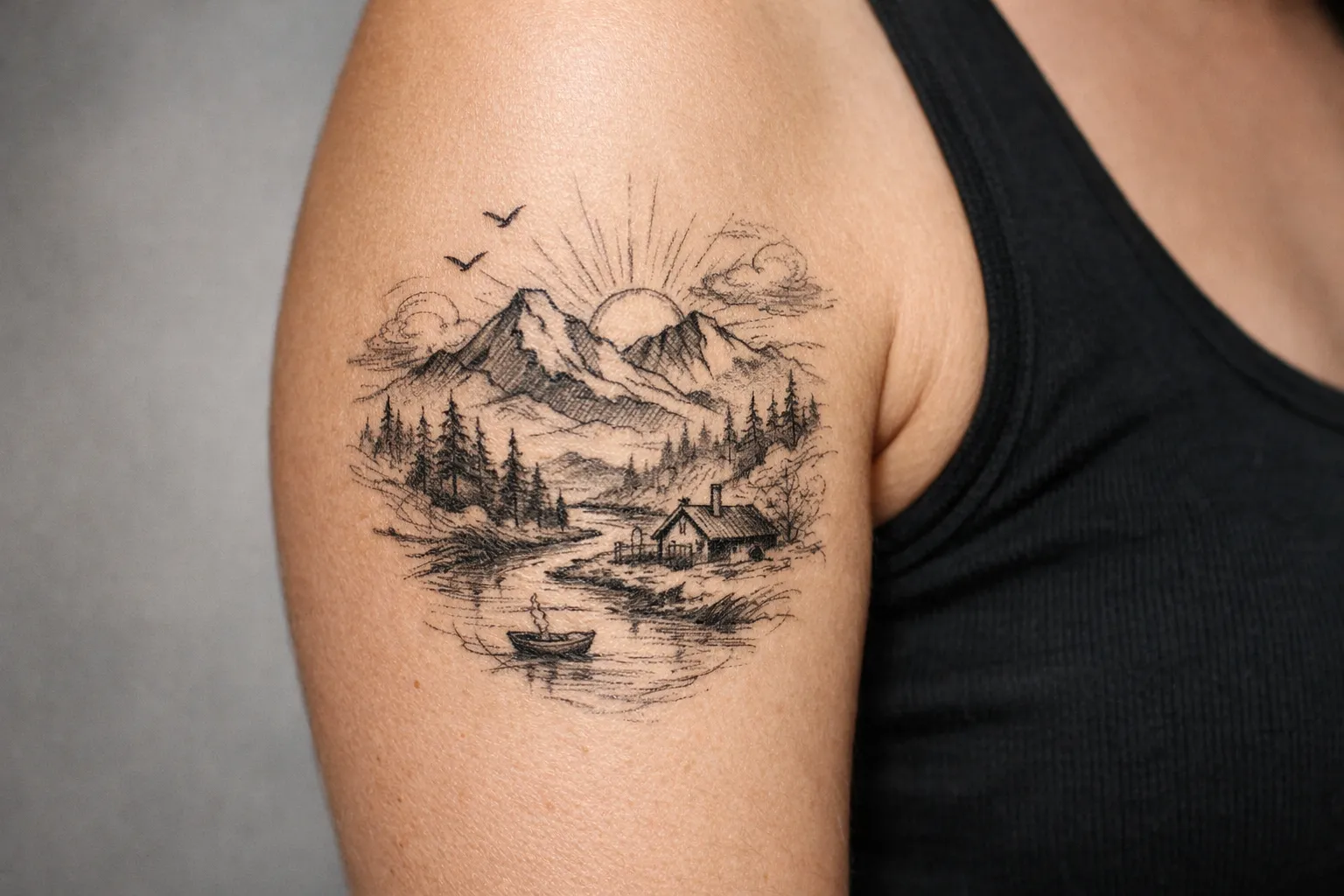
Pick the zone first. The outer bicep if it’s your first piece or you want flexible visibility; the inner bicep only if you want privacy and can sit through that 4-to-7 pain range; the inner arm (triceps side) if you want something in between. Get that decision right before you even open a reference folder.
Match the design weight to the placement. Bold blackwork on the outer arm, simpler linework on the inner bicep, fine-line florals and butterflies on the inner arm - with SPF discipline afterward for any of them.
Then protect it from the sun. The outer upper arm sits at the T-shirt edge and catches more UV than most people expect. Daily SPF 30 or higher is the difference between a tattoo that still reads cleanly at ten years and one faded into a soft blur by year three.
And the last practical note: if a sleeve is on the horizon, tell your artist before the stencil goes on. A well-placed standalone upper arm piece is a strong anchor. A poorly placed one is a cover-up problem waiting to happen.