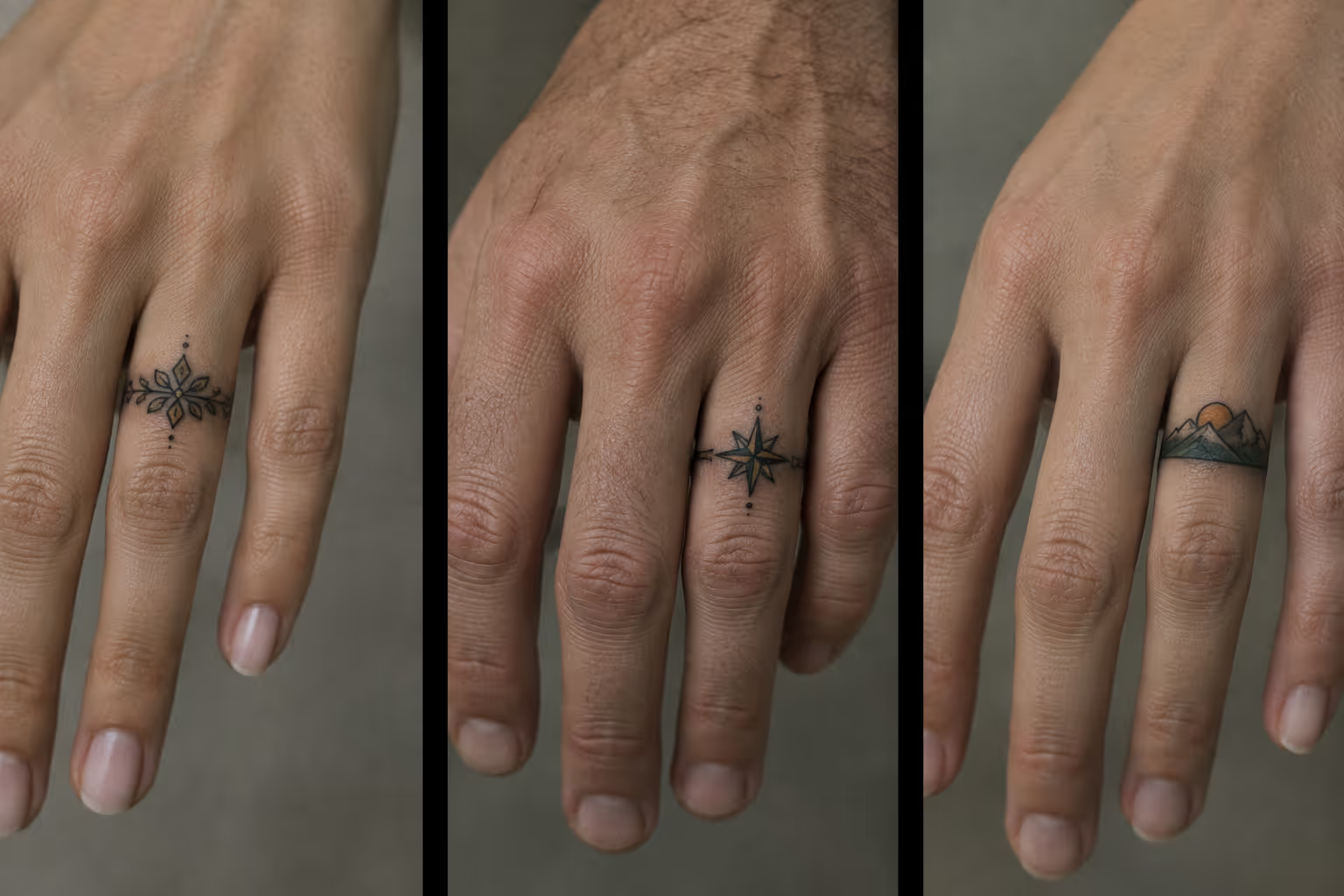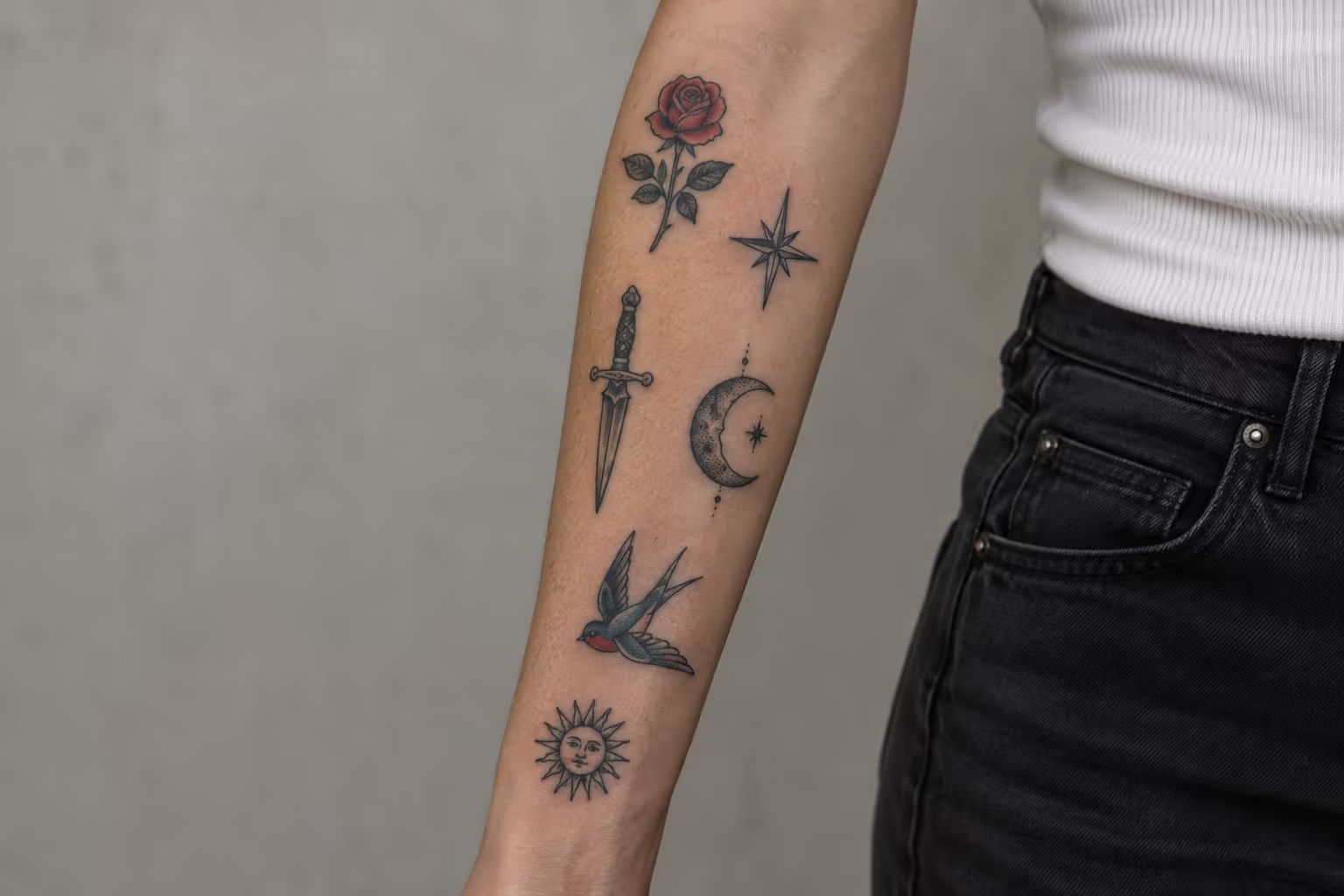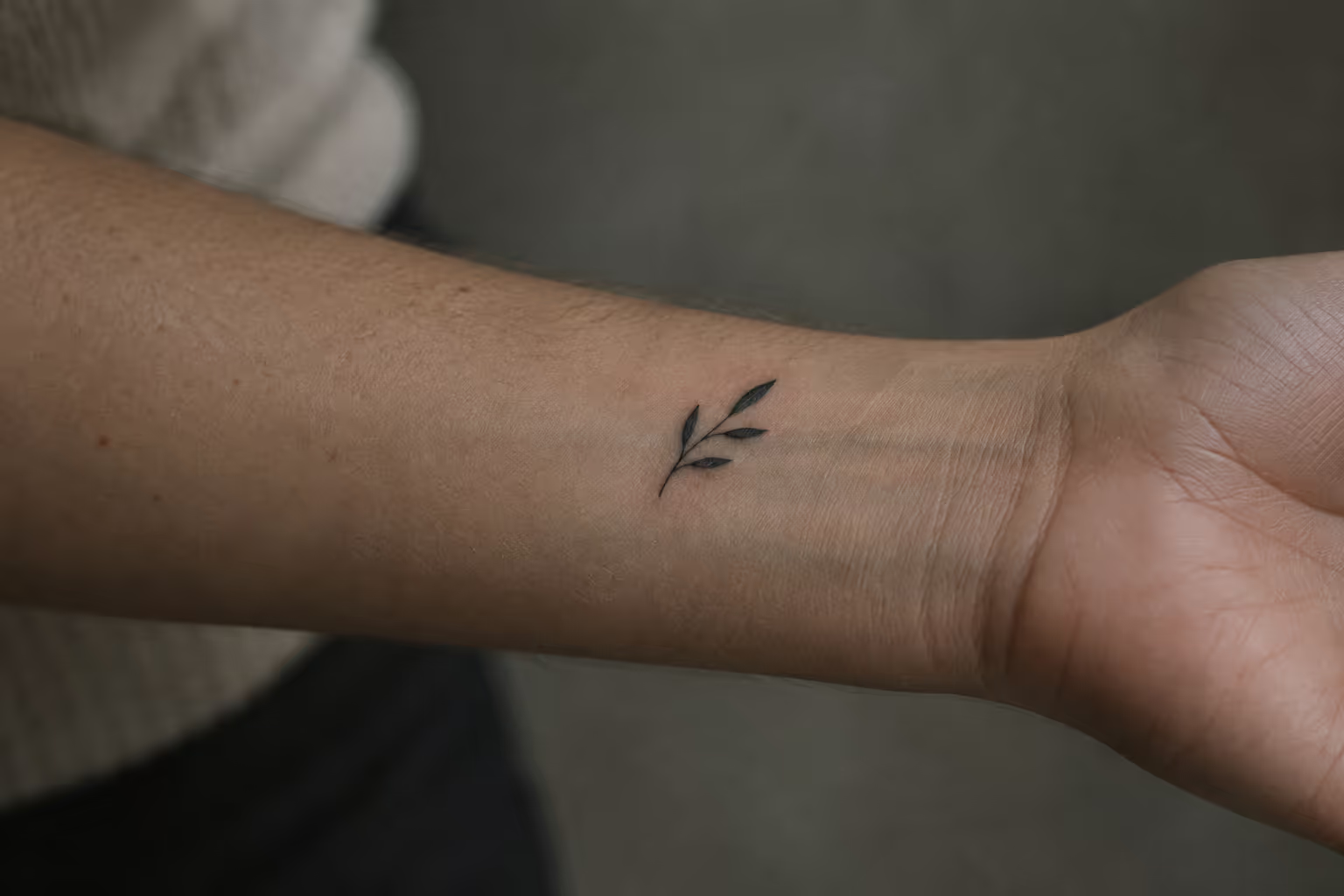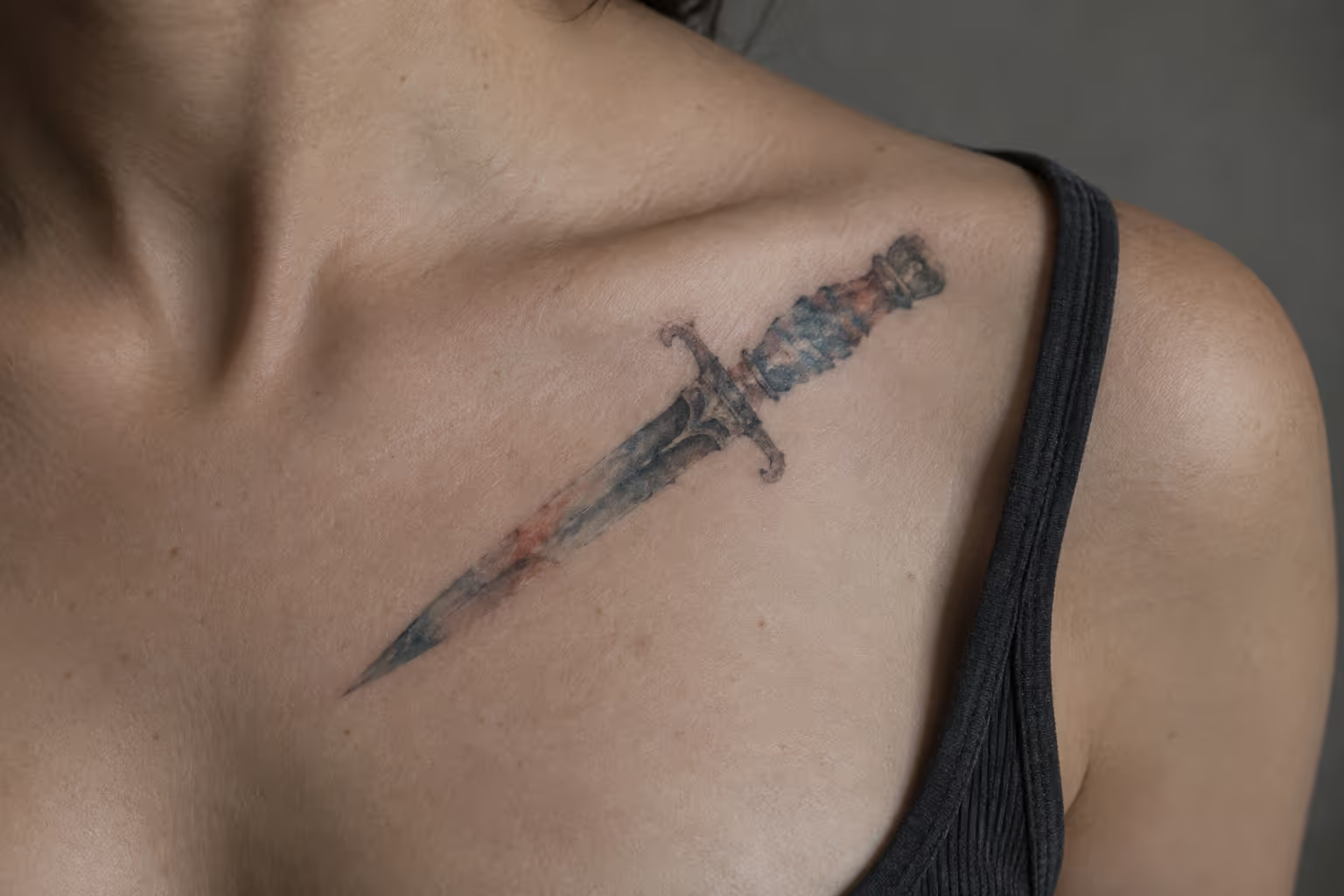
Arms account for a third of all tattoo placements, yet most women getting their first piece land on the wrist or ankle instead. That gap is exactly where good tattoo ideas for women should start - not with a gallery of pretty motifs, but with a design matched to a placement that can actually carry it. Where a tattoo goes decides how much it hurts, whether you can cover it for work, and how it looks in ten years. This guide pairs each design with honest sizing, aging behavior, and placement logic so you can tell the difference between what’s popular and what’s right for you.
Should You Get a Tattoo? Honest Pros and Cons
Before you commit, weigh what the decision actually involves.
The upside:
- The style range is wide enough that a design can be as discreet as a 1-inch wrist symbol or as visible as a full sleeve, so it fits your dress code and your taste.
- Small tattoos under 2 inches are quick and land in the lowest cost bracket, typically $80 to $150 in US studios, which makes experimenting relatively low-risk.
- Arms and wrists are the most practiced placements in any shop, so fine-line and delicate work tends to come out cleaner there.
- You can build incrementally - several small pieces over years instead of one large commitment upfront.
The trade-offs:
- Shop minimums mean even a tiny tattoo rarely costs less than $80 to $150 (4), regardless of how little time it takes.
- Fine-line and script on high-friction spots (inner wrist, fingers, ankles) can soften and blur within a few years.
- Ribs, sternum, and spine photograph beautifully but rank among the most painful placements.
- Large concept pieces - sleeves, back mandalas - mean multiple sessions and budgets that climb past $1,000.
✓ Pros
- Wide style range means designs can be as discreet or visible as needed
- Small tattoos (under 2 inches) are relatively quick and affordable ($80-$200 range)
- Arms and wrists are highly practiced placements - artists are skilled there, which benefits fine-line work
- Can be built incrementally - small pieces over time rather than one large commitment
✗ Cons
- Shop minimums mean even tiny tattoos rarely cost under $80-$150, per U.S. pricing guides
- Fine-line and script work on high-friction spots (wrists, fingers, ankles) can blur within a few years
- Ribs, sternum, and spine are popular for aesthetics but are among the most painful placements
- Large concept pieces (sleeves, back mandalas) require multiple sessions and $1,000+ budgets
What the Data Says About Where Women Actually Get Tattooed
Arms are the single most common tattoo placement at 33%, according to a survey of 1,000 tattooed Australians conducted for CynoSure Australia by McCrindle Research, as reported by Women’s Health (6). The same survey found women were more likely than the overall sample to have tattoos on their back, wrist, and ankles - areas Women’s Health identified as where women “were more likely to get inked” (6).
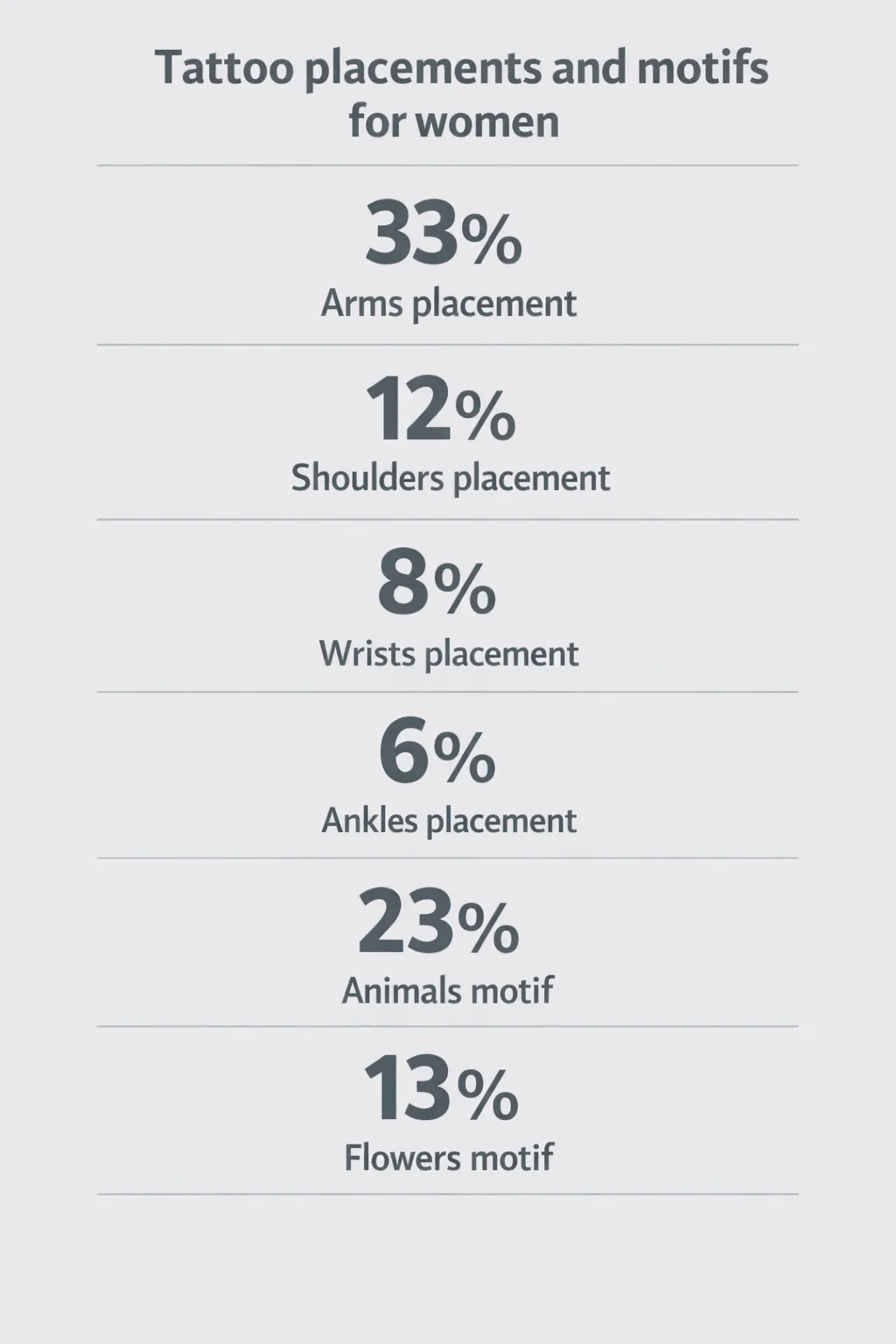 Arms dominate placements at 33%, with animals 23% and flowers 13% among women’s tattoo choices in the Australian survey.
Those zones dominate for practical reasons. They hurt less, they cover easily for work, and because artists tattoo them constantly, the technical execution tends to be stronger - especially for the fine-line work many women want. Motif preferences track just as clearly in the data: animal designs showed up in 23% of choices, flowers in 13%, and hearts in 6%, per the same CynoSure Australia/McCrindle Research survey as reported by Women’s Health (6). For anyone researching tattoos for women, that combination of forgiving placement and repeat-friendly motifs is the baseline the rest of this guide builds on.
One thing the survey won’t tell you: how much each spot hurts. Practitioner guidance is consistent that the outer forearm and upper arm are among the least painful placements, while ribs, sternum, inner wrist, and ankles run noticeably more intense - the skin is thinner there and bone sits closer to the surface.
Forearm and upper arm - the most practiced canvas
The outer forearm and upper arm age well, suit nearly every style, and sit at the low-to-moderate end of the pain range. That makes them the smart default for a first tattoo, a fine-line floral, or a geometric band. Skin here barely moves, so lines stay crisp for years, and the flat-to-gently-curved surface gives a design room to sit without distorting. If you want one placement that’s hard to get wrong, this is it.
Wrist, ankle, and collarbone - the jewelry-zone placements
The wrist reads like a bracelet, the ankle like an anklet, the collarbone like a necklace. That’s the appeal, and it’s why these three host so much small script and minimal symbolic work. The honest caveat: the inner wrist and ankle involve thinner skin and moderate pain, and fine-line work here softens faster than it would on the forearm. Keep the design simple and the lines a touch heavier than you think you need.
The Most Popular Designs Right Now
The three motif families that top the data are flowers, animals, and hearts. What separates a piece that still looks sharp in a decade from one that blurs is rarely the motif itself - it’s the size, the style, and where you put it. Here’s how each breaks down.
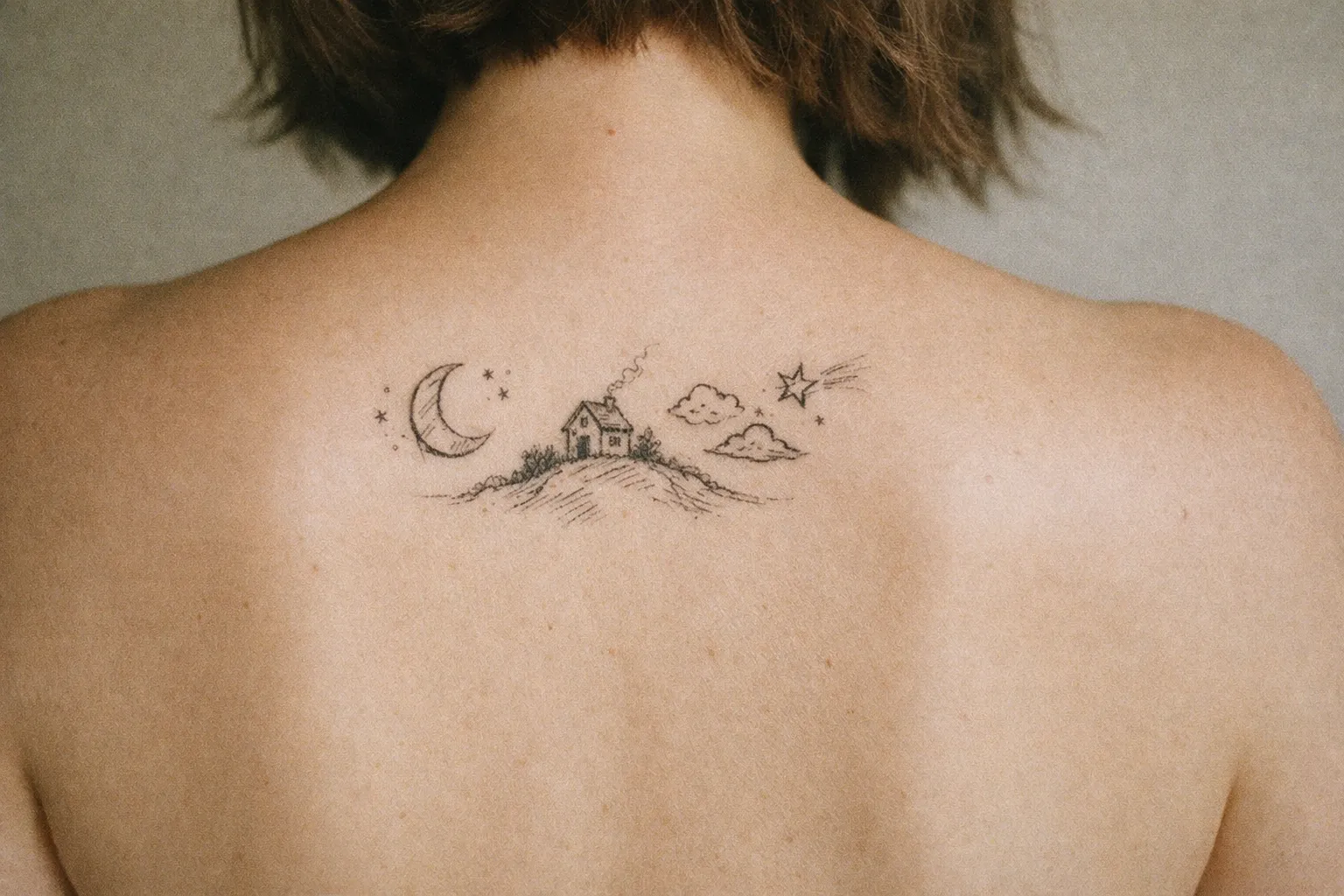
Floral tattoos - from bold roses to fine-line botanicals
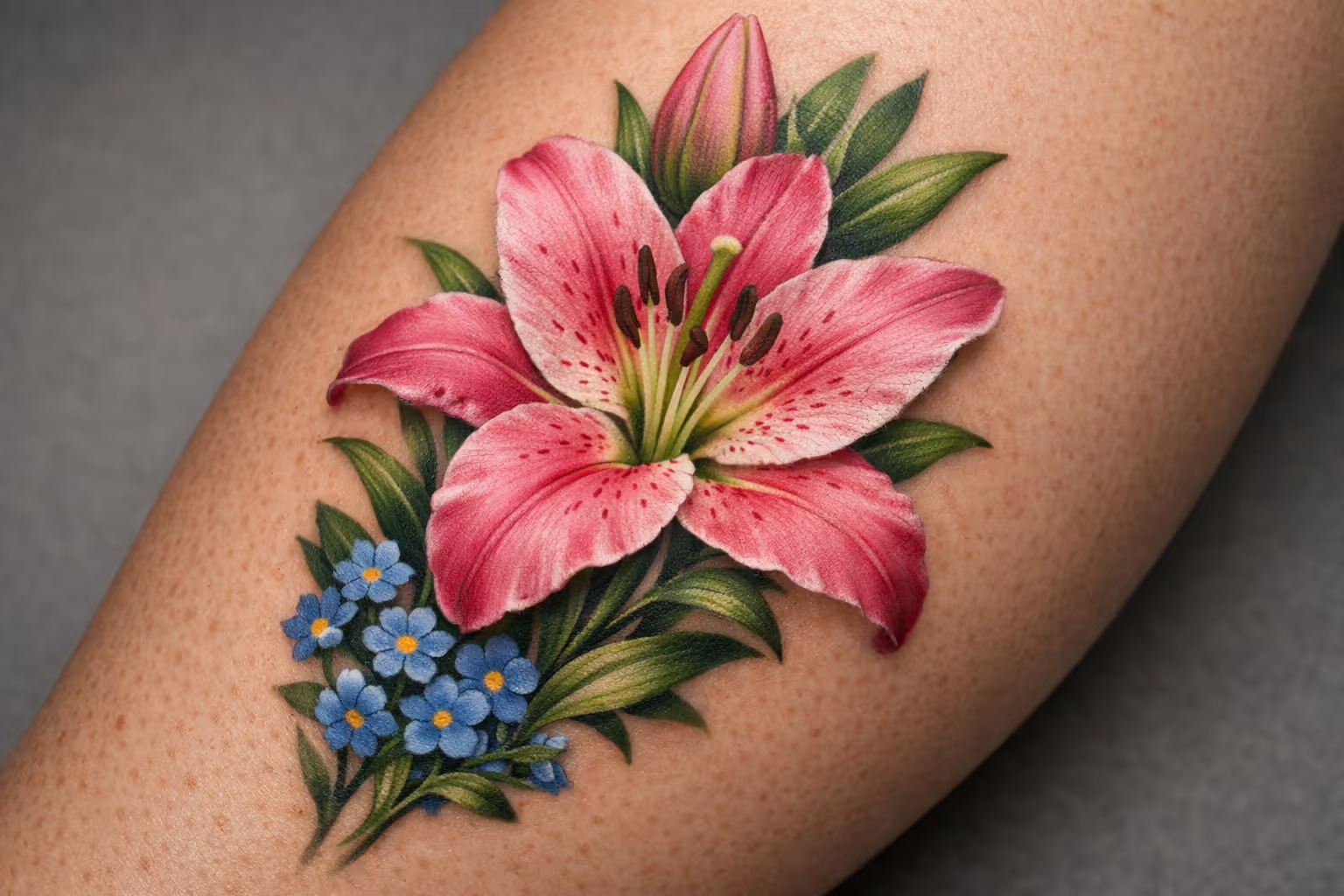
Flowers accounted for 13% of all tattoo motifs in the CynoSure Australia/McCrindle Research survey of 1,000 tattooed Australians, as reported by Women’s Health (6), making them the second most popular motif category behind animals. Roses are consistently the most-requested floral design across the style, whether rendered bold and traditional or soft and fine-line.
- Rose in American traditional style leans on the style’s two hallmarks: a thick black outline and a limited palette (red, green, black). That construction is why traditional roses hold up for decades. Fine-line botanical roses are softer and more delicate but need diligent sun protection and may soften sooner.
- Lotus carries rebirth and spiritual awakening symbolism from Buddhist and Hindu traditions. It suits fine-line or dotwork treatment well.
- Sunflower reads as optimism and carries a loose Van Gogh association in Western tattoo culture.
Size a single bloom at 2 to 5 inches and place it on the forearm, upper arm, or ankle. Below 2 inches, petal detail crowds and blurs as skin ages.
Animal motifs - what each one actually signals
Animals were the single largest motif category at 23% in the CynoSure Australia/McCrindle Research survey, as reported by Women’s Health (6), and a few dominate women’s choices:
- Butterfly - transformation and rebirth. Works best as fine-line at 2 to 4 inches on the wrist or collarbone. Keep the outline from going too thin, or high-friction placement will blur it.
- Wolf - strength and pack loyalty, with roots in both Celtic and Native American associations. Give it 4 to 7 inches on the upper arm or thigh so the face reads clearly.
- Cat - independence. The Japanese maneki-neko (beckoning cat) tradition frames it as luck and welcome, while Western versions tend toward a minimalist single-line outline.
Script and lettering - the font decisions that matter
A single word or short phrase reads best on the inner forearm or collarbone, where there’s a flat run of skin for the letters to sit. Hearts made up 6% of choices (6), and small script sits alongside them as a perennial request. The pitfall is thin fonts at small sizes: ultra-thin script blurs within a few years unless it is scaled up to about 1 inch (25 mm) of letter height, and the wrist is where blowout (ink spreading under the skin) shows up most. If you want a phrase on your wrist, go a step larger and a step bolder than the reference image suggests.
Celestial and geometric - placement is everything
Moon phases along the spine or collarbone work well at 4 to 6 inches, and those low-friction spots let fine-line hold. Mandalas belong on the upper back or thigh, where there’s flat, broad space for symmetry - and they demand an experienced artist, because any wobble in a symmetrical pattern is immediately obvious. Geometric linework ages better on the forearm or calf than on the ankle, where skin turnover works against crisp lines.
Meaning-Driven Picks - Designs Organized by What You Want to Say
Motif lists tell you what’s popular. Organizing by intent tells you what to actually pick.
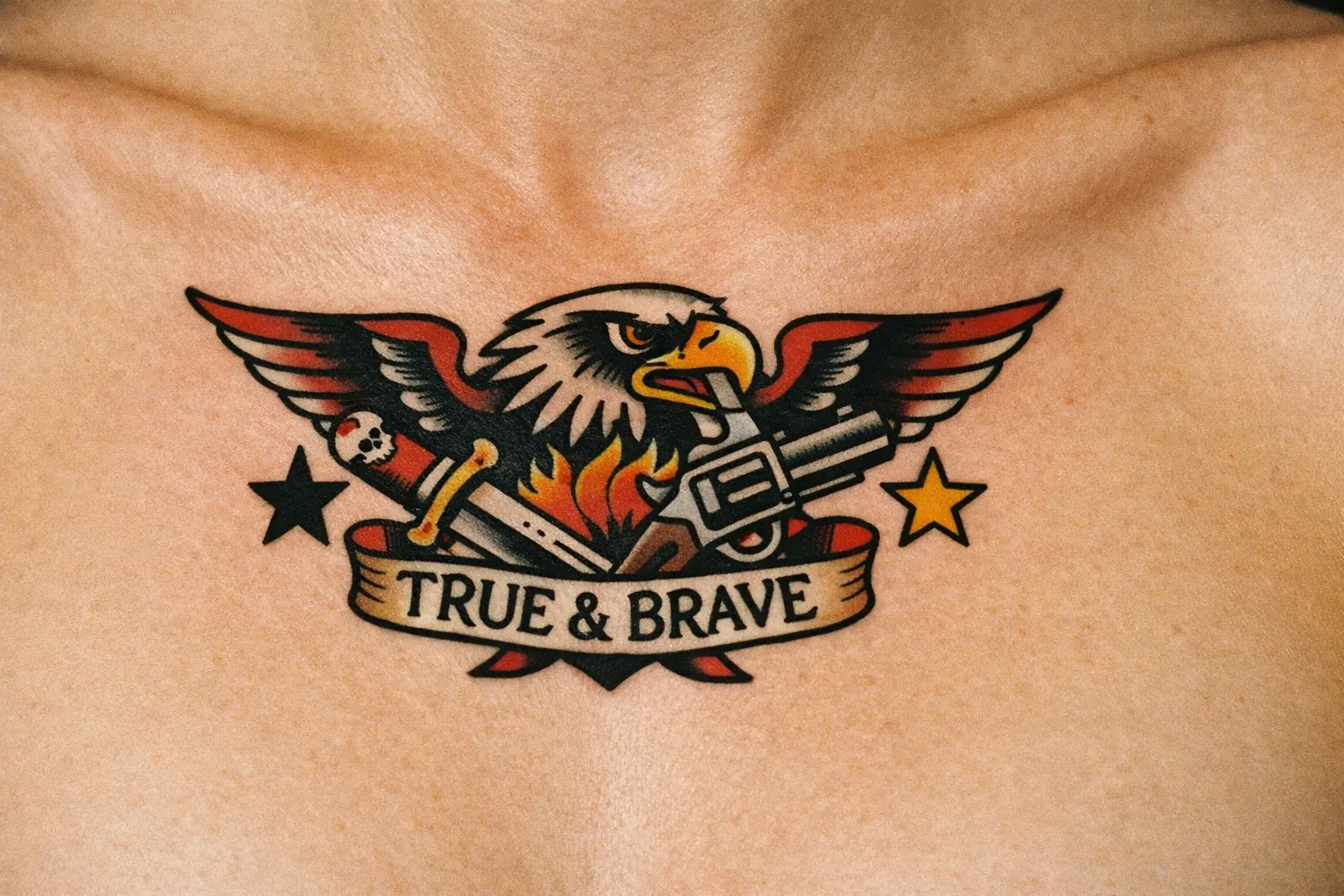
Tattoos that reference strength - what holds up visually and symbolically
- Lion - a straightforward strength read. Blackwork or neo-traditional at 4 to 6 inches on the upper arm gives the mane and face enough room to hold detail.
- Unalome - a Buddhist symbol of the path toward enlightenment, the winding line straightening as it rises. Fine-line on the spine or sternum suits it well.
- Semicolon - recognized as a symbol of mental health awareness and solidarity with people who’ve experienced depression, suicide attempts, or self-harm. It’s typically kept small and discreet. Small on the wrist or behind the ear works.
Family-connected designs - sizing and placement when matching with others
- Children’s birth dates in Roman numerals - clean and legible on the inner forearm or wrist. Keep the numeral strokes bold enough to survive.
- Mother-daughter matching motifs - coordinate sizes deliberately. Skin elasticity differs across generations, so a slightly larger version on the older skin and a smaller one on the younger tends to age more evenly.
- Small paw prints - a simple pet reference that reads well small.
Spirituality and protection
- Lotus - Hindu and Buddhist rebirth and purity.
- Evil eye (nazar) - a Turkish and Greek symbol of protection against envy and harm. Small on the collarbone or wrist.
- Celtic knotwork - defined in Celtic art as a continuous interlaced line symbolizing eternity and interconnectedness, which is why it gets chosen for family bonds. Give it 3 to 5 inches on the upper arm or calf.
Growth, new chapters, and memory
A phoenix needs size to read - plan 5 to 8 inches on the upper back or thigh. A snake shedding its skin reads as transformation and sits well at 4 to 6 inches on the forearm or upper arm. For grief and memory, portrait work requires a realism specialist and at least 4 inches for the likeness to hold, on the upper arm or thigh. Dates and coordinates on the inner forearm keep memorial pieces clean and legible.
Placement Guide - Pain, Visibility, and How Each Spot Ages
Placement decides three things at once: how much it hurts, whether you can hide it, and how it looks a decade out.
The placements that age best - outer forearm, upper arm, calf, outer thigh
The outer forearm is the safest bet in tattooing: low pain, ages well, and handles fine-line and bold styles equally. I’d put a first-timer here almost every time. The upper arm and shoulder suit medium-to-large pieces at 4 to 7 inches and cover easily under a sleeve, making them ideal for floral half-sleeves and geometric bands. The outer calf and outer thigh offer a large, relatively low-pain canvas for detailed mandalas, botanicals, and portraits. Practitioner guidance consistently names these four zones for better aging and lower friction.
The placements that need honest expectations - wrist, ankle, ribs, hands
The wrist is popular but comes with a caveat: the inner wrist hurts more than the outer, and fine-line here softens faster than on the forearm. The hip fades faster than the thigh because of waistband friction - worth knowing before you commit to something detailed there. The ribcage and sternum are visually striking and among the most painful placements; the sternum is more intense than the side ribs, and fine-line can hold here if your artist is experienced. The ankle runs moderate on pain and ages decently on the outer bone, but the foot fades fast from friction and skin turnover. Hands and fingers are high-friction and fast-fading, often needing touch-ups every 1 to 3 years - which is why they’re a poor first-tattoo choice.
I’ve watched clients come back within two years for finger touch-ups they didn’t budget for. It’s not a dealbreaker, but go in knowing.
Style Breakdown - Which Tattoo Style Fits Which Design
Aesthetic preference and technical reality don’t always match. Here’s how the main styles behave over time.
Fine-line / single-needle uses thin, delicate lines and minimal shading - ideal for botanicals, script, and celestial motifs. Its lines widen over decades, so it belongs on low-friction placements (outer forearm, upper arm, calf). Common pitfall: artists who go too thin on the needle gauge produce lines so fine they ghost out within three to five years, leaving a blurry shadow where crisp detail used to be. Aging durability: moderate.
American traditional relies on thick black outlines, a limited palette, and bold fills - those two hallmarks are exactly why it ages the most reliably of any style. Classic motifs: roses, hearts, eagles, anchors. Common pitfall: artists who soften the outlines or expand the palette to please a client end up with something that reads as neo-traditional but has neither the durability of traditional nor the detail of neo - the worst of both. Aging durability: excellent.
Blackwork uses solid black fills and high contrast, either geometric or illustrative - the density of pigment is what makes it age well. Common pitfall: artists who pack the black unevenly leave patchy gray areas once healed, and touch-ups on solid black are notoriously difficult to blend. Aging durability: excellent.
Neo-traditional keeps bold outlines but adds a richer color range and more illustrative detail - a middle ground between fine-line delicacy and traditional durability. Common pitfall: crowding too much illustrative detail into a medium-sized piece; at 4 inches or under, the extra linework competes with itself and muddies as the skin ages. Aging durability: good.
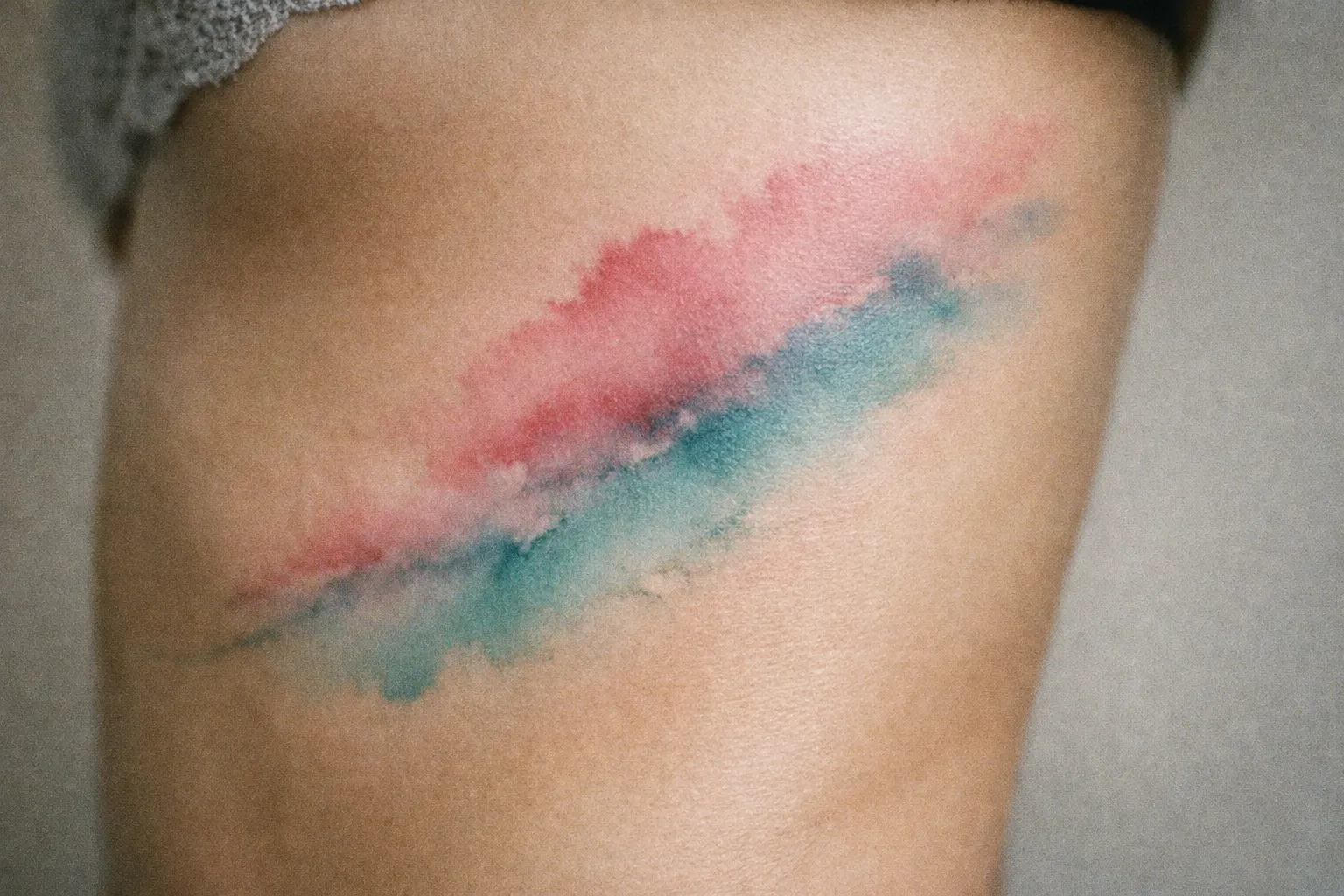
Watercolor leans on color washes, often without a strong black anchor, and fades faster than any other style. Pairing it with solid black outlines improves longevity considerably, but without that dark structure underneath, it will fade. Common pitfall: artists who skip the black base entirely to chase a “pure watercolor” look are setting the client up for a washed-out smear within five years. Aging durability: poor without a black base.
Geometric / dotwork is precise and mathematical; dotwork shading ages gently, but imprecision shows immediately, so it needs a specialist. Common pitfall: freehand geometric linework that isn’t measured and mapped before needling - even a millimeter of drift in a symmetrical mandala is visible to anyone who looks twice. Aging durability: good.
If your priority is a design that still looks sharp in twenty years, American traditional and blackwork are the reliable picks. If you want the delicate fine-line look, accept that you’re signing up for more diligent sun protection and possible touch-ups.
Tattoo Style Breakdown
| Fine-line / Single-needle | American Traditional | Blackwork | Neo-traditional | Watercolor | Geometric / Dotwork | |
|---|---|---|---|---|---|---|
| Aging Durability | Moderate | Excellent | Excellent | Good | Poor without black base | Good |
| Best Placements | Outer forearm, upper arm, calf | Arms, chest, shoulders | Upper arm, thigh, back | Upper arm, thigh | Forearm, shoulder | Forearm, calf, thigh |
| Ideal Motifs | Botanicals, scripts, celestial | Roses, hearts, eagles, anchors | Mandalas, silhouettes, abstract | Illustrative, bold color | Color washes, soft blends | Precise patterns, dot shading |
| Complexity / Skill Required | High | Medium | High | High | High | Very high |
| Watercolor-Safe? | No | Yes | Yes | Yes | Yes | Yes |
Tattoo Trends for Women in 2026 - What’s Actually Worth Getting
Several trends are genuinely worth getting - not just Instagram-of-the-moment picks:
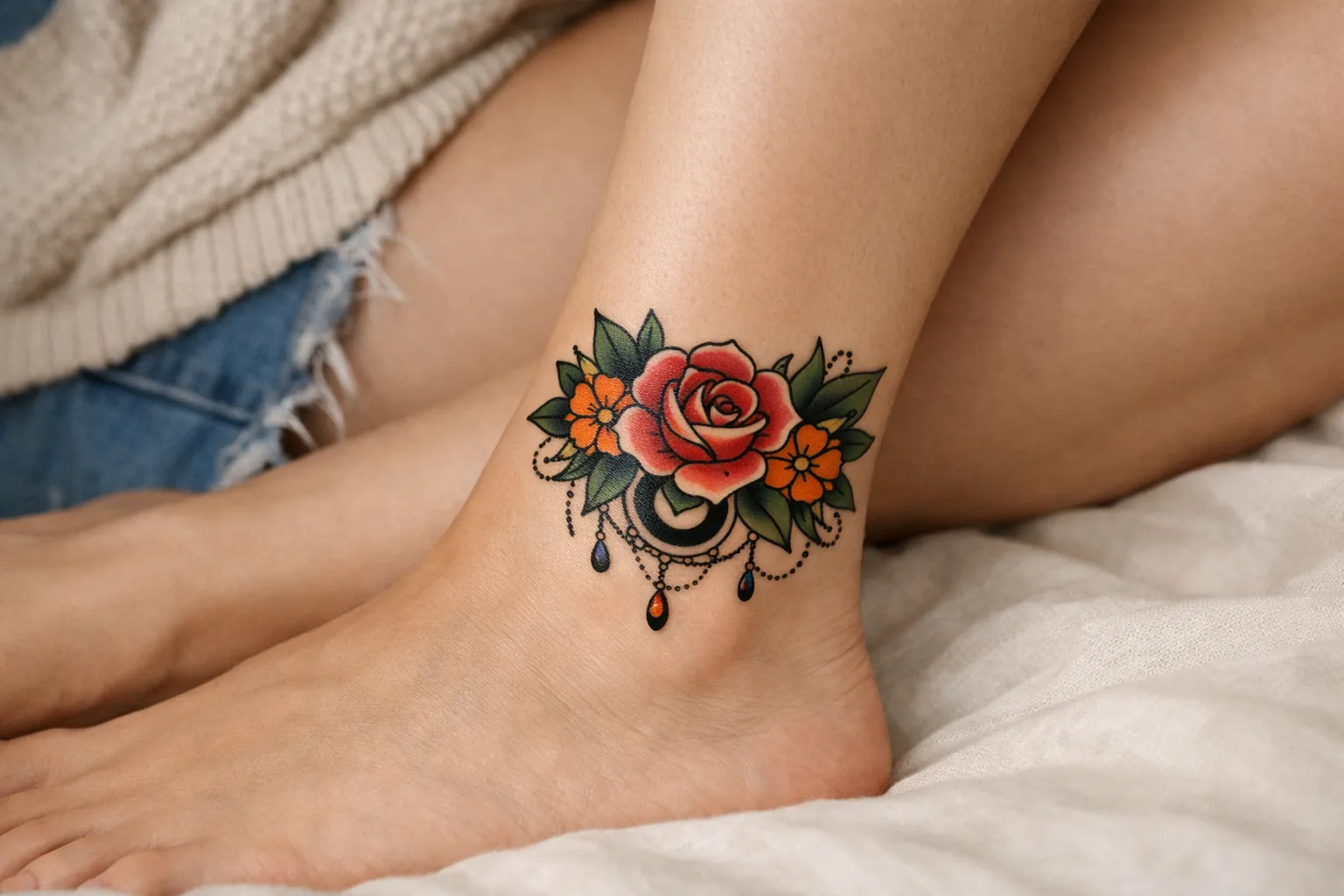
- Fine-line botanical clusters - small groups of flowers and leaves rather than a single isolated bloom, typically 3 to 6 inches on the forearm or upper arm. The leading nature-inspired trend heading into 2026.
- Micro realism - tiny photographic details like a single eye or a small face. These sit in the tiny bracket (under 2 inches, roughly $80 to $200) but demand a specialist and meticulous aftercare to age well at that scale.
- Ornamental / jewelry-style tattoos - designs mimicking gold chains, gems, and lace on the collarbone, sternum, and wrist. Most land in the small-to-medium range, 2 to 6 inches.
- Blackout and negative space - bold, high-contrast graphic work on the upper arm or thigh, a countertrend to years of delicate fine-line dominance. Because of the volume of packed black, it usually takes multiple sessions.
- Illustrative / storybook style - loose, hand-drawn animals and botanicals with an editorial feel, on the forearm or thigh.
One honest caveat: trends move faster than tattoos fade. Pick something that means something specific to you, not just what’s filling your feed in 2026.
Size, Sessions, and What to Expect Before You Book
Size drives both cost and session length more than any other factor. Here’s what each tier means in practice, using 2026 US pricing:
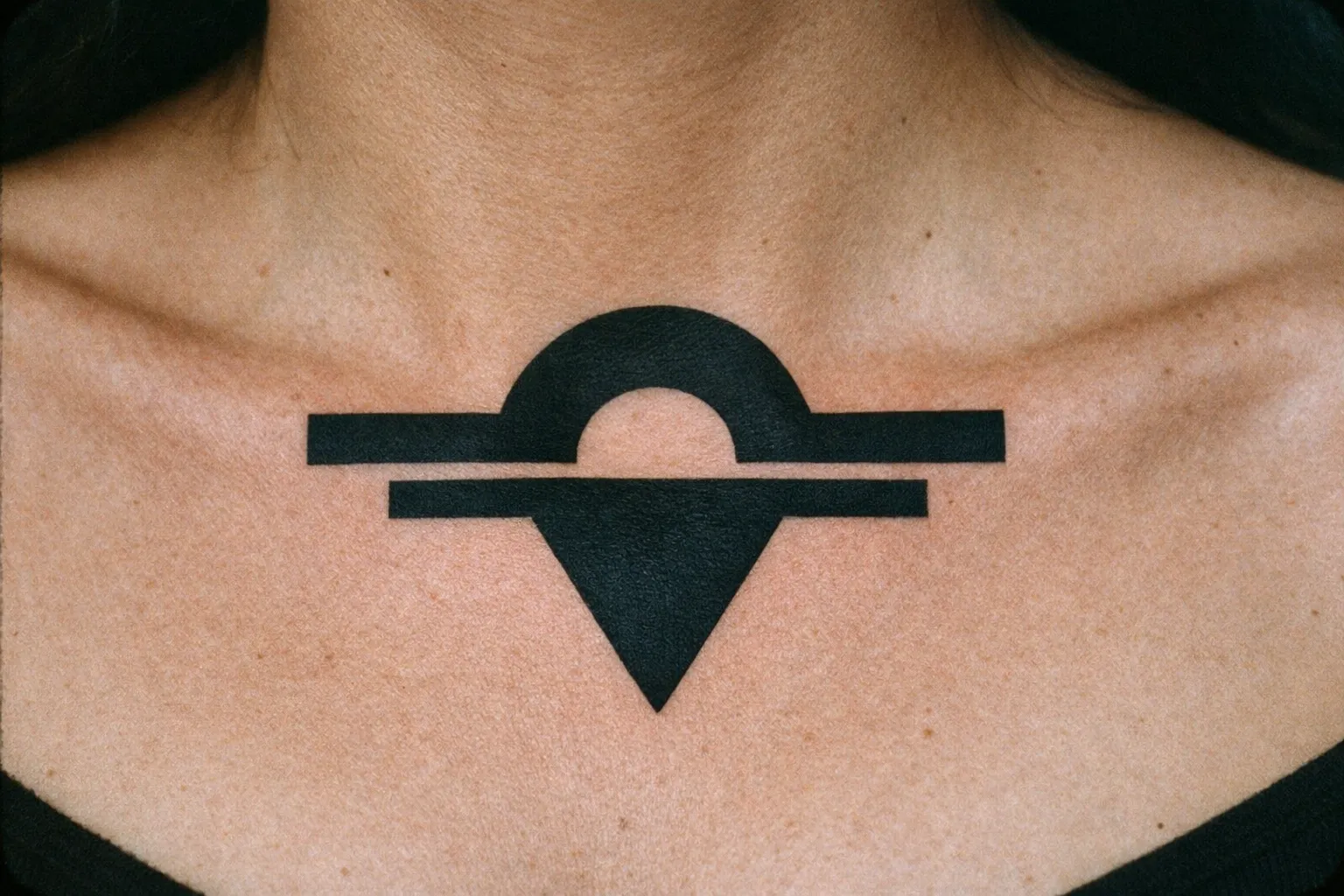
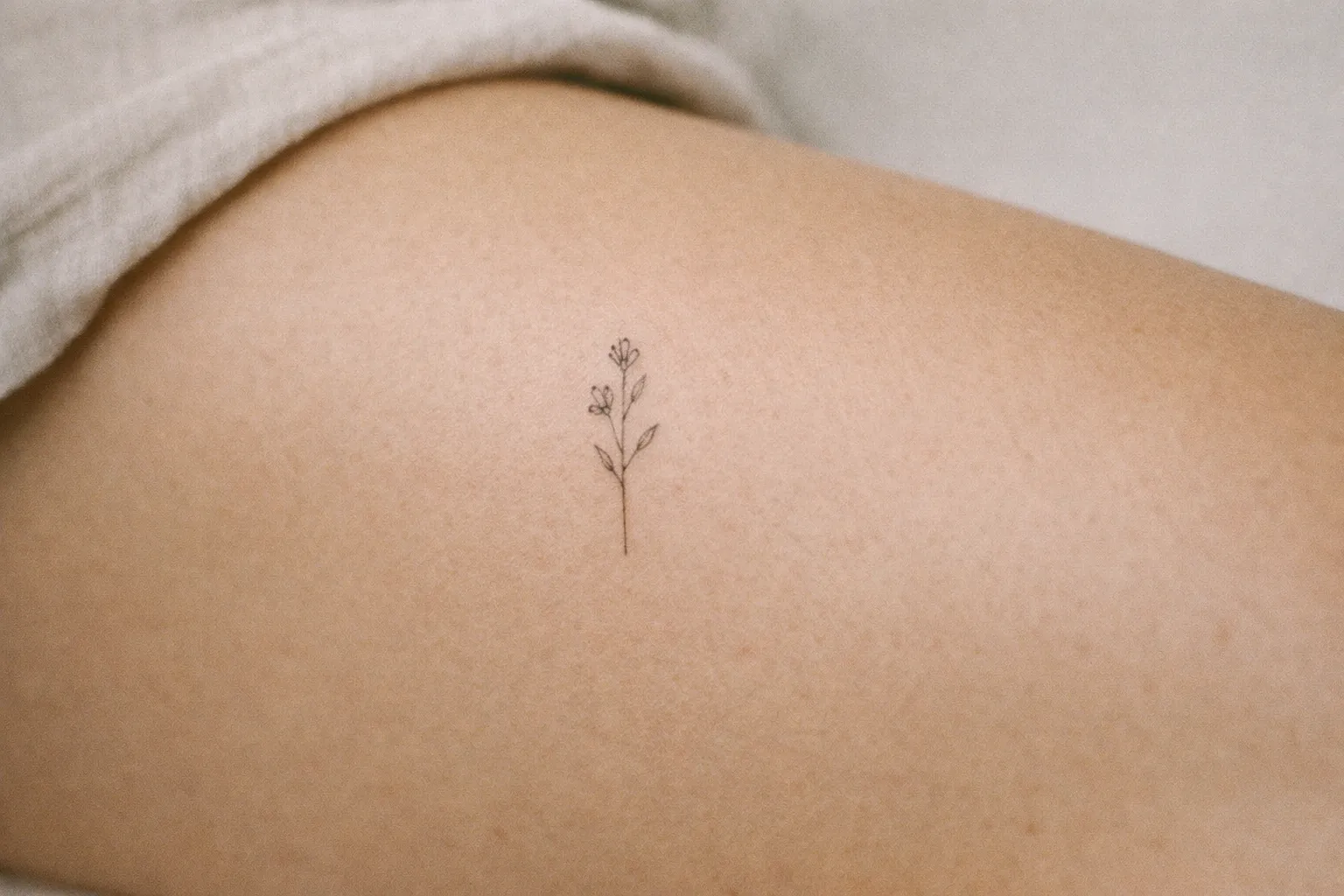
- Tiny (under 2 inches): single session, 30 to 60 minutes, $80 to $200 (average about $140). Symbols, small script, minimal florals.
- Small (2 to 4 inches): 1 to 2 hours, $150 to $350 (average about $250). Single blooms, small animals, short phrases.
- Medium (4 to 6 inches): 1 to 3 hours, $300 to $700. Detailed florals, portrait elements, geometric mandalas.
- Large / multi-session (sleeve, back piece): 8 to 10-plus hours total across multiple bookings, budgets climbing past $1,000.
Two things to plan around. First, shop minimums: US studios typically charge $70 to $150 regardless of size (4), so a micro design doesn’t mean micro pricing. Professional hourly rates commonly run $100 to $300, with top specialists higher. Second, consultations: fine-line and script work especially benefit from a pre-session consult to confirm the design stays legible at your chosen size. What reads clearly on a full screen may not translate to 1.5 inches on a wrist.
If you’re weighing one large piece against several small ones, building a themed collection over time is often more practical - and less painful per session - than committing to a big concept upfront.
Aftercare - What the First Month Actually Looks Like
Healing runs on a predictable timeline. Here’s what to expect and what to do.
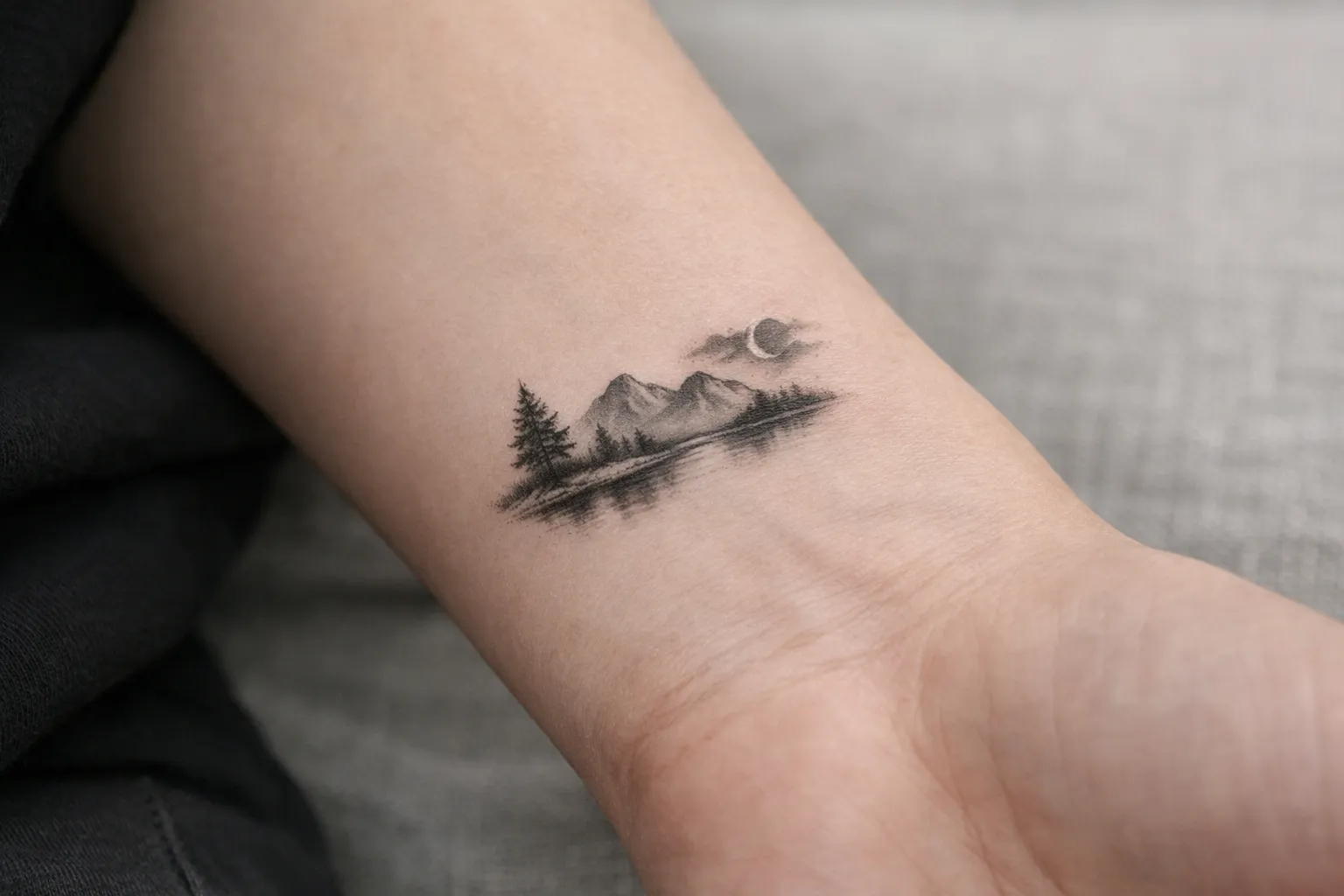
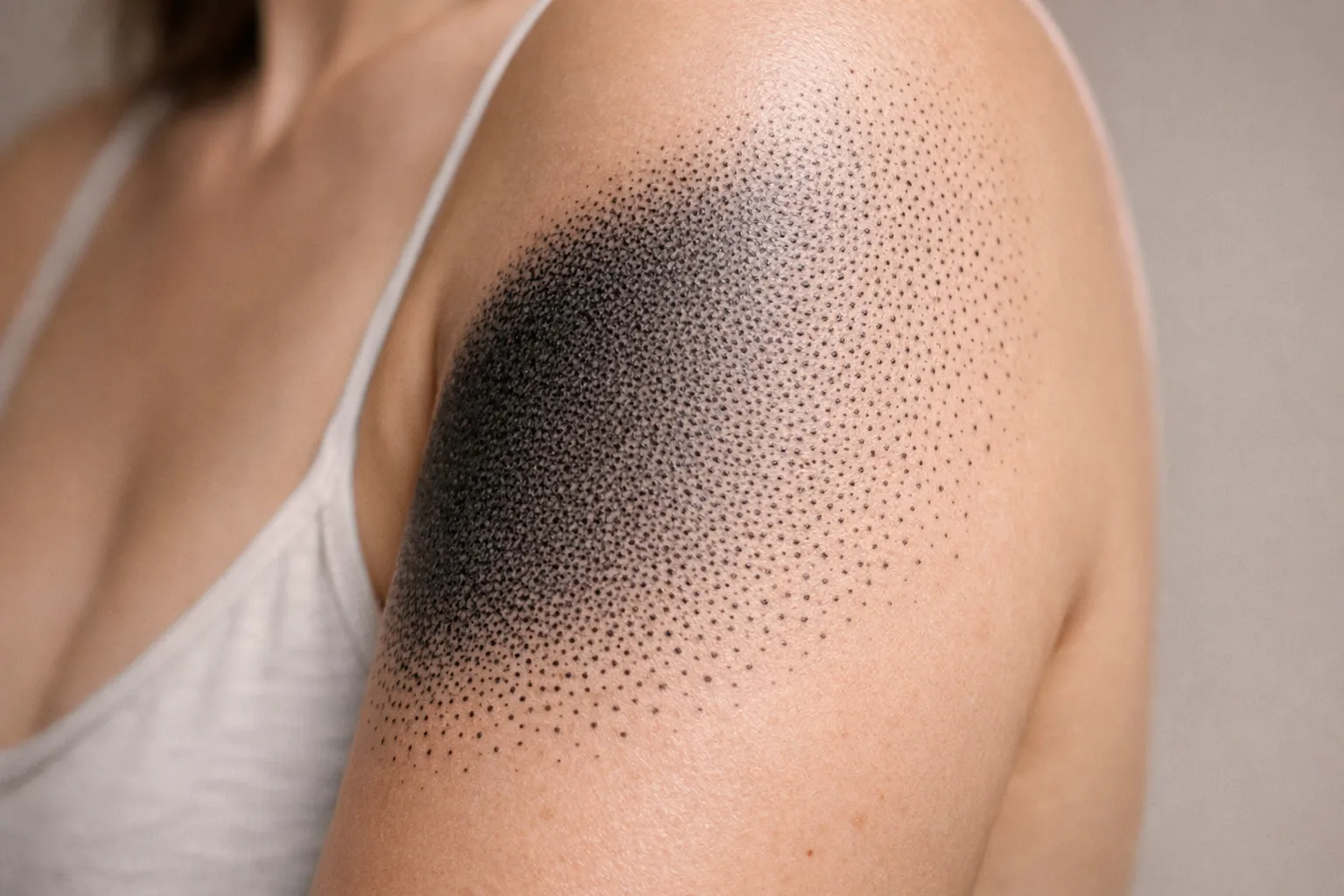
Day 1 to 3: Keep the wrap on as your artist directs. Wash 2 to 3 times daily with a fragrance-free antibacterial soap, pat dry, and apply a thin layer of fragrance-free ointment or tattoo balm. Expect redness, plasma weeping, and tenderness. Dermatology guidance backs the wash-then-thin-ointment routine for the first few days.
Week 1: Scabbing and flaking begin. Do not pick or scratch. Switch to a fragrance-free lotion 2 to 3 times daily and avoid soaking - no baths, pools, or ocean.
Week 2 to 4: The outer layer finishes healing and itching subsides. Keep moisturizing as needed. The tattoo may look slightly dull at this stage, which is normal as color settles. Deeper layers keep remodeling for a few weeks beyond this.
Long-term: UV exposure is the single biggest cause of fading. Use a broad-spectrum SPF 30 or higher on healed tattoos whenever they’re exposed, or cover them with sun-protective clothing. Fine-line and watercolor fade fastest without it, and high-friction placements (hands, feet, inner wrist) may need touch-ups within a few years.
One placement-specific note: ribcage and sternum tattoos are awkward to wrap and uncomfortable to sleep on during the first week. Plan your sleeping position and clothing accordingly. I tell clients to buy a cheap button-front shirt they don’t mind getting ointment on - it makes the first few nights a lot less miserable.
Frequently Asked Questions
- What is the most popular female tattoo?
- In a survey of 1,000 tattooed Australians by CynoSure Australia and McCrindle Research, animals led all motif categories at 23% and flowers came in at 13%, per Women's Health. Roses are consistently among the most requested floral designs, and the American traditional rose is a perennial shop staple.
- What are the top tattoo trends for women in 2026?
- Fine-line botanical clusters, ornamental jewelry-style tattoos, micro realism, and illustrative storybook animals lead 2026 trends.
- What are the most meaningful tattoos for women?
- Common meaningful motifs include the lotus, unalome, semicolon, lion, and family-connected designs like birth dates and matching pieces.
- Where is the least painful place for a woman to get a tattoo?
- Outer forearm and upper arm are least painful due to thick skin and low nerve density; outer calf and thigh are close seconds.
- How small is too small for a tattoo?
- Fine-line or script tattoos under 2-3 cm risk losing legibility over time; bold symbols can work at 1 inch but detailed scripts need more space.
- What tattoo style ages the best?
- American traditional ages best with thick outlines and bold fills; blackwork and neo-traditional also age well; fine-line and watercolor need more care.
- Can I get a tattoo if I need to cover it for work?
- Yes; upper arm, back, ribcage, thigh, and hip cover easily; forearm hides under sleeves; wrist, hand, neck, and collarbone are harder to conceal.
- How much does a small tattoo cost for women?
- Tiny tattoos under 2 inches typically cost $80-$200; small tattoos 2-4 inches average $150-$350; shop minimums apply regardless of size.
The Three Decisions That Actually Matter
Strip away the gallery and it comes down to three choices. Placement determines pain, visibility, and how the tattoo ages - which is why arms and wrists dominate the data. They’re forgiving, heavily practiced, and versatile, though they’re far from your only option. Size drives cost and session time hard: upsizing by even 2 inches can move you from the $150 to $350 bracket into $300 to $700. Style is the long game: fine-line is beautiful fresh, but American traditional is still the most durable choice a decade out.
Two practical closers. Book a consultation before committing to any fine-line or script work, because legibility at full screen rarely survives the shrink to 1.5 inches on a wrist. And the aftercare split is real: the first two weeks decide how the tattoo heals, but the next decade of sun protection decides how it ages.