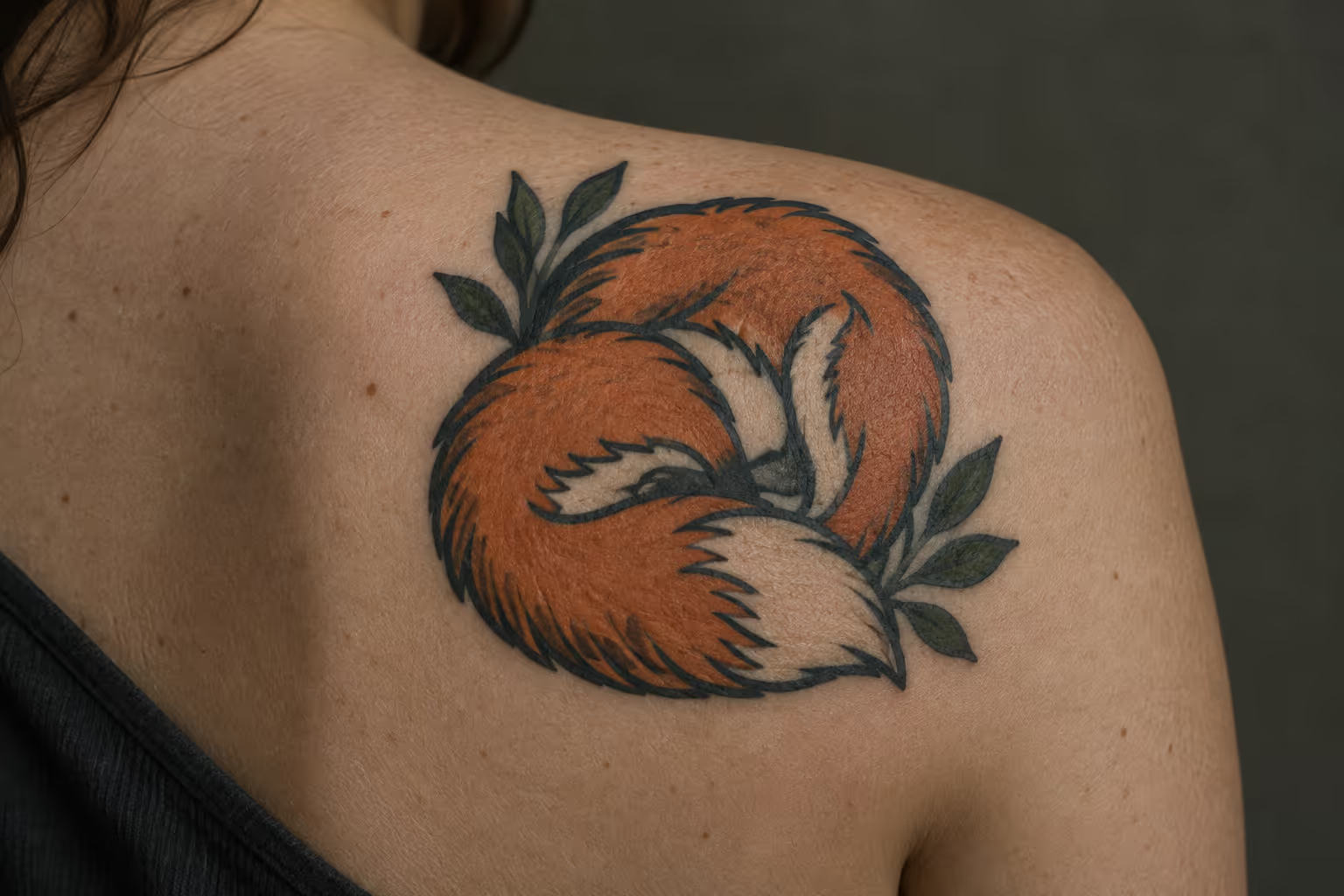
A fox tattoo can be a sly cartoon on the wrist or a nine-tailed kitsune tied to the Shinto deity Inari, and those two read as completely different pieces. Pick the story first: the animal or the folklore. That choice sets the style, the size and the placement, and it decides how well the tattoo holds up over time.
What a Fox Tattoo Means: Kitsune, Trickster and More
Its meaning depends on the tradition. Western readings lean toward cleverness and adaptability, while Japanese kitsune imagery points to folkloric fox spirits and Inari worship. Kitsune is simply the ordinary Japanese word for fox (12). The supernatural layer comes from folklore. Fushimi Inari Taisha describes foxes as messengers of Inari Okami. These are unseen “white foxes,” not the ones living in the mountains, and the shrine is clear that Inari is not a fox (10).
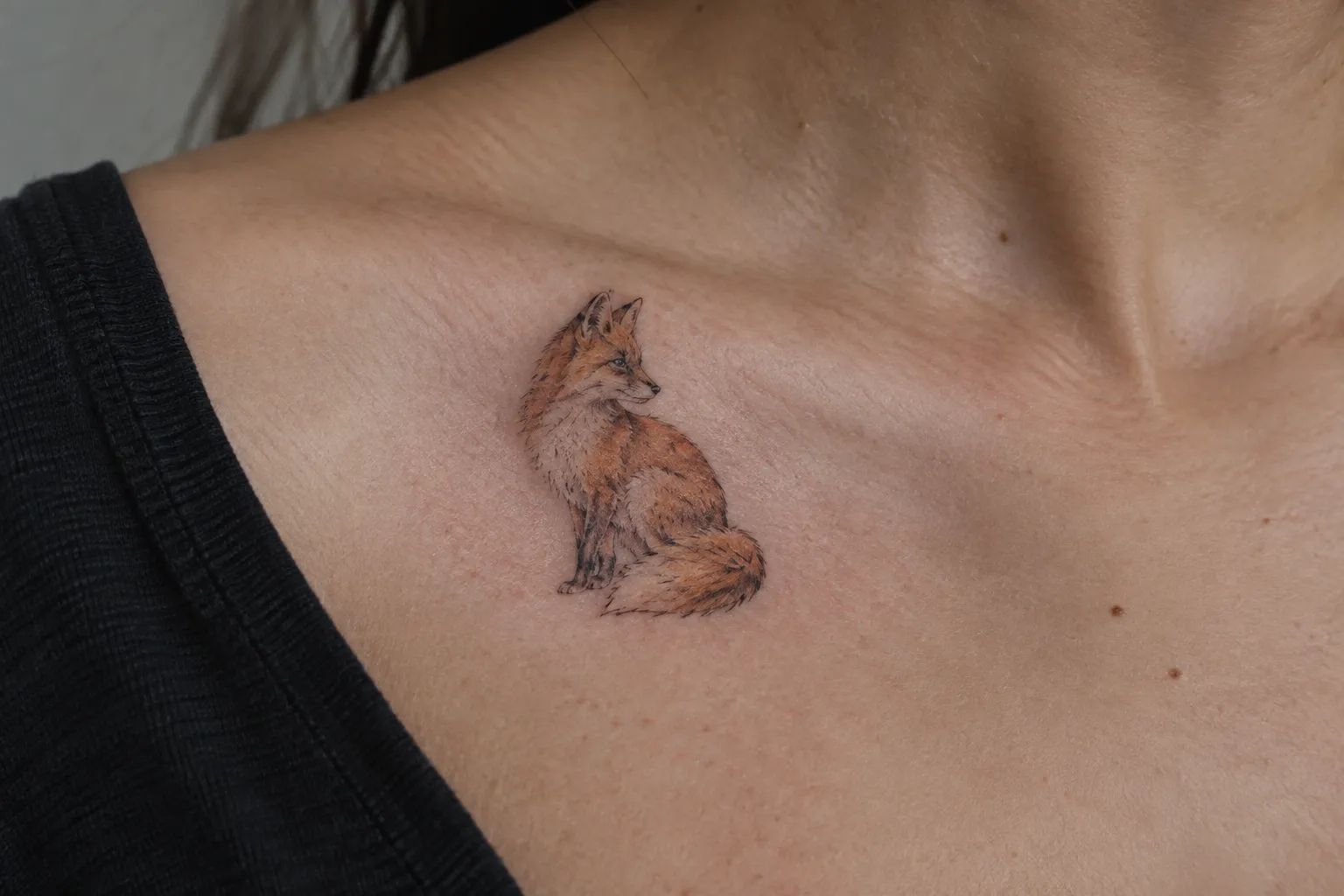
The nine-tailed fox is a mythic motif, not a zoological one. Folklore-oriented tattoo coverage links it to accumulated wisdom and supernatural power (11). In Western tattoo culture, the fox mostly works as Aesop’s clever survivor (11) or as the Native American trickster (5). Over time it has drifted toward a general “smart and independent” meaning, which no single tradition holds.
Kitsune vs. a Straightforward Fox Portrait
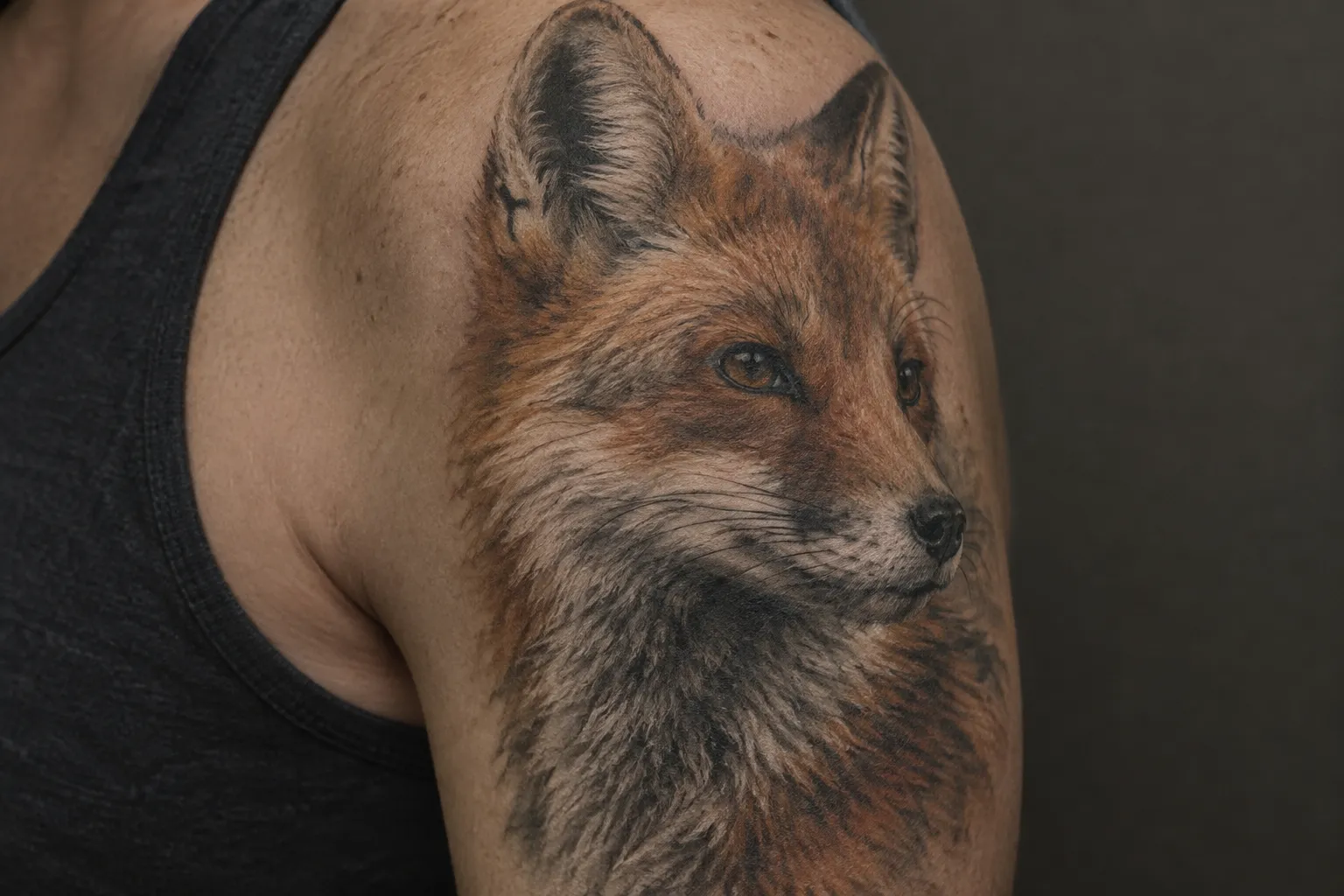
- Choose a naturalistic portrait if you want the animal itself: fur texture, amber eyes, a real posture.
- Choose a kitsune design only if you want the shapeshifter or divine-messenger narrative. Talk through that intent with your artist before adding Inari cues like vermilion torii or a white fox (10)(11).
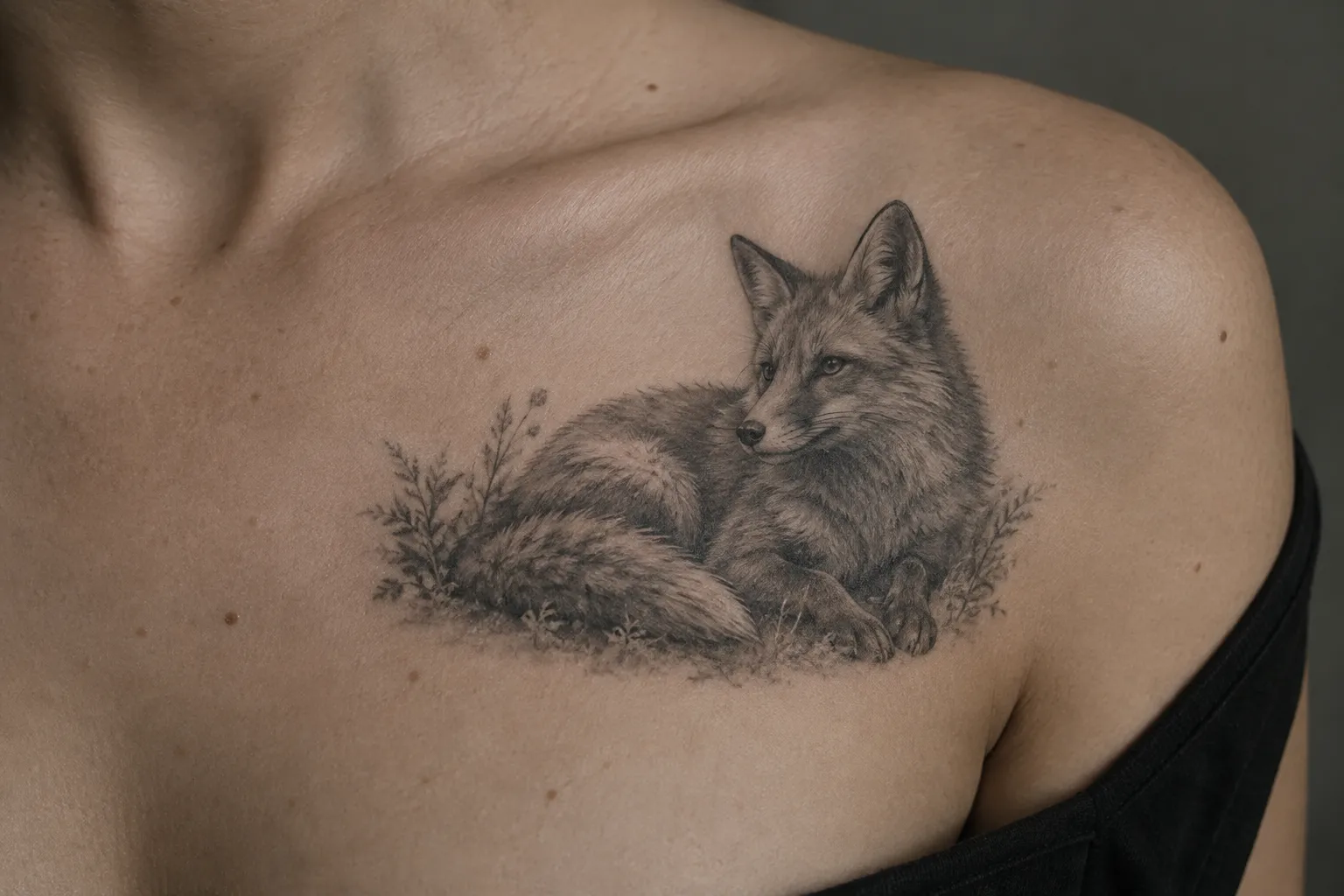
Mixing the two without a plan is how you end up with a nine-tailed fox wearing a realistic snout and a cartoon mask. It reads as three tattoos fighting each other.
✓ Pros
- The fox silhouette stays recognizable across naturalistic, graphic and folklore-led designs.
- A pose, expression or surrounding detail can make a familiar motif feel specific to its wearer.
✗ Cons
- Viewers may read the same fox as an animal portrait, a trickster or a kitsune, regardless of the wearer's intent.
- A design built around fine facial features or layered tails has less room to shrink than a simple silhouette.
Popular Styles: From Realism to Geometric Foxes
Fox designs appear in blackwork, illustrative, linework, minimalist, realism, watercolor, geometric and traditional styles across the major idea guides (5)(6). Each style suits a different kind of fox.
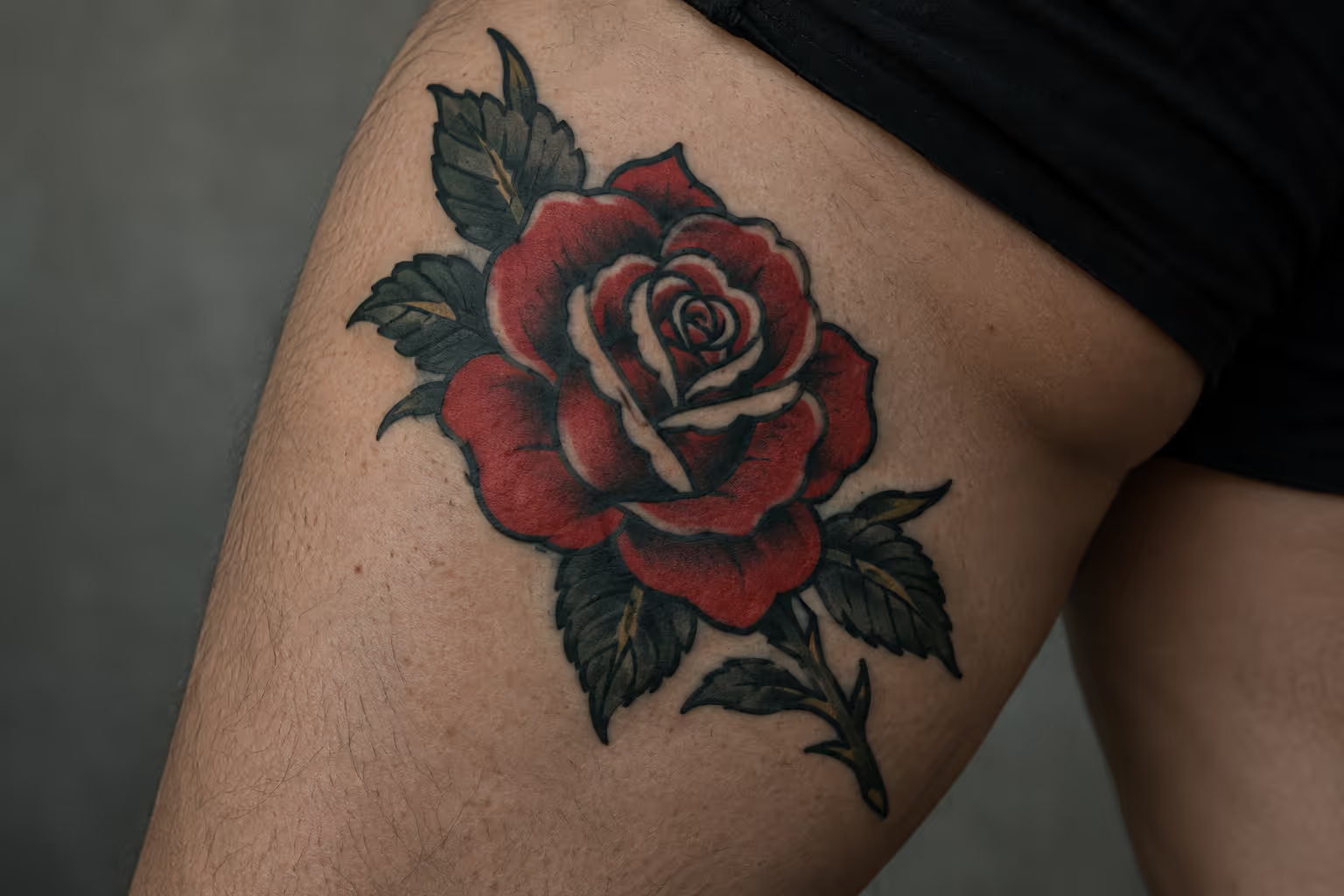
American traditional uses thick outlines and a small set of bright colors (5). Designs built on bold outlines and saturated color, like Japanese traditional and neo-traditional foxes, hold up well over the years (11). The common pitfall is thin, wobbly outlines that let the color blur over time.
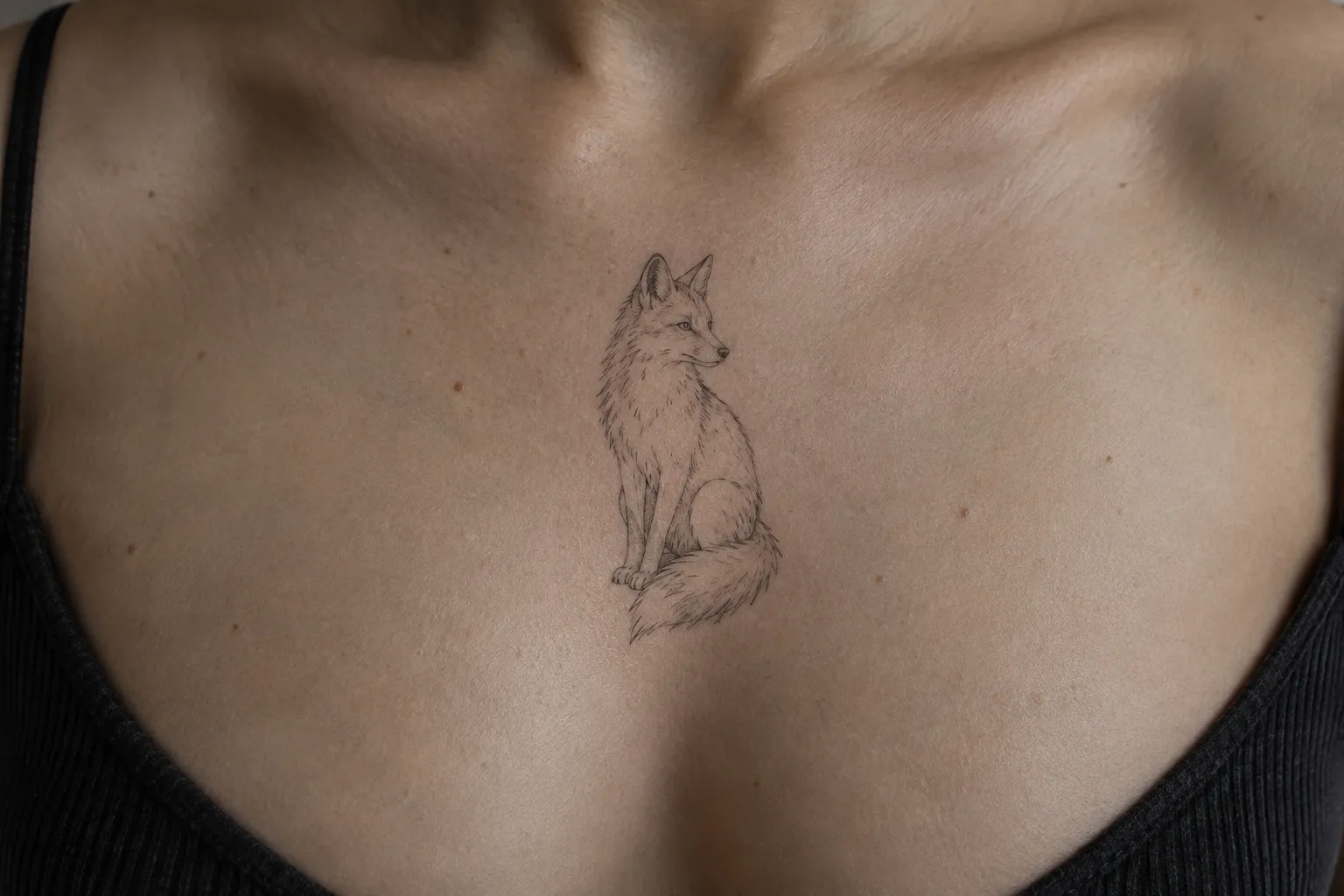
Fine line and linework rely on single-needle lines and open negative space. They look crisp when fresh. Done badly, the lines sit too close together. They spread as the tattoo heals and ages, and the fox’s face closes up into a smudge.
Realism suits a portrait, and watercolor suits an expressive, color-led piece. Geometric work suits clean structure, and irezumi-influenced work suits kitsune folklore (5)(11). For browsing, Sway Tattooer’s roundup of 70 ideas (5) gives you more than double the range of Soxy’s 30 designs (2). Pick the larger gallery if you’re still exploring styles, and the smaller one for a quicker, curated look.
Placement Ideas by Size and Detail
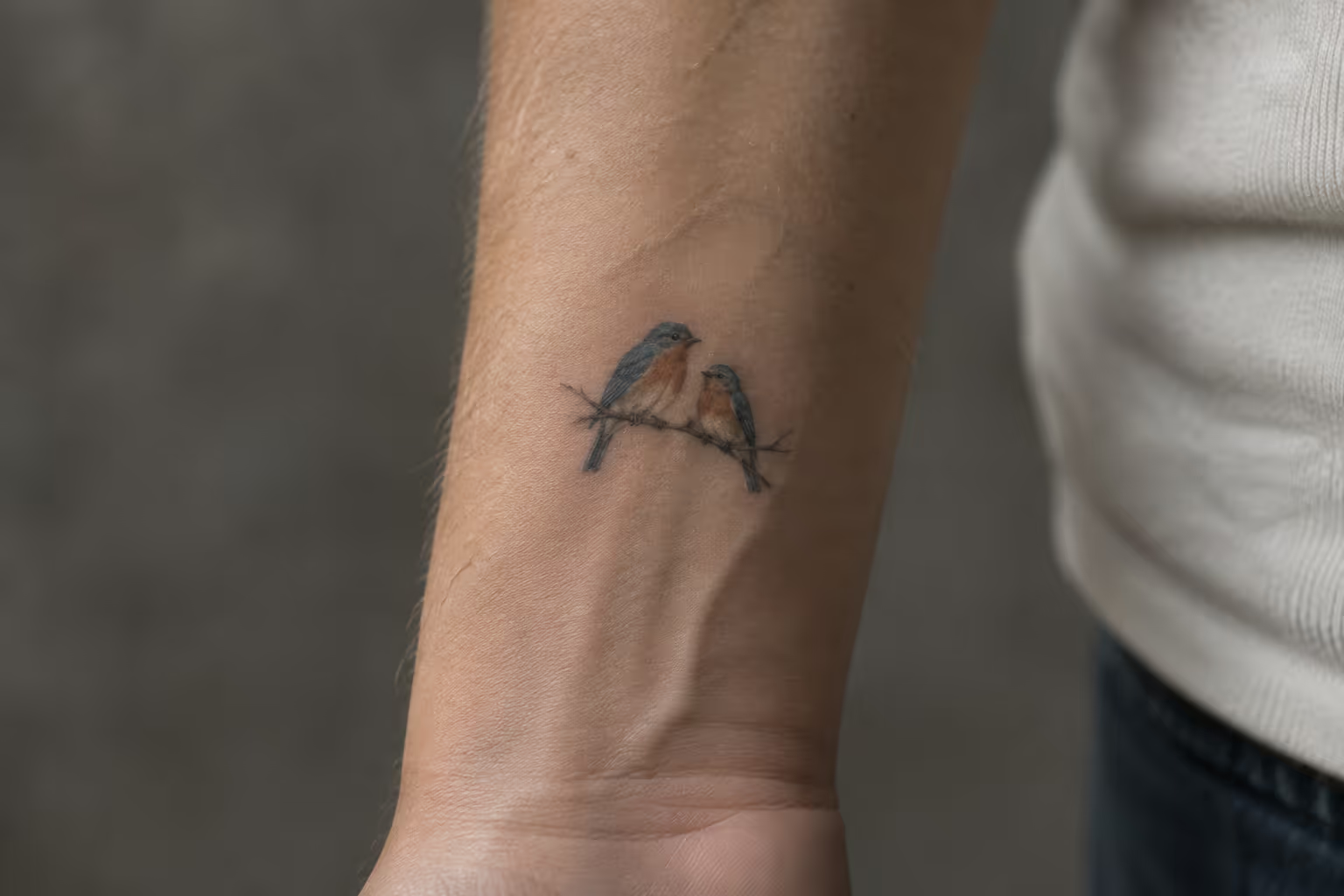
Match placement to design detail: small outlines fit the wrist or ankle, a detailed fox face suits the shoulder or thigh, and a full-body fox needs a fair-sized patch of skin such as the forearm or lower back (2).
- Small outline or cartoon fox: wrist, nape, ankle, hip (2)
- Detailed fox face or portrait, at least 4-5 in (10-13 cm) across for realistic fur (11): shoulder, shoulder blade, thigh, calf (2)
- Full-body fox: forearm, inner forearm, inner bicep, lower back, foot (2)
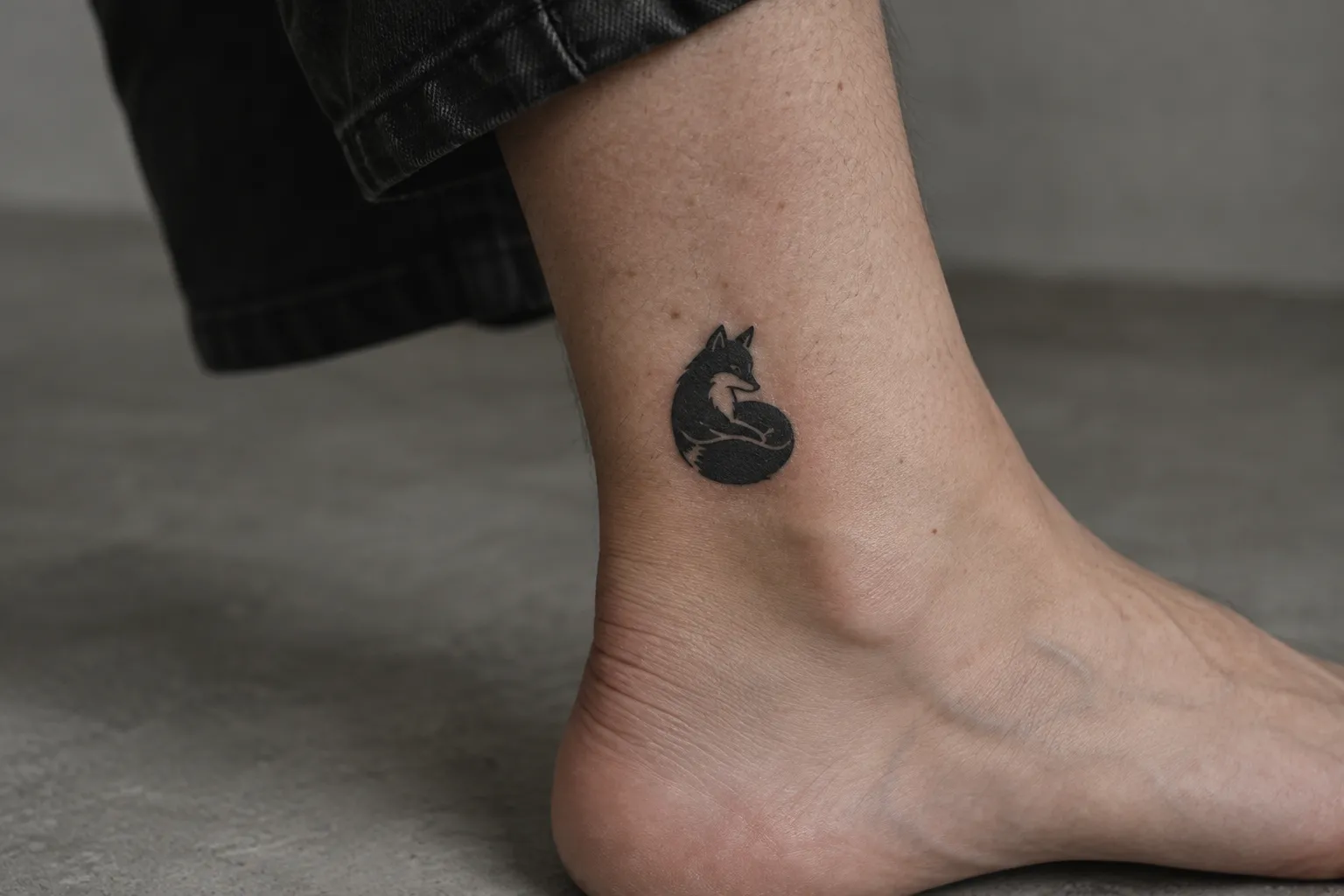
Don’t shrink a detailed reference to fit a small spot. Ask your artist whether the size can keep the eyes, fur and tail readable. Sizing often needs adjusting to keep a design tattooable and legible (13).
On pain, bony placements such as the chest and sternum tend to hurt more (5)(11), and the rest depends on the spot and your own tolerance (6).
Healing and Long-Term Care for Your Ink
Healed foxes need broad-spectrum, water-resistant SPF 30+ sunscreen, applied 15 minutes before going outside and reapplied every 2 hours (8).
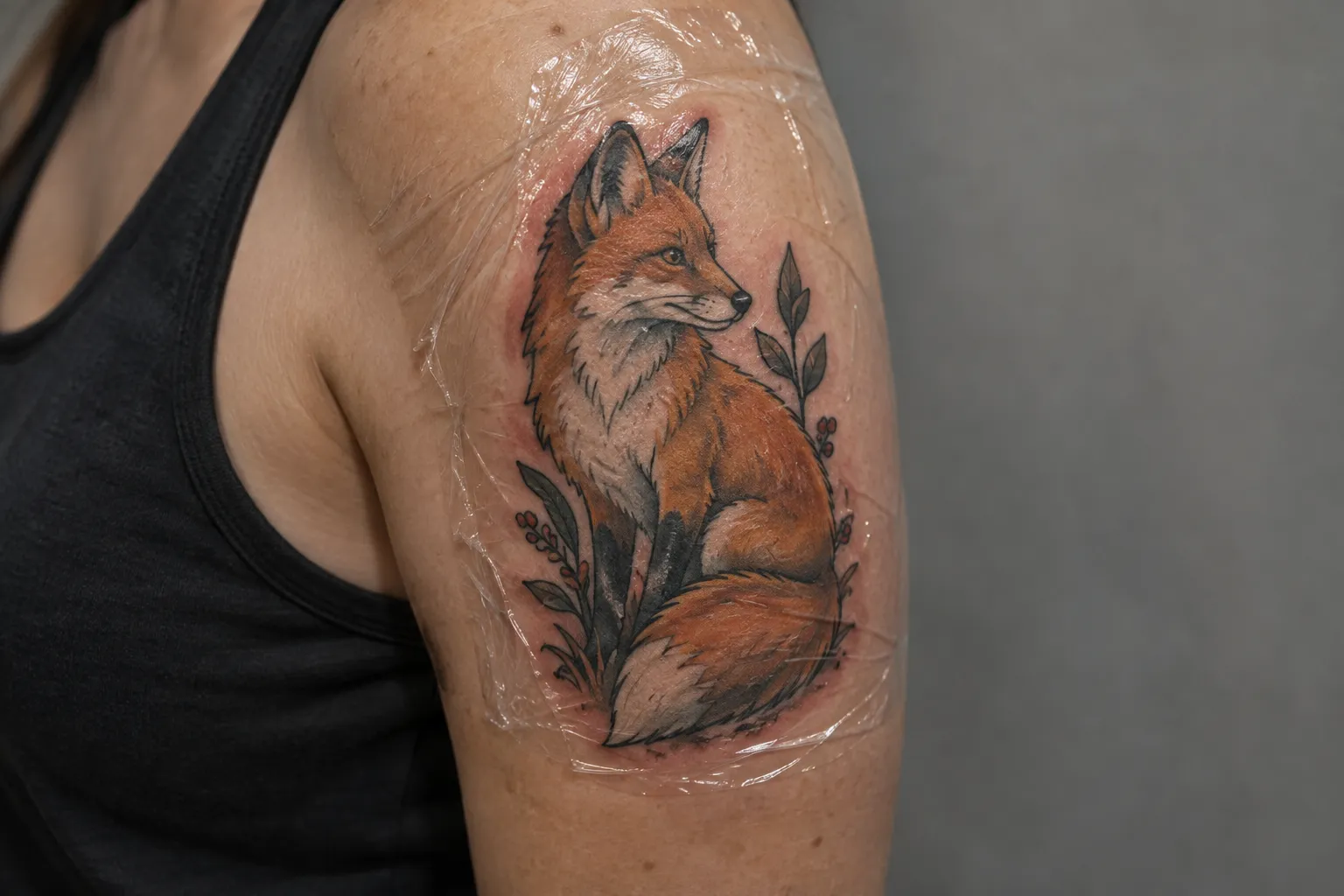
Days 1-3: keep the tattoo clean and follow your artist’s wrap instructions. Days 4-7: wash gently, apply a thin layer of fragrance-free moisturizer and expect tightness and light flaking. Week 2: peeling and itching peak, so don’t pick at the flakes. Weeks 3-4: the surface looks healed while the skin underneath is still settling, so stay out of pools and baths. Keep it out of direct sun for the first 4-6 weeks; full integration comes around week 6, as our tattoo aftercare timeline details.
After healing, the American Academy of Dermatology (AAD) recommends a water-based moisturizer for dry tattooed skin. It also warns that UV light can fade some inks (8), and a fox on a sun-exposed forearm will fade faster than the same piece on the thigh (11). Sun-protective clothing helps on long days outdoors.
A licensed artist doesn’t guarantee zero risk, and doing your aftercare right doesn’t either: the AAD is explicit that skin reactions can still show up even when you’ve used a licensed, aftercare-compliant artist (9). Don’t treat licensing as a safety guarantee. Tell your artist about any skin sensitivities or allergies before the session (13).
Is It the Right Choice for You?
It’s a good choice if you want a flexible motif. Sources describe trickster, guide, protector and messenger associations that shift by culture (5)(10). None of these traditions promises luck. Its meaning is whatever reference you attach to it.
Generic small outline foxes are everywhere. A personal detail keeps yours distinct: a specific pose, local flora, or a style you commit to. As for tattoos to avoid, skip micro-detail on small placements and symbols from a culture you haven’t researched. Also skip trend designs you picked from a single photo.
Frequently Asked Questions
- What are tattoos to avoid?
- Avoid designs whose smallest details cannot be drawn clearly at the size you can wear; ask your artist to check the stencil at actual scale before tattooing.
- Is a fox design a good or bad choice?
- It's a sound choice when you can explain the image you want and the design can be drawn clearly at your chosen size.
- What is the most overused tattoo?
- There is no reliable ranking of overused tattoos; the more useful test is whether the pose and styling feel specific to your references.
- Which tattoo is lucky for men?
- No tattoo is reliably lucky for men; luck associations belong to particular cultural traditions, not to a design's gender or the wearer's identity.
- Is a kitsune tattoo disrespectful without context?
- A kitsune tattoo is not automatically disrespectful, but shrine imagery can carry religious context; understand those references before using them as decoration.
- How big does a fox design need to be to keep detail?
- The minimum size depends on how much separation the eyes, fur marks and tail need; have your artist assess those details on a full-size stencil.
- Does this design fade faster than others?
- It does not fade at one fixed rate; sun exposure, ink colors and how the design is tattooed all affect how its contrast changes.
Choosing Your Fox and Booking It
Decide on the animal or the kitsune narrative first. Then let the level of detail set the style and placement, and protect the healed piece with SPF 30+. Bring reference images, a rough size and your placement to the consultation. That appointment is where the design, sizing and placement get settled (13).