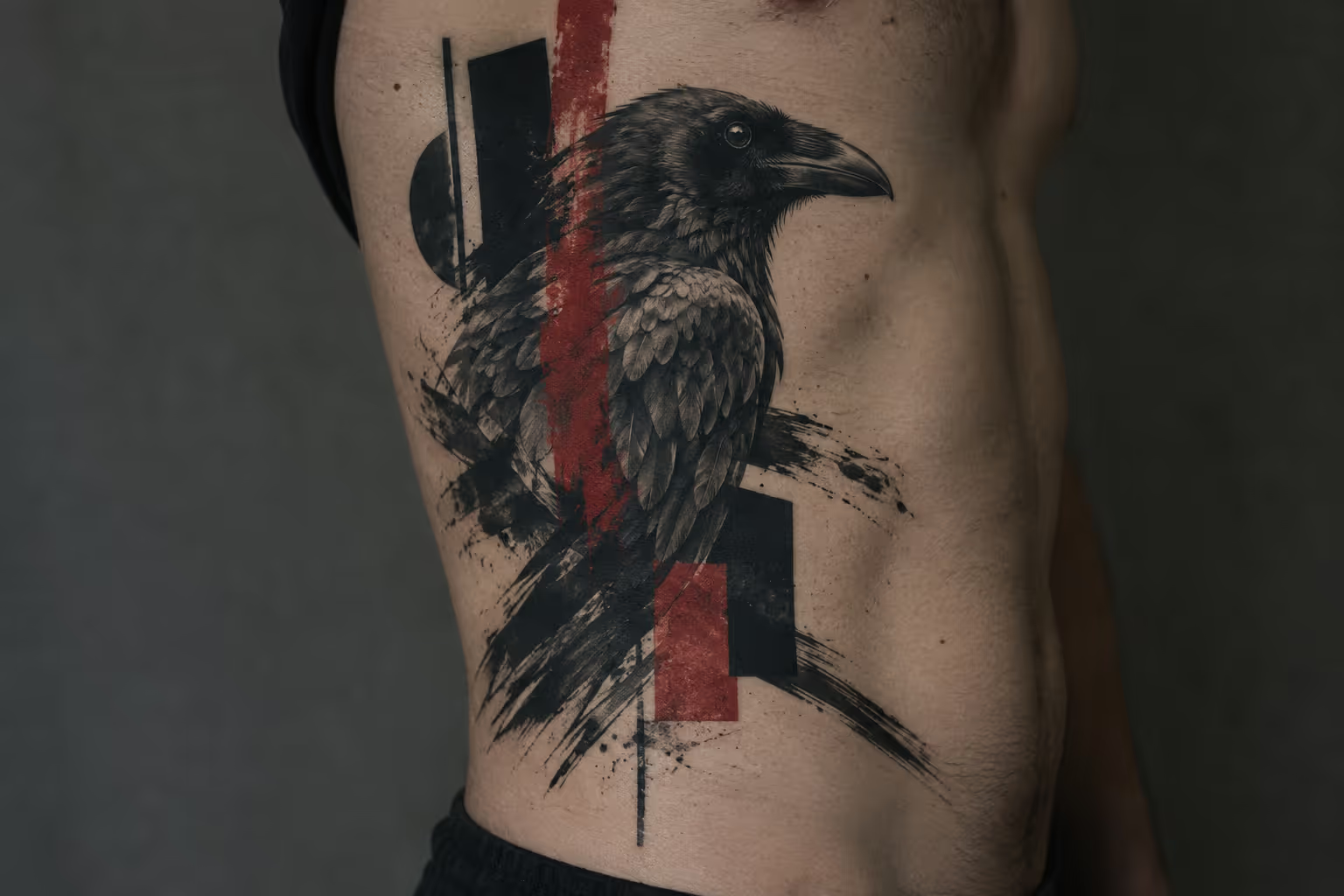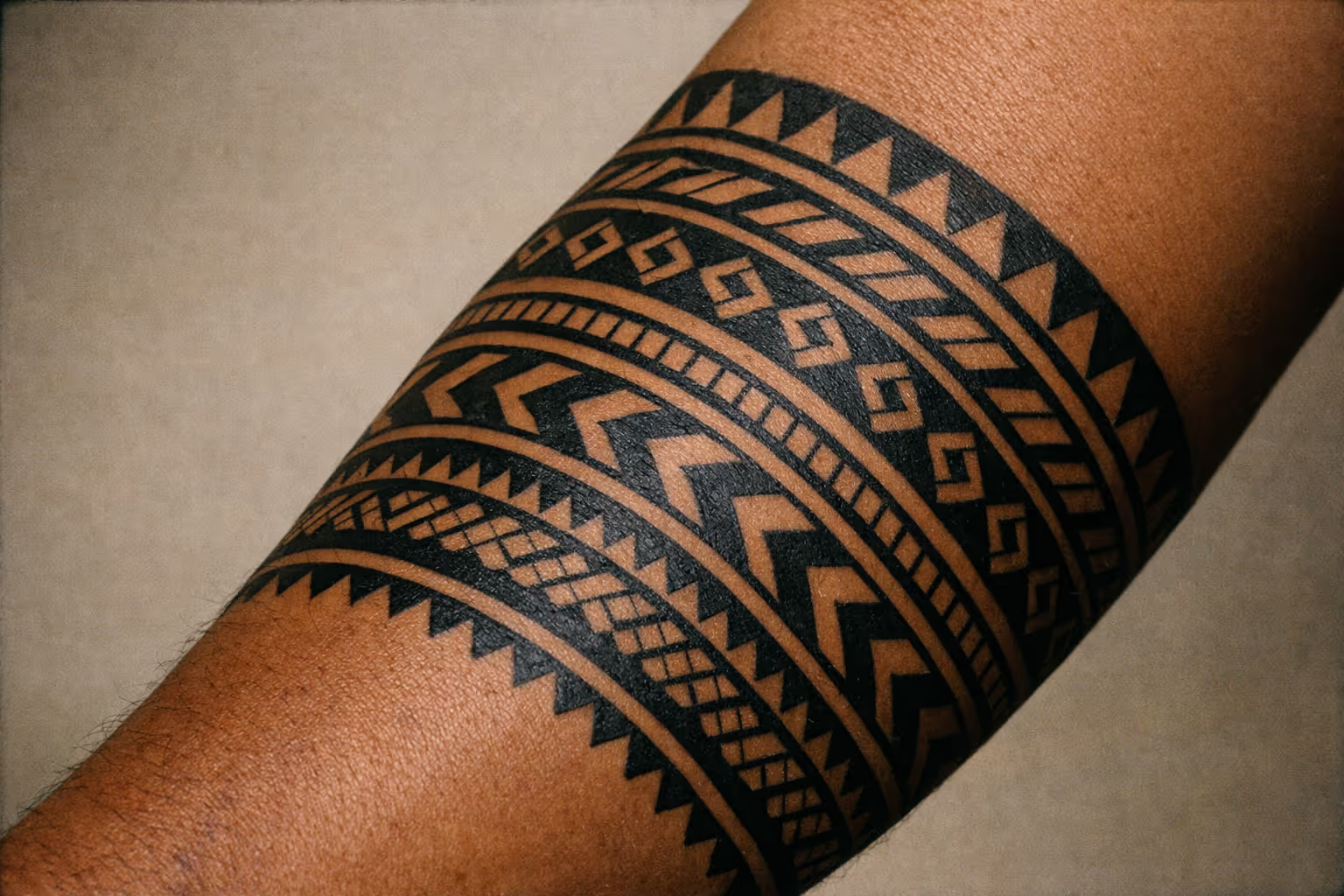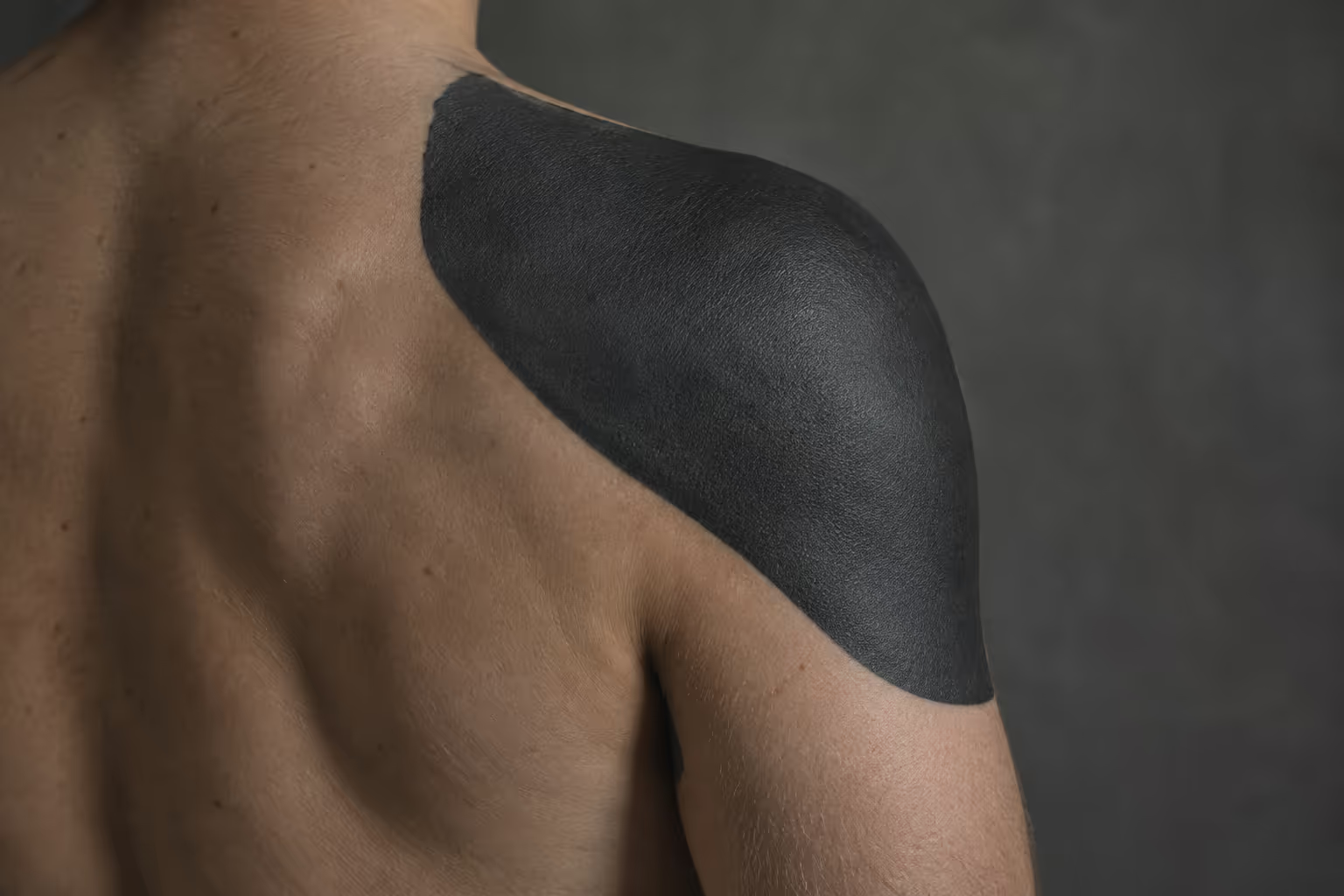
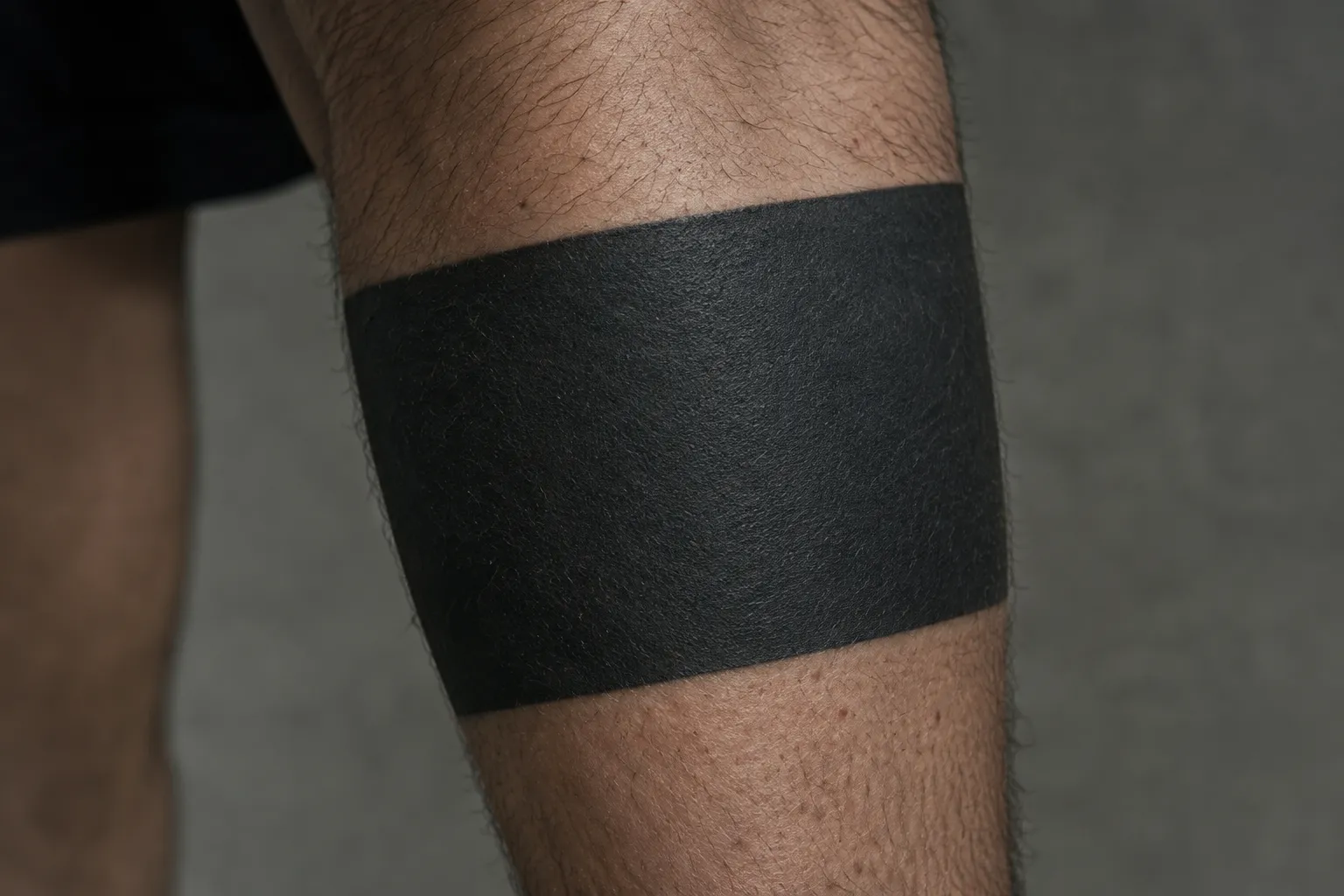
A blackout tattoo is full saturation across a section of skin with no bare patches left inside the filled area. It is more than “a lot of black ink.” That density changes the sessions, the swelling and the recovery. Like any tattoo, the surface settles in 2-3 weeks, but the skin underneath can take up to 6 months to finish (4). Here’s what the sessions, pain and cover-up planning look like before you commit.
✓ Pros
- One filled field can visually unify several unrelated older designs.
- A defined edge gives a large black area a deliberate shape instead of leaving it as an unfinished cover-up.
- The result does not rely on small details staying crisp as the tattoo ages.
✗ Cons
- The filled area leaves little room to revise the design with bare-skin detail later.
- Large solid fields can make changes in the underlying skin harder to spot.
- Removing a large saturated piece may require a lengthy, costly process.
What Is a Blackout Tattoo? When Solid Black Ink Covers the Skin
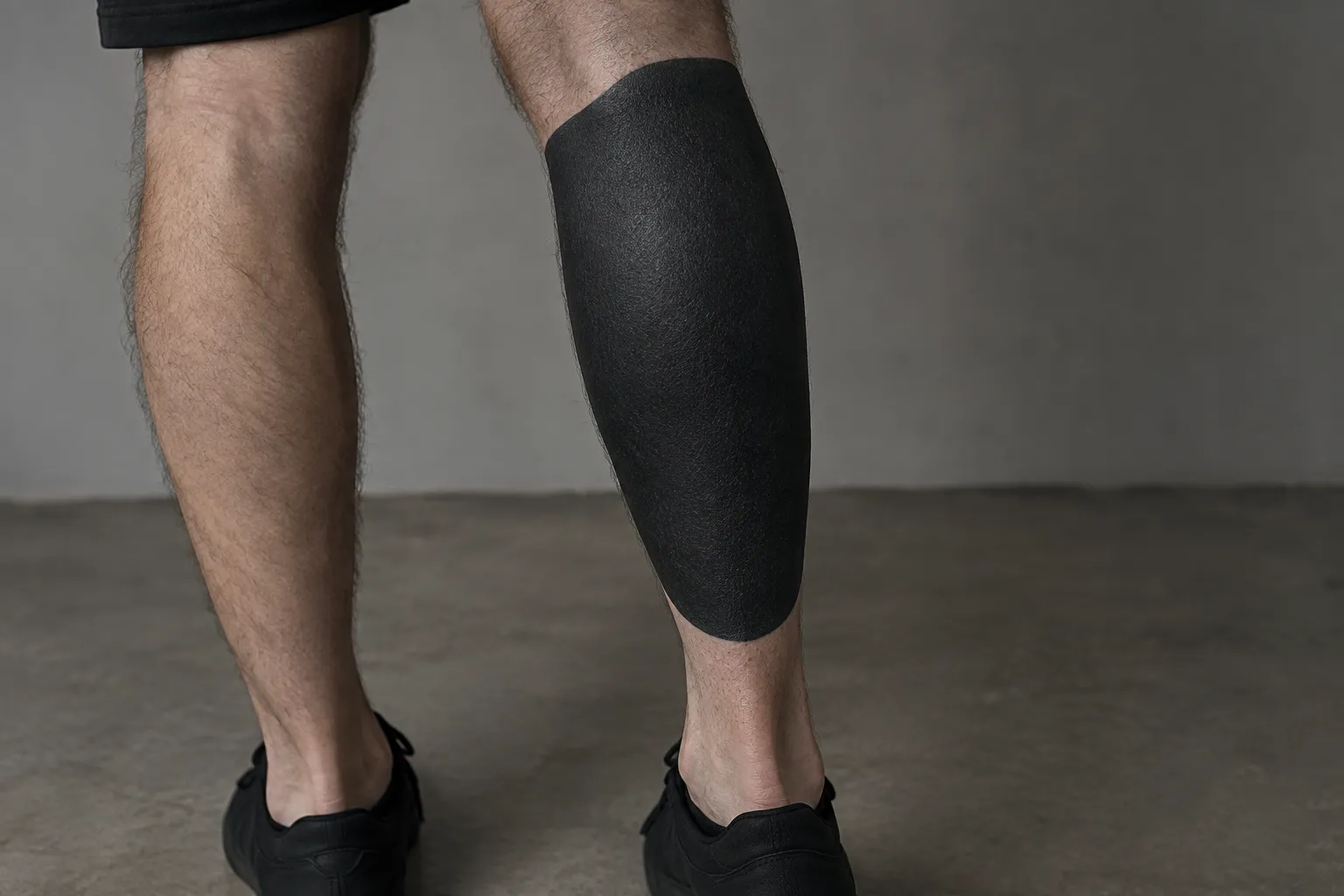
A blackout tattoo is a large area of skin saturated with solid black ink, with no bare skin showing anywhere inside the filled section (4). The equipment and ink are the same ones used for any other tattoo. The scale is what’s different (4).
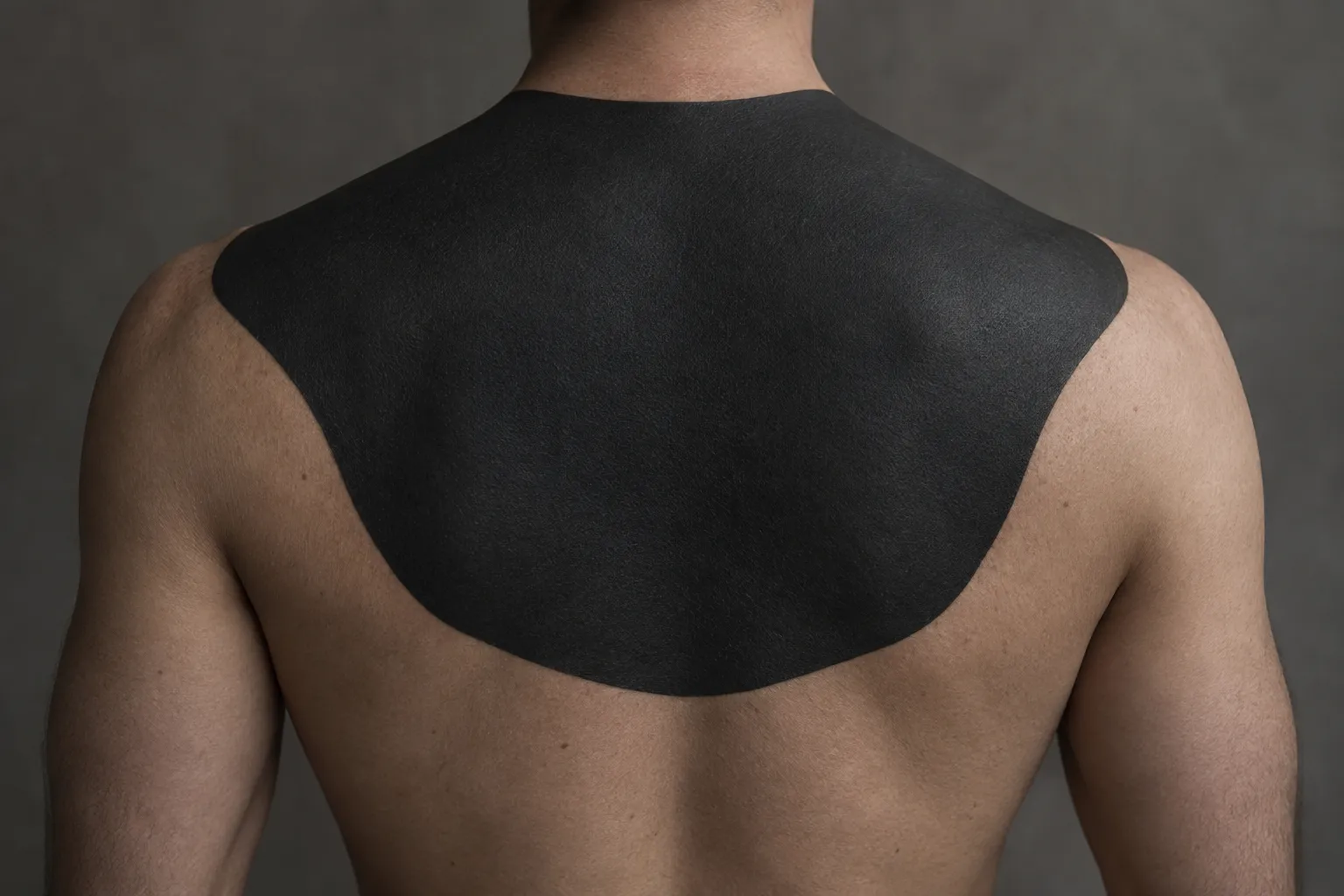
Standard shading builds tone in gradients and lets skin breathe through. A solid black tattoo leaves nothing to breathe. The ink has to sit opaque and even across the whole zone, often an entire arm, leg or chest. Heavy blackwork patterns use bold black too, but bare skin is part of the design. Some sources use the two terms interchangeably (4), so check reference photos rather than labels when you talk to an artist.
Two technical hallmarks define good blackout work:
- Even, opaque saturation with no grey patches once healed.
- Clean shaped edges: scalloped, straight, geometric, wave or brushstroke borders that finish the piece (1).
The common pitfall is patchy saturation that only shows after healing. Overworking the skin to fix that patchiness risks scarring. Minimising scarring while depositing ink evenly is part of why the work takes hours (3).
Be skeptical of tidy origin stories. Wikipedia’s summary links modern blackout to Polynesian tattooing and graphic art, credits a Singaporean artist whose work went viral on Instagram in early 2016 with popularizing it, and also traces it to cover-up work and to Bornean tattooing traditions (3). The process and medical sources used for this guide don’t verify any single, settled origin story, so treat a neat historical narrative as unconfirmed rather than fact.
A blackout changes your decisions on three fronts: the sessions run longer and hurt more, the swelling and recovery are heavier, and moles under the ink get harder to track. Removal, if you ever want it, means multiple expensive sessions on a large saturated piece, so weigh that against the cover-up or aesthetic you’re after before booking.
Covering Old Tattoos: The Original Reason for Blackout Work
Blackout began as a way to cover unwanted tattoos without paying for removal (3). One LA County artist says it’s not unusual for a blackout to be a large-scale cover-up of one or several old pieces, though in recent years it has become much more common as an aesthetic choice (1).
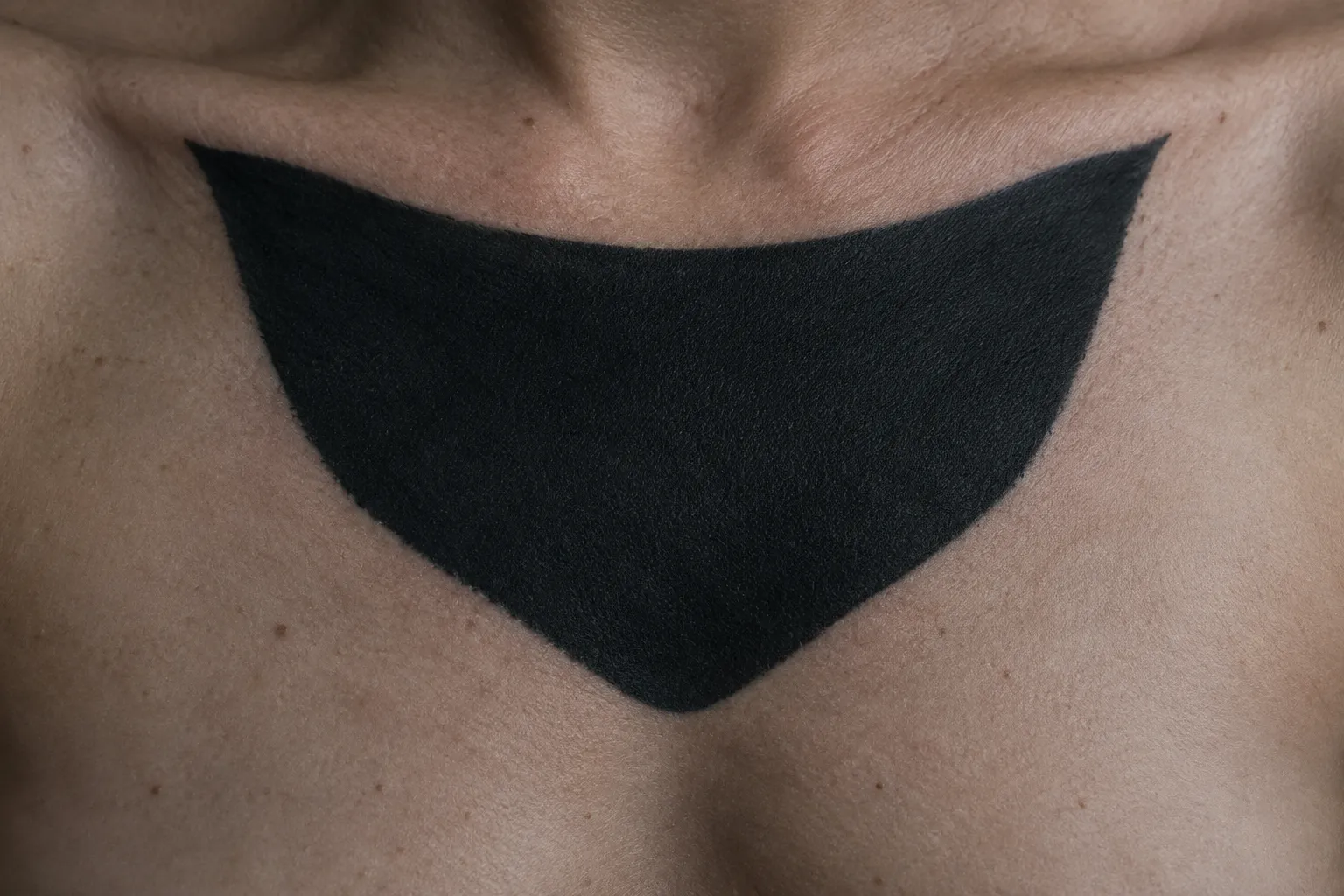
Before quoting, a good artist looks at how visible the old piece is and how much coverage you want. A faded script tattoo on the outer forearm is a different job from a dense, dark tribal band. The darker and denser the existing ink, the more the artist has to plan the border so the old shapes don’t ghost through the edges.
Decide which goal you have before the consult:
- Concealment means the blackout only has to extend past the old piece.
- An all-black aesthetic means the shape, edges and proportions to your limb drive the design.
The answer changes how big the piece gets and how long you’re in the chair. Healthline’s 2022 guide puts artist rates at around $100 to as high as $500 per hour, depending on experience and popularity (4). That’s an hourly rate, not a project total, so ask for an estimate of hours.
How Much Blackout Work Hurts
Blackout work is typically more painful than other designs because the artist may work the same skin repeatedly to reach full saturation (4). Every pass lands on skin that’s already inflamed, and repeated passes over the same area tend to feel more intense as the session goes on.
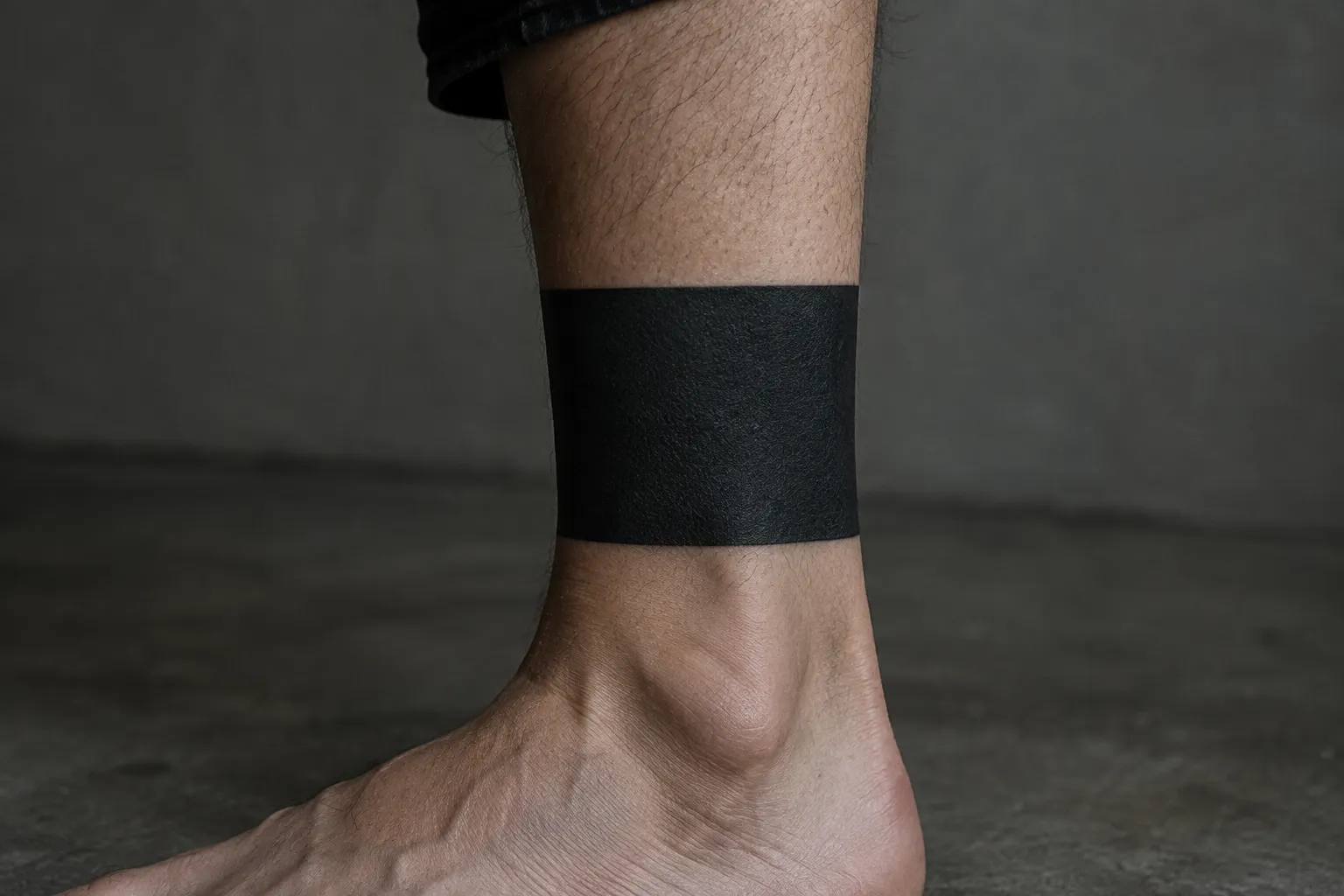
A blackout may take 1-3 back-to-back sessions, depending on the size of the piece and your pain tolerance (4). Treat that as a reported range, not a promise.
Don’t push through more back-to-back time than your body can handle. Overexertion can negatively affect healing (4). If you’re shaking, nauseous or dreading the next hour, stopping and rebooking gives you a better result than grinding through.
Pain by placement: ribs and joints vs forearm
Relative pain roughly runs like this:
- Ribcage and sternum hurt most, with thin skin over bone and breathing moving the area.
- Elbow ditch, inner bicep, back of the knee come next, because they’re soft and nerve-dense.
- Outer forearm and outer thigh hurt least, with more padding and less movement.
Placement and individual tolerance both shift where you land on that scale (4). The tattoo pain scale by body zone rates each placement in more detail.
Healing Timeline: Surface Recovery vs Full Healing Underneath
Blackout tattoo healing happens in two stages: the surface typically closes in 2-3 weeks, but complete healing underneath can take up to 6 months (4). Blackout heals on the same timeline as other tattoos, with more swelling and recovery up front (4). If you treat the tattoo as finished when it looks finished, you’ll make decisions about sun, friction and add-on work too early. Placement, movement, your general health and aftercare all affect the timeline (4).
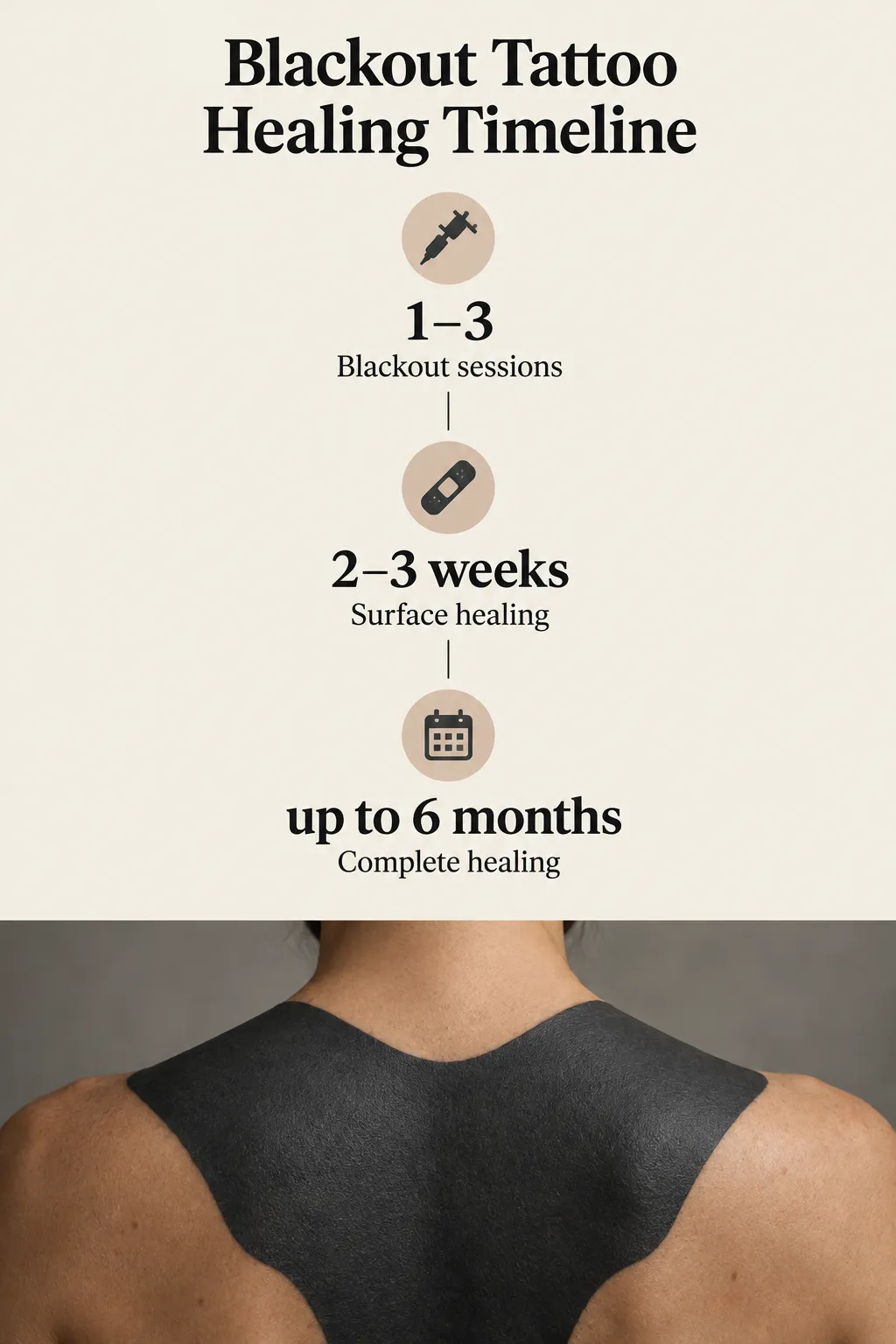 Blackout work may take 1-3 sessions; the surface recovers in 2-3 weeks, while complete healing underneath can take up to 6 months (4).
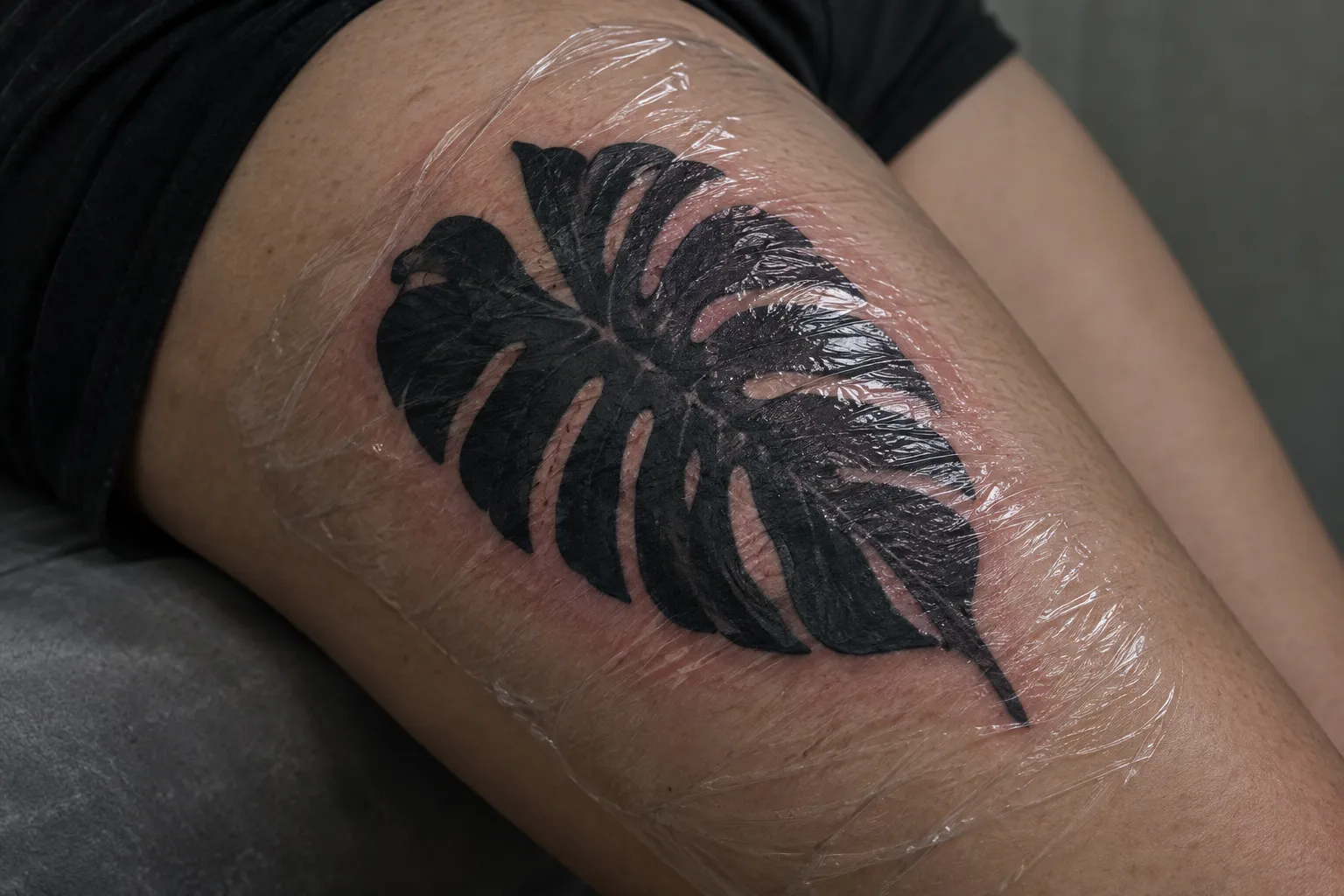
Day 1-3: swelling, oozing and rest
Expect swelling, pain, itching and some oozing. Swelling can last up to one week (4). Rest the tattooed limb, keep it elevated and avoid strenuous use right away (4). For swelling, put ice over the covering, never directly on the fresh tattoo (4). The large worked area is why blackout swells more than a palm-sized piece.
Weeks 1-3: surface closes over
Follow your artist’s aftercare instructions (4). In practice, that usually means:
- Wash gently with fragrance-free soap.
- Pat the skin dry.
- Apply a thin layer of fragrance-free moisturizer.
- Don’t scratch or pick at peeling flakes.
Peeling and itching usually peak in week 2, and black that peels can look patchy for a few days. Judge saturation after the flakes are gone, not during.
See a healthcare professional if you notice signs of infection: severe or worsening redness or swelling, skin that feels hot to the touch, fever or pus (4).
Up to 6 months: complete healing underneath
The surface usually looks healed by weeks 3-4, but the deeper skin is still settling, and most tattoos are considered fully integrated around week 6. Complete healing underneath can still take up to 6 months (4). Keep the area out of direct sun for the first 4 to 6 weeks, then cover it with sun-protective clothing outdoors. Avoid heavy friction from tight sleeves or straps, and hold off on any further tattooing over the area.
For a day-by-day view of both stages, see the tattoo healing process timeline.
Checking Moles and Understanding the Skin-Cancer Research
Have a dermatologist assess any mole or skin irregularity before you tattoo over it, because dense black ink can obstruct visual monitoring of skin changes (2). Columbia’s cancer center flags particular caution with large or “blackout” tattoos for this reason, since dense coverage can make early warning signs harder to spot (2). You’re not working around a mole, you’re burying it.
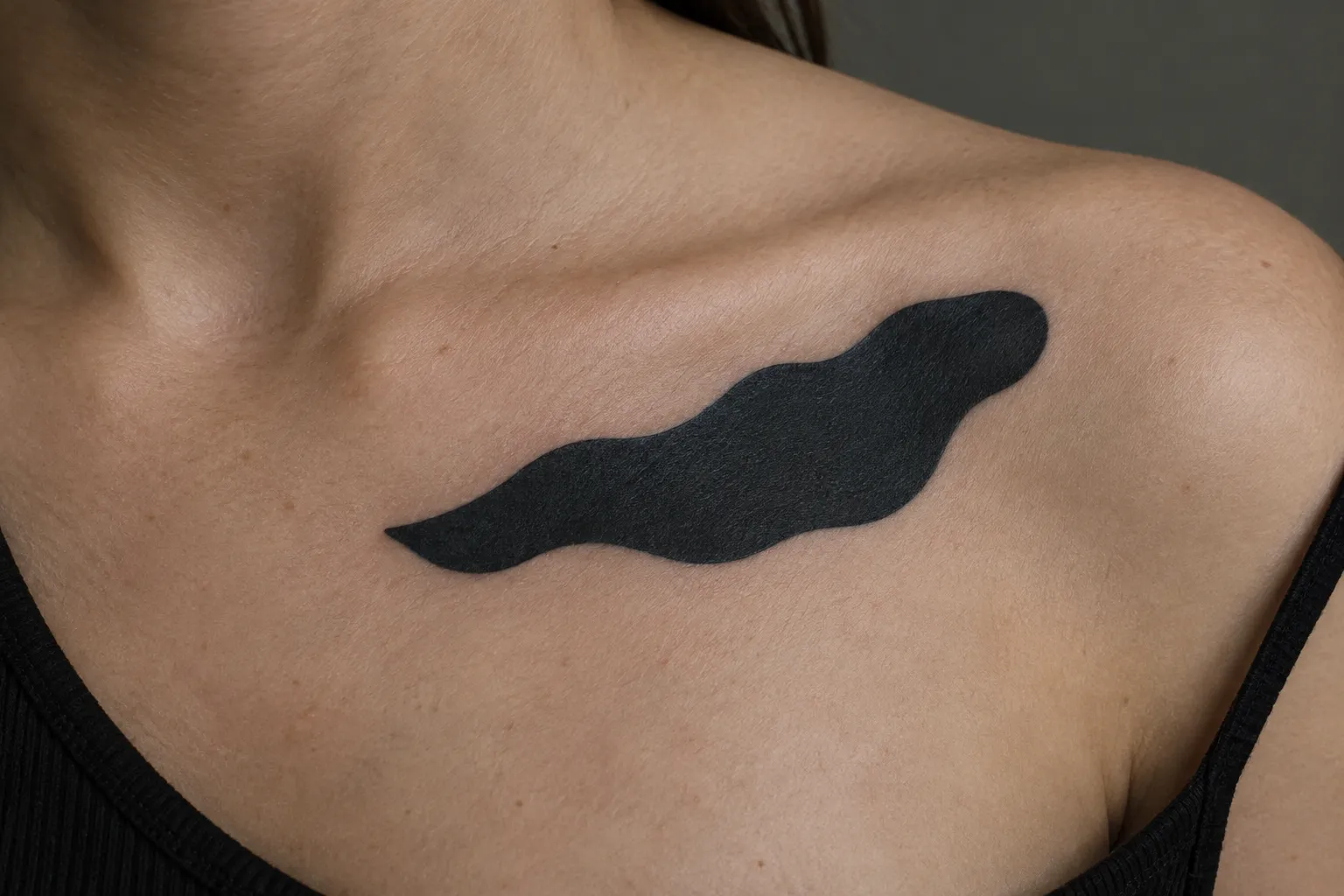
Once healed, check the area monthly for new or changing spots (2). Use the ABCDE checks:
- Asymmetry
- Border irregularity
- Color that’s uneven
- Diameter larger than 6 mm (about 0.24 in, roughly a pencil eraser)
- Evolution, meaning any change in size, shape, color or symptoms (2)
The research is worth reading calmly. Columbia’s cancer center cites a 2025 Danish twin study that found an association between tattoos larger than the palm and a higher skin-cancer risk, and it says large or blackout tattoos may put you at higher risk (2). That’s an association, and Columbia says more research is needed (2). Columbia also reports that tattooed people don’t need extra screening solely because they have tattoos; no extra schedule is recommended beyond standard risk-based checks, and screening frequency should follow your individual risk factors (2). There is no separate screening schedule for blackout pieces; what the guidance asks of everyone is the monthly self-check.
Adding White Ink or Patterns Over a Healed Black Base
White ink can be layered over blackout once the black foundation has healed (1). The surface closes in 2-3 weeks (4), but the skin underneath is still healing, so ask your artist how long they want the black to settle before the white goes in. A smooth-looking surface on its own is not the green light.
White ink is a separate design choice. Over black it won’t look as bright as it would on fresh skin (1). Floral and geometric white designs are popular over blackout (1), and one artist finds white holds together best when the artwork is bold and graphic, such as a linear drawing (1).
Negative-space patterns are different. Designs built from bare skin left inside the black (1) have to be planned before the blackout goes on. Once the skin is saturated, there’s no bare skin left to reveal. If you might want patterns someday, decide now.
Blackout Sleeves and Other Placement Choices
Placement size feeds straight into session planning: the reported 1-3 back-to-back sessions depend on the piece and your pain threshold (4).
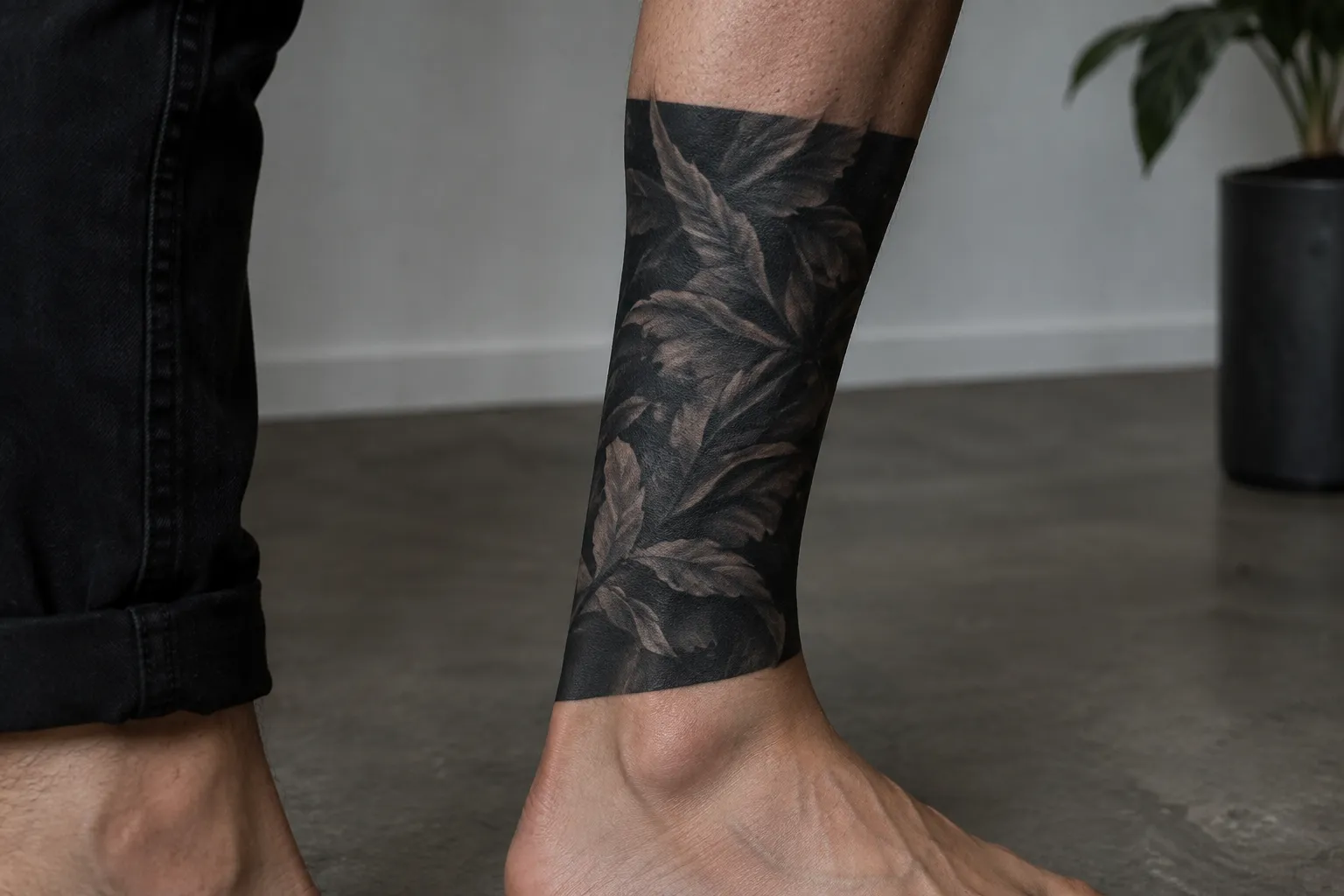
Full sleeve
A blackout sleeve from shoulder to wrist is the kind of project that sits at the top of that range. It’s large and high-contrast, and impossible to overlook in short sleeves. Plan for jacket and shirt-cuff friction during the first weeks, plus the elbow ditch, which is slow to heal.
Half sleeve
A half sleeve covers either the forearm or the upper arm. It’s the more manageable entry point. An outer-forearm section is also the easiest to keep elevated while it swells.
Ribcage, back and thigh
- Ribcage: the most painful of these three, and bra bands and waistbands rub through healing.
- Back: large and flat with good saturation, but hard to wash and moisturize alone.
- Thigh: well padded, though jeans and seated pressure add friction.
Choosing an Artist and Preparing for the Appointment
An artist experienced in blackwork tattoos can make both the process and the recovery faster and easier (4). Look for healed blackout photos in their portfolio, not just fresh ones. Fresh black always looks perfect. Healed black shows whether the saturation held.
Ask them about:
- Session planning: how many sessions and how many hours each
- Healing expectations for your placement
- Health-and-safety practices (4)
The tools are standard: the same machines and ink as other tattoos (4). Artists typically use large magnum needle groupings to pack solid black over wide areas.
Plan a couple of days off after each appointment (4). Tell your artist about any medications you take, especially blood thinners, and don’t stop a prescribed medication without asking your doctor.
How to Prepare for a Blackout Tattoo
Set your coverage goal, check the skin, and plan the appointment and first days of recovery before the artist starts.
- 1
Set the coverage goal
Decide whether the priority is hiding existing ink or creating an all-black shape, since that changes the size and edge plan.
- 2
Check the skin
Have a dermatologist assess any mole or irregularity that would sit under the planned black area.
- 3
Choose a blackwork artist
Review healed work and ask how many sessions and hours the specific placement is likely to need.
- 4
Arrange recovery time
Clear a couple of days after the appointment and set up a place where the tattooed area can rest elevated.
- 5
Confirm aftercare
Ask the artist how to care for the covering and confirm the plan for icing over it rather than directly on the tattoo.
Frequently Asked Questions
- What is the point of a blackout tattoo?
- A blackout tattoo can conceal older work or create a deliberate solid-black field; choose it only if that coverage suits the shape you want.
- How painful is a blackout tattoo?
- Blackout sessions can feel more demanding than line-focused work because the artist repeatedly saturates the same skin; ribs hurt more than the outer forearm.
- Is a blackout tattoo safe?
- A blackout tattoo carries the same basic risks as other tattoos, but its dense coverage makes monitoring covered skin harder; discuss suspicious spots with a dermatologist.
- Is blackout tattooing racist?
- Some people see non-Black people blackening their skin as cultural appropriation, given the history of racism based on skin color; others disagree. It's worth weighing if you're not Black.
- Can you add color or white ink over a blackout tattoo?
- White ink is the more workable overlay, while most colors cannot show clearly through saturated black; ask the artist to assess healed skin first.
- Can you add patterns to a blackout tattoo later?
- You cannot reveal untouched skin after it has been filled; later pattern work must sit on top, usually as a separate white-ink design.
- How do I choose a blackout tattoo artist?
- Choose an artist whose healed blackwork shows even saturation and controlled edges, then ask how they plan to limit repeated trauma to the skin.
- How should I prepare for a blackout tattoo session?
- Confirm the coverage plan, session estimate, and aftercare instructions beforehand, and arrange help with rest or elevation if the placement limits movement.
What Decides Whether Blackout Is Right for You
Two things settle the decision. The first is whether you can handle a longer, more painful set of sessions, reported at 1-3 back-to-back sessions (4). The second is whether you can stay patient through healing that looks done in 2-3 weeks but isn’t finished underneath for up to 6 months (4).
If you can, the next steps are simple: book a consult with an artist whose healed blackwork you’ve seen, and get a dermatologist to check any moles in the area first. Plan the edges and any negative space before the first pass, because blackout is the one style with no bare skin left to rethink later.