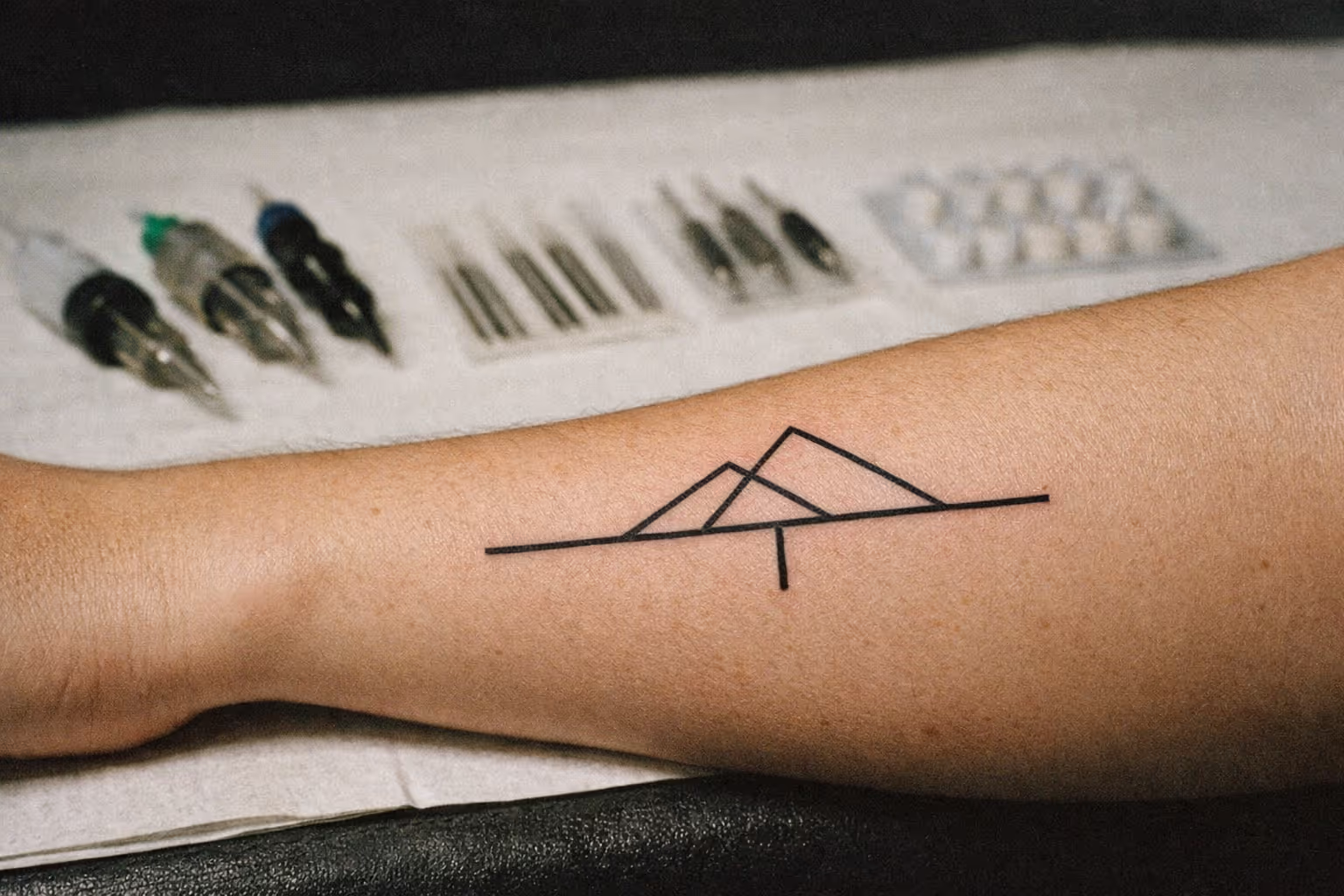
Tattoo needles come labeled like a secret code - 1207RL, 1023CM - and picking the wrong one is how a lot of clean designs end up blurred or blown out. Those numbers actually tell you everything: the diameter, the count, and the grouping that decides whether a needle lays a crisp line or a soft gradient. Once you can read the label, matching the needle to the work is simple. Here’s how to decode them, and which to reach for.
What Tattoo Needles Actually Are and How They Work
A tattoo needle is not a hollow syringe. It’s a group of solid steel pins soldered to a bar - or sealed into a plastic cartridge housing - that punctures the skin somewhere between 50 and 3,000 times per minute. Ink doesn’t get injected. The needle creates a tiny void in the dermis, and then capillary action pulls the ink off the pins as the needle retracts. That’s the whole mechanism.
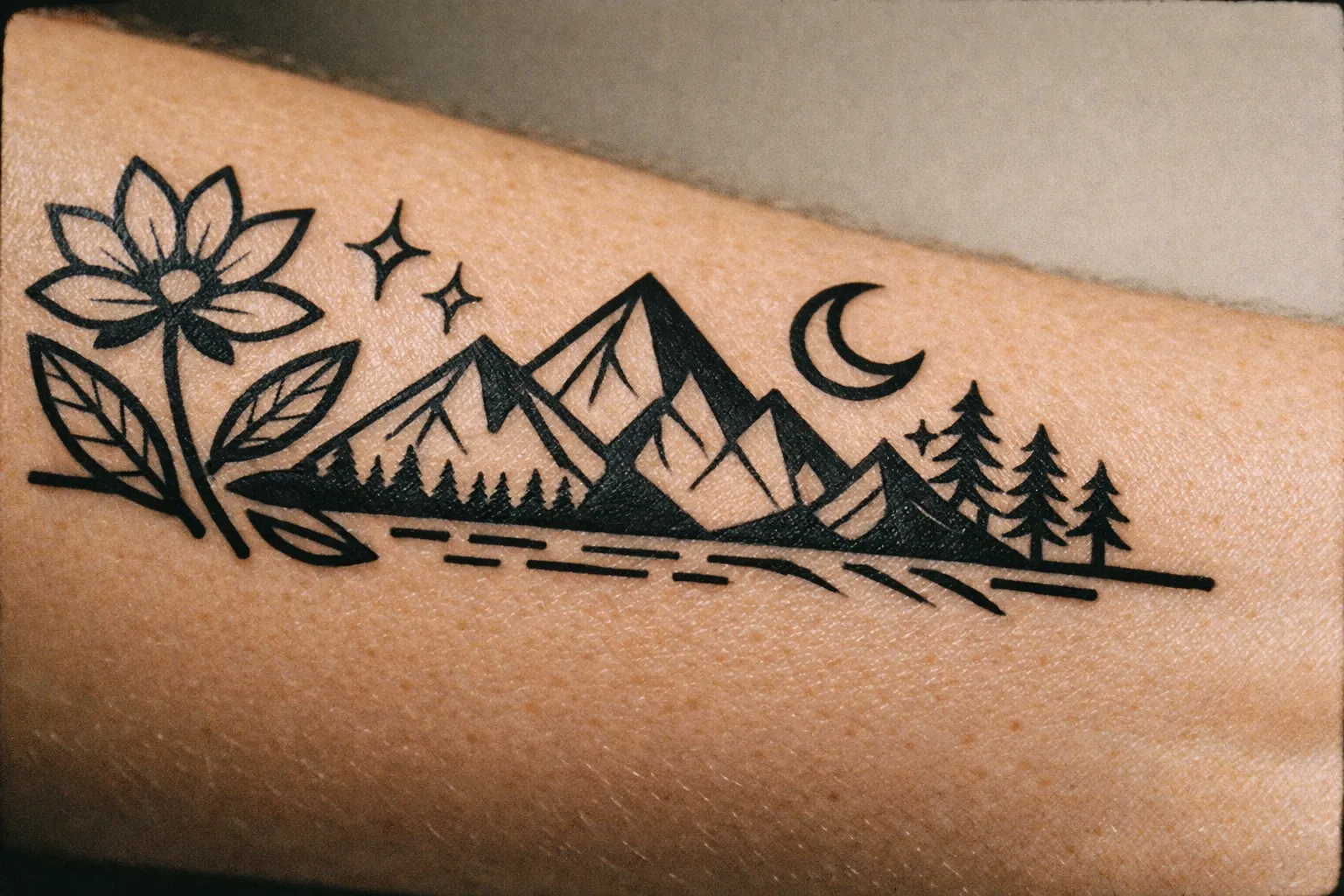
The target depth is the upper to mid-dermis, around 1-1.5 mm below the skin surface. Shallower than that and the ink sits in the epidermis, which sheds every few weeks - the tattoo fades fast or looks patchy. Go past that window and you get blowouts: ink spreading sideways under the skin into a fuzzy halo around the line, prolonged healing, and in worst cases scar tissue.
I’ve seen both failure modes plenty of times. Blowouts are more dramatic, but shallow work is more common - especially on artists who are nervous about going too deep and overcorrect.
Decoding Tattoo Needle Sizes and Codes
Every box of needles is labeled with a code like 1207RL or 1009M1. Once you know how to read it, the whole catalog gets simple.
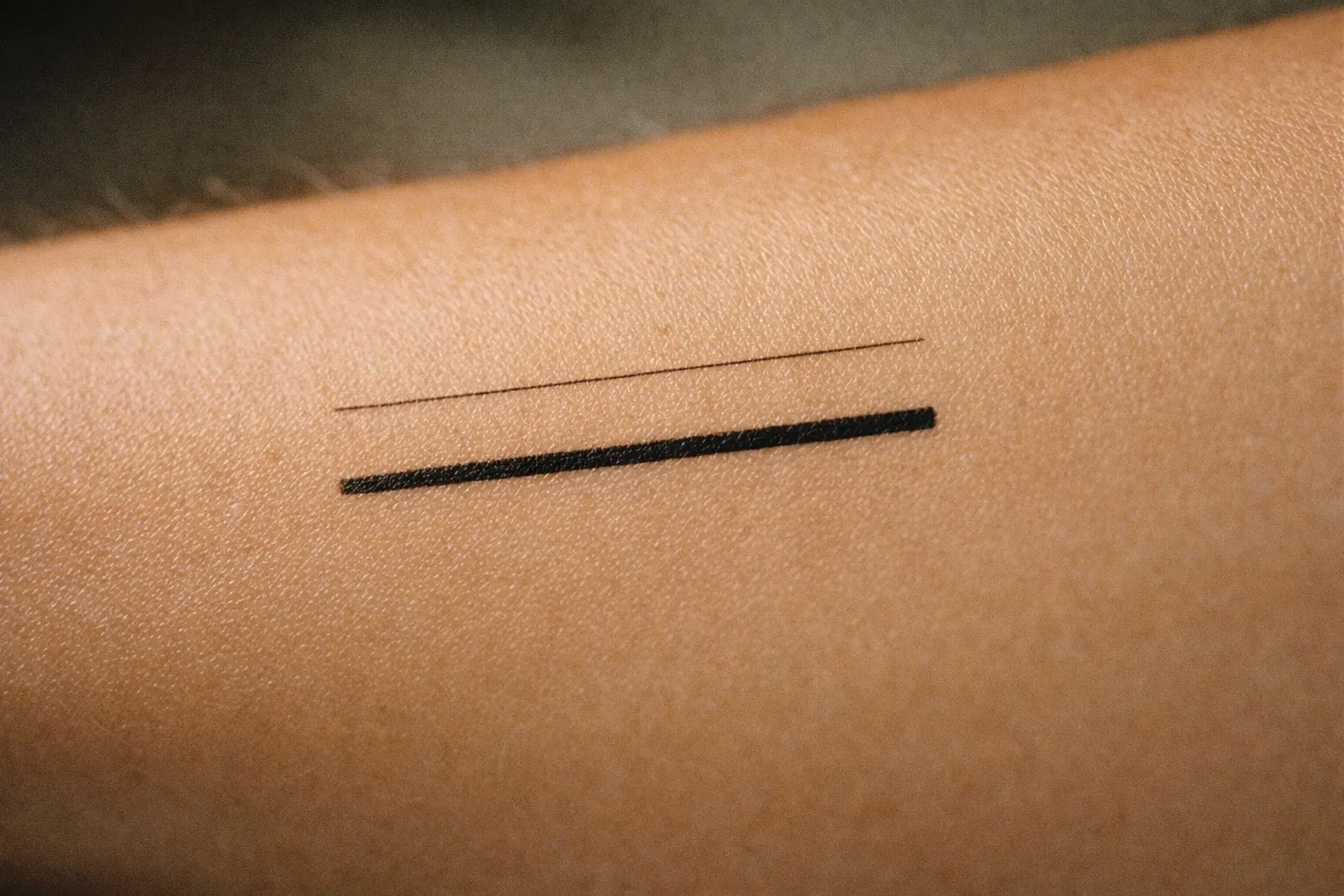
A code like 1207RL breaks down as:
- 12 → diameter (#12 = 0.35 mm)
- 07 → number of pins in the grouping (7 needles)
- RL → configuration (Round Liner)
Tattoo Needle Sizes by Diameter
The diameter - sometimes just called “size” or “gauge” - is the thickness of each individual pin in the grouping.
- #6 - 0.20 mm - micro fine line, single-needle work
- #8 - 0.25 mm - “bugpin,” fine line, smooth shading
- #10 - 0.30 mm - fine line, black & grey, soft shading
- #12 - 0.35 mm - the industry standard for lining and color packing
- #13 - 0.40 mm - bold traditional outlines
If you’re going to memorize one number, memorize #12. It’s the most common diameter for bold lines and packing in American traditional, neo-trad, and color realism. #10 is the second most common, dominant in fine line and black & grey work. Bugpin is shop slang for the smaller diameters (#8-#10) on groupings that traditionally came in #12 - same number of pins, finer pins. The result is a noticeably softer, more controlled ink deposit.
Taper Length
Taper is how long the sharpened tip is - separate from diameter, and something a lot of people skip over when they’re first learning.
- Short taper (1.5-2.0 mm) - drops more ink per hit, hits harder. Used for color packing and solid black.
- Medium taper (~3.5 mm) - balanced. A safe default for beginners.
- Long taper (5.5-7.0 mm) - less ink per hit, smoother transitions. Used for fine line and soft shading.
Mixing a short-taper liner with delicate 1RL work is a fast way to blow lines out. Match taper to job.
Tattoo Needle Configurations (Groupings)
The configuration is the shape and arrangement of the pins. Every grouping has a specific purpose, and swapping one in where it doesn’t belong is where things go sideways.
Round Liner Tattoo Needles (RL)
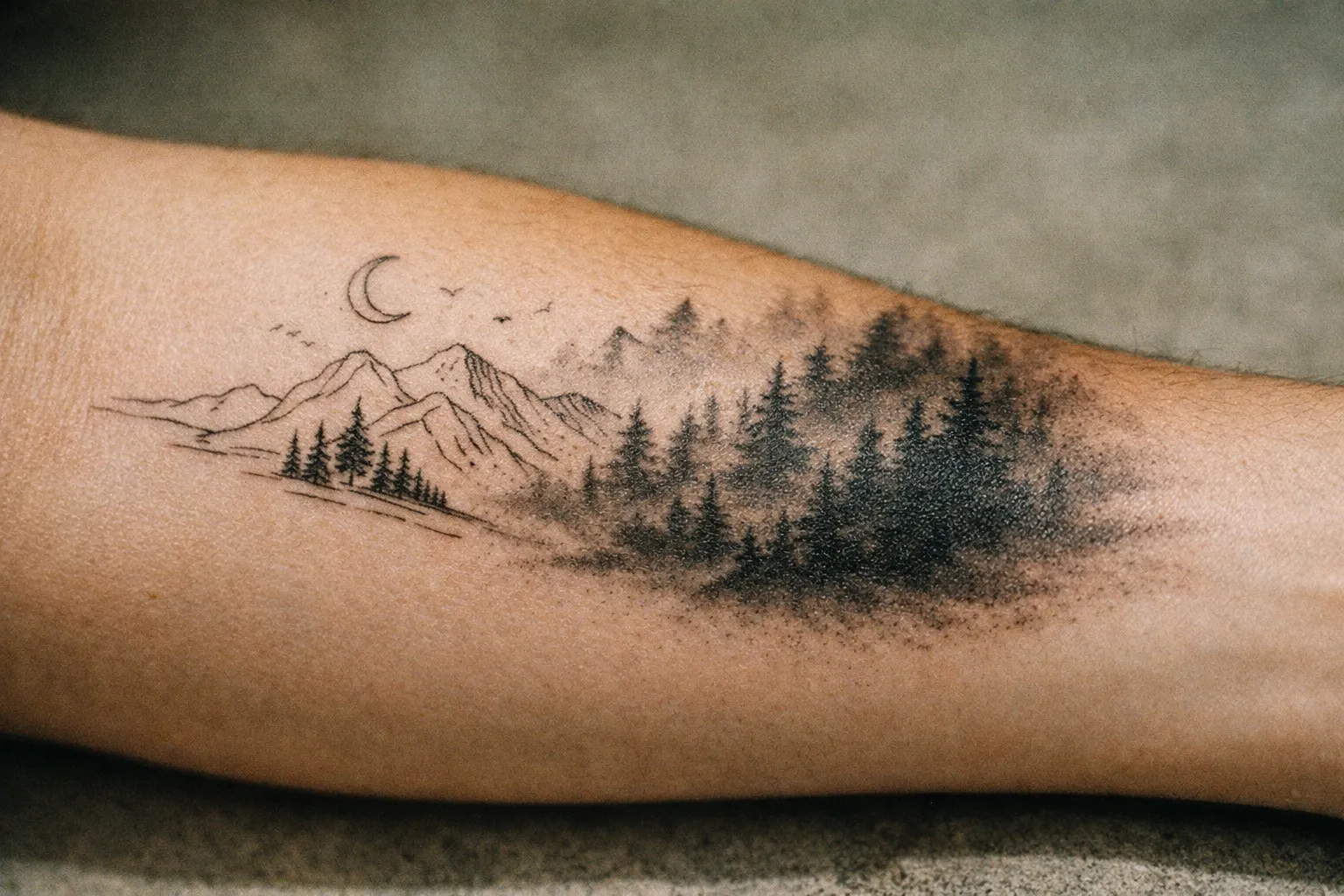
Pins soldered in a tight circle. The standard tool for linework: outlines, script, dotwork, geometric detail. Common sizes:
- 1RL, 3RL - single-needle and micro fine line
- 5RL, 7RL - the everyday workhorse liners for most artists
- 9RL, 11RL, 14RL - bold American traditional outlines
Round liner tattoo needles are what you reach for any time the goal is a crisp, defined edge. I keep a 5RL and a 7RL loaded at almost every session - they handle the majority of general shop linework without any drama.
Round Shader (RS)
Same circular arrangement as RL, but the pins are soldered more loosely so they spread slightly on contact. Shader tattoo needles in the RS configuration are used for small fills, dot shading, and color in tight spaces. Common: 3RS, 5RS, 7RS, 9RS.
Magnum (M1) - Straight Magnum
Two stacked rows of pins in a flat row. The default shader for large areas - color packing, big black fills, bold traditional shading. Common: 5M1, 7M1, 9M1, 13M1, 15M1, 23M1.
Curved Magnum (CM / M1C / RM)
Same two-row stack as M1, but the pins curve upward at the ends. That curve means the outer pins make contact at the same depth as the center ones as the needle rolls across skin - gentler, smoother gradients, less trauma on rounded body parts. Most artists doing realism or black & grey live on 7CM, 9CM, 13CM, 23CM. If I had to pick one configuration that changed how I work more than any other, it’s the curved mag.
Flat (F)
Pins in a single straight row. Used for geometric lines, ornamental work, and some traditional styles. Common: 5F, 7F, 9F, 13F. Less common than they used to be - curved mags replaced a lot of flat shader work over the past decade.
Comparing Tattoo Cartridge Needles and Traditional Bars
For years, the standard was a needle soldered to a steel bar, loaded into a steel tube, and run through a coil machine. That setup is still in use. But tattoo cartridge needles now dominate the market - industry analysis calls them “the most popular tool” for working artists, and disposable cartridges are a major driver of the global tattoo needle market, valued at roughly USD 368 million in 2024 and projected to keep growing at about 3.5-4.4% per year through 2033.
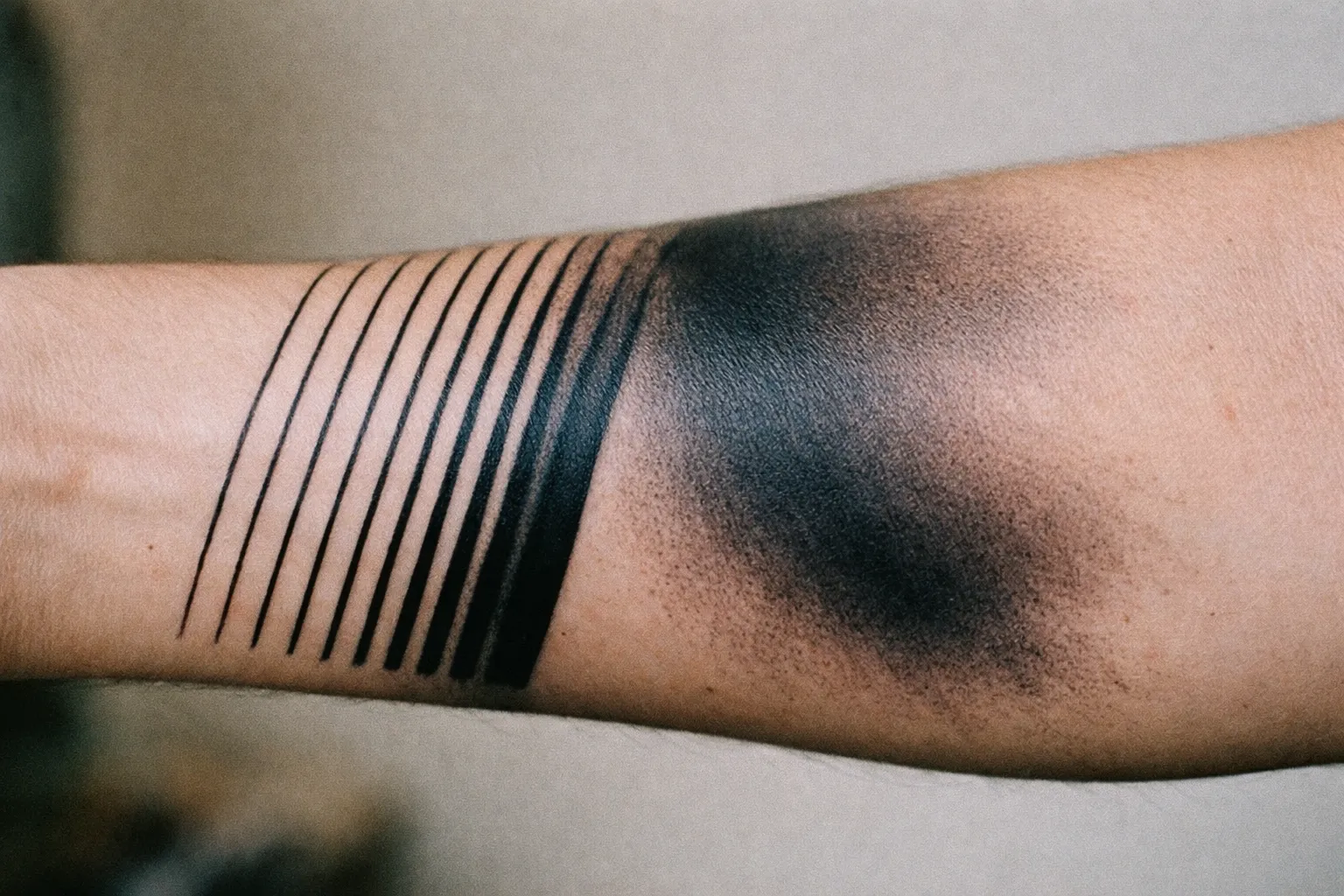
Cartridges are sealed, disposable plastic housings with the needle pre-installed. You click one into a cartridge-compatible grip on a pen-style or rotary machine and you’re running. When you’re done, the whole housing goes in the sharps bin.
Why cartridges took over:
- Hygiene. The needle, membrane, and tip are one sealed single-use unit. Lower cross-contamination risk.
- Speed. Swapping from a 5RL to a 9CM mid-session takes about three seconds.
- No autoclave for tubes. Disposable plastic grips and cartridges mean you can skip a USD 2,000-5,000 autoclave investment.
- Consistency. Premium cartridges have tighter manufacturing tolerances than hand-assembled traditional setups.
Costs to budget for:
- Traditional bars (boxes of 50): USD 10-25 per box, so roughly USD 0.20-0.50 per needle.
- Mid-range cartridges (boxes of 20): USD 25-45, so USD 1.25-2.25 per cartridge.
- Premium cartridges (Cheyenne, Kwadron, EZ V-Select Gold): USD 35-70 per box of 20, or USD 1.75-3.50 per cartridge.
Cartridges cost 2-5x more per unit than bars, but most shops save more in setup time, autoclave maintenance, and barrier supplies than they spend on the price difference. The math works out - that’s why the switch happened.
Capillary Cartridges and Other Recent Designs
The biggest cartridge innovation in the last few years is the capillary cartridge, which uses micro-reservoirs to hold ink inside the housing. The result is ink flow that lasts up to 10x longer per dip than a standard cartridge - fewer trips back to the ink cap, fewer passes over the same area, less skin trauma on big color fields. Brands like Cheyenne lead on this, and Kwadron, Peak, and EZ Tattoo V-Select Gold Series are the other names that show up consistently in working-artist reviews, generally rated 4.5-5.0 / 5.
Choosing the Right Tattoo Needles for Lining
Lining is where most beginners blow tattoos out, and almost always because they picked the wrong needle for the line weight they wanted.
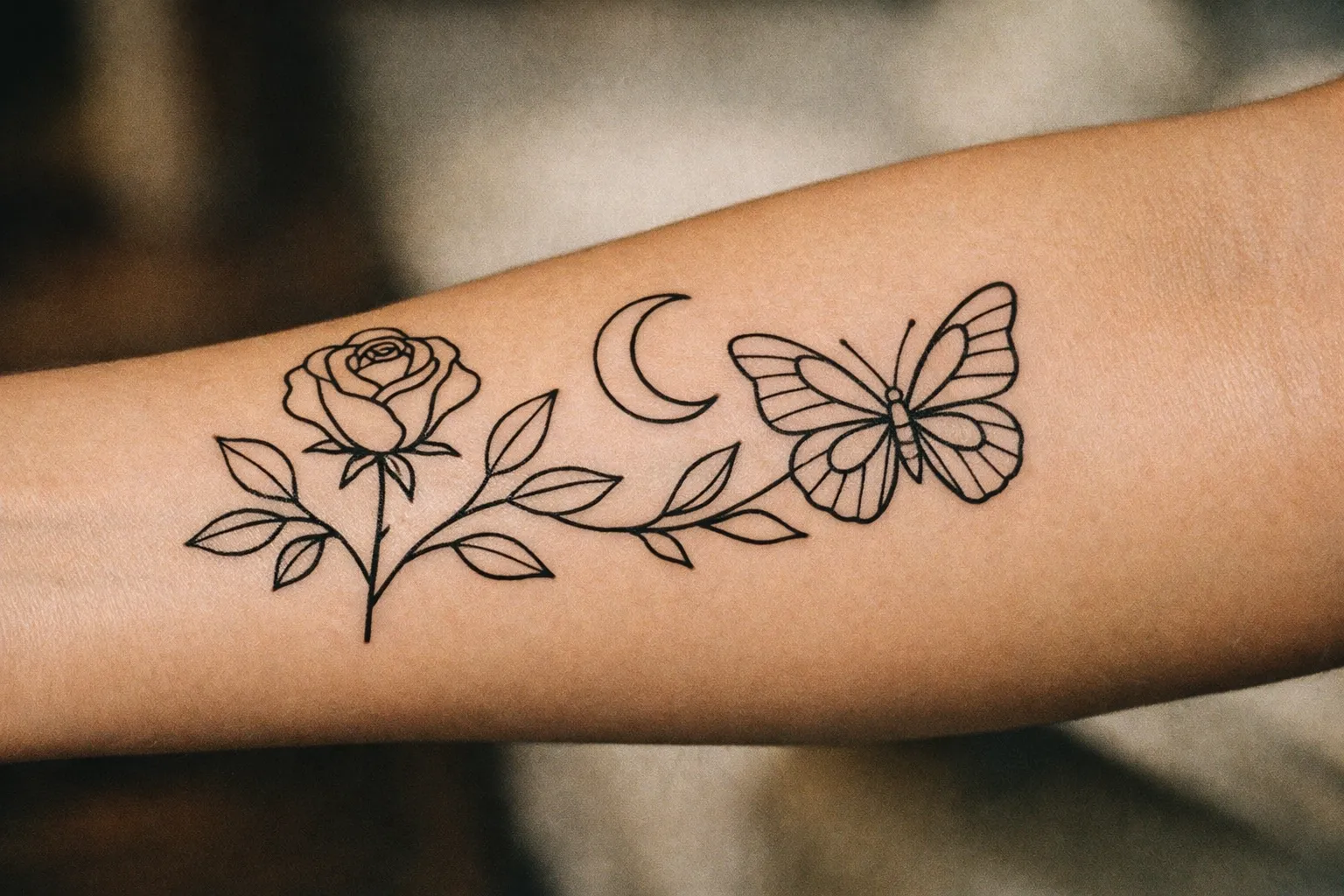
Which Needle Size Is Best for Lining?
The honest answer depends on the line weight, but here’s what works in practice:
- Bold American traditional outlines: #12 9RL, 11RL, or 14RL. Run higher voltage, faster hand speed.
- Standard shop linework (most tattoos most days): #12 5RL and 7RL. This is the all-purpose liner most working artists keep loaded.
- Black & grey, smaller detail work: #10 3RL or 5RL with a long taper.
- Fine line and micro tattoos: #8 or #10 1RL-3RL, long taper, lower voltage, slow hand.
- Script: #10 3RL-5RL for delicate lettering; #12 5RL for bolder weights.
The most common pitfall: running a short-taper #12 9RL on small, detailed work because “more needles equals more saturation.” It doesn’t - it equals blowouts. Match the grouping to the line weight, not to how confident you want to feel.
For very long, flowing lines, capillary cartridges genuinely help because they reduce the number of dips, so saturation stays consistent from start to finish of the line.
Picking Shader Needles: The Right Setup for Shading and Color
Shader tattoo needles cover everything from soft black & grey gradients to packing solid blocks of color. The configuration matters more than the diameter for shading work - that’s worth repeating because it’s where a lot of people get stuck.
For soft black & grey realism:
- #10 7CM, 13CM, 23CM is a common trio. Curved magnums lay smoothly without leaving track marks.
- Long taper. Lower voltage. Slow, deliberate passes.
For color packing:
- #12 13M1 or 15M1 with a short taper. You want ink dropping in fast and saturated.
- For larger fills, #12 23M1 or 23CM.
For small fills and detail shading:
- #10 or #12 5RS, 7RS, 9RS. Round shaders pack tight ink into small areas where a magnum won’t fit.
Common mistake: running a straight magnum on a rounded surface - calf, shoulder, ribcage. The outer pins don’t make consistent contact, and you get choppy blends and visible track marks. Curved magnums fix this. I switched most of my shading work to curved mags years ago and haven’t looked back.
What Needles Do Most Tattoo Artists Use?
Walk into a working shop and the cartridge wall looks pretty similar from station to station. The standard lineup most artists keep stocked:
- #12 5RL - everyday liner
- #12 9RL - bolder outlines
- #10 3RL - detail and fine line
- #12 9CM or 13CM - soft shading
- #10 23CM - large area black & grey gradients
- #12 13M1 or 15M1 - color packing and solid black
That six-needle kit handles the majority of jobs in a general shop. Specialists add to it - a fine-line artist stocks heavily in #8 and #10 1RL-3RL, a Japanese-style artist keeps big magnums and 14RL liners on hand, a black & grey realist runs through curved mags by the box.
Best Needles to Use for Tattoos: Brands and Recommendations
There’s no single best needle. There’s the right needle for the job. But for the recurring question of which brands working artists actually trust:
- Cheyenne - premium, tight tolerances, originator of the capillary cartridge design
- Kwadron - consistent quality, popular for fine line and black & grey
- EZ Tattoo V-Select Gold Series - strong value at the premium end
- TATSoul / Envy - solid mid-range workhorse cartridges
- Peak - popular for black & grey shading
For a beginner stocking a first kit, a mid-range cartridge from a reputable brand in the six sizes above will outperform a premium cartridge used in the wrong configuration. Spend your learning money on synthetic skin practice, not on the most expensive box on the shelf.
Adjusting Your Setup for Skin Depth and Body Area
A needle that works perfectly on a forearm can shred the skin on a wrist. As a concrete example: a bold American traditional piece placed on the outer forearm typically runs at 3-5 inches (7-13 cm) in length - that scale gives you room to use a #12 9RL or 11RL without crowding the design into the ditch of the arm, where skin gets thinner fast. Skin thickness, fat layer, and proximity to bone all change how the needle behaves - and you have to adjust accordingly.
- Thin, delicate skin (wrists, inner arm, neck, behind the ear): smaller groupings (#10 3-5RL, 7CM), lower voltage, lighter hand.
- Thick, tougher skin (upper back, outer thigh, calf): #12 7-9RL, 13-23M1, slightly higher voltage. You can move faster without trauma.
- Bony areas (ribs, sternum, ankle): the ribcage hurts more than the forearm regardless of needle choice - there’s less padding between skin and bone, and the bone vibration amplifies the sensation. Use a smaller grouping than you’d use on a fleshier area at the same scale, and take more breaks. The pain isn’t about needle depth; it’s about location.
Tattoo Needle Labeling, Region, and Regulation
Labels can vary by language and region, but the structure is consistent. 1207RL in the US is 1207RL in the EU. What changes is what you’re legally allowed to use:
- Most US states, the EU, Canada, and Australia either mandate or strongly expect single-use needles and cartridges. Reprocessing needles is a fast path to license suspension.
- OSHA bloodborne pathogen standards (US) require sharps to go into an FDA-approved sharps container immediately after use.
- Cartridges with membranes that prevent backflow into the machine are increasingly required or recommended for hygiene compliance.
Practical takeaway: stick to sterile, individually blister-packed needles or cartridges from a brand with documented sterilization - EO gas or gamma. Skip anything in bulk plastic bags from unknown suppliers. This isn’t a corner worth cutting.
Common Mistakes That Wreck Tattoos
Most needle-related problems trace back to a handful of errors. I’ve seen all of these, more than once.
- Wrong grouping for the job. Using a 9RL for tiny detail. Using a 3RL to outline a large piece. Both produce uneven, frustrating results.
- Running too deep. Past the 1-1.5 mm target window and you get blowouts - ink spreading sideways into a fuzzy halo around the line. This is the single most common beginner mistake.
- Running too shallow. Ink sits in the epidermis and sheds out. The tattoo looks patchy or faded within weeks.
- Wrong magnum for the surface. Straight mags on curved anatomy = track marks. Use curved magnums.
- Mixing diameters mid-piece. Switching from #12 7RL to #10 7RL noticeably changes line weight. Plan your needle changes around design transitions, not in the middle of a line.
- Reusing single-use cartridges. Even if you “only used it for a minute,” residual blood and plasma remain inside the housing. There’s no safe way to reprocess them.
- Using bent or dropped needles. Microscope analysis of used needles shows burrs and surface damage on the tips that translate to scratchy lines and excess trauma. If you drop one, throw it out.
What Organ Does Tattoo Ink Affect?
The needle deposits pigment into the dermis, but the ink doesn’t always stay there. Particles small enough to enter the lymphatic system can migrate, and toxicology research has detected tattoo pigments in regional lymph nodes (most consistently), as well as in the liver and spleen in smaller amounts.
The visible reactions - allergic responses, granulomas, raised skin - show up mostly in the skin and nearby lymph nodes. Systemic organ effects are an area of ongoing research, and risk depends more on pigment chemistry (especially red and yellow inks, which have historically used more reactive compounds) than on the needle itself. The needle is the delivery mechanism; the ink is what your body has to live with long-term.
For both artists and clients, this is the case for using inks from reputable manufacturers with disclosed ingredient lists - not just the needle that’s sealed and sterile.
Healing Timeline After a Tattoo
The needle work is done in hours. The healing takes weeks.
- Day 1-3: Open wound. Plasma weeping, mild swelling, redness around the lines. Keep it clean with mild fragrance-free soap, pat dry, and either rewrap (if your artist uses a second-skin film) or let it air. No submerging.
- Week 1: The tattoo starts to scab and flake. It will itch. Do not pick. Use a thin layer of fragrance-free moisturizer 2-3 times a day. No swimming, no soaking, no direct sun.
- Week 2-4: Surface healing wraps up. The tattoo may look slightly dull or cloudy - that’s the new skin layer over the dermis where the ink sits. Keep moisturizing. Start using sun-protective clothing over the area; UV will fade fresh tattoos faster than anything. Following a proper tattoo aftercare routine during this window makes a measurable difference in how the final result looks.
- Week 4-8: Deep healing finishes. The colors brighten back up as the surface skin settles. Now’s when you can fully resume sun exposure with SPF 30+ over the tattoo.
If you went too deep with the needle work, healing extends and you may see raised lines or scar tissue developing in week 2-4. That’s a sign for the artist to ease up on depth next time - not a normal part of healing.
Frequently Asked Questions
- What needles are best for linework?
- For most shop work, #12 5RL and 7RL are the standard. Use #12 9RL-14RL for bold traditional outlines, #10 3RL for detail and black & grey, and #8-#10 1RL with a long taper for fine line and micro tattoos.
- What needles do most tattoo artists use?
- A typical working kit covers: #12 5RL and 9RL for lining, #10 3RL for detail, #12 or #10 9CM/13CM for shading, #10 23CM for large gradients, and #12 13M1 or 15M1 for color packing. Six configurations handle the majority of jobs.
- What are the best needles to use for tattoos?
- The right configuration for the job matters more than the brand. Among brands working artists trust: Cheyenne, Kwadron, EZ Tattoo V-Select Gold Series, TATSoul, and Peak. Stick to sterile, blister-packed cartridges from brands with documented sterilization.
- What organ does tattoo ink affect?
- Pigment is deposited into the dermis, but particles can migrate through the lymphatic system to regional lymph nodes, and have been detected in smaller amounts in the liver and spleen. Most visible reactions occur in the skin and nearby lymph nodes. Risk depends largely on ink pigment chemistry, not on the needle.
- How deep does a tattoo needle go?
- Roughly 1-1.5 mm - into the upper to mid-dermis. Shallower and the ink sheds out with the epidermis. Deeper and you risk blowouts and scarring.
- Can a tattoo needle hit a vein or bone?
- No. The dermis sits well above any vein large enough to matter, and a needle running at correct depth doesn't go anywhere near bone. On bony areas like the ankle or sternum, vibration through the bone can make it feel like the needle is hitting bone - but it isn't.
- Cartridge or traditional bar - which should a beginner start with?
- Cartridges are a solid starting point - they eliminate assembly errors, reduce contamination risk, and let you focus on hand technique instead of equipment setup. That said, coil machines with traditional bars are still in active use in plenty of shops, so it's worth understanding both systems. Cartridges are just the faster on-ramp for most beginners today.