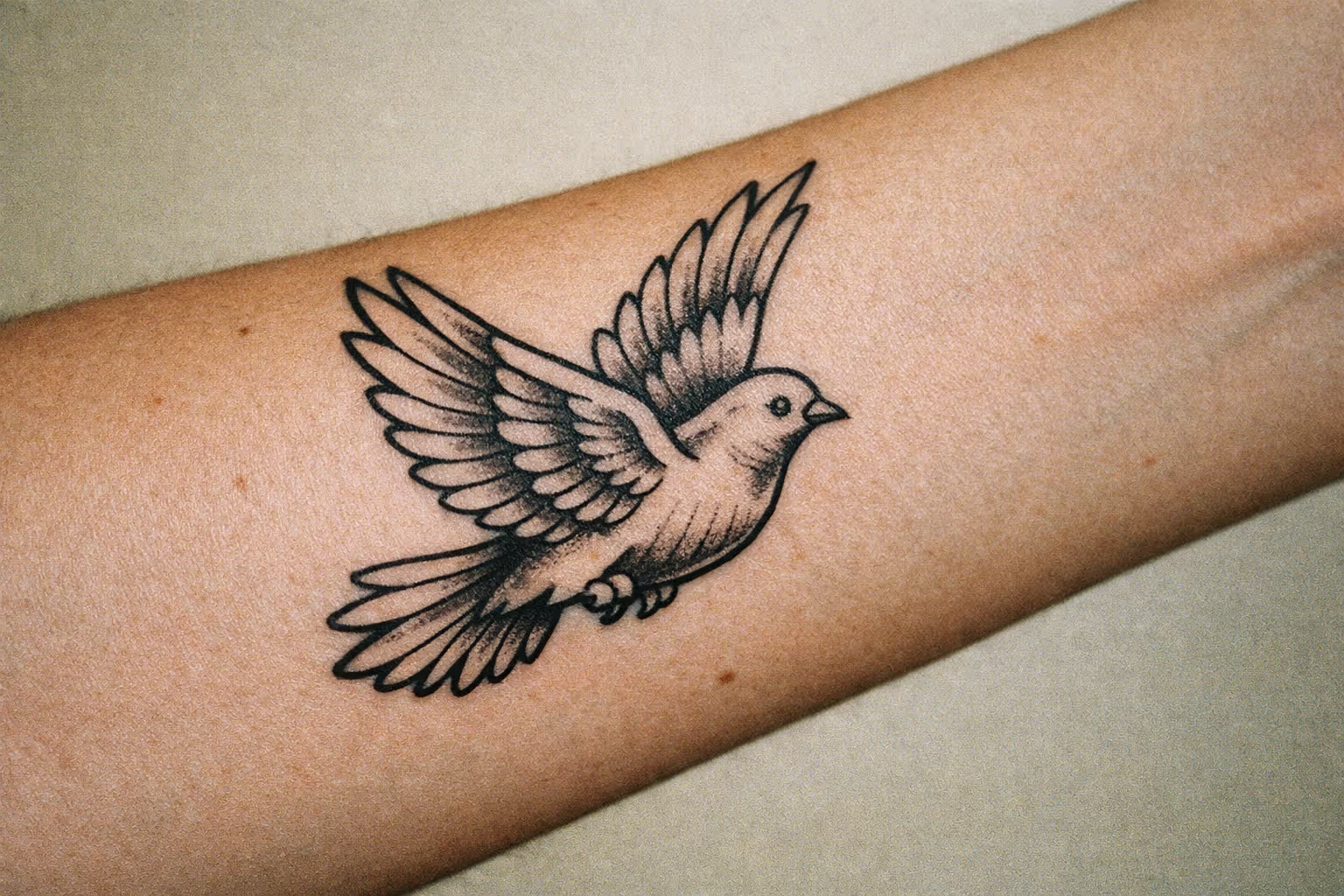
The most common dove tattoo regret isn’t the bird - it’s everything people pile onto it. A dove reads beautifully on its own, but add an olive branch, a banner, a name, and a ray of light, and you’ve crowded a simple symbol into a muddy one that blurs as it ages. Restraint is the whole trick. Here’s how the dove’s meaning shifts with what you pair it with, and the sizing that keeps it clean.
What a Dove Tattoo Actually Means
The dove tattoo has one of the clearest reads in Western tattoo iconography: peace, love, faith, new beginnings. That’s exactly why it’s held a spot at the top of bird tattoo requests for decades, and why it works on everything from a 2 cm inner wrist silhouette to a full chest piece without looking like a relic. The silhouette is instantly recognizable. The meaning lands even at small scale.
Symbolism and Meaning Across Traditions
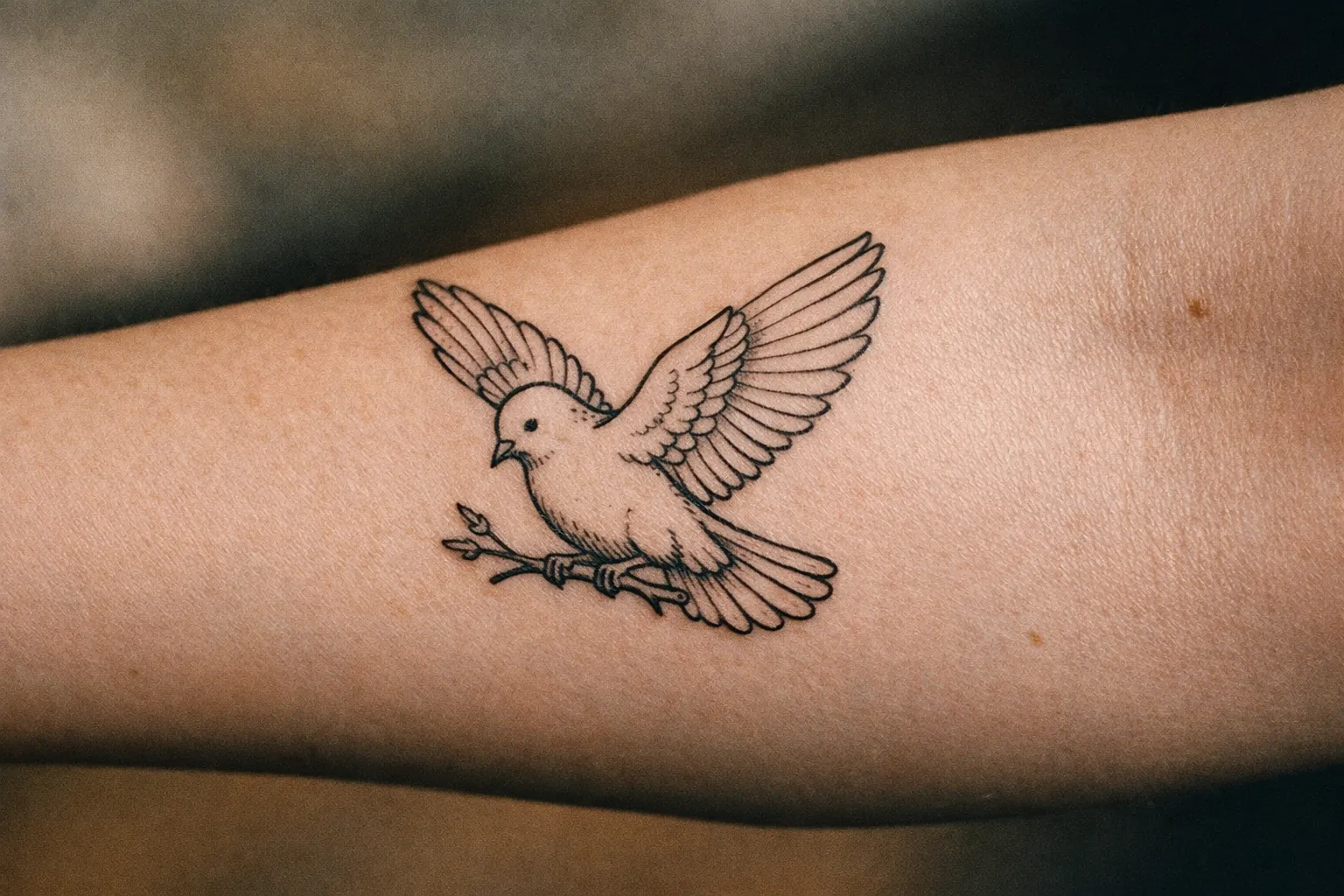
The core associations are peace, love, purity, faith, hope, and new beginnings (1). Some studios catalog 20-plus extended meanings - monogamy, partnership, victory, devotion, joy, messages from a higher power - but in practice, most clients land in one of four buckets: spiritual/religious, peace/anti-war, love/partnership, or memorial.
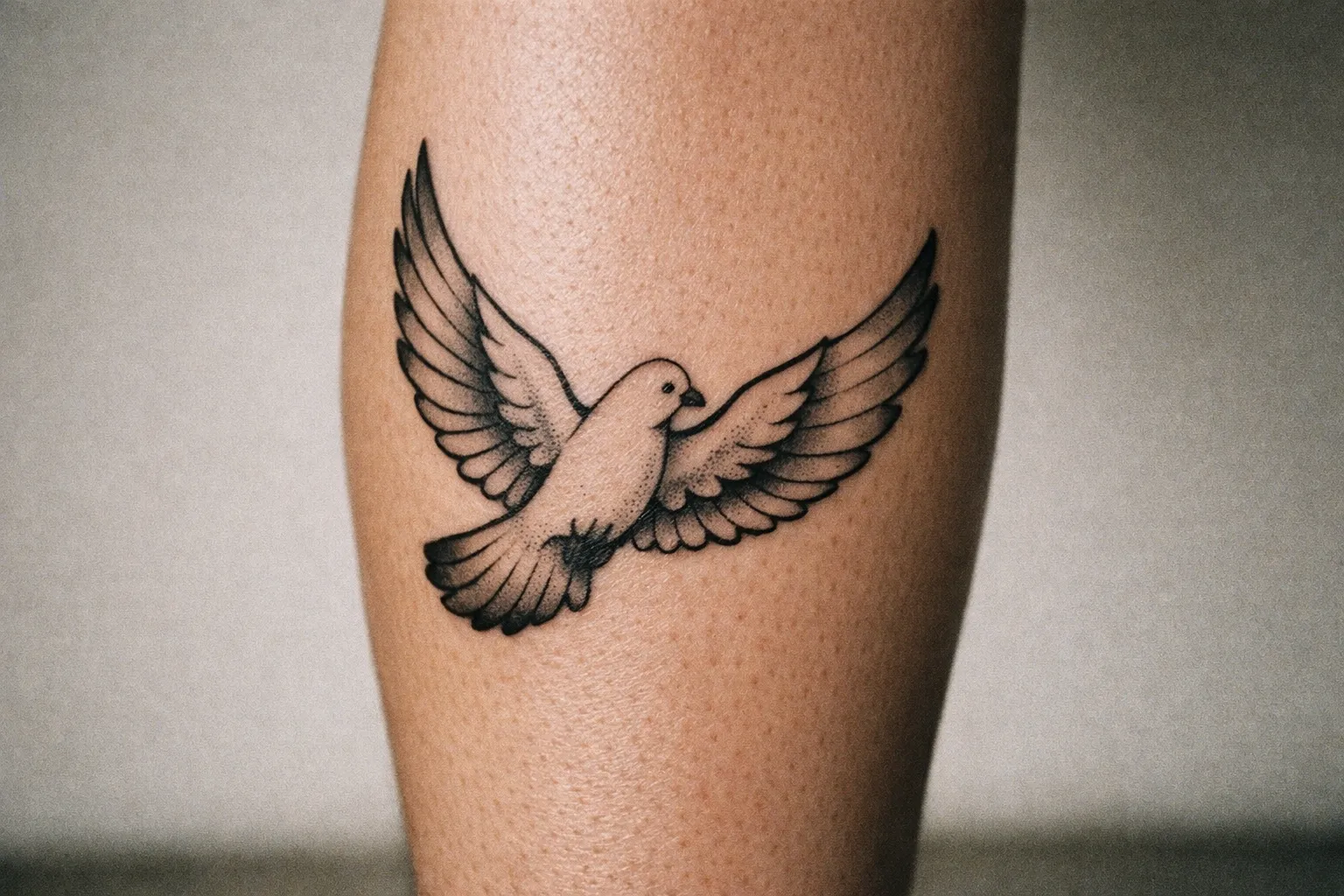
Before you book, write down one to three words you actually want the tattoo to convey. Peace. Mom. Faith. That single sentence drives every composition decision your artist will make. It sounds obvious, but I’ve watched clients sit down for a consultation without being able to answer it, and the design suffers for it.
The monogamy meaning isn’t sentimental marketing. Doves are genuinely socially monogamous and form long pair bonds, which is why two-dove designs are common for couples and anniversaries (1)(2).
Across Traditions
- Christianity: The dove represents the Holy Spirit and appears at Christ’s baptism. A dove with an olive branch references Noah’s ark - survival and God’s favor.
- Judaism: Same Flood narrative, with the dove as a symbol of peace and the end of judgment.
- Islam: The dove is associated with the Prophet Muhammad as a protective bird.
- Greek and Roman mythology: Sacred to Aphrodite and Venus - love and harmony.
- Native American folklore: A messenger between the earthly and spiritual worlds, with white plumage tied to purity of the soul.
If you want the design to read as “peace” without any religious weight, skip the cross and use an olive branch instead. The cross changes the read immediately. That’s not a value judgment - it’s just how the visual language works.
✓ Pros
- Clear, widely recognized symbolism with positive meanings
- Works well at small and large sizes
- Versatile placement options from wrist to chest
- Aesthetic adaptability across styles like black-and-grey realism and fine line
✗ Cons
- Religious symbolism can shift meaning significantly
- Small detailed elements risk blurring over time
- Complex compositions can become visually noisy if overcrowded
Dove Tattoo Meaning by Composition
Most consultations come down to what you put next to the bird. Each pairing shifts the meaning enough that it’s worth choosing deliberately.
Dove and Cross Tattoo
The dove and cross tattoo is the most explicitly Christian variant - Holy Spirit plus crucifixion, often placed over the heart, on the upper arm, or across the back. Typical sizing: cross between 5-15 cm with the dove either perched on the crossbar or flying in front of it, wings spread.
Two technical hallmarks that work here: black-and-grey realism with soft feather shading, and a single light source so the cross doesn’t visually compete with the bird. The common pitfall is artists who outline both elements with the same line weight. That flattens the composition entirely. The cross should sit slightly back; the dove takes the foreground.
Dove and Rose Tattoo
A dove and rose Tattoo balances peace against love or passion, and it’s the go-to for memorial pieces honoring a partner, parent, or child. Roses also soften the religious read - useful if you want spiritual symbolism without committing to a cross.
Forearm and shoulder are the standard placements, sized 10-18 cm. The pitfall here is scale. I’ve seen this go wrong more times than I can count: a tiny rose next to a detailed dove looks like an afterthought. Match the visual weight, or commit to one as the focal point and let the other support it.
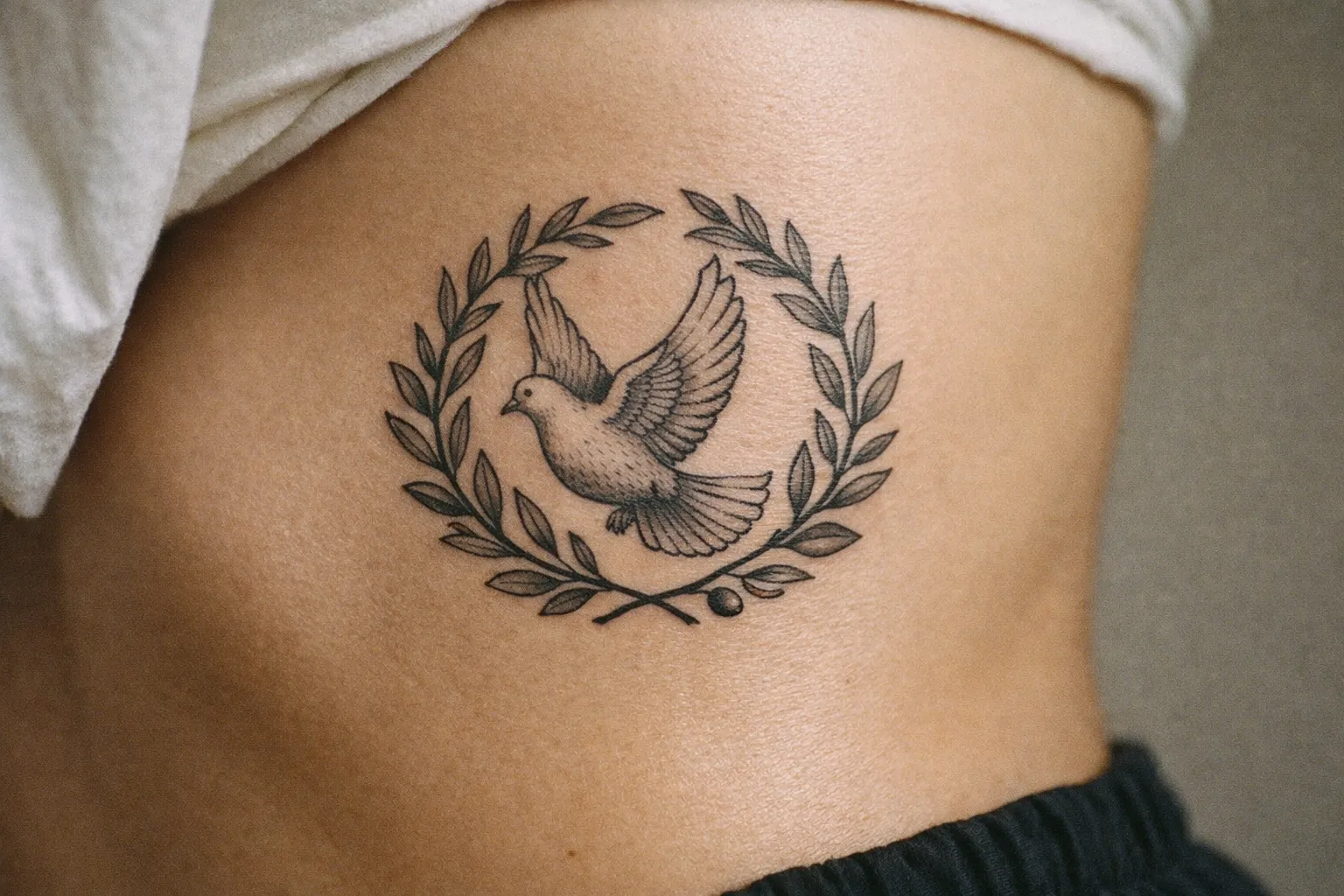
Dove with Olive Branch
The cleanest peace symbol available. No cross, no rose - just a flying dove carrying an olive branch in its beak. This reads as Noah’s ark or universal peace depending on context and works at almost any size, from 3 cm behind the ear up to 25 cm across the chest.
Two Doves
For couples, anniversaries, or family. Two doves facing each other, often with a date, names, or a small ribbon. The monogamy meaning is doing the heavy lifting here (1).
Memorial Dove
A dove flying upward, often with a name and birth/death dates in script below or alongside. Some clients add a clock face, a heartbeat line, or a small cluster of feathers trailing behind to suggest departure. Studios reported a noticeable rise in these pieces in the years following 2020, and that hasn’t fully leveled off.
Forearm Placement for Doves
Dove tattoos on forearm are the most requested placement, and the reasons are practical: it’s relatively flat, has enough real estate for detail (8-15 cm comfortably), heals fast, and photographs well. When clients ask me where to start, the forearm is usually my first suggestion unless they have a specific reason to go elsewhere.
Composition notes for the forearm:
- Inner forearm: Best for visibility when your arm is at your side or holding a phone. Place the dove at the upper inner forearm (closer to the elbow) with any script trailing toward the wrist. The bird should fly forward - toward your hand - so it has motion along your body’s natural line.
- Outer forearm: More visible to others than to you. Works well for larger pieces or designs that include a cross or rose.
- Wrap-around: Possible but tricky. Wings that wrap from inner to outer forearm need an experienced artist who can plan around the ulna - don’t book this with someone who hasn’t done it before.
Pain on the forearm sits below the ribcage or wrist - fleshy, fewer nerve clusters, and most forearm doves finish in 1-2 hours for a simple shaded design. Add time if you’re including script or a second element.
Other Placements That Work
- Chest, over the heart: The strongest emotional read, especially for memorial or religious pieces. The bird appears to be flying out of the chest cavity, which works particularly well for doves. Pain runs higher than the forearm - expect chest to be noticeably more uncomfortable.
- Collarbone: Elegant for small to medium pieces (3-8 cm). The bone gives the design a natural frame. Pain is moderate, similar to the chest.
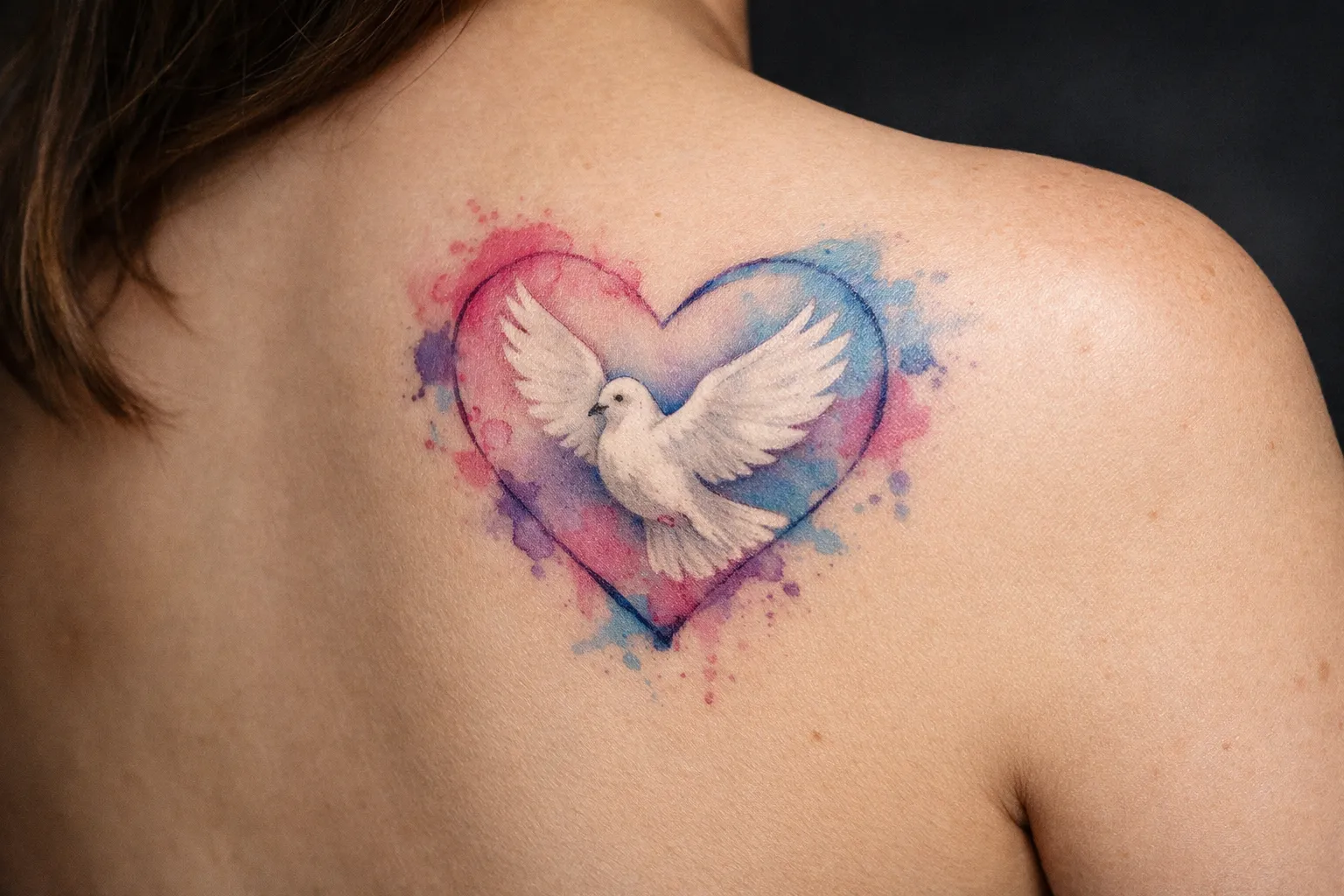
- Upper shoulder / shoulder blade: Room for larger pieces (15-25 cm) with detailed wings. Heals well and holds up over time.
- Ribcage / side: Best for large, dramatic doves with spread wings. Pain here is in a different category - ribcage is significantly worse than forearm, and you should plan for a longer session and a break if needed.
- Wrist / ankle: Minimalist outlines, 2-4 cm. Good for first tattoos but limited detail, and the wrist is bonier than most people expect.
- Behind the ear: Micro doves, 1-2 cm. Trendy, but expect more frequent touch-ups than larger pieces. The skin there is thin and the ink moves.
What’s the Most Attractive Placement?
There’s no single answer. Artists consistently point to the inner forearm, collarbone, upper shoulder, and side of the ribcage as placements that show off dove tattoos best - they give the bird’s silhouette enough room to read clearly and photograph well in normal lighting. Wrist and behind-the-ear placements look great in close-ups but get lost at conversational distance.
Sizing, Style, and Pricing
Pricing varies by city and artist, but here’s what’s realistic in the US as of 2024-2025:
- Small line dove (2-4 cm, 15-30 min) on wrist or ankle: $80-$150 - usually the shop minimum.
- Medium forearm dove with shading (8-12 cm, 1.5-3 hrs): $200-$500.
- Large chest or back piece with cross and roses (15-25 cm, 3-6 hrs): $400-$1,000+, sometimes split across two sessions.
Aftercare products run $10-$30. Most reputable studios include one touch-up within 6-12 months at no charge or a small fee.
Style Choices
Black-and-grey realism is the most-requested style for doves. Feathers benefit from shading, and black-and-grey ages more predictably than color over 10-plus years. It’s what I’d default to unless you have a specific reason not to.
Fine line / minimalist doves under 4 cm are trending. One practical note: ask for slightly thicker line weight - a 5RL grouping rather than a single needle. Single-needle fine line on small birds can blur within 5-10 years, especially on the wrist or fingers. I’ve seen otherwise clean pieces turn soft and indistinct because the artist went too light on the lines.
Color is possible but selective. A “white dove” rarely reads as pure white on most skin tones - artists build it with grey shading and negative space, using white ink only as highlights on feather tips. If you’re expecting a brilliant white bird, look at healed photos (3-12 months post-tattoo) before committing. Fresh photos lie.
Black dove designs are used for rebirth, transformation, or mourning rather than anything negative. Worth knowing if you’re drawn to that look but worried about how it reads.
Adding Other Symbolic Elements
Beyond the cross and rose, common additions include:
- Olive branch - peace, new beginnings
- Praying hands - faith, devotion
- Mandala backdrop - inner peace, cycle of life and death (3)
- Rays of light - divine presence
- Clock face or heartbeat line - memorial pieces
- Script - names, dates, scripture verses
The pitfall with combinations is trying to fit too much into a small area. If your dove is under 8 cm, cap it at two or three elements. Five elements crammed into a 6 cm space turns into visual noise within a few years as ink spreads slightly. I’ve had clients come in for cover-up consultations on exactly this kind of piece.
Healing and Aftercare
Standard timeline for a forearm or chest dove:
- Day 1-3: Wrap stays on for the first few hours per your artist’s instructions. Once removed, wash gently with fragrance-free soap 2-3 times daily; apply thin layers of fragrance-free moisturizer or tattoo balm; avoid picking scabs; no swimming, sauna, or direc. Expect some plasma and ink weeping - that’s normal.
- Week 1: Switch to a fragrance-free moisturizer 2-3 times a day. The tattoo will start to flake - do not pick. Picked scabs are the number one cause of patchy lines on dove outlines and can mean a $50-$100 touch-up.
- Week 2-4: Itching peaks and resolves. Keep moisturizing. Avoid pools, hot tubs, and direct sun.
- Week 4-6: Deeper layers stabilize. The tattoo should look “set” by week six.
Long-term: use SPF 30-50 on the tattoo any time it’s exposed. UV fades dove tattoos faster than anything else, especially the soft greys in feather shading. Sun-protective clothing works just as well if you’d rather not apply sunscreen daily. See the full sun protection for tattoo guide for detailed advice.
How to Interpret a Pinterest Dove Reference
A lot of dove tattoo planning starts on Pinterest, and the saved images can mislead you in a few specific ways.
Fresh vs healed: Most pins show tattoos photographed minutes after the session, when ink saturation is at its peak. The healed version is softer. Ask your artist for healed photos of similar work - any artist worth booking will have them.
Filtered photos: Heavy editing exaggerates contrast and white ink. The actual tattoo won’t pop the same way.
Anatomy mismatch: A dove that looks great on the reference’s forearm may need redrawing for yours. Don’t ask an artist to copy line-for-line - give them three or four references and let them adapt the design to your body.
Style mixing: If you save a fine-line reference and a black-and-grey realism reference, you have to pick one. Mashing styles into a single tattoo usually fails. I’ve seen it attempted. It doesn’t work.
Related Bird and Faith Motifs
If you’re not fully sold on the dove, a few adjacent motifs cover similar ground:
- Swallow: Loyalty, return home, traditional sailor symbolism. Smaller and more graphic than a dove.
- Sparrow: Freedom, working-class identity in American traditional tattooing.
- Phoenix: Rebirth and transformation - overlaps with the “new beginnings” meaning of the dove but reads as fire and power rather than peace.
- Cross alone: Pure faith without the peace and Holy Spirit layer.
- Angel: Protection and memorial, with stronger Christian iconography than a dove.
- Olive branch alone: Pure peace symbolism, no animal element.
These work well as companion pieces if you build a larger sleeve or chest panel later.
Frequently Asked Questions
- What does a tattoo of a dove mean?
- A dove tattoo most often represents peace, love, faith, hope, and new beginnings. The exact reading depends on what you place around it - a cross signals Christian faith, an olive branch signals peace, a rose adds love or memorial weight, and a name with dates makes it a memorial piece.
- Is a dove tattoo a 'safe' choice?
- Yes. The dove reads as positive across virtually every culture and audience. It ages well socially and professionally. The only context where it can shift meaning is when combined with extremist or political imagery. On its own, or with traditional companions like olive branches, crosses, or roses, it's about as low-risk as a tattoo motif gets.
- How long does a dove tattoo take to heal?
- Surface healing takes 7-14 days. Deeper healing where line crispness and shading fully stabilize runs 4-6 weeks. Keep it out of the sun, moisturize with a fragrance-free product, and don't pick the flakes.
- What should I consider before booking a dove tattoo?
- Write a one-sentence meaning for your tattoo to guide the design. Limit symbolic elements to two or three if the piece is under 8 cm. Choose placement based on how you want to live with it. Default to black-and-grey for longevity and clarity. Ask for healed photos of similar work before committing.
- Can I mix different tattoo styles in a single dove design?
- Mixing styles like fine-line and black-and-grey realism in one tattoo usually fails. It's better to pick one style and stick with it to maintain clarity and longevity.
- Why do some dove tattoos include an olive branch?
- The olive branch is a clean symbol of peace and new beginnings, often used to avoid religious connotations that a cross might add.
- Are black dove tattoos negative in meaning?
- No. Black dove tattoos are often used for rebirth, transformation, or mourning rather than negative symbolism.