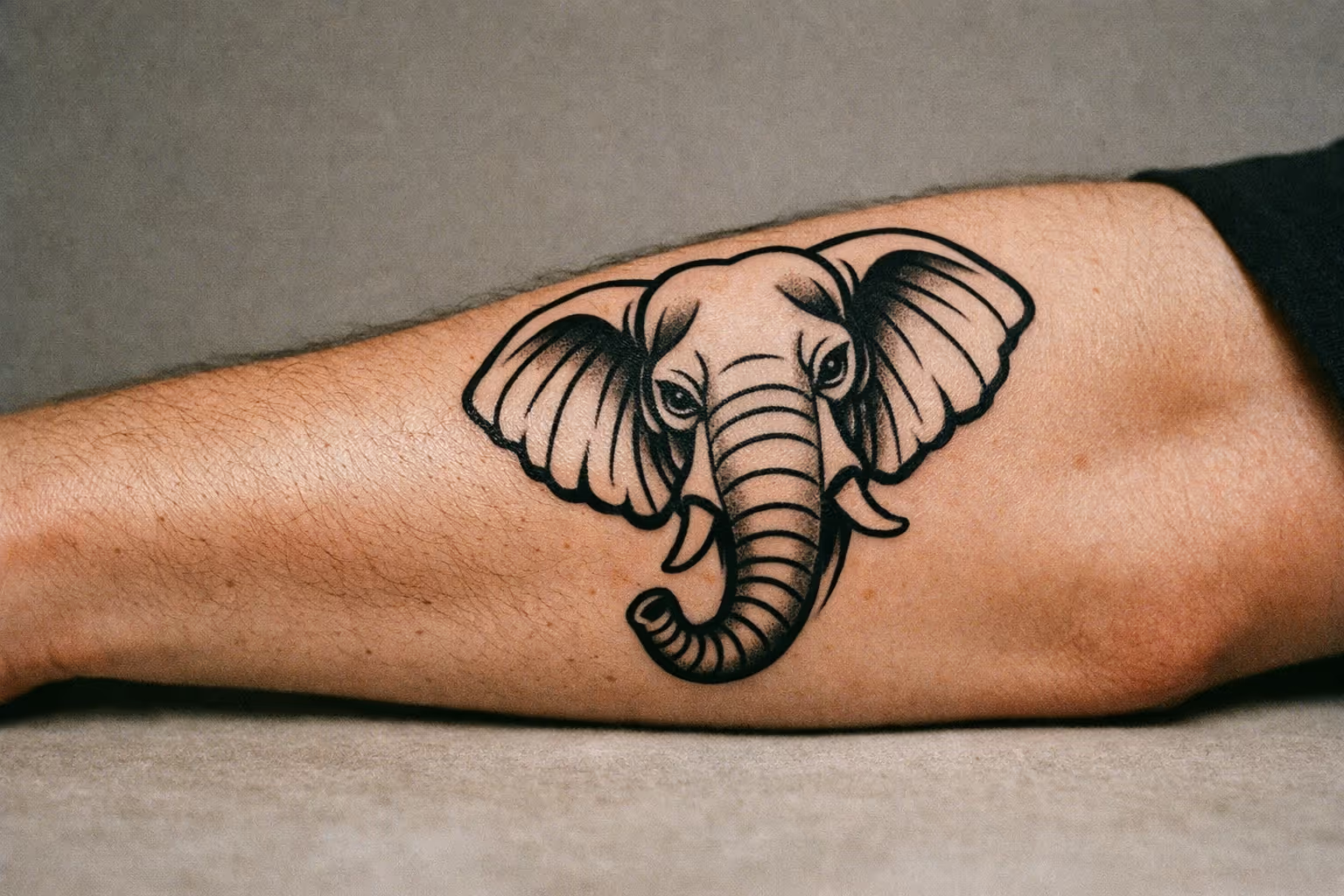
An elephant tattoo tempts everyone toward detail - the wrinkled skin, the eye, the ornate headdress - and that’s exactly where small ones fail. Below a certain size, all that texture merges into a grey mass and the elephant loses what made it an elephant. It’s a big-canvas animal that punishes going small. Here’s the cultural symbolism worth knowing, the minimum sizes that keep the detail, and the placements that suit it.
What Elephant Tattoos Mean: Symbolism, Designs, and Sizing
At a technical level, an elephant tattoo is any design whose primary subject is an elephant - head-only, full-body, side profile, front-facing, realistic, geometric, or stylized. What separates good ones from bad ones is whether the silhouette reads as an elephant at the size you’ve chosen. Two features carry the recognition: the curved trunk and the fan-shaped ear. Lose either to over-detailing or bad placement and the tattoo collapses into a gray smudge within five years.
The motif appears across major design traditions - American traditional (bold black outline, limited palette of red, yellow, green), Japanese-influenced work (often featuring elephants in temple or floral scenes), fine line minimalism, mandala/ornamental, watercolor, and dotwork realism. Each style demands different size minimums and different placements to age well.
Symbolism of Elephants Across Cultures
Elephant tattoo symbolism is not a single fixed meaning. It shifts by cultural origin, and modern Western tattoo culture often blends several traditions into one design. Worth knowing the source before you commit.
Hindu tradition. The elephant-headed god Ganesha is the remover of obstacles and patron of new beginnings. According to the legend, Parvati created Ganesha from clay; Shiva beheaded him and later replaced his head with that of an elephant. Attitudes toward Ganesha tattoos vary among Hindus; for some, it is a devotional image, while others may view it as decorative. It’s worth sitting with the meaning before choosing it purely for aesthetics.
Buddhist tradition. White elephants are sacred. The Buddha’s mother reportedly dreamed of a white elephant before his conception, a symbol of spiritual significance. However, white elephants are not broadly regarded as signs of reincarnation. White-ink elephant designs lean on this lineage whether the wearer knows it or not.
African and broader symbolism. Elephants represent matriarchal leadership, family bonds, longevity, and memory. The phrase “elephants never forget” is rooted in observable behavior - they recognize humans and other elephants across decades.
Modern Western tattoo culture. The common shorthand is family, strength, wisdom, good luck, protection, and loyalty (1). A raised trunk is widely read as luck - though this is a modern Western convention, not a strict cultural rule from any of the traditions above.
The practical takeaway: pick one meaning to drive the design. Stacking Ganesha + mandala + family trio + raised trunk + flowers turns a symbolic tattoo into a cluttered illustration.
Sources and Further Reading
For deeper cultural context and symbolism, consult academic sources on Hindu and Buddhist iconography, as well as ethnographic studies on African elephant symbolism. Tattoo-specific references include interviews with artists specializing in traditional and modern elephant tattoo designs.
What Does an Elephant Tattoo Signify?
The short answer: it depends on what you put around it and how the elephant is posed.
- Solo adult elephant, calm stance: strength, wisdom, steadiness
- Raised trunk: good luck, optimism, new beginnings
- Two elephants, trunks touching: loyalty, partnership, love
- Three or more elephants in a line: family, generations, matriarchal lineage
- Baby elephant: innocence, purity, joy, playfulness
- Ganesha: removal of obstacles, divine protection
- White elephant: rarity, spiritual purity, Buddhist reverence
- Crying or wounded elephant: grief, conservation awareness, loss
If the design is meant to communicate calm or resilience, choose a forward-facing, grounded pose rather than a charging or trumpeting one. Aggressive postures contradict softer personal meanings, and I’ve seen that disconnect bother clients more than they expected once the tattoo is healed.
Design Ideas
These are the directions that hold up over time. Each comes with a realistic size floor and a note on what tends to go wrong.
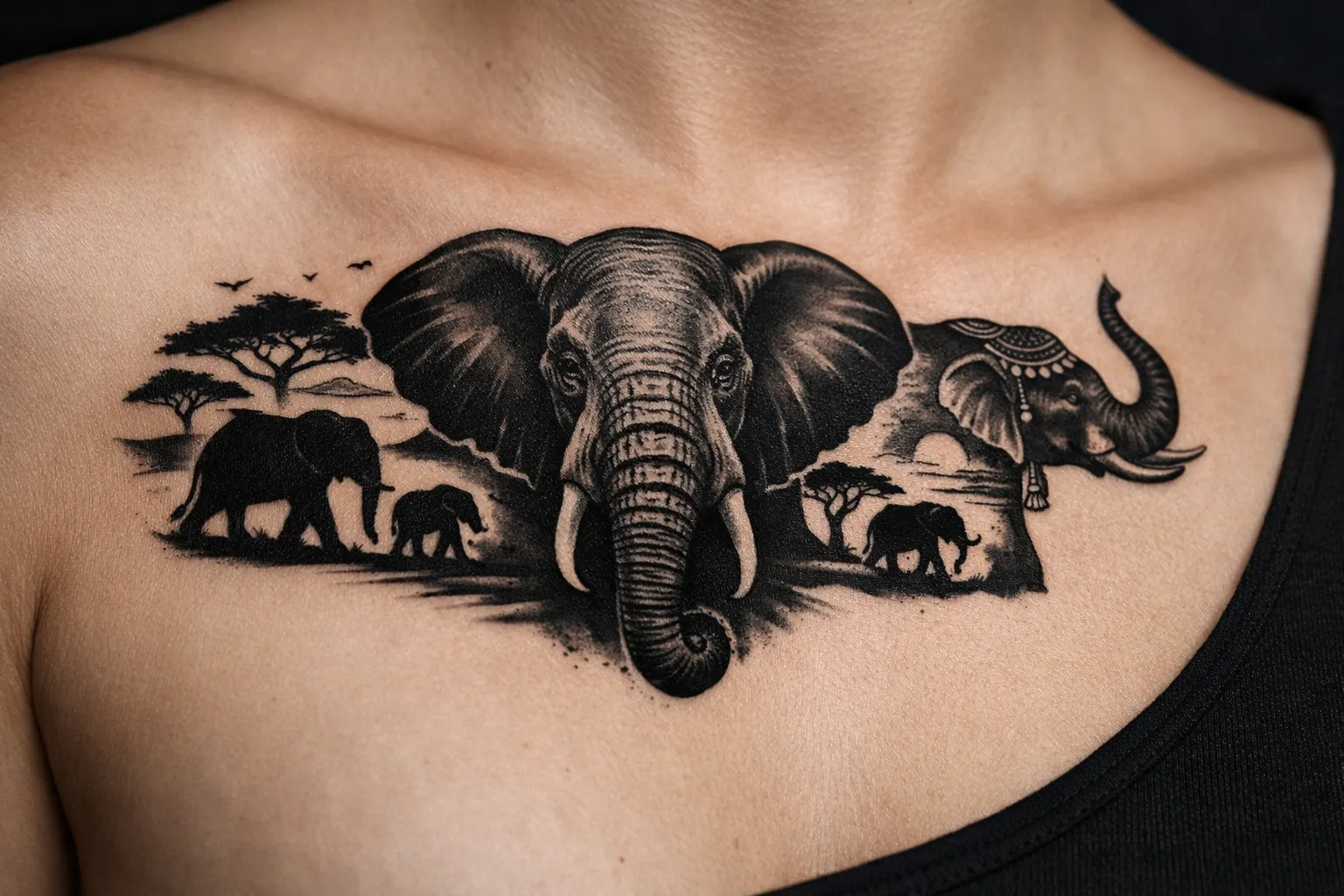
Female Matriarch Tattoo
In wild herds, the oldest female leads - she’s the matriarch, responsible for stability, route-finding, and protecting younger animals. A solo lead-elephant tattoo is a clean way to mark female lineage, mentorship, or maternal strength. Works at 3-6 inches on the outer forearm, upper arm, or thigh. Smaller than 3 inches and the herd-leader detail - head held high, deliberate stance - gets lost.
Lord Ganesha Tattoo
Best as a medium-to-large piece, 4 inches minimum, on the upper arm, thigh, back, or chest. Ganesha designs are loaded with detail - multiple arms, jewelry, mudras, a lotus base - and miniaturizing them is the most common mistake I see. If you want Ganesha at wrist size, simplify hard: head and crown only, single line weight. Otherwise commit to the space the design actually needs.
White Elephant Tattoo
White ink reads as a soft scar more than a tattoo, and it fades faster than black - especially on darker skin tones or sun-exposed placements. If you want a white elephant design, pair it with a thin black outline so the shape survives long-term, and keep it on low-sun placements like the inner bicep or ribs. Expect to revisit it within 5-8 years for touch-ups.
Minimalist Elephant Tattoo
Single-weight linework, no shading, no fill. The elephant is reduced to ear curve, trunk, and back line. Works at 1-3 inches on the inner forearm, ankle, behind the ear, or back of the neck. The pitfall when artists do these badly is inconsistent line weight - fine line that wobbles or breaks at the curve of the trunk. Ask to see healed examples of the artist’s fine line work, not just fresh photos. Fresh linework always looks cleaner than it will in two years.
Small Elephant Tattoo
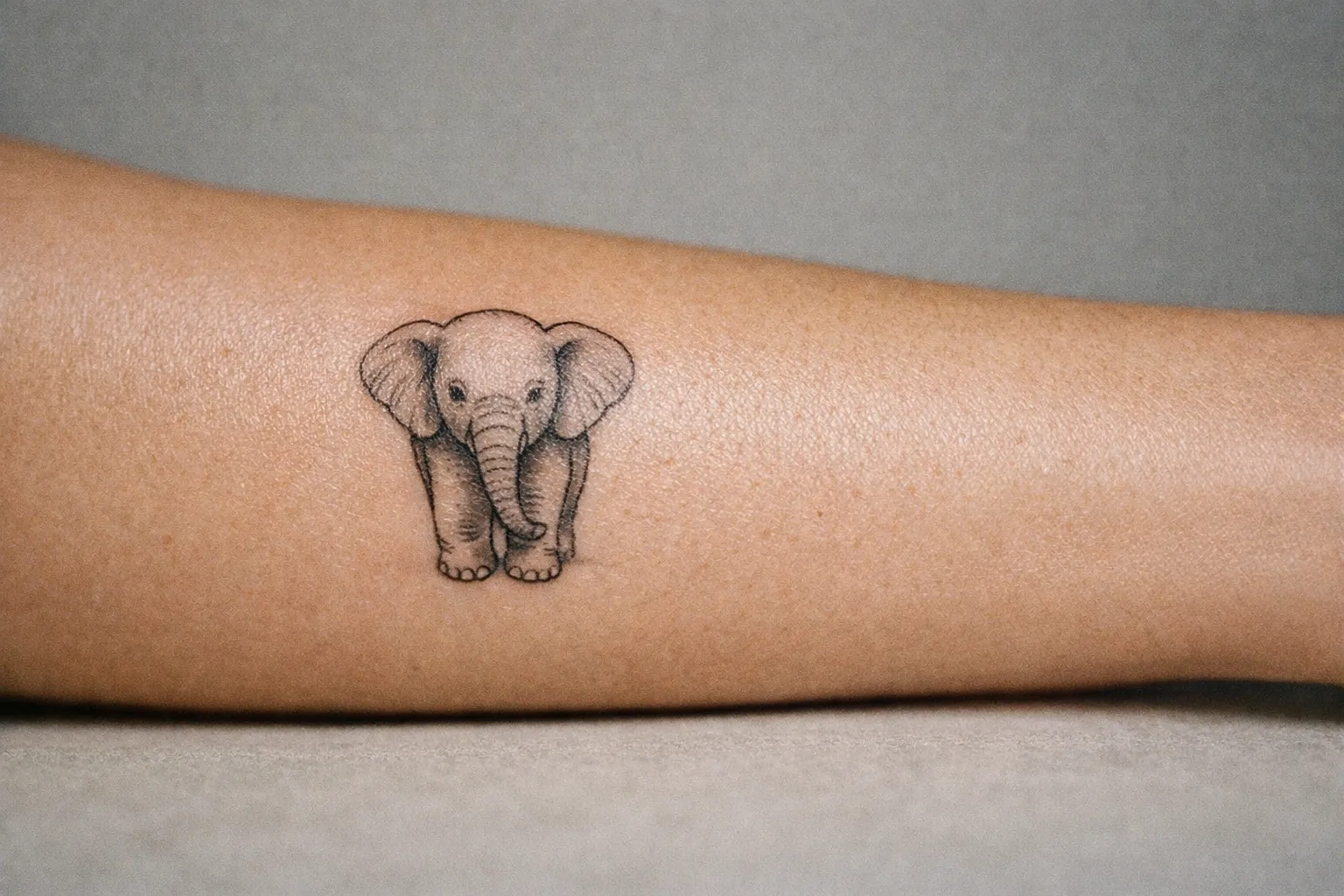
A small elephant tattoo at 1-2 inches is one of the most requested first tattoos because it carries real meaning in a low-commitment size. The catch: at this scale, the design has to be simplified. Skip the wrinkled trunk texture, the eyelashes, the individual toenails. Keep the silhouette and one defining detail - usually an upward trunk or a single eye dot. Etsy and other marketplaces lean heavily on delicate geometric and outline-only formats at this size for exactly this reason (2).
Mandala Elephant Tattoo
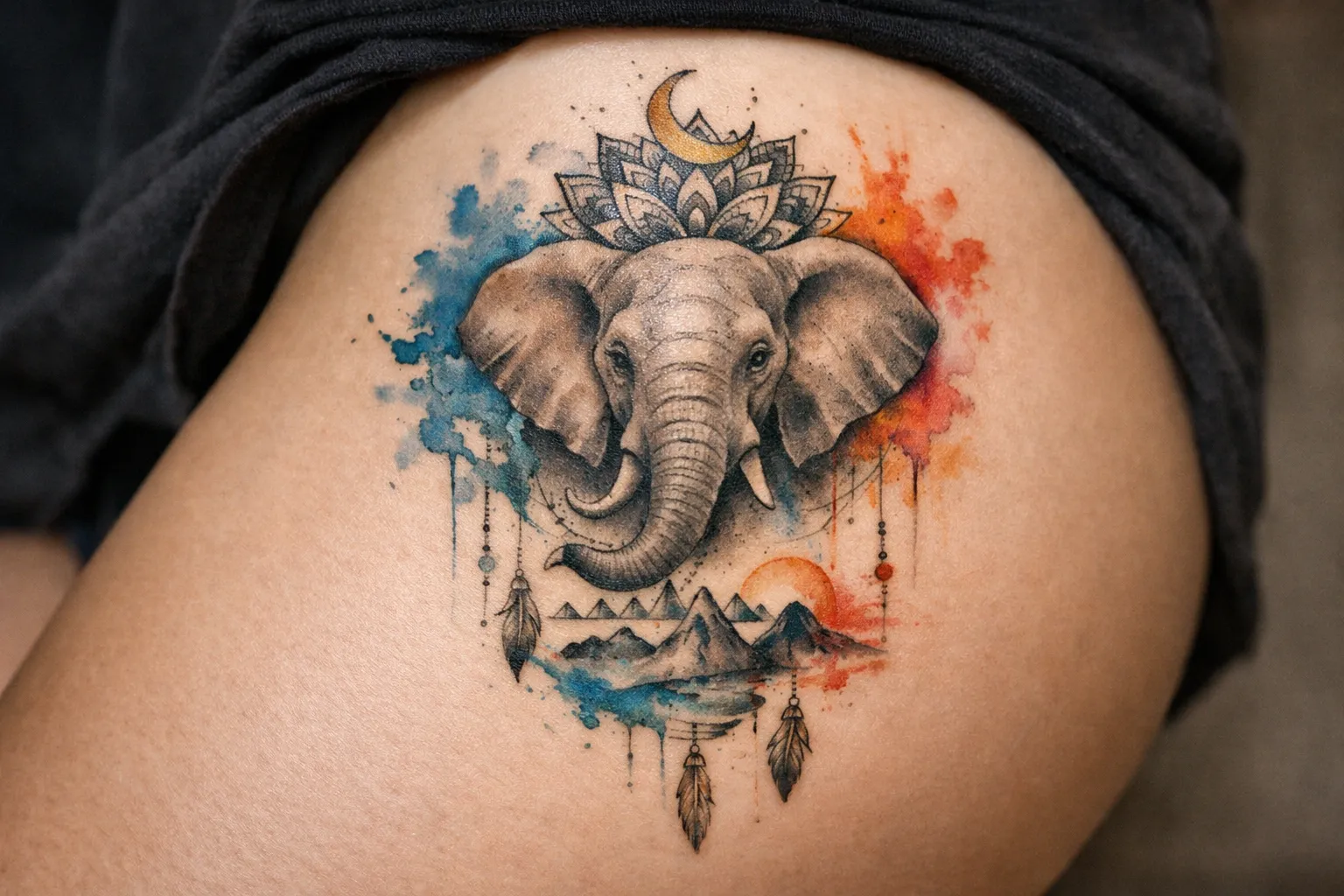
Mandala (Sanskrit for “circle”) work pairs naturally with elephant heads, often filling the body or ears with geometric symmetry. Best at 4 inches and up on the thigh, back, or upper arm - mandala detail blurs fast at smaller sizes because the dotwork and fine geometry collapse into mush after a few years of skin movement. This style demands an artist with genuine dotwork or ornamental experience. Not every tattooer who can draw a mandala can execute one in skin that holds up.
Colorful Elephant Tattoo
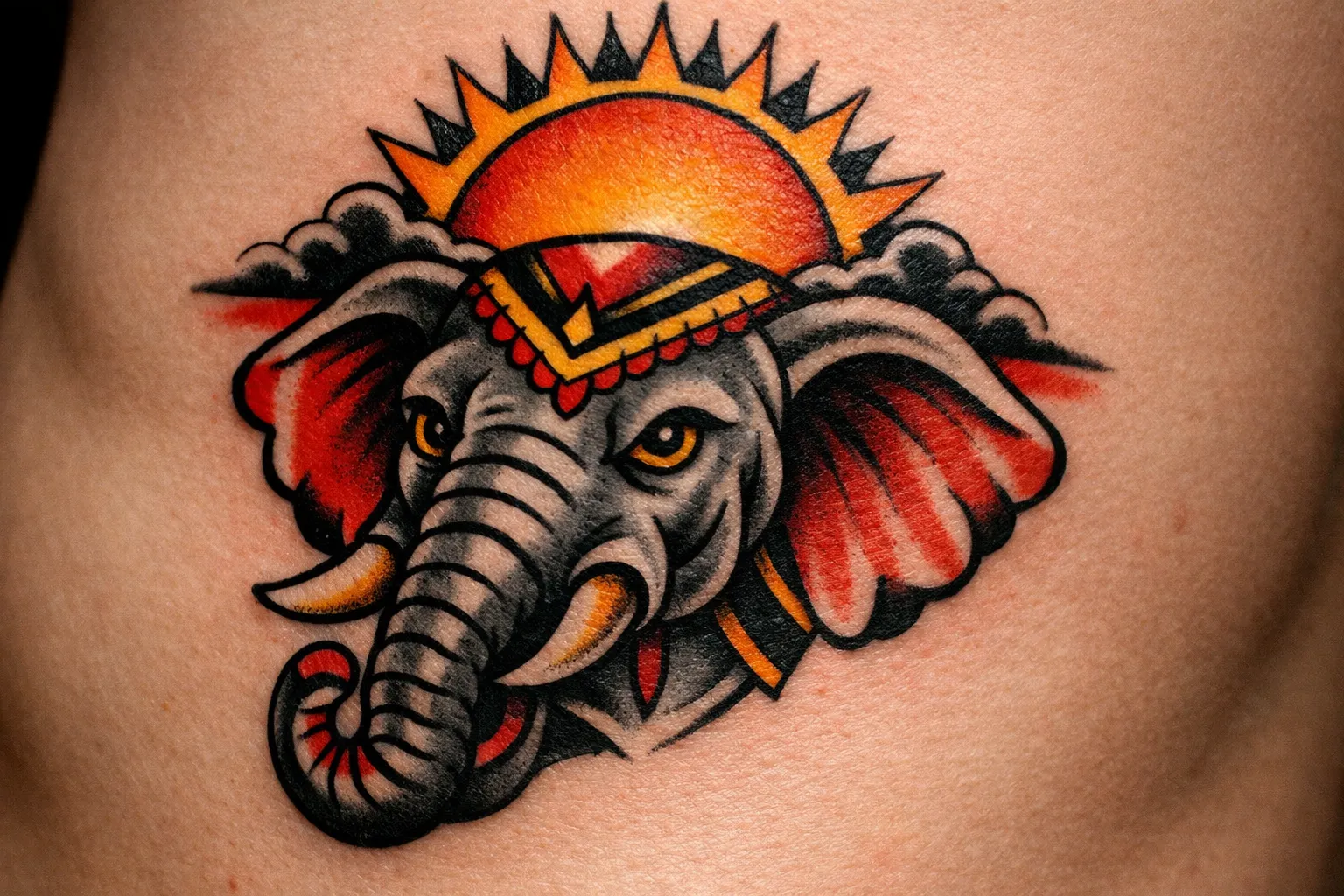
Indian festival-style elephants come dressed in red, turmeric yellow, gold, and saffron, often with tilak markings. Color packs need denser saturation than black, which means longer sessions and higher cost. Color also fades faster than black on sun-exposed skin. Place on covered areas - upper arm, back, thigh - and commit to sunscreen for the life of the tattoo.
Family Elephant Tattoo
Two, three, or four elephants walking in line, usually with the largest leading and a baby at the back. Reads clearly as family symbolism (1). Works horizontally across the forearm, ribs, collarbone, or back. Minimum size depends on the count: 3 inches for two elephants, 5+ inches for a trio with a baby, otherwise the smallest figure loses definition. I’ve tattooed this composition on a lot of people marking a parent’s death or a new child - it’s a design that earns its popularity.
Elephant Tattoos with Flowers
Flowers around an elephant head - lotus is the most common, also peony, rose, and chrysanthemum - add cultural layering and visual softness. The pitfall: too many flower types crowding the elephant. Stick to one flower variety repeated in scale, not a botanical mix.
Couple Elephant Tattoo
Two elephants with trunks looped into a heart, or two facing silhouettes mirrored. Best as a matching pair, 2-3 inches each, on the forearm, ribs, or upper back. Skip initials or dates inside the design - those age worst when relationships shift, and removing them later means damaging the elephant around them.
Indian Elephant Tattoo
Asian elephants depicted with ornate fabric, jewelry, and ceremonial paint. Royal courts historically rode elephants dressed this way, which is why the imagery reads as “majesty.” This is detail-heavy work - plan for 5+ inches minimum on the thigh, back, or upper arm.
Baby Elephant Tattoo
A baby elephant tattoo communicates innocence, joy, and softness rather than strength. Rounder ears, smaller tusks (or no tusks), upward-curled trunk. Works well at 1.5-3 inches on the inner forearm, ankle, shoulder blade, or behind the ear. Worth noting: “baby elephant” doesn’t automatically read as “family” - if you want the family meaning, add the parent elephants explicitly. The baby alone reads as playful, not generational.
Watercolor Elephant Tattoo
Pastel washes of color around or behind a black-outline elephant. Watercolor styling looks striking fresh, but it ages less predictably than traditional ink - the unbounded color splashes can spread or fade unevenly. Choose an artist with healed watercolor examples in their portfolio, not just Instagram-fresh shots. Best on covered placements to preserve color: upper arm, thigh, back.
Realistic Crying Elephant Tattoo
A statement piece tied to conservation awareness. Poaching for ivory remains a serious threat to African and Asian elephant populations. Realism demands space - 6 inches minimum, ideally on the upper arm, calf, back, or thigh - and an artist who can hold detail in healed skin, not just fresh ink. Eyes are where realistic elephant tattoos succeed or fail. Ask to see the artist’s healed eye work specifically before you book.
Best Placement Options
Placement is the question most galleries skip. Here’s the honest version, sorted by what the elephant tattoo is meant to do.
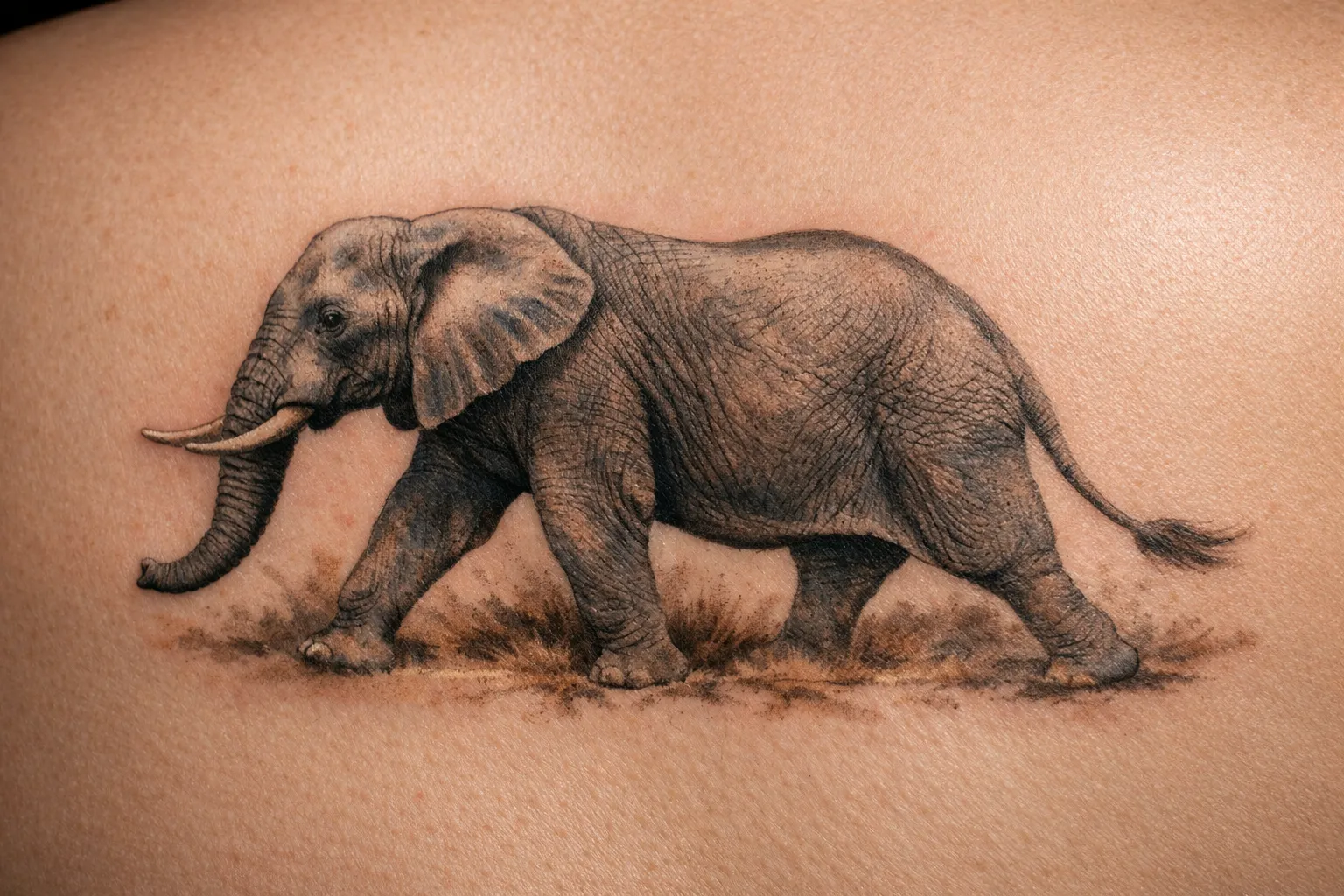
For small or minimalist elephants (1-3 inches):
- Inner forearm - good visibility, low-friction skin, ages well
- Behind the ear - discreet, but harder to size up later
- Ankle (outer) - works for outline-only designs; inner ankle blurs faster
- Back of the neck - easy to cover, moderate sun exposure
For medium designs (3-6 inches) like family lines, mandalas, or Ganesha:
- Outer forearm - heals predictably, shows off detail
- Upper arm (outer) - best long-term canvas; minimal stretch, moderate sun
- Thigh (outer or front) - large flat space, easy aftercare
- Shoulder blade - covered placement, holds detail well
For large realistic or ornate pieces (6+ inches):
- Upper back - biggest available canvas, ages well
- Calf (outer) - holds shading and color long-term
- Ribs - dramatic placement, but hurts more and skin shifts with weight changes
- Full thigh - best for detailed realism and color
Placements to avoid for elephant tattoos:
- Hands and fingers - fade fast, blow out easily, won’t hold the trunk detail
- Feet - friction from shoes destroys fine line within 2-3 years
- Inner wrist - workable for the smallest minimalist designs but ages worse than the outer forearm
- Sides of fingers - the trunk curve will not survive
Pain-wise, ribcage and sternum hurt significantly more than the outer forearm or upper arm. Inner bicep and inner thigh fall in the middle. Ribcage > forearm by a wide margin. If this is your first tattoo, an outer forearm or outer upper arm placement gives you both manageable pain and a placement that actually ages well.
Tattoos to Avoid Within Elephant Designs
This isn’t about banned symbols. It’s about choices that look great in a portfolio photo and bad three years later.
- Micro tattoos with too much detail. A 1-inch elephant with realistic wrinkles, individual lashes, and shaded tusks will blur into a dark blob. Simplify or size up.
- White ink as the only ink. White fades to near-invisible faster than black, especially with sun exposure. Always pair with a black outline if you want the design to last.
- Hand, finger, and foot placements for detailed designs. High-wear skin destroys fine work.
- Trendy script combined with imagery. Adding a partner’s name or a date inside an elephant tattoo locks the design to a specific moment. The elephant outlives the inscription’s relevance more often than not.
- Over-stacked symbolism. Ganesha + mandala + lotus + family trio + raised trunk + script in one tattoo reads as cluttered, not meaningful. One symbol, one message.
- Aggressive poses for soft meanings. A charging, trumpeting elephant doesn’t communicate calm, grief, or anxiety recovery. The body language fights the intent.
What Tattoo Represents Anxiety?
There is no single universal anxiety tattoo, and elephant imagery isn’t a fixed anxiety symbol. That said, elephants are frequently chosen by people processing anxiety, grief, or recovery because the animal reads as calm strength, emotional steadiness, and self-protection. A grounded, forward-facing elephant - especially a smaller, gentler design - pairs well with that intent.
Other motifs commonly chosen for anxiety-adjacent meanings include the semicolon, lotus, moth, wave, and breath-related imagery. If you want an elephant tattoo to carry this meaning, lean into a calm pose, minimalist styling, and a placement you can see daily - inner forearm or inner wrist - so the tattoo functions as the daily marker you actually need.
Aftercare Timeline
Standard aftercare applies regardless of design - but for fine line and small elephant work, healing matters more because there’s less ink margin to lose.
Day 1-3: Keep the second-skin bandage on as your artist instructed (typically 24 hours to 5 days depending on the product). Once removed, wash gently 2-3 times daily with a fragrance-free, mild soap. Pat dry - never rub. Apply a thin layer of fragrance-free moisturizer.
Week 1: Expect peeling and itching. Do not pick, scratch, or soak. No pools, hot tubs, baths, or ocean. Showers are fine; keep them short and avoid direct water pressure on the tattoo. Continue fragrance-free moisturizer 2-3 times daily.
Week 2-4: Surface healing wraps up, but deeper layers are still settling. Itching fades. Color may look duller - this is normal; the final saturation appears after the shed completes. Keep moisturizing. Begin using SPF 30+ sun-protective lotion once the skin is fully closed.
Months 2-6: Full healing. Daily sunscreen is the single biggest factor in how your elephant tattoo ages. Sun exposure fades black to gray and washes color out, especially on small or fine-line work. If you’re committed to a colorful or watercolor elephant, sun-protective clothing is the better long-term move than relying on sunscreen alone.
Touch-ups: small elephant tattoos and fine line work often need a touch-up within the first year. This is normal, not a sign the artist failed. Larger black and gray pieces typically hold longer.
For a detailed week-by-week guide on healing, see Tattoo Aftercare.
Frequently Asked Questions
- What does an elephant tattoo signify?
- Elephant tattoos commonly symbolize strength, wisdom, family, good luck, and protection, but the exact meaning depends on design elements like trunk position or number of elephants.
- Where is the best place to tattoo an elephant?
- Small designs do best on the inner forearm, behind the ear, or outer ankle; medium on outer forearm, upper arm, or thigh; large on upper back, calf, or full thigh. Avoid high-friction areas like hands and feet.
- What tattoos should I avoid?
- Avoid over-detailed micro tattoos, white-ink-only designs, hand and finger placements for fine detail, embedding names or dates inside the tattoo, and cluttering multiple symbolic elements in one piece.
- What tattoo represents anxiety?
- While no universal anxiety tattoo exists, elephants are chosen for calm strength and emotional steadiness. A small, grounded elephant on the inner forearm or wrist works well as a daily reminder.
- How small can a baby elephant tattoo be?
- Baby elephant tattoos hold up well at 1.5 inches minimum; smaller sizes lose defining features like rounded ears and curled trunk unless simplified to outline only.
- Do elephant tattoos hurt?
- Pain depends on placement, not the elephant design itself. Outer forearm and upper arm are manageable; ribs and sternum hurt significantly more. Inner bicep and thigh fall in between.
The Bottom Line
An elephant tattoo works because the silhouette is unmistakable and the symbolism runs deep across multiple traditions. The decision points that actually matter: pick one meaning, choose a style that matches the size you want, and place it where it will age well. A small elephant tattoo on the inner forearm beats a detailed one on the finger every time. If you want Ganesha, mandala, or realism, give the design the space it needs - 4 inches minimum, more for color or detail. Keep it simple, keep it readable, and let the trunk and ear do the work.