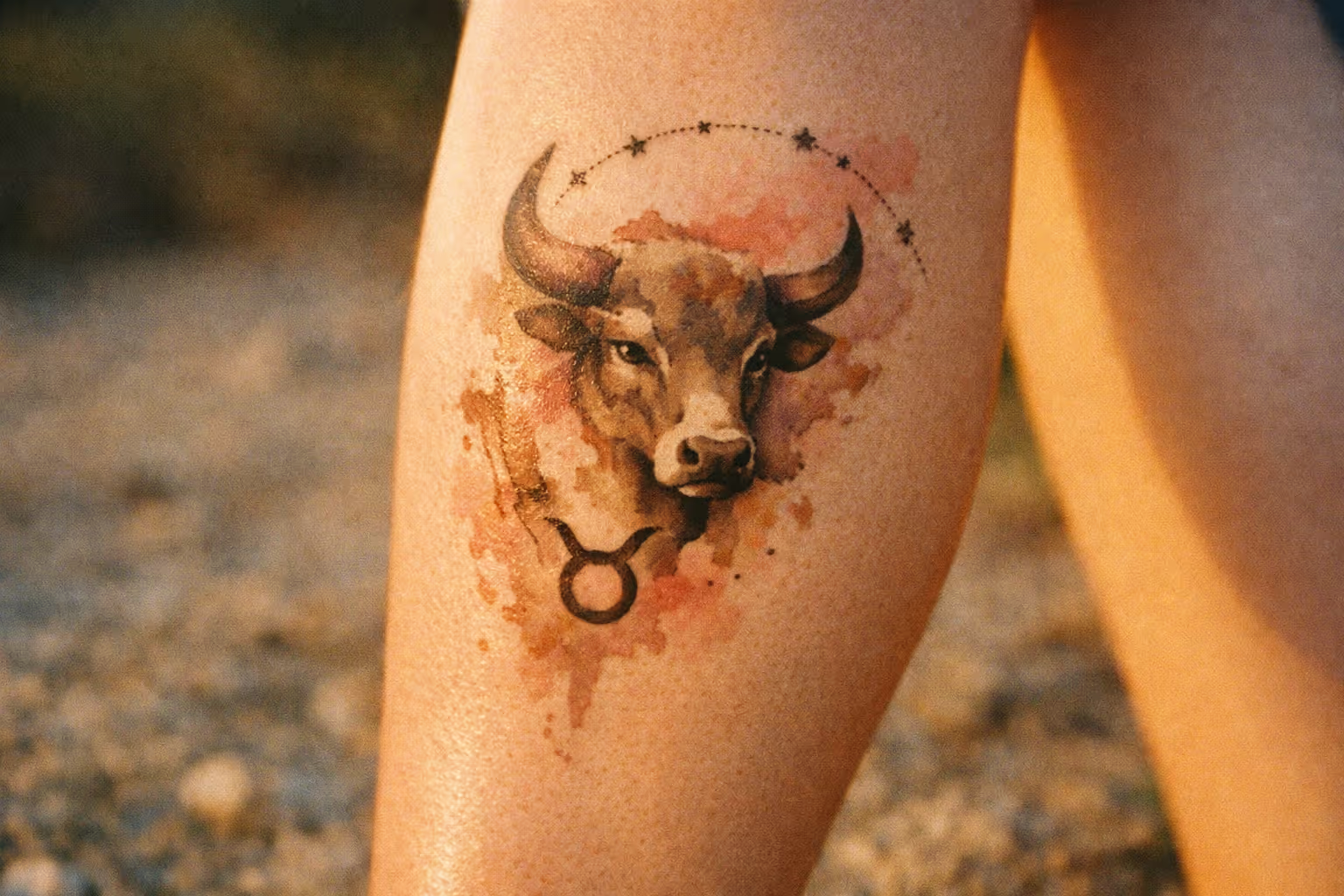
The Taurus glyph is one of the most recognizable zodiac symbols going: a circle capped with two horns that reads as a stylized bull’s head at a glance. Most people booking a Taurus tattoo don’t realize they’re actually choosing between three distinct visual languages - the bull, the glyph, and the constellation - each carrying different weight and needing different placement. This guide walks through what each symbol actually means, which style suits which spot on the body, and the mistakes that turn a thoughtful zodiac piece into a generic animal tattoo. And because Taurus is ruled by Venus, the planet of beauty and sensuality, there’s a tension worth designing around: the most popular motif is an aggressive bull, but the sign’s real character is grounded and sensual, not just brute force.
The Good and the Awkward of a Taurus Tattoo
Before you commit, weigh what this design actually delivers against where it trips people up.
What works in its favor:
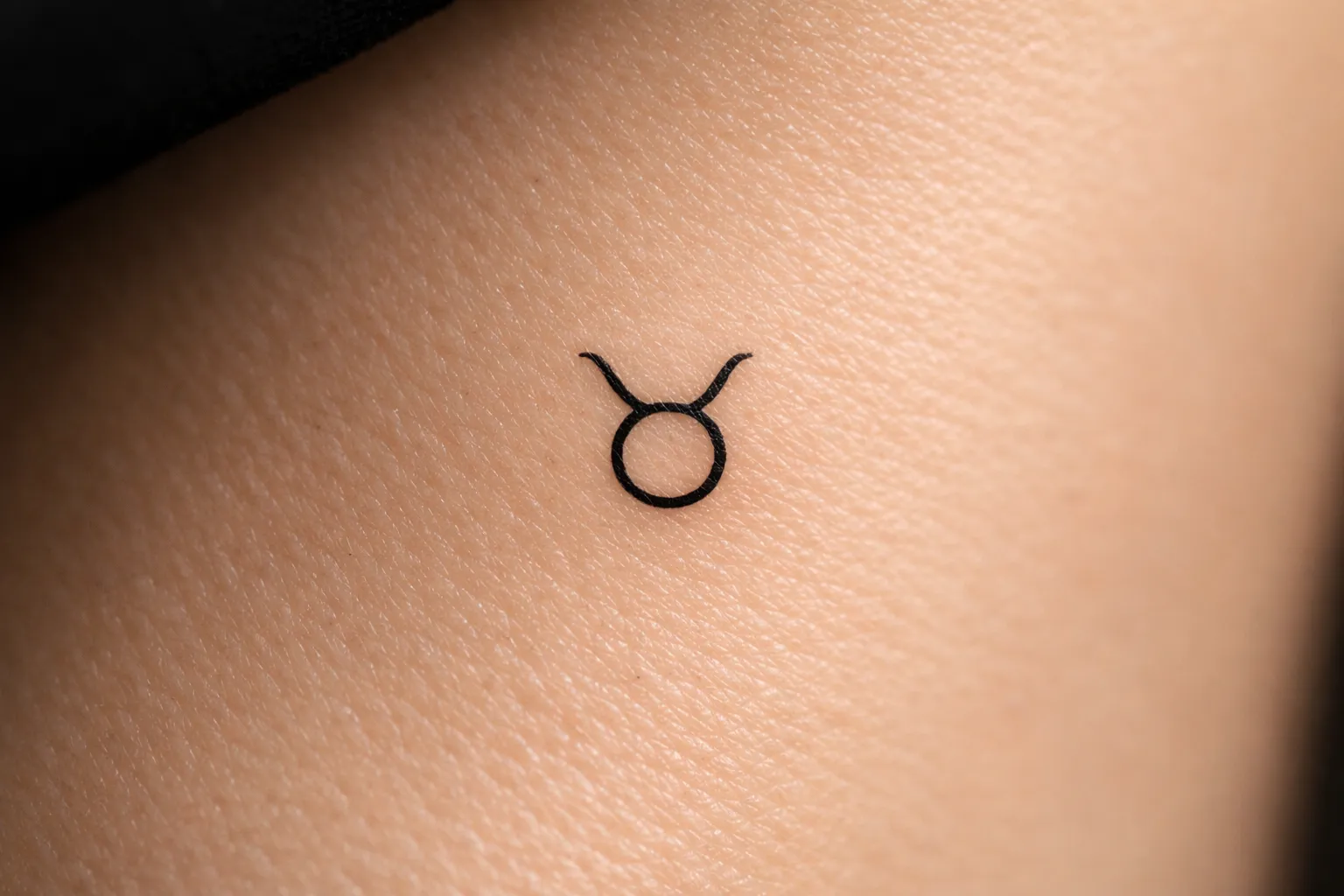
- The glyph reads as full zodiac identity in a tiny footprint (1-3 cm), so you get complete meaning at minimal cost and pain.
- Three symbols means real design flexibility - bold bull for presence, glyph for discretion, constellation for subtlety.
- Venus rulership gives you a genuine design lever most people skip: roses, soft gradients, earth tones add depth beyond a snarling animal.
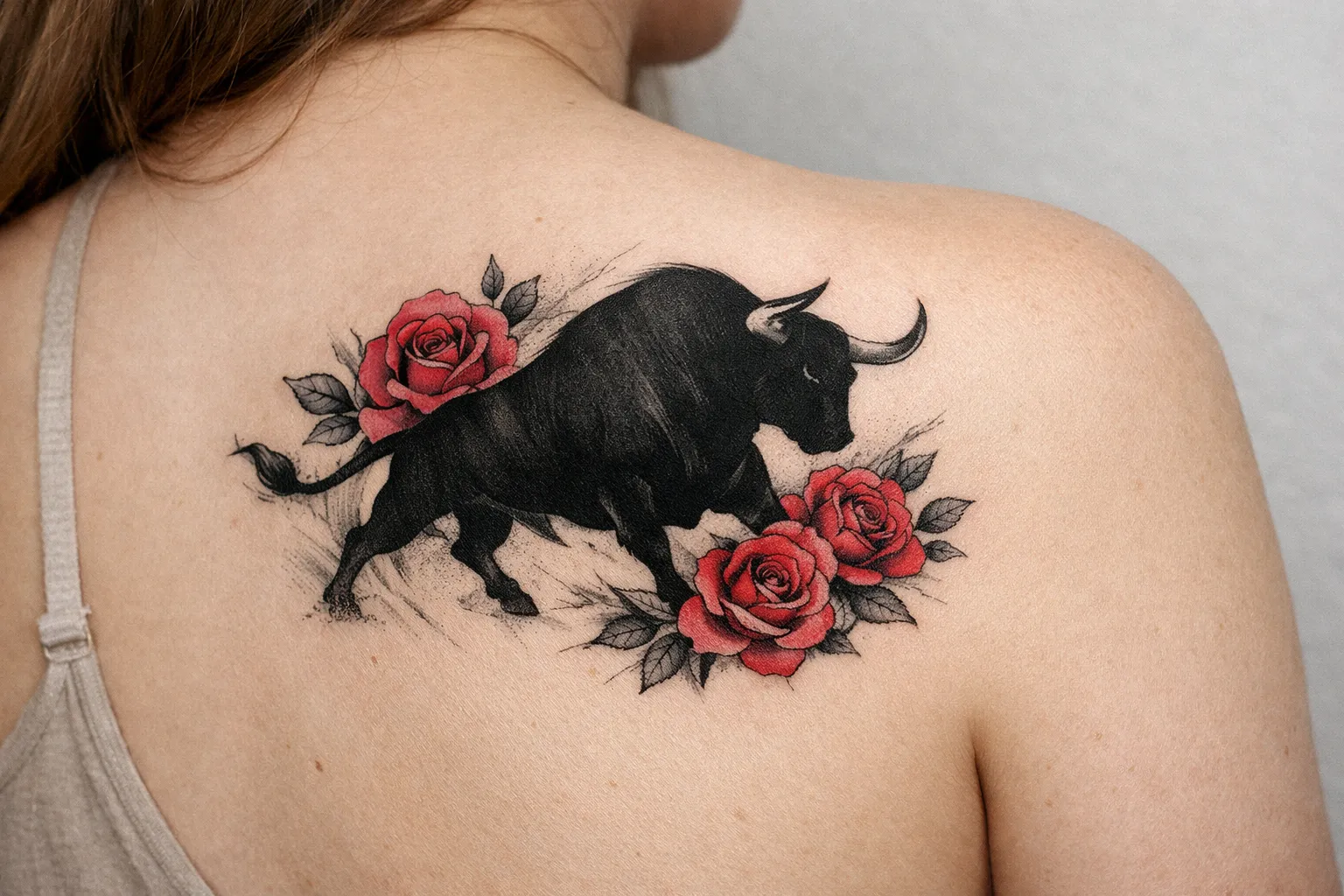
- The bull silhouette is unmistakable at larger scales and ages well in blackwork or neo-traditional.
Where it goes wrong:
- A bull with no glyph, constellation, or date reads as “bull tattoo,” not Taurus - you lose the astrology entirely.
- Fine-line constellations blur fast on hands, fingers, and ankles - the delicate detail that makes them appealing is also what makes them fragile.
- Designing purely around aggression contradicts the sign’s actual Venus-ruled character and feels one-dimensional a decade later.
- Overloading a small piece with bull plus glyph plus constellation plus florals produces visual noise, not layered meaning.
✓ Pros
- Glyph offers full zodiac meaning in a tiny, low-pain footprint
- Three symbols provide flexible design options from bold to subtle
- Venus rulership adds unique design depth beyond brute strength
- Bull silhouettes age well in blackwork and neo-traditional styles
✗ Cons
- Bull without Taurus markers reads as generic animal tattoo
- Fine-line constellations blur quickly on high-friction areas
- Aggressive-only designs ignore Taurus's sensual, Venus-ruled nature
- Crowding small tattoos with multiple symbols creates visual noise
What a Taurus Tattoo Actually Symbolizes
A Taurus tattoo symbolizes strength, stability, loyalty, and sensuality, drawing on the sign’s status as an earth sign ruled by Venus. Taurus is the second zodiac sign, governing roughly April 20 to May 20, and sits alongside Virgo and Capricorn in the earth element (1). That element drives the whole design language: grounded compositions, natural textures, stable forms that sit comfortably on the body rather than fighting it.
The bull as a symbol has deep roots across multiple cultures. In ancient Mesopotamian and Egyptian traditions, the bull represented divine power, fertility, and the earth’s productive force - the same grounded energy that modern Western astrology assigns to Taurus. In Greek mythology, Zeus took the form of a bull to carry Europa across the sea, cementing the bull’s association with both strength and desire. When the symbol moved into Western astrological tradition, those meanings compressed into the Taurus archetype: endurance, sensuality, and protective loyalty rather than pure aggression. It’s worth knowing that the “stubborn bull” shorthand is largely a modern Western pop-astrology reduction - the older symbolic weight is considerably more nuanced.
The traits most wearers actually want to represent are the positive ones. Canonical Taurus profiles emphasize reliability, patience, loyalty, and devotion, plus a deep appreciation of beauty and physical comfort. The bull carries strength, determination, endurance, and the ability to hold ground - protective rather than aggressive when designed with any thought at all. Britannica describes the bull as symbolizing strength and steadfastness, tied to the sign’s capacity to protect what it values (2).
The shadow traits - stubbornness, possessiveness - exist, but they shouldn’t dominate the design unless you’re being deliberate about it. A purely snarling, rage-driven bull reads as one-dimensional and, worse, contradicts what the sign is actually about. Many guides frame the taurus zodiac tattoo as a protective talisman: a daily marker of inner strength and loyalty to the people you care about. That reading works far better with a bull holding its ground than one mid-charge.
The Venus factor - why sensuality belongs in the design
Venus governs Taurus, and that rulership ties the sign directly to love, beauty, art, and physical pleasure (2). In Greco-Roman tradition, Venus (Aphrodite in the Greek) presided over beauty, desire, and earthly abundance - all qualities that translate directly into design choices: roses, soft curves, ornamental framing, and warm color palettes. Modern Western tattoo culture tends to strip this out entirely and default to the aggressive bull, which is a cultural flattening worth pushing back on. Ignore Venus and you get a one-dimensional strength tattoo. Fold it in - through roses, soft gradient shading, or ornamental framing - and the piece gains the depth that separates a considered taurus astrology tattoo from a stock bull head off a flash sheet.
For those who want color, the symbolic palette splits two ways. Earth tones (greens, browns) reinforce the grounded, stable side of the sign. Venus-linked colors (pinks, soft pastels) lean into sensuality and beauty. You can use either, or shade the whole thing in black-and-grey and let the composition carry the meaning.
The Three Core Taurus Symbols - and How They Differ
Taurus offers three distinct design choices - the bull, the glyph, and the constellation - and each does a different job at a different size and placement. Pick the wrong one for your intent and the tattoo either overwhelms the spot or fails to read as astrology at all.
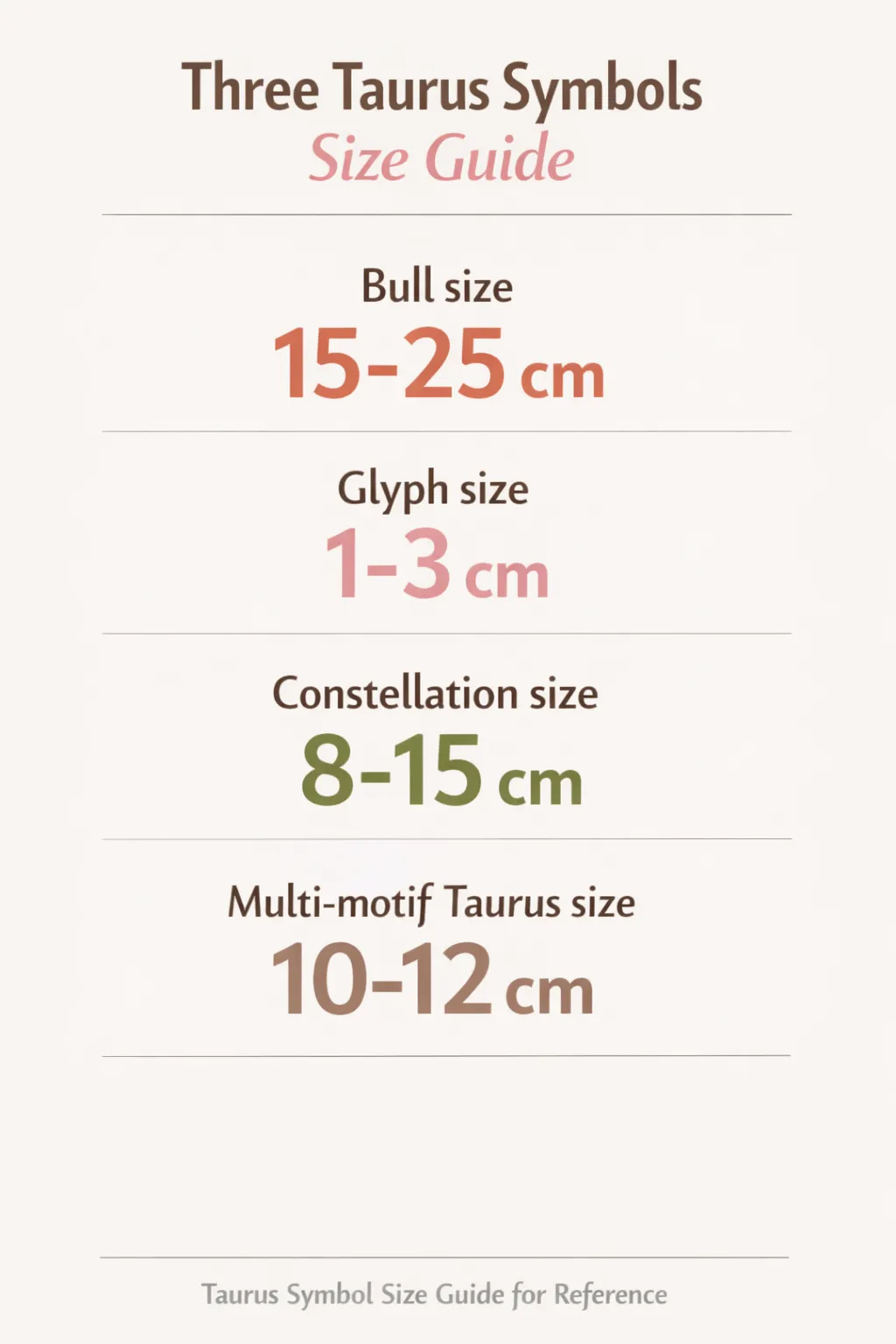 Taurus tattoos compare bull, glyph, and constellation sizes: 15-25 cm, 1-3 cm, and 8-15 cm respectively; multi-symbol minimum 10-12 cm.
The bull - head, full body, and skull variations
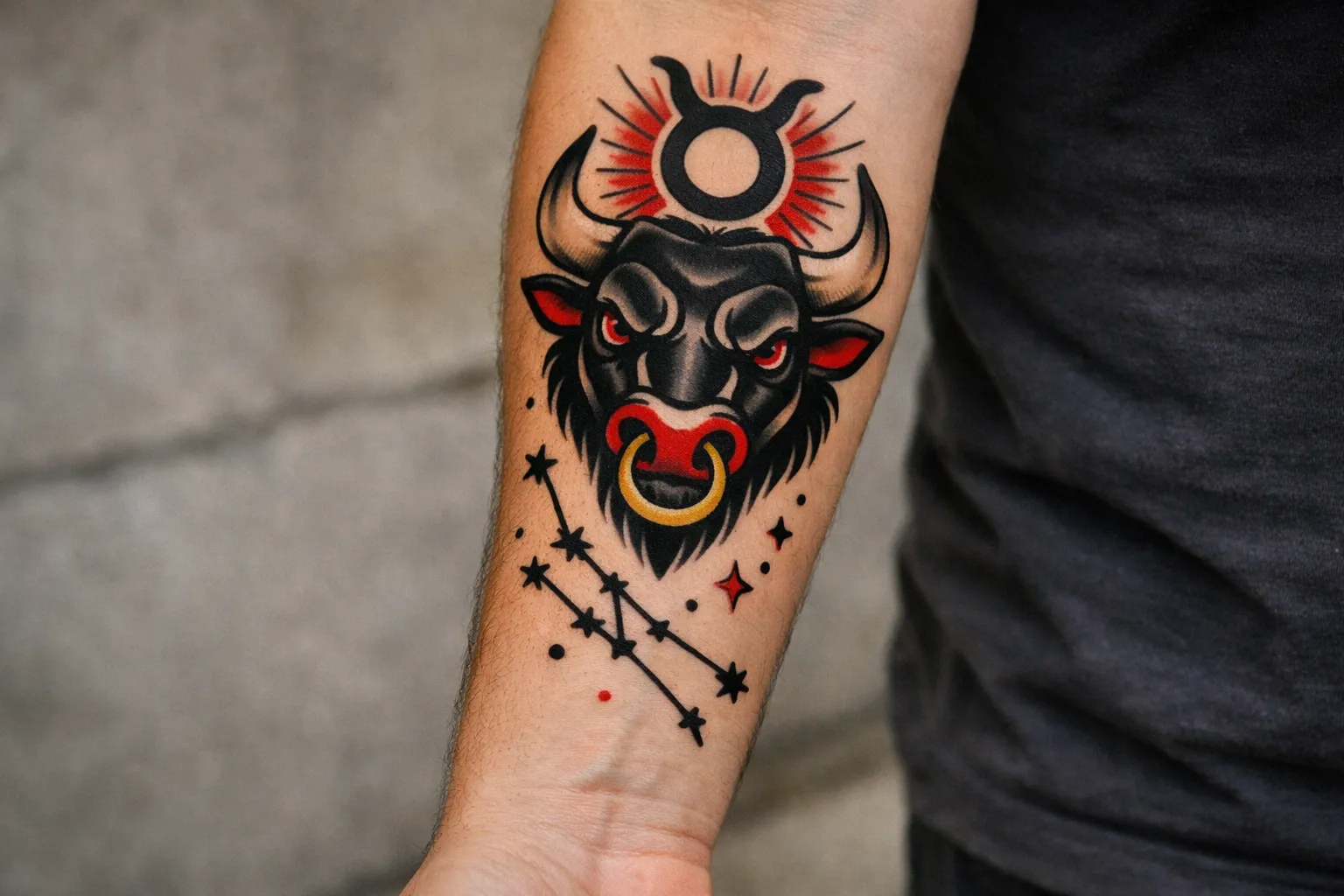
The bull is the most literal representation of Taurus identity and the most demanding at scale. It emphasizes strength, stubborn determination, loyalty, and protective power, and it wants space: 15-25 cm on the chest, back, upper arm, thigh, or shoulder blade. Detail-heavy realism or neo-traditional versions need multiple sessions for shading and color density.
You’ve got three main variations. The bull head is the most common and the easiest to place. The full bull needs a large canvas - back or thigh - to read properly. The bull skull, often paired with flowers, is a popular variant that softens the aggression: the skull reads as endurance rather than menace, and the florals bring the Venus and earth elements straight into the piece. Modern astrology descriptions lean on Taurus being resilient and protective (3), which supports reading the bull as steadfast and grounded rather than purely fierce.
The glyph - smallest Taurus tattoo design with the clearest identity signal
The Taurus glyph (♉) is the standard shorthand used in professional astrology charts and ephemerides, which makes it the clearest minimal identity marker you can put on skin. It focuses on identity, minimalism, and quiet steadiness, and it works small: 1-3 cm on the inner wrist, behind the ear, or along the ribcage. One short session does it. This is the classic entry point for first-time clients.
Proportions matter more than people expect. The horn arc and the circle base need clear separation, or the symbol reads as something unrelated. Get the ratio wrong and a hasty artist can turn a Taurus glyph into an ambiguous squiggle. The glyph also works as an anchor element inside a larger composition - centered or at the base - rather than only as a standalone.
The Taurus constellation tattoo - fine-line star maps
The taurus constellation tattoo leans toward cosmic connection and fine-line aesthetics, and it needs enough room for the star spacing to stay readable, usually 8-15 cm. For accuracy, the two features to include are the Hyades - a V-shaped cluster forming the bull’s face - and Aldebaran (Alpha Tauri), the brightest star in the constellation, traditionally read as the “eye of the bull.” The Pleiades cluster is a recognizable extra anchor if you want it.
Technique matters here. Fine-line needle work keeps the star map crisp, but delicate lines blur over time, so keep line length modest and avoid high-friction, high-sun placements like hands and fingers. A constellation on the inner forearm or upper arm holds far better than the same design on a knuckle.
Comparing Taurus Tattoo Symbols
| Bull | Glyph | Constellation | |
|---|---|---|---|
| Typical Size Range | 15-25 cm | 1-3 cm | 8-15 cm |
| Session Count | Multiple | One short session | One to two sessions |
| Best Placements | Chest, back, thigh, upper arm, shoulder blade | Inner wrist, behind ear, ribcage | Forearm, ribcage, shoulder blade |
| Aging Risk | Ages well in blackwork/neo-traditional; realism may blur | Very low risk, minimal detail | Moderate risk due to fine lines |
| Style Compatibility | Realism, neo-traditional, tribal | Fine-line, minimalist | Fine-line, dotwork |
Style Options - From Fine Line to Realism
Taurus tattoo design options range from fine-line minimalism to full-color realism, and the right style depends on which symbol you’ve chosen and where it’s going. Matching style to symbol is where most of the design decision actually lives.
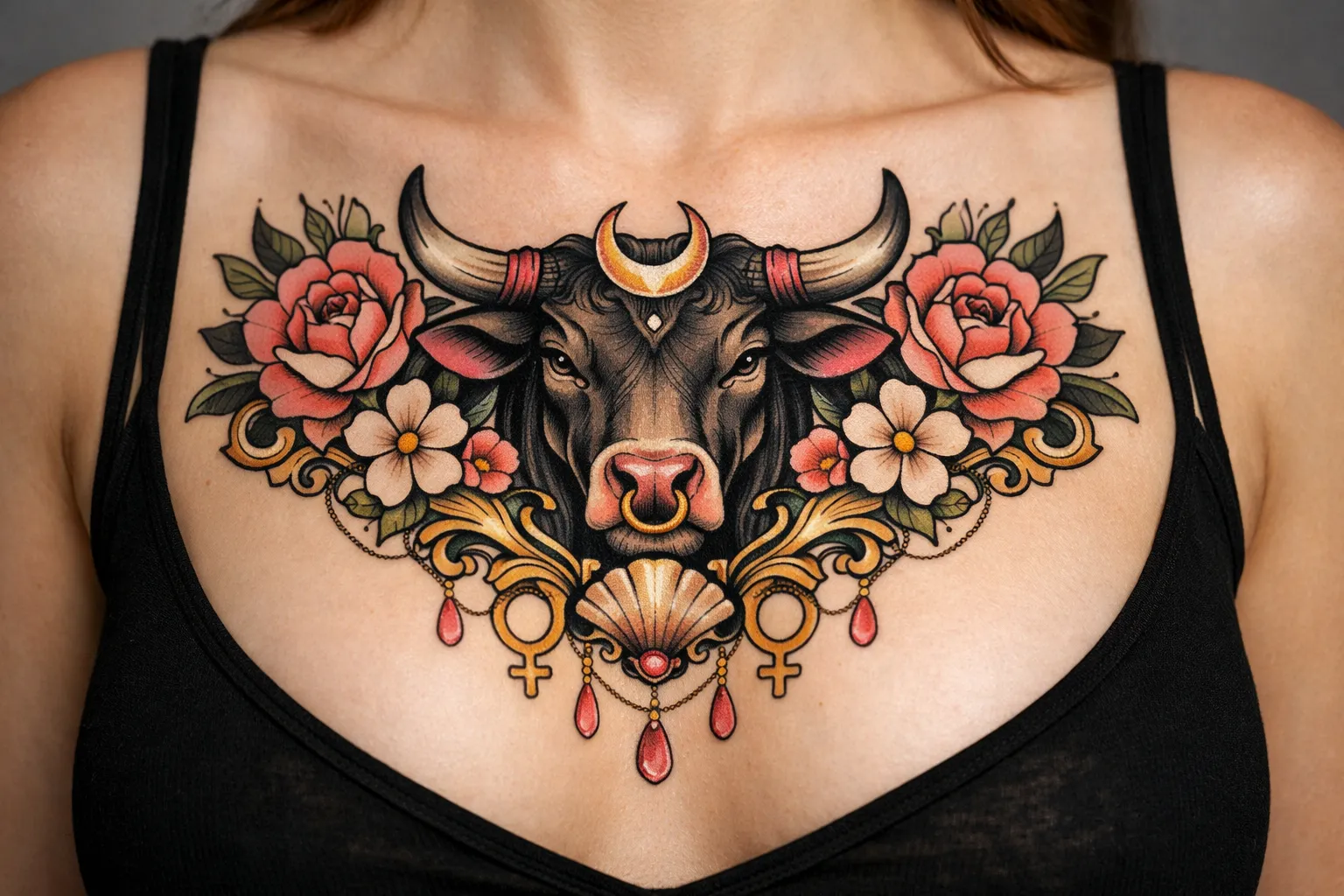
Fine-line and minimalist suits the constellation, small glyphs, and outline-only bulls. The two hallmarks are hairline strokes and negative space doing most of the compositional work - when an artist overworks the fill or uses inconsistent line weight, the whole thing reads muddy rather than precise. Single session, clean lines, and it fits the wrist, ribcage, ankle, or behind the ear. This is squarely where the current trend sits, with minimalist astrology tattoos dominating recent 2025-2026 collections over the heavier tribal work of a decade ago.
Neo-traditional and illustrative uses bold black outlines and a limited but saturated color palette - think American traditional’s structural logic applied to more complex subject matter. The common pitfall is muddying the palette by adding too many mid-tones; the style reads best when the outline does the heavy lifting and color fills clean shapes. It wants upper arm, chest, or thigh, and it takes more sessions to build color density.
Realism and black-and-grey delivers the detailed, fierce bulls and realistic star fields that dominate bold taurus tattoo for men content. The two hallmarks are smooth tonal gradients built through layered grey wash and precise highlight placement - done badly, the shading goes chalky and the highlights blow out. It demands an artist with genuine shading skill and enough space to breathe - upper arm, chest, or back at 12-20 cm. Realism under 10-12 cm simply doesn’t read.
Geometric and linework integrates the bull with sacred geometry or geometric framing for a modern, design-led look. It works at medium scale, 8-15 cm, on the forearm or thigh.
One underused approach worth naming: earth-sign texture. Adding textured shading behind the bull - stone, wood, or soil effects - reinforces the sign’s groundedness in a way color alone can’t. These designs reward careful spacing and considered background rather than empty fill.
The clean matches: fine-line to constellation or glyph; neo-traditional to bull head with florals; realism to full bull or bull skull; geometric to bull with sacred geometry framing.
Color choices - earth tones, Venus pinks, or black-and-grey
Earth tones (greens, browns) align with Taurus’s element and its grounded nature. Venus-linked colors (pinks, soft pastels) fit designs emphasizing sensuality and beauty. Black-and-grey stays the most common choice in men’s Taurus tattoos for its high contrast and bold read.
One practical caveat: bright colored inks - especially reds, yellows, and fluorescent tones - fade more noticeably with sun exposure than black ink, per the American Academy of Dermatology, which recommends diligent sun protection to slow that process. If you want a pink-and-green Venus-heavy piece, factor that into where you put it and how consistent you’ll be with sun-protective clothing or SPF.
Placement Guide - Matching Location to Meaning
Placement should follow intent, not just anatomy. Organize the decision around what the tattoo means to you.
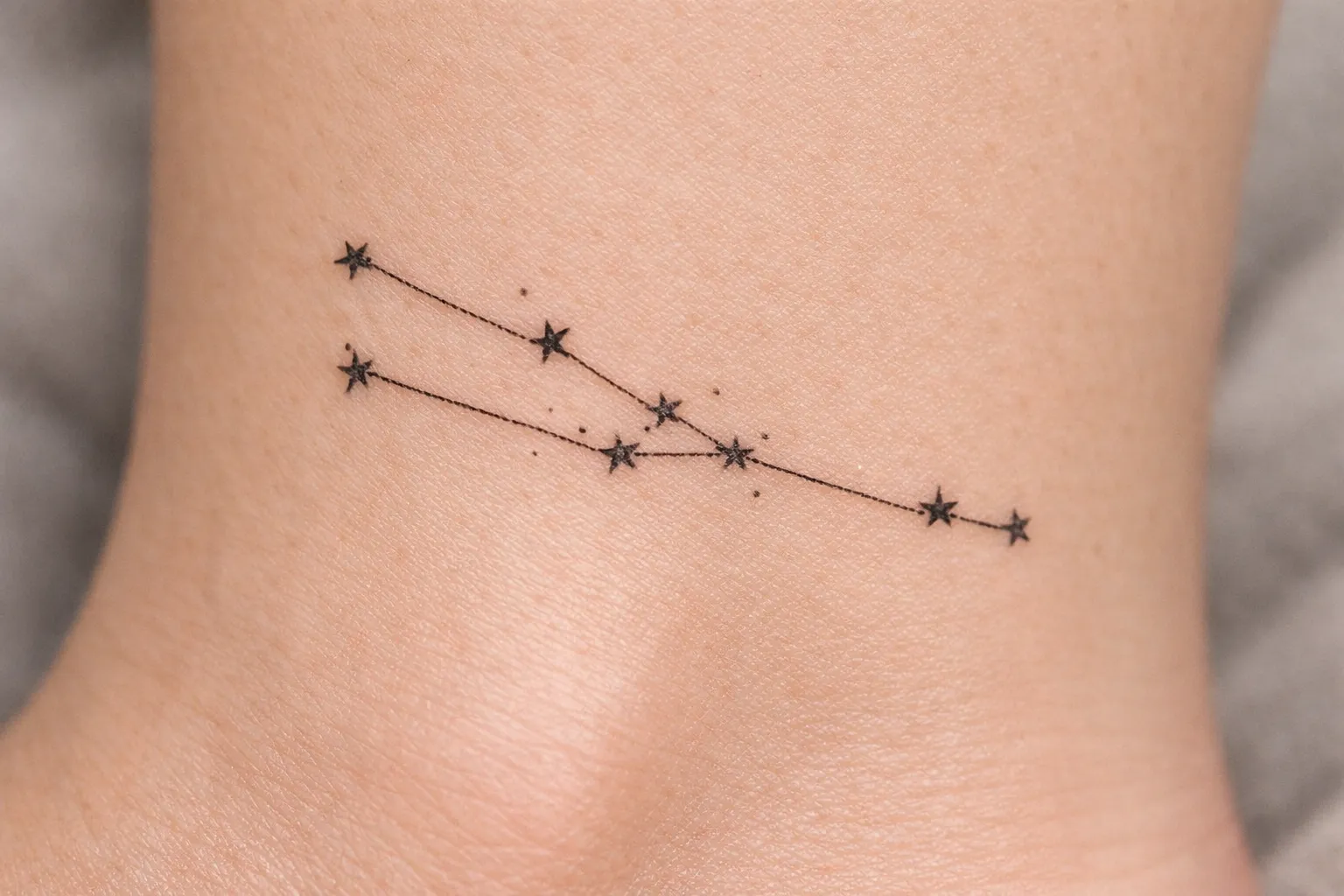
Visible identity placements - forearm, hand, neck - suit those who deeply identify with Taurus traits and want the sign readable day to day. The forearm at 5-10 cm is the most versatile spot on the body: a relatively flat surface, moderate pain, and it takes a fine-line constellation or glyph cleanly.
Intimate and sensual placements - ribcage, hip, sternum, lower back - fit those linking the sign to Venus-ruled sensuality and private meaning. The ribcage is significantly more painful than the forearm but carries a fine-line constellation or glyph beautifully. The sternum works for a symmetrical glyph or a small constellation.
Large statement placements - chest, back, thigh, upper arm - are for complex bulls and multi-element compositions. Chest at 15-20 cm for a bold bull head, back for a full bull or large neo-traditional piece, thigh for floral bull compositions.
Small and discreet placements - inner wrist, behind the ear, ankle - hold micro-constellations and glyphs. Behind the ear at 1-2 cm for the glyph; inner wrist at 2-4 cm for a constellation or glyph. Easily concealable when you need it to be.
On pain: ribcage > sternum > inner arm > forearm, roughly. The ribcage and sternum sit over thin skin and bone with minimal cushioning, which is why they rank among the most painful sites, while the forearm’s muscle and fat make it considerably more manageable - according to Healthline’s tattoo pain location guide. On aging: a fine-line constellation on the inner forearm or upper arm holds far better than the same lines on hands or fingers, where small line art blurs within a few years thanks to constant friction and UV exposure.
Forearm Taurus tattoos - size and orientation
The inner forearm takes a constellation or glyph at 4-8 cm, or a bull head at 8-12 cm. The outer forearm handles 6-12 cm and suits a geometric bull or neo-traditional design. Orient a bull head so it faces upright when your arm hangs naturally at your side - not when it’s extended flat on a table. Artists get this wrong more often than you’d expect, and the result reads sideways in everyday posture.
Bold Designs for Men That Still Honor Venus
A taurus tattoo for men usually gravitates toward larger placements and bolder styles, but the strongest versions still nod to the sign’s Venus-ruled character rather than settling for pure aggression. The default move is a big realistic, tribal, or geometric bull on the chest, shoulder, or biceps - and done thoughtlessly, that produces a one-dimensional angry animal that ignores what Taurus actually stands for.
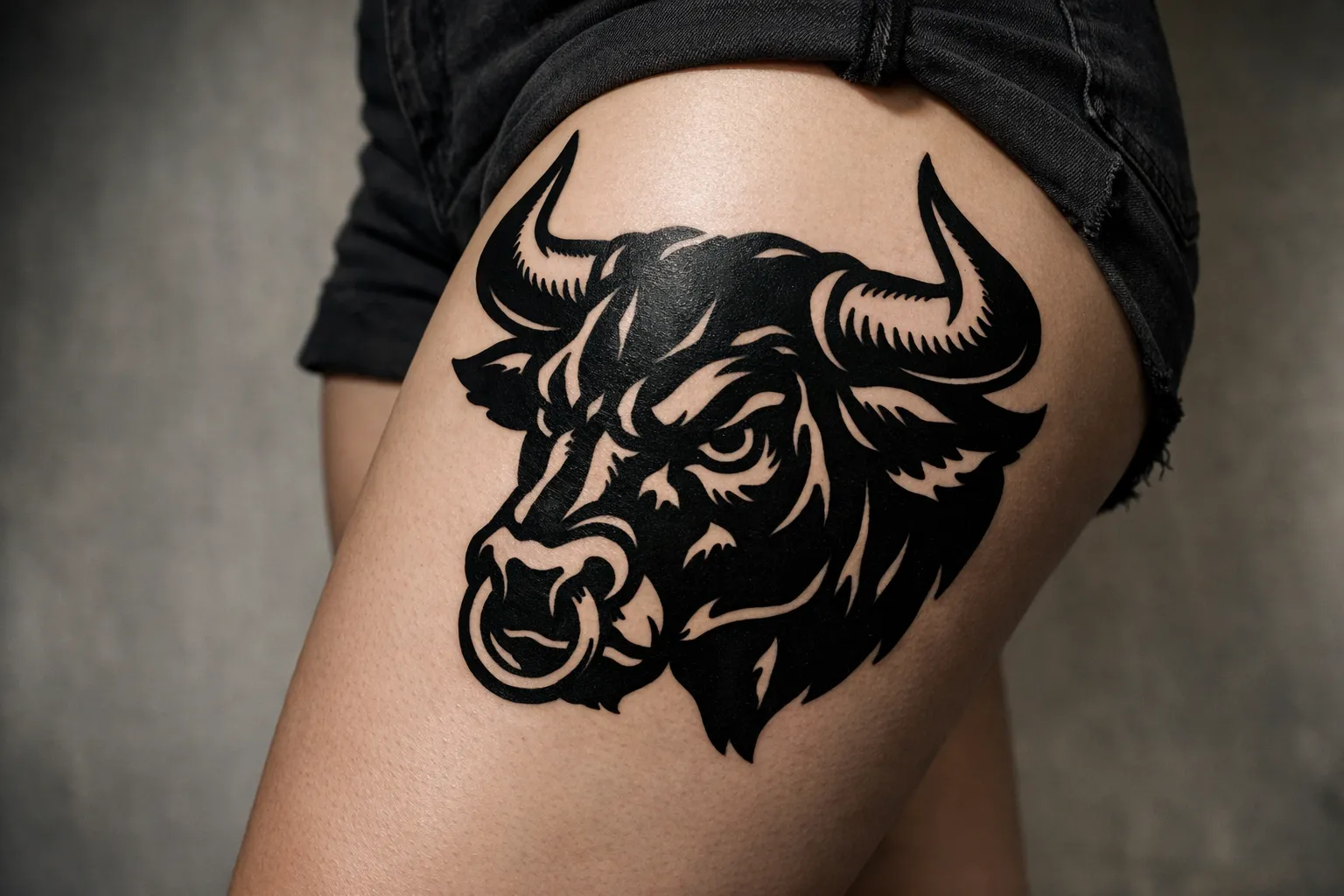
The fix is simple: add loyalty or family elements. Names, dates, or a protective (not charging) posture on the bull align the piece with Taurus’s devoted, reliable reputation. Mainstream astrology consistently frames the sign as loyal and protective (5), so strength without pure aggression is the more accurate read anyway.
A few directions that work:
- Tribal Taurus tattoos: thick blackwork lines and bold geometric forms, strong on the upper arm or shoulder. The style draws on Polynesian tatau traditions - where bold solid fill and negative-space patterning carry cultural weight - though in modern Western tattoo culture it’s largely been adopted as a purely aesthetic choice. That shift in meaning is worth being honest about: if you’re not from a culture with a living tribal tattoo tradition, you’re borrowing the visual language, not the original symbolism. Done well and with that awareness, it ages well at larger scales because there’s no fine detail to blur.
- Realism black-and-grey bull: needs an artist with genuine portrait-level skill, chest or upper arm at 15-20 cm, multiple sessions for shading density.
- Geometric bull with sacred geometry framing: modern and design-led, for those who want structure over organic linework.
For a subtle Venus nod that doesn’t read as overtly romantic, work in a small Venus symbol (♀) or a single rose alongside the bull. It adds depth without softening the whole piece. Whatever the style, pairing the bull with the glyph is the cleanest way to guarantee it reads as Taurus rather than a generic bull - taurus tattoos for men benefit enormously from that one addition.
Combining the Bull, Glyph, and Constellation in One Design
Combining all three symbols lets each element do a different job: the bull carries strength, the glyph fixes identity, and the constellation adds cosmic connection. Taurus is both a zodiac constellation and an astrological sign, which is the natural rationale for pulling all three into one composition.
The hierarchy usually works like this: the glyph anchors the piece (centered or at the base), the constellation arcs above or around the bull, and the bull occupies the dominant visual space. You can reinforce the earth element with natural textures - stone, soil, botanical elements - in the background, provided you keep them subtle enough not to clutter. Subtle Venus references, a small Venus symbol, roses, or soft gradient shading, add depth for astrology enthusiasts without overwhelming the design.
There’s also the scorpio and taurus tattoo concept. Scorpio is Taurus’s opposite sign on the zodiac wheel (6), and in Western astrological tradition opposite signs are said to share an axis of complementary tension - Taurus grounds and accumulates, Scorpio transforms and releases. Some wearers incorporate both glyphs or both constellations in one design to represent polarity, a relationship, or internal tension. It’s a strong idea when it’s given room.
And room is the operative word. Multi-element compositions need a minimum of 10-12 cm to keep all three symbols readable and avoid visual overcrowding. Forearm, thigh, or upper arm are the practical placements.
How to plan a multi-symbol Taurus composition
About 1 hourStep-by-step guide to combining bull, glyph, and constellation in one tattoo
- 1
Choose your dominant symbol
Pick bull, glyph, or constellation to get the most visual weight and set the tone.
- 2
Decide secondary elements and scale
Limit to two supporting elements to avoid visual noise.
- 3
Pick a placement with enough room
Minimum 10-12 cm; forearm, thigh, or upper arm work best.
- 4
Choose a unifying style
Fine-line for constellation-led; neo-traditional for bull-led; avoid mixing styles.
- 5
Bring separate reference images
Show your artist clear examples of each element before discussing integration.
Small Designs - What Works at Minimal Scale
At minimal scale, the glyph is the strongest small Taurus tattoo option because it carries full zodiac identity in just 1-3 cm. Inner wrist, behind the ear, or ankle are the natural placements, and it’s the most reliable way to signal Taurus without needing space.
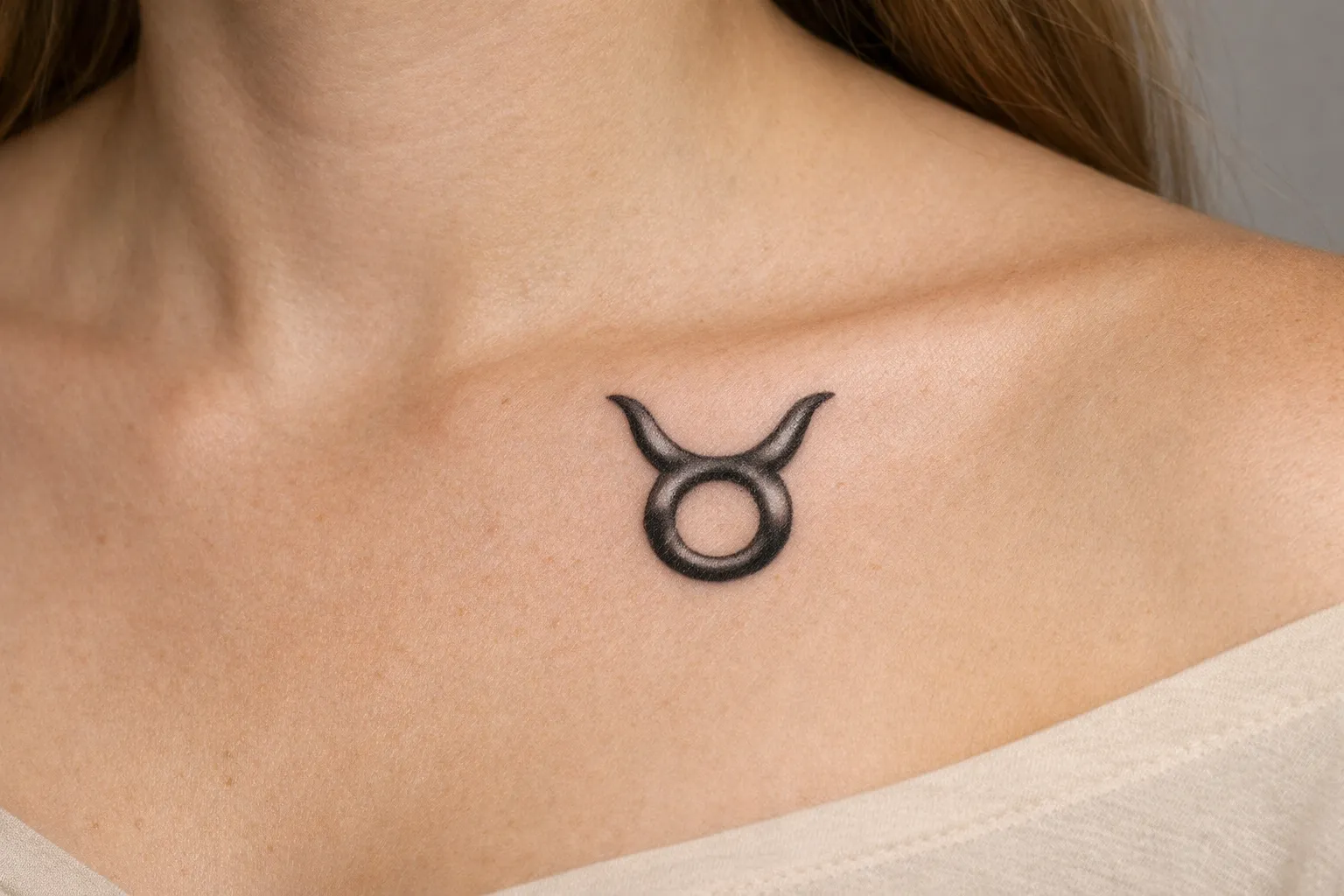
A micro-constellation works at 3-6 cm if the artist uses fine-line technique and keeps dot size consistent - the Hyades V-shape stays recognizable even shrunk down. A single-line bull outline, a minimalist silhouette in one continuous line, works at 4-6 cm on the forearm or collarbone, though it loses definition fast on high-friction areas.
What doesn’t survive at small scale: realistic bull heads, full-body bulls with shading, and constellation maps with too many connecting lines. Detail like that blurs within a few years. Small fine-line tattoos hold significantly better on low-friction, low-sun areas - inner forearm, upper arm, ribcage - than on wrists, fingers, or ankles, where constant motion and UV exposure blur delicate work faster (per Harvard Health and AAD guidance).
Design Mistakes That Undermine a Taurus Tattoo
Most Taurus tattoo regret traces back to a handful of avoidable errors.
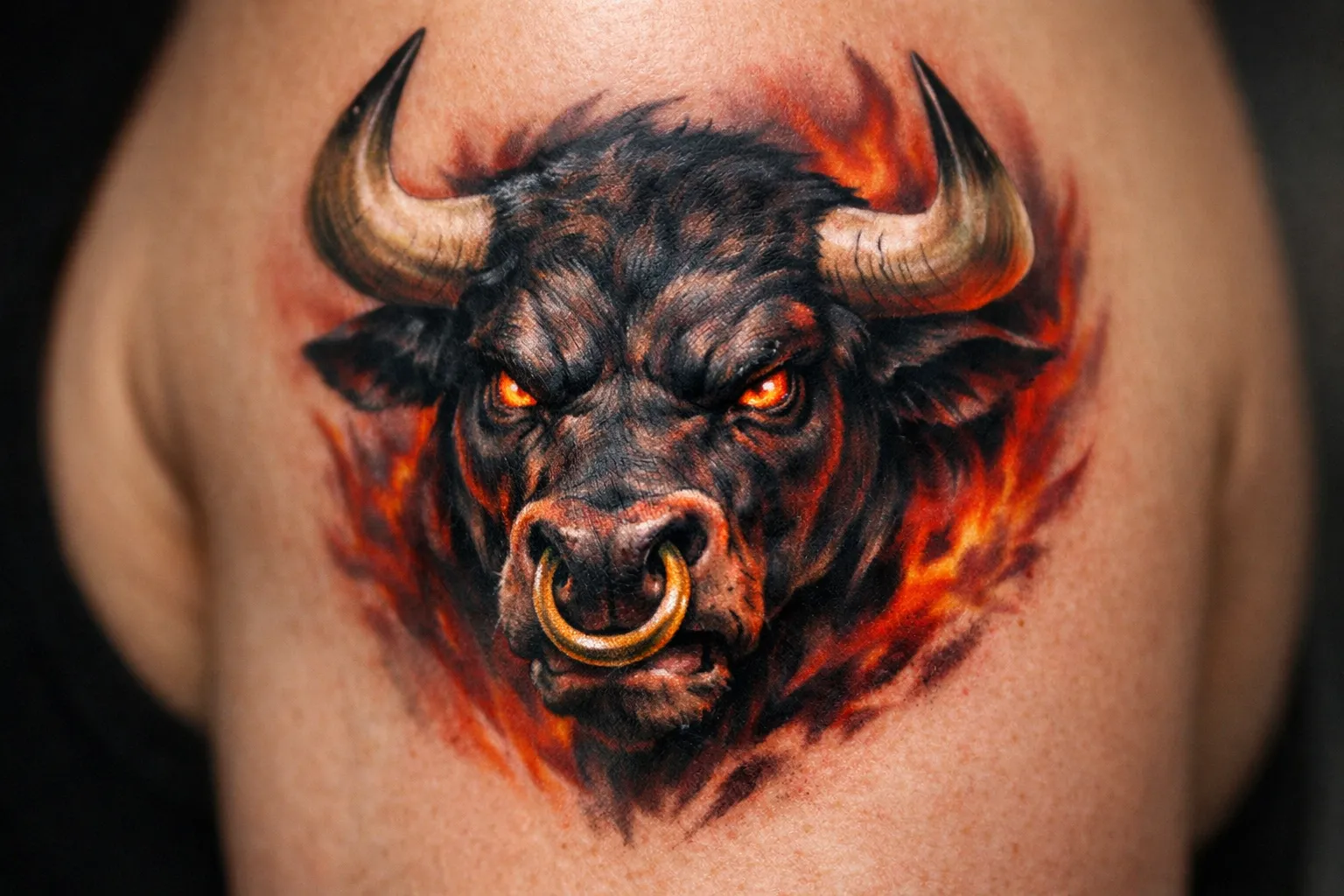
- A generic bull with no Taurus markers. Without a glyph, constellation, or date, it reads as a bull tattoo, not astrology. Add at least one explicit marker.
- A glyph that’s too small or distorted. The horn arc and circle base need clear separation, or it reads as an unrelated symbol. Proportion matters more than size here.
- A fine-line constellation on the hand or fingers. Delicate lines blur within a year or so on high-friction areas; the inner forearm or upper arm hold far better (per AAD tattoo-care guidance).
- Designing purely around aggression. A snarling bull with no softening element ignores the sign’s Venus-ruled character and feels flat and one-dimensional years down the line.
- A style that fights the size. Realism needs a minimum of 10-12 cm to read; fine-line constellations need consistent line weight or they fade unevenly.
- Overloading a small composition. Bull plus glyph plus constellation plus florals plus dates crammed into under 8 cm produces visual noise, not layered meaning.
Frequently Asked Questions
- What does a Taurus tattoo symbolize?
- A Taurus tattoo symbolizes strength, stability, loyalty, and sensuality rooted in earth and Venus rulership, blending endurance with beauty and grounded devotion.
- Which tattoo is lucky for Taurus?
- Tattoos featuring Venus symbols, roses, or earth motifs like flowers are lucky; a protective bull posture also serves as a positive talisman.
- What are the three types of Taurus?
- Taurus divides into three decans: first with strong Venus, second influenced by Mercury, third by Saturn; these subtly guide design choices.
- Who should a Taurus marry, and how does that affect paired tattoos?
- Compatible signs include Virgo, Capricorn, Cancer, Pisces; Scorpio is opposite. Couples often combine glyphs or constellations to symbolize relationships.
- What is the best placement for a small Taurus tattoo?
- Inner wrist, behind the ear, and ankle suit glyphs; inner forearm suits micro-constellations; avoid hands and fingers for fine-line work.
- How long does a Taurus constellation tattoo take to complete?
- A fine-line constellation takes under an hour; larger multi-element pieces with shading require 2-3 hours or multiple sessions.
- Can men get a minimalist Taurus tattoo?
- Yes, clean glyphs or geometric constellations read strong and intentional, especially on forearm or upper arm without aggressive overtones.
Aftercare - What the Healing Window Actually Looks Like
A Taurus tattoo heals like any other, but the timeline matters more than most clients expect - especially for fine-line work where overworking the skin during healing blurs the detail you paid for.
Day 1-3: The tattoo is an open wound. Keep it covered with a fragrance-free, breathable wrap or second-skin film, wash gently with unscented soap twice a day, and pat dry. No soaking, no sun, no gym sweat pooling on fresh linework.
Week 1: Peeling starts. Do not pick. Apply a thin layer of fragrance-free moisturizer two to three times a day - enough to stop the skin tightening, not enough to suffocate the ink. Itching is normal; scratching pulls pigment.
Week 2-4: Surface skin looks healed but the deeper layers are still settling. Keep the area out of direct sun - UV exposure at this stage is the fastest way to fade a fine-line constellation or blow out a delicate glyph. Sun-protective clothing beats sunscreen on a healing tattoo. Color work and heavy shading take the full four weeks; fine-line pieces often look settled by week two but still need the same care.
After full healing, SPF on any sun-exposed placement is the single most effective thing you can do to keep the linework sharp long-term - particularly relevant for forearm and wrist pieces.
Three Symbols, One Decision - What to Bring to Your Artist
The whole decision comes down to the three-symbol framework. Choose the bull if you want strength and presence at scale, and give it the 15-25 cm it needs on the chest, back, or thigh. Choose the glyph if you want identity in a small, discreet form - 1-3 cm on the wrist or behind the ear, done in one session. Choose the constellation if you want cosmic subtlety and fine-line aesthetics, at 8-15 cm on a low-friction spot.
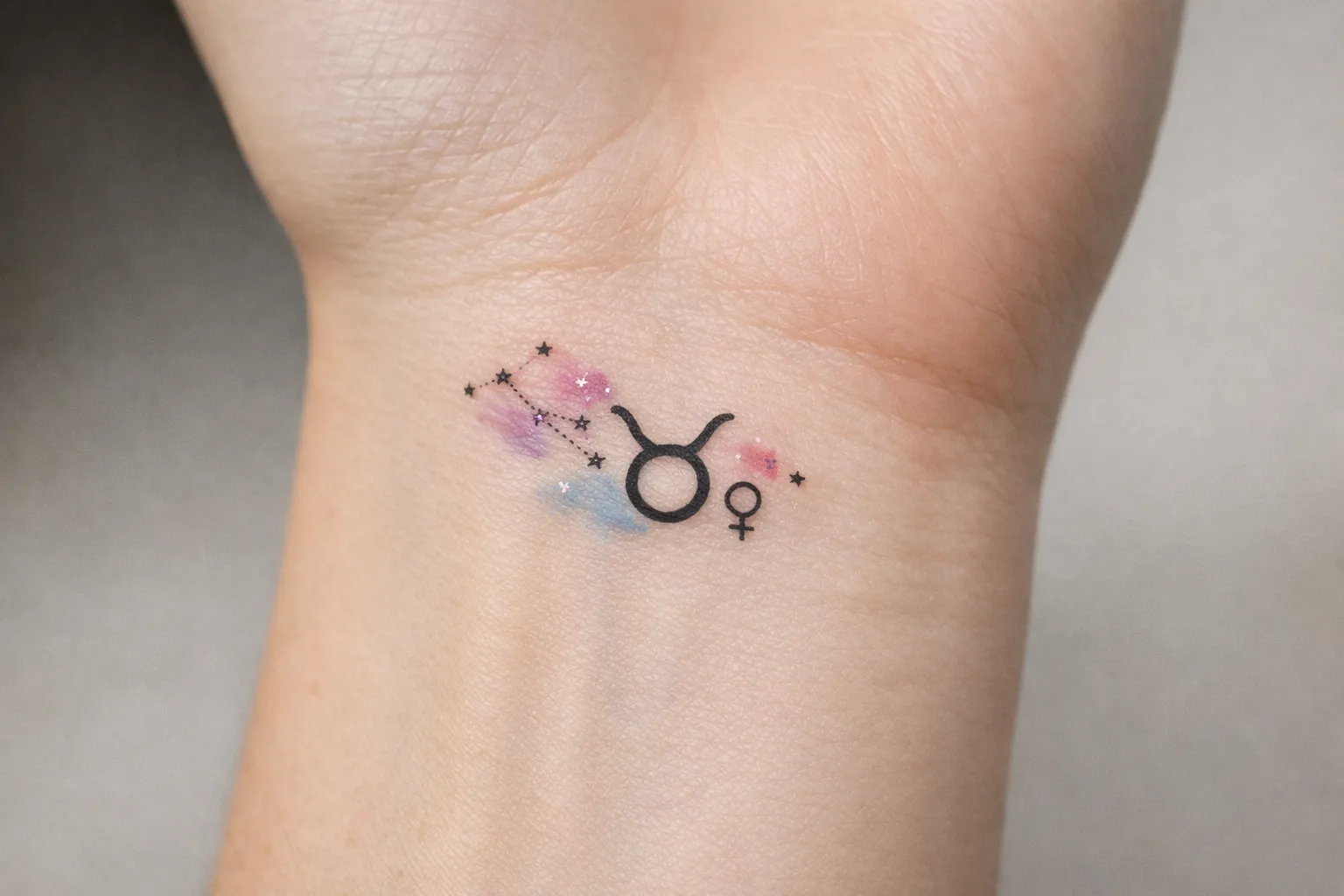
The most underused lever in all of this is Venus. Folding in a rose, a soft gradient, or a small Venus symbol is what separates a considered piece from a stock bull head. Before your consultation, collect separate reference images for each element you want, settle on your dominant symbol, and confirm the placement gives the design enough room. A glyph on the inner wrist will still read cleanly in ten years; a detailed bull crammed into 6 cm will not.