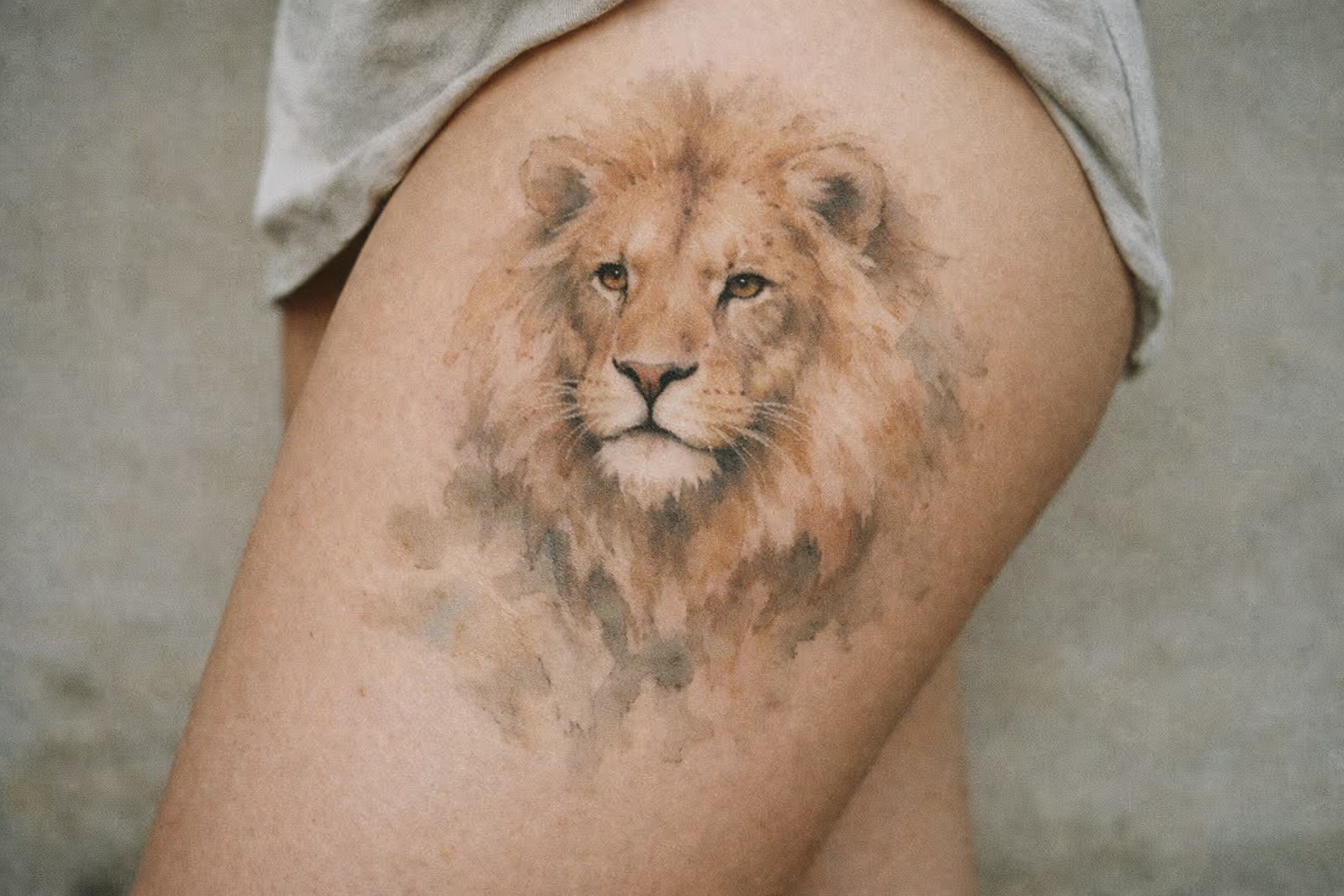
The eyes carry a lion tattoo. Before you settle on style, size, or whether to add a crown, the two decisions that shape everything else are pose - roaring or calm - and scale. A resting lion with a direct gaze reads as more commanding than an open-mouthed roar, and a realistic portrait crammed too small turns to mush within a few years. This is not a masculine-only symbol. The lion works across genders, across styles from blackwork to fine line, and across meanings from raw dominance to quiet family protection.
✓ Pros
- Versatile symbolism - reads as strength, family protection, royalty, or self-mastery depending on pose and elements
- Scales well from a compact forearm profile to a full chest or back piece
- Holds up in multiple styles: realism, blackwork, neo-traditional, fine line, geometric
- Gender-neutral - equally strong as a lion for men or a lioness design for women
- Cross-cultural depth (European heraldry, African leadership, Buddhist wisdom, Chinese guardian imagery) adds layers without locking you into one fixed reading
✗ Cons
- Realistic lion portraits need significant skin real estate - underestimating size is the most common planning mistake I see
- Mane detail, crown filigree, and tiny facial features blur if the design is scaled too small
- Overloading with crowns, roses, cubs, clocks, and scripture weakens the focal point
- High-detail black-and-grey work on the ribcage or sternum hurts more than the forearm or thigh
- Saturated realism needs disciplined aftercare - scabbing or over-moisturizing flattens contrast
What a Lion Tattoo Actually Symbolizes
A lion tattoo symbolizes courage, strength, power, leadership, royalty, protection, and wisdom - and the specific reading you land on depends almost entirely on pose, expression, and what you put around it. These meanings aren’t a modern invention. They run deep across cultures, which is exactly what gives the design room to mean something specific to you rather than one fixed thing.
In medieval European heraldry, lions on coats of arms represent bravery, power, and royal authority. The Lion Rampant of Scotland is the clearest example, still used in national arms and banners today. In Hindu-Buddhist art, lions stand for royalty, protection, wisdom, and pride, appearing as protectors of Dharma supporting the Buddha’s throne. Pairs of lion statues guard temple gates across India and Southeast Asia, documented at sites like Borobudur in Indonesia. Chinese guardian lions serve the same protective function outside buildings. African leadership traditions tie the lion to authority and command. You don’t have to pick one origin - the layering is part of the appeal.
There’s also the astrology layer. The lion is the symbol for Leo, the zodiac sign ruled by the Sun, covering July 23 to August 22 (10). If you’re a Leo, that adds a birth-sign reading without forcing it to be the only one - most people who go this route still want the strength-and-courage meaning underneath.
Is a lion tattoo good or bad? There’s no inherent negative symbolism. The symbol is broadly positive across every culture that uses it. Whether it reads as aggressive or calm comes down to your design choices - a snarling lion in a highly visible placement reads differently than a resting lion on the ribcage.
Roaring vs. Calm - How Expression Changes the Message
A roaring lion reads as high-energy, assertive, outward dominance - bravery in one context, aggression in another. A calm, forward-facing lion communicates authority through restraint. That’s the counterintuitive part: a resting lion with a direct gaze frequently reads as more commanding than an open mouth full of teeth.
The practical takeaway is to choose expression before style. I’ve seen clients come in with a clear “quiet strength” concept and walk out with a snarling face because they fell in love with a reference image. The body language fights the message every time someone looks at it. Decide expression first, then find a reference that matches.
Lion Designs - The Main Types and What Sets Them Apart
Lion tattoo designs break down into five main types - realistic, crowned, roaring, calm profile, and geometric or fine line - and each communicates something different, suits different styles, and demands a different minimum size. Pick your design type and your symbolism together, not separately. The type you choose is how the meaning shows up on skin.
Realistic Lion
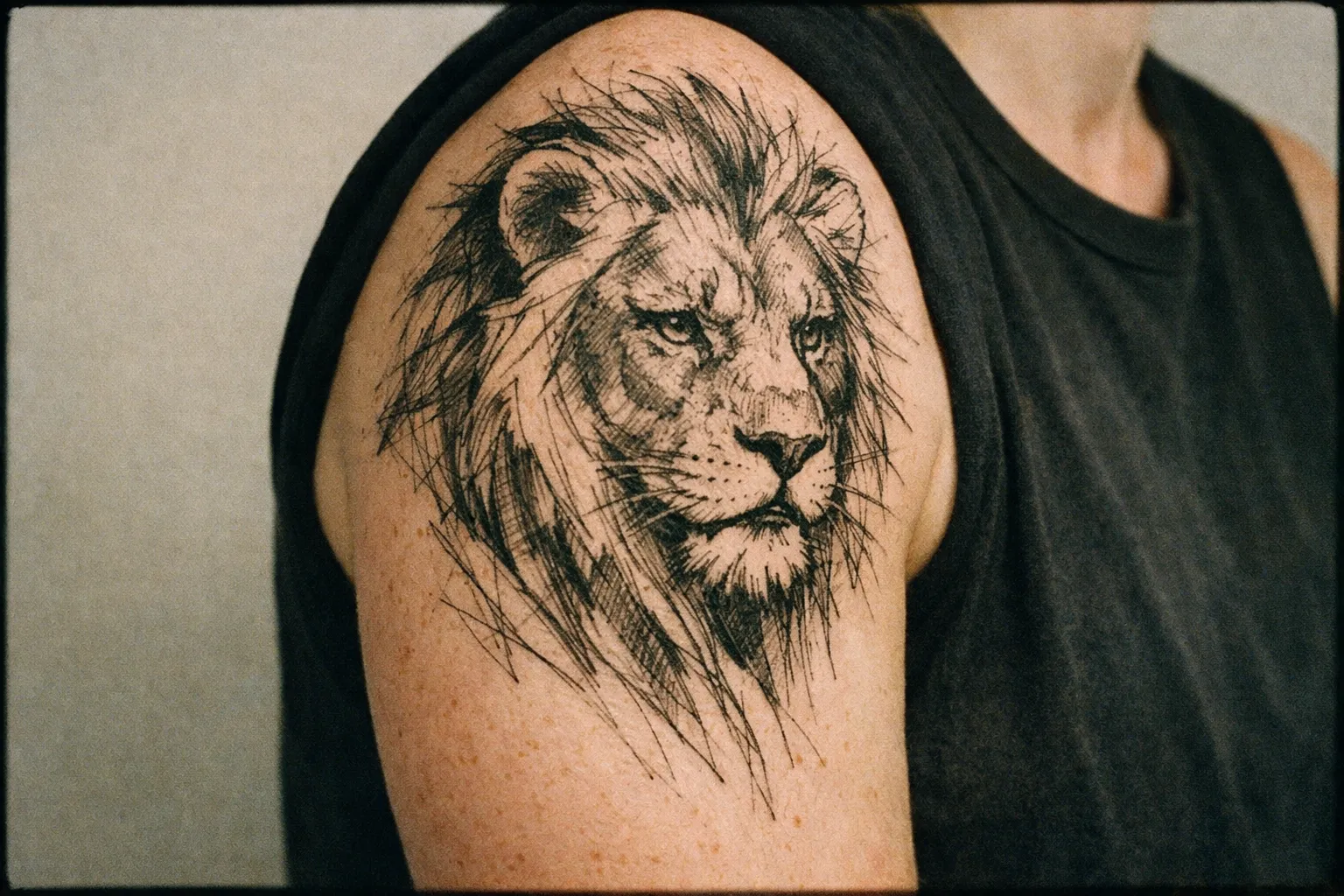
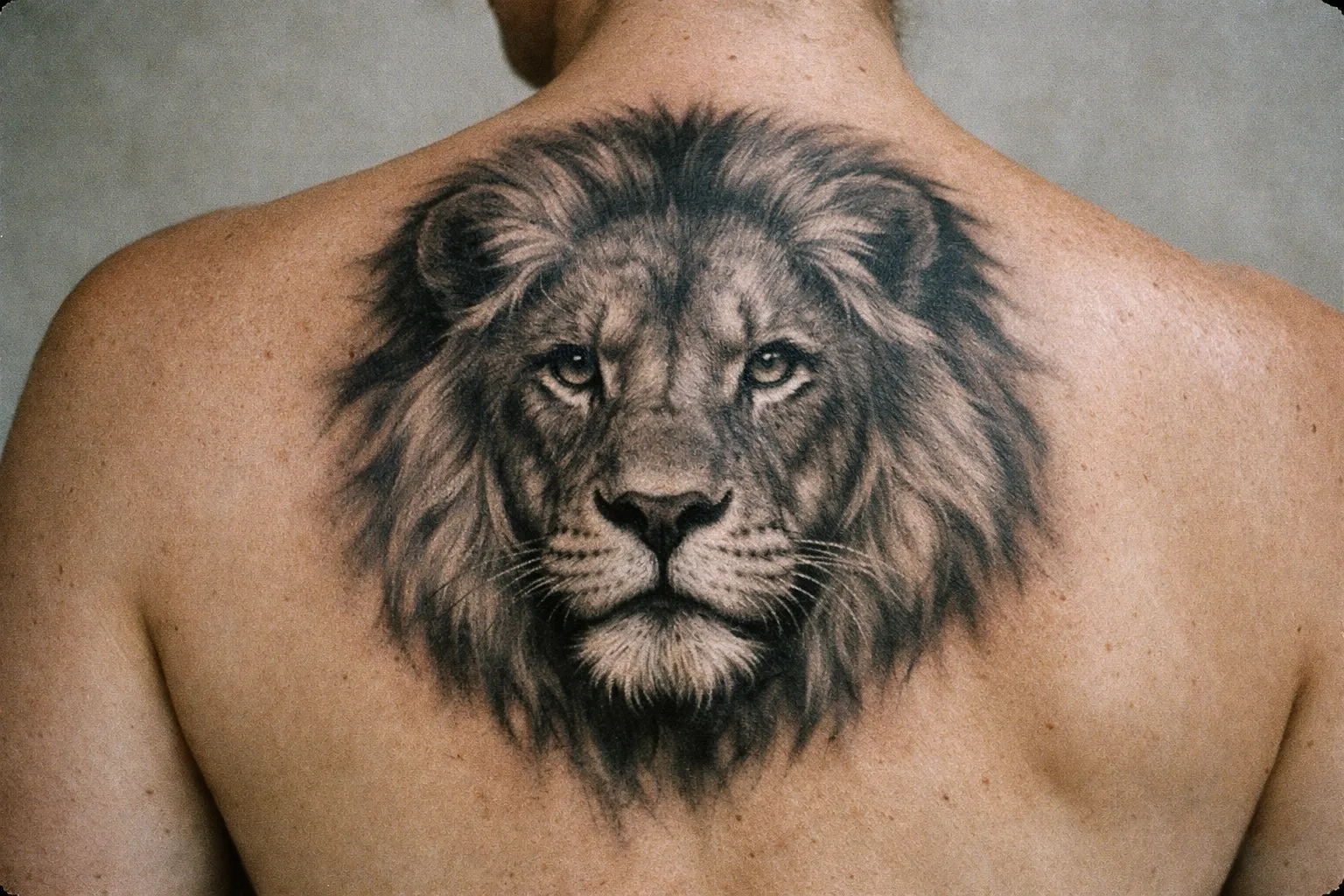
A realistic lion is the choice for visual impact and portrait-level detail, and the face needs space to stay readable. Plan for a minimum of 5-6 inches on the longest axis (2) - anything smaller collapses mane texture and eye clarity as it heals. The best placements are the chest, upper arm or shoulder, back, and thigh, all of which offer enough flat canvas for a full tonal range.
Black-and-grey realism is the dominant approach here, and for good reason: a mane holds both dark mass and bright highlight, and grayscale reads that contrast cleanly. Color realism works but needs more upkeep. The eyes are the first place a viewer reads, so a skilled artist concentrates contrast there - a well-defined gaze matters more than any background element you might add.
Lion with Crown
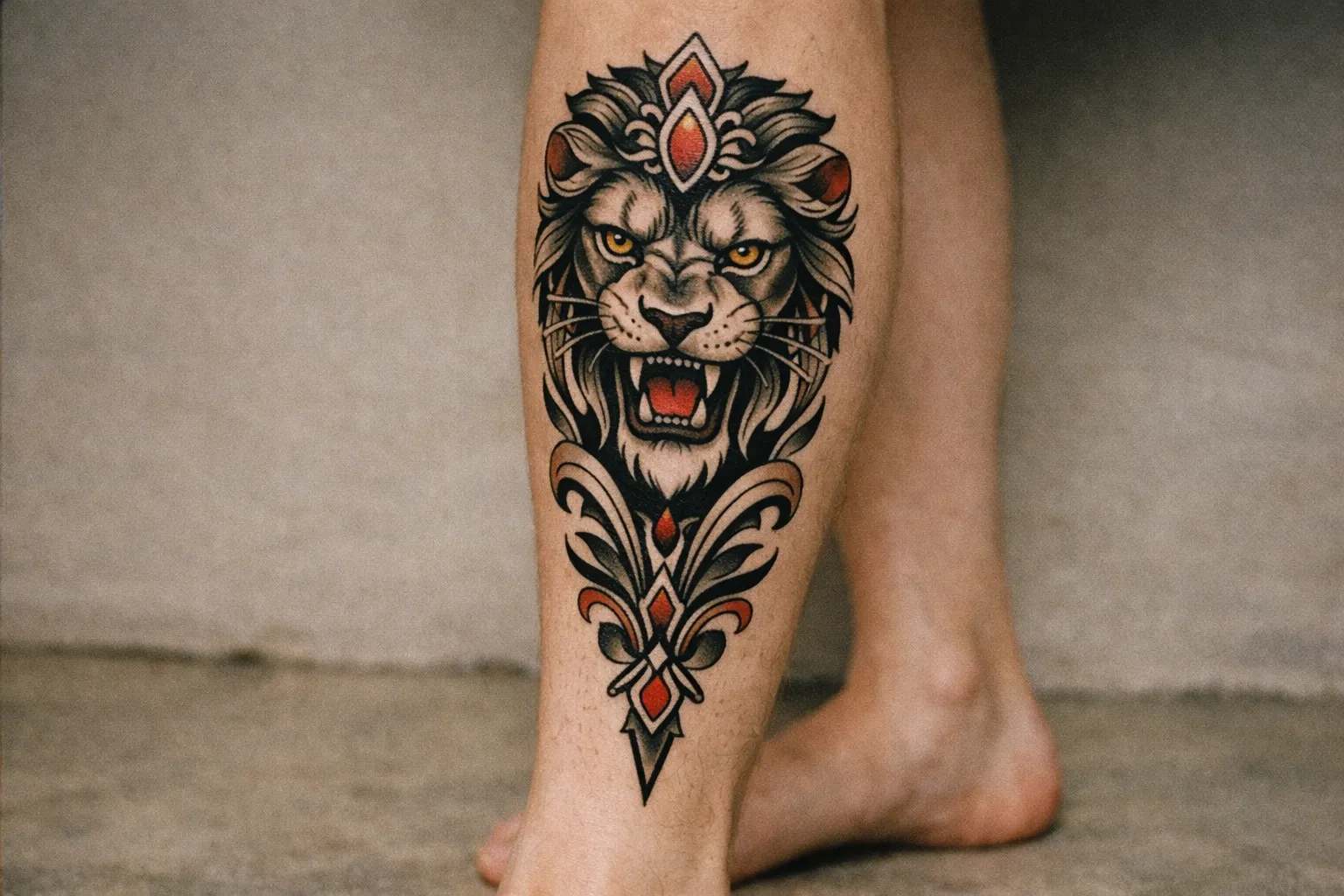
A lion with a crown is the most direct visual shorthand for royalty, sovereignty, personal authority, and leadership (3)(9). Crown style matters more than people expect - a simple band reads differently than a jeweled imperial crown, and both need to stay proportional to the lion’s head or the whole thing tips into costume. This design works in American traditional (thick outlines, limited palette), neo-traditional, and realism.
Best placements are the upper arm, chest, or forearm if you keep the composition head-only at 4-6 inches. One honest note: if the tattoo is meant as a status symbol, the crowned lion is the clearest choice. If it’s a personal-growth marker, a lion without a crown often reads as more grounded and less literal.
Roaring Lion
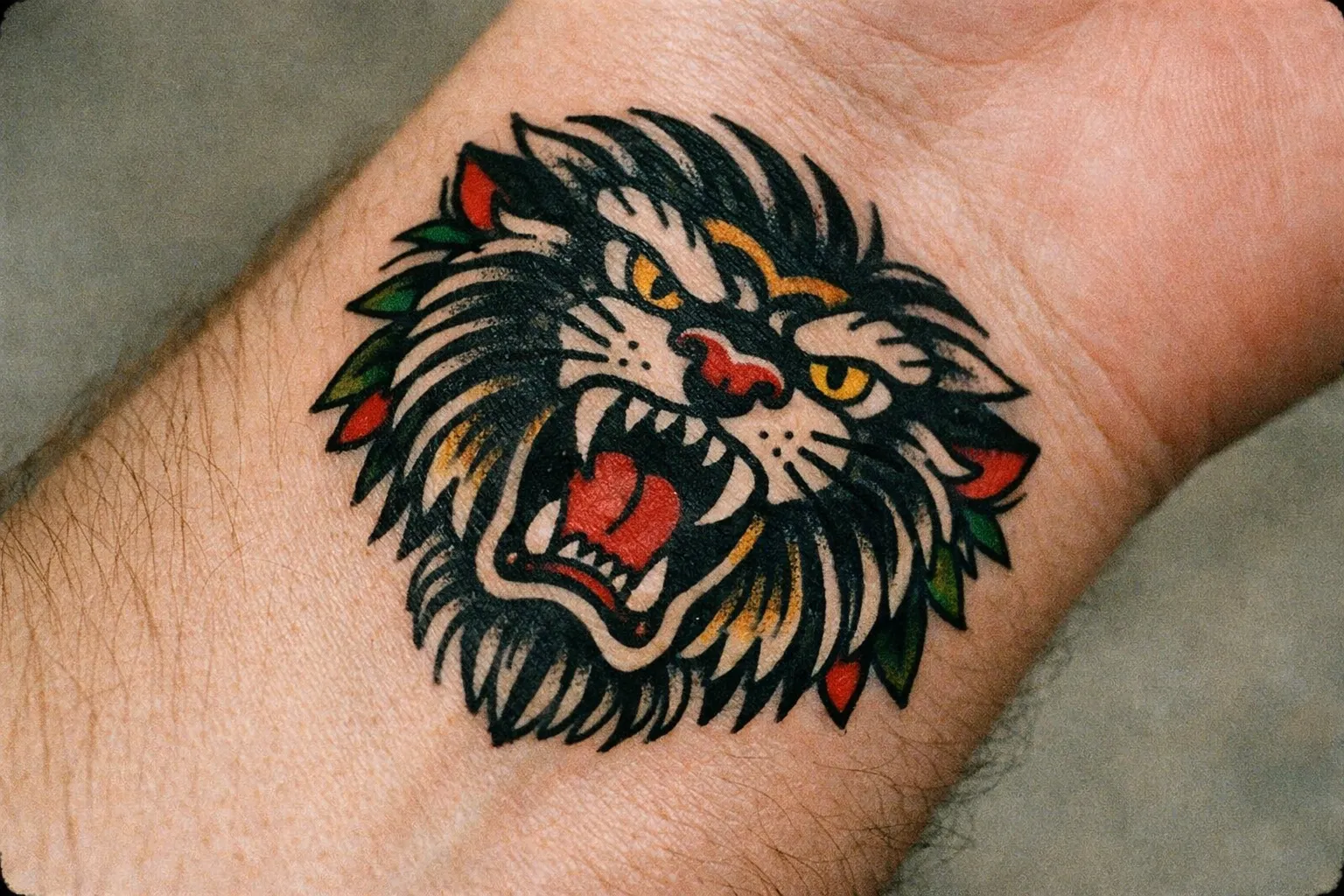
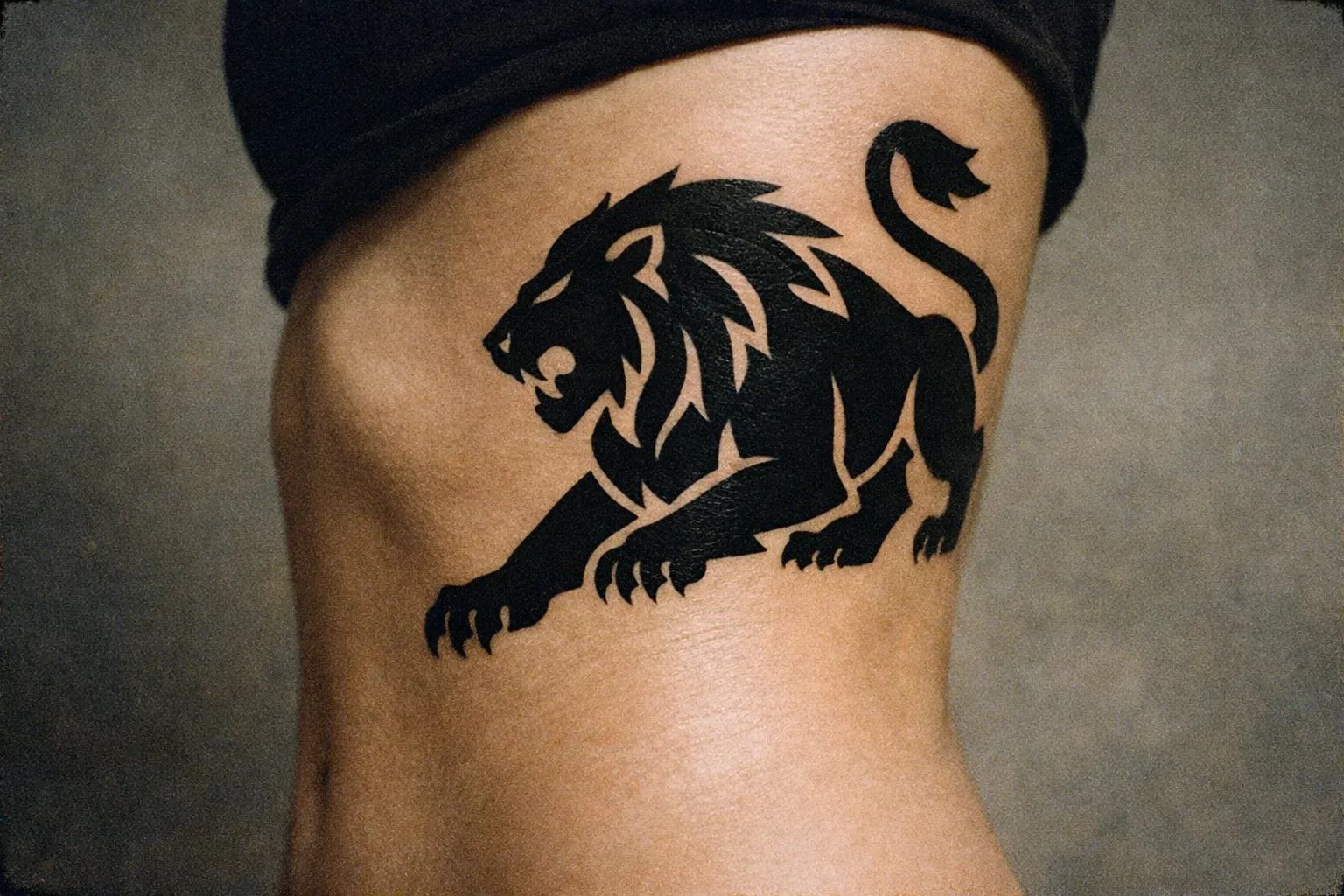
A roaring lion suits high-energy, assertive symbolism and works in both black-and-grey and bold color. The risk is a mismatch - if you actually want calm leadership or quiet strength, an open maw fights that reading. The open mouth also needs room, so plan for a chest panel or an upper arm piece at 5-8 inches. Cram it smaller and it looks compressed. You’ll see this one most often in American traditional and blackwork.
Geometric and Fine-Line Lion
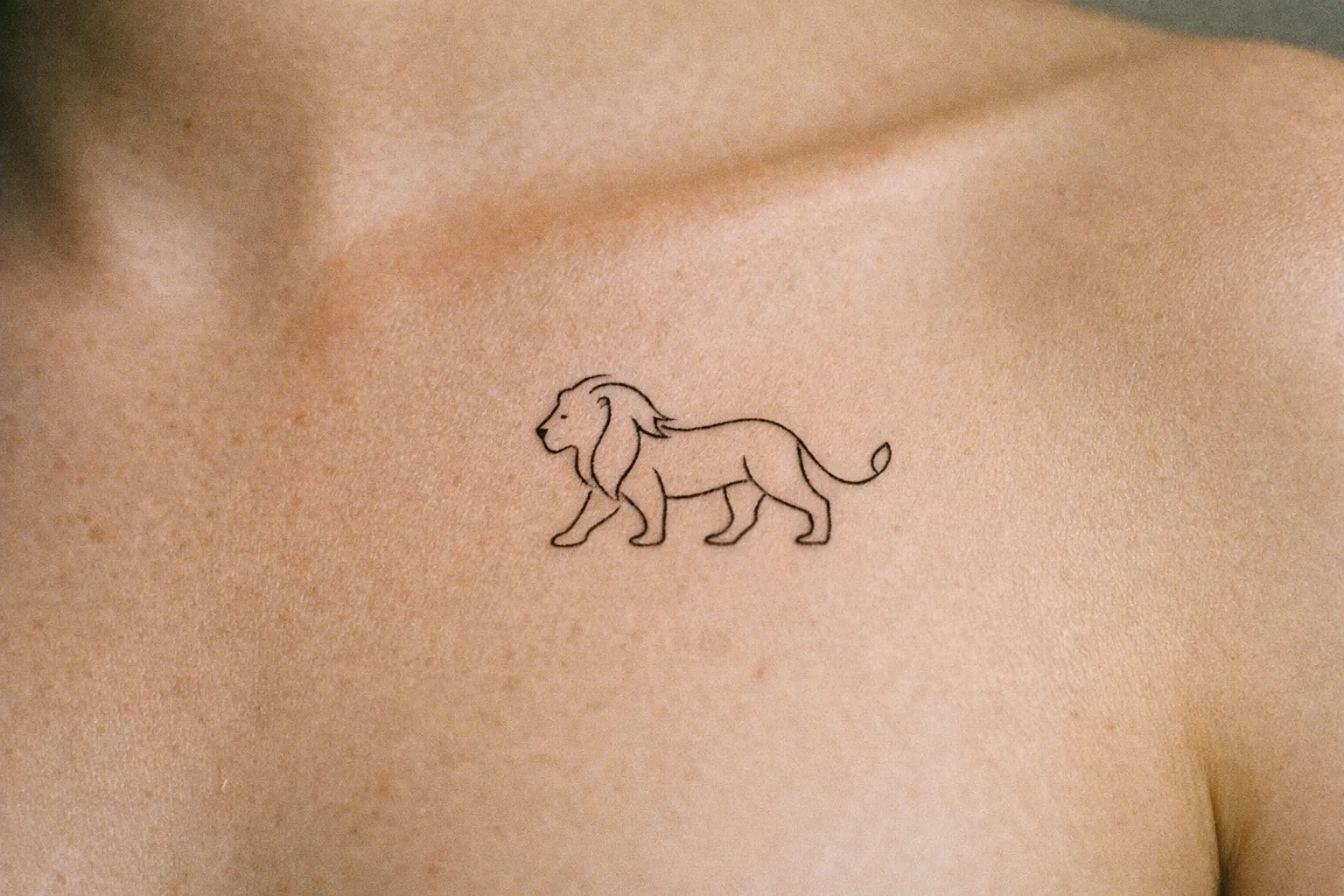
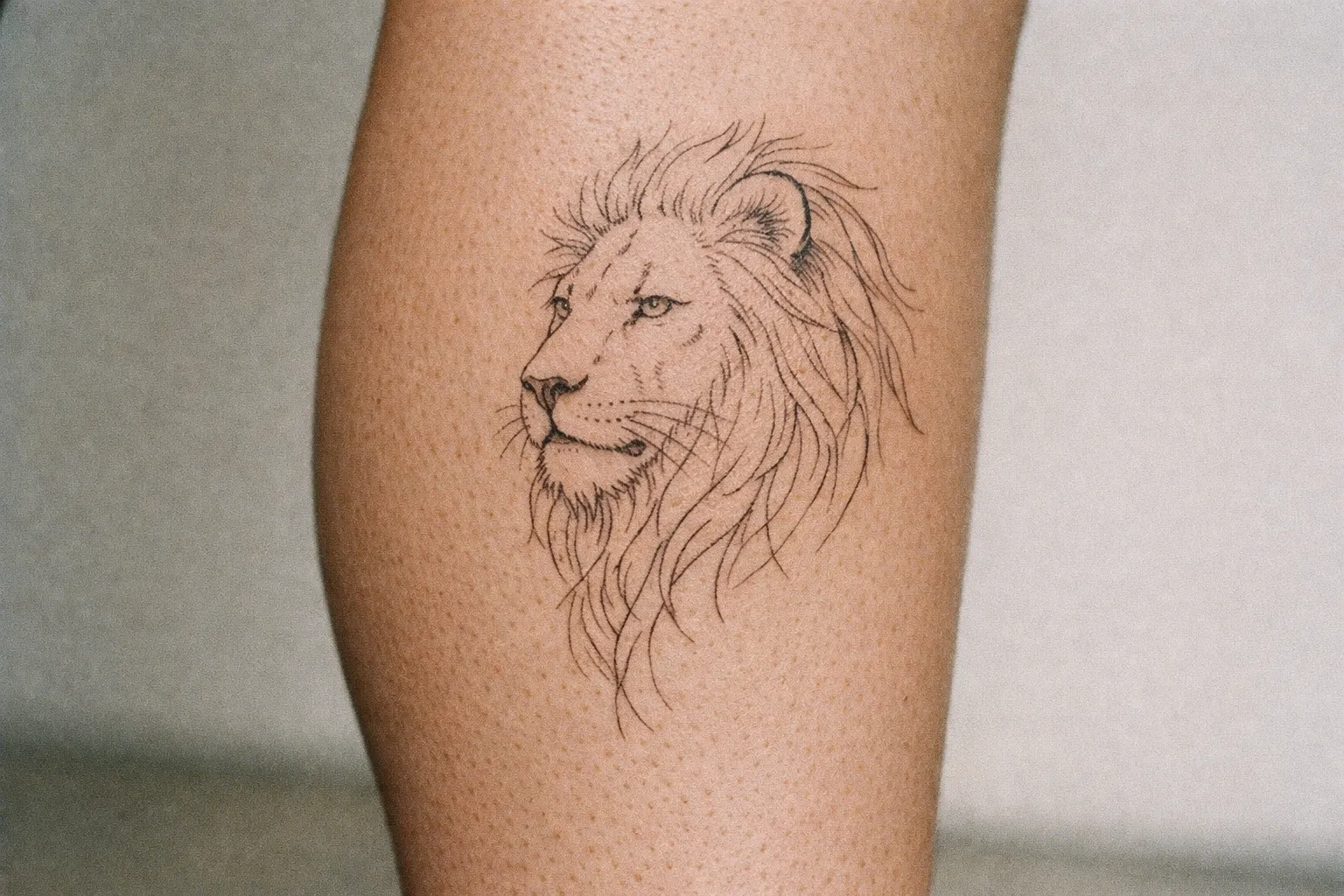
A geometric or fine-line lion keeps the symbolism while lowering the visual density - the right call if you want something subtler. A fine-line profile or geometric lion head works at 3-5 inches on the forearm, sternum, or ribcage (3), as long as the lines aren’t ultra-fine single-needle and the design skips dense micro-detail.
Linework ages differently than saturated realism. Very thin lines spread and soften over 5-10 years, so a slightly heavier line gauge holds up better long-term. This is a solid entry point for first-timers or anyone working with a smaller budget.
Men - Design Logic and Placement
A lion for men typically leans on heavier shading, broader composition, crown or tribal accents, and bold linework - and those choices are structural, not just aesthetic. Heavier shading gives a large piece the depth to read from across a room. Bold linework holds up as the tattoo ages and the skin moves. “Lion for men” is really a marketing convention rather than a design rule - the same compositions work for anyone who wants bold, high-contrast work.
Placement logic follows the canvas:
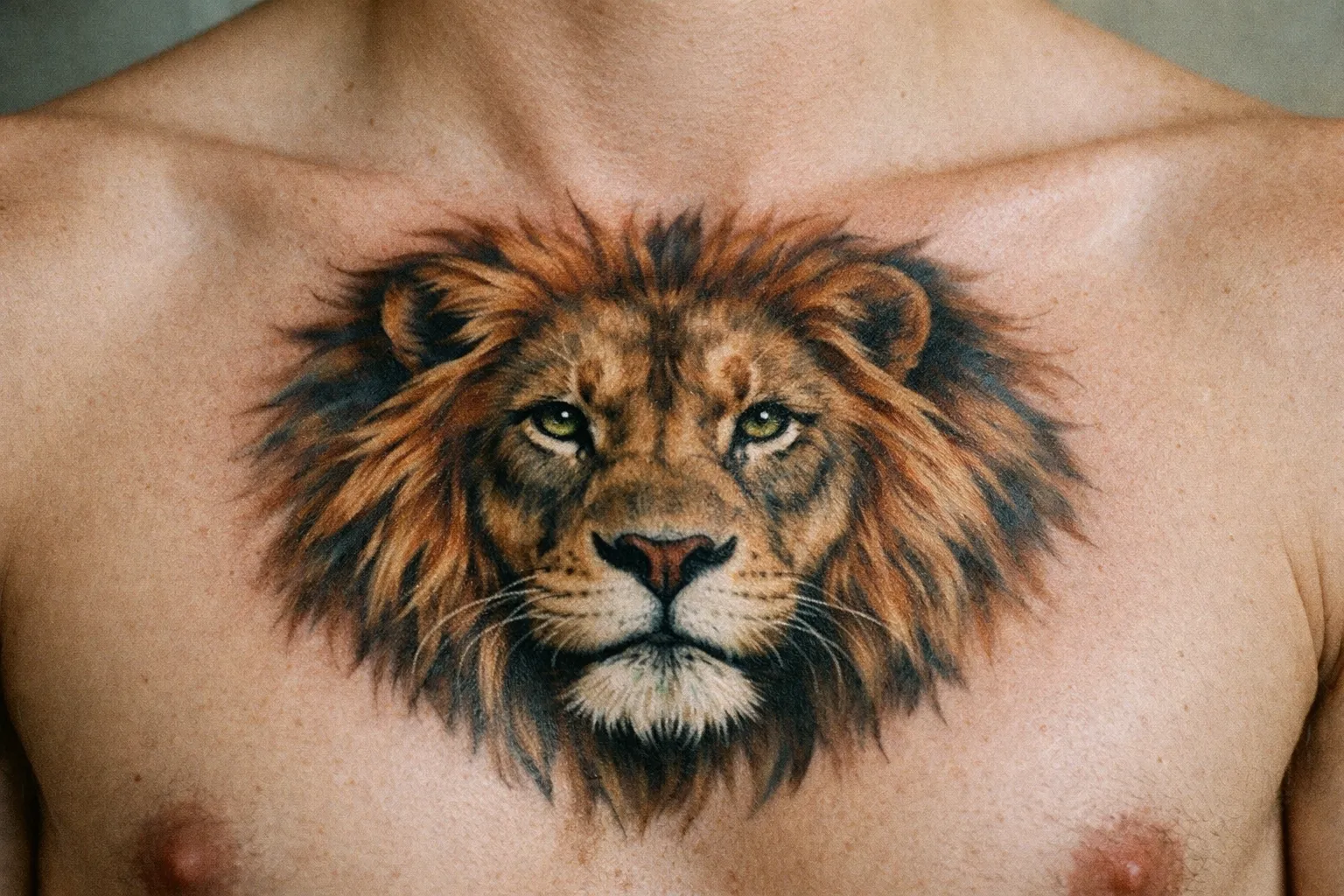
- Chest: 8-12 inches for a one-sided panel or full chest (4); suits roaring or forward-facing compositions, and the sternum gives an open-maw design its symmetry
- Upper arm/shoulder: 5-8 inches; the most versatile option, ages well, and hides easily under a sleeve
- Back: 10-18 inches or larger; room for a full-body lion or a large portrait with background elements
- Forearm: 5-7 inches; head-only or profile, with moderate detail to avoid healed blur
The roaring lion on the chest is one of the most requested compositions in this category. It works because the sternum lends symmetry to the open-maw design. The crown-plus-lion combination is also common here - see the crowned lion section above for how to keep the crown proportional.
Forearm Lion Tattoos - Sizing and Orientation
Outer forearm pieces run 5-7 inches (12-18 cm), inner forearm 4-6 inches (10-15 cm) (5). Orient the lion’s head upright when your arm hangs at rest, not when it’s extended on a table - otherwise the tattoo reads sideways in daily life.
Head-only or profile compositions work far better than full-body at this scale. And avoid a hyper-detailed mane on a narrow forearm. The lines merge as the tattoo heals, and the inner forearm near the wrist is more prone to blurring than broader, more stable areas. The issue is scale, not concept - go bigger or simplify the mane.
Lioness and Female Lion Designs
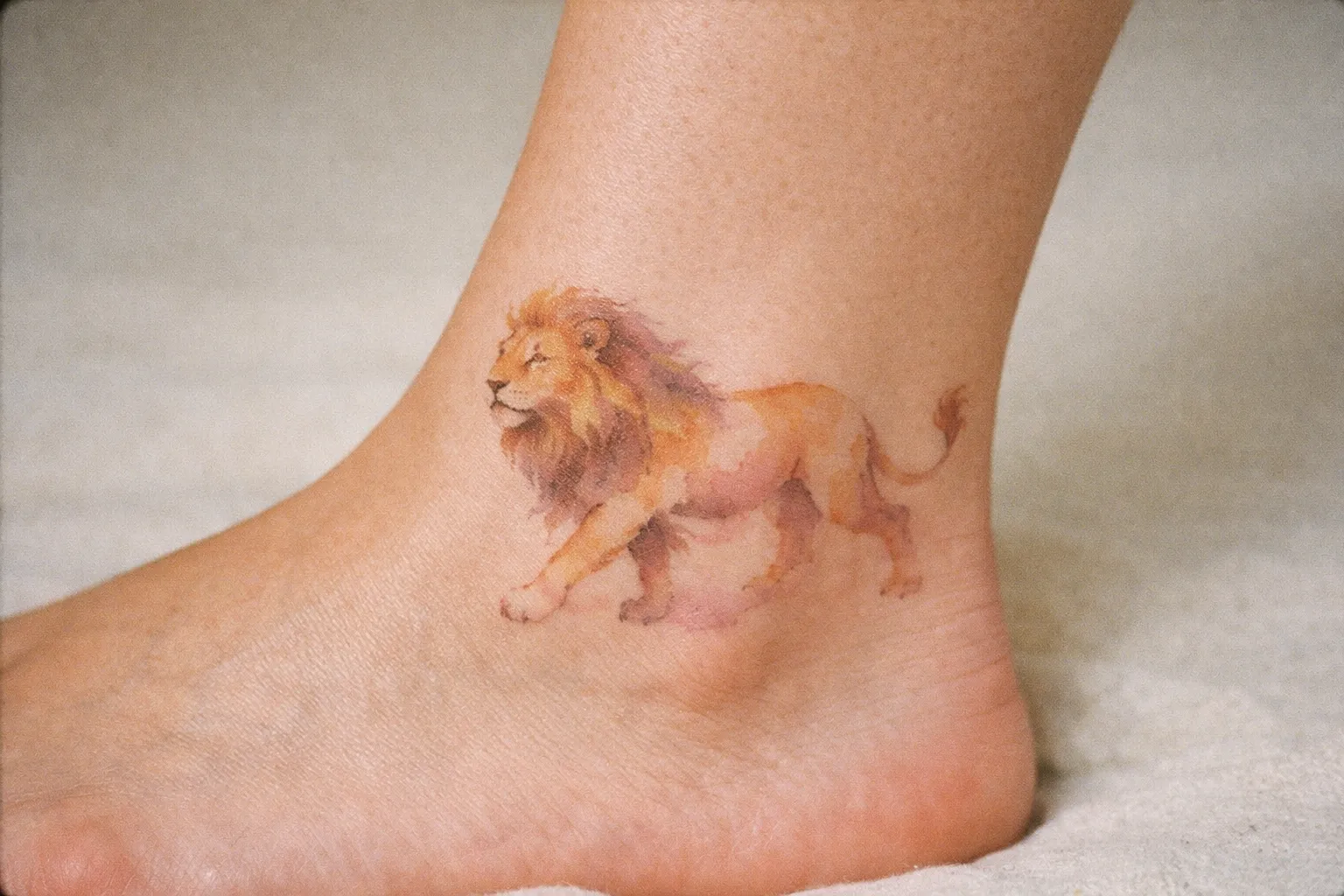
A lioness tattoo carries its own symbolism - motherhood, femininity, protection, independence, and grace under pressure - distinct from the “king” narrative of the male lion (7)(8). This is a fully separate design category, not a footnote to the men’s section.
Worth killing the outdated assumption up front: current design practice treats the lion as gender-neutral, and a female lion design is not a “softer” choice. It’s a different one. A lioness protecting cubs is arguably more intense imagery than a crowned male lion.
Certain design hallmarks shift the read: elegant linework, floral framing (wind-blown florals, roses, peonies), a softer expression, or a protective posture. Pairing with cubs strengthens the family-guardian reading. Pairing with florals emphasizes femininity and resilience. The elements do the work - the animal itself doesn’t dictate a gendered meaning.
Placements that suit lioness compositions:
- Ribcage: 6-10 inches; strong for curled or protective poses, higher pain than the thigh or upper arm
- Thigh: 6-12 inches (6); large canvas, ages well, good for multi-figure compositions
- Sternum: 5-8 inches; symmetrical, higher pain, works with floral framing along the torso curve
- Upper arm: 5-7 inches; versatile, lower pain
One flag for first-timers: the ribcage and sternum sit near bone with thin skin over them, which puts them higher on the pain scale than the thigh or upper arm. Both of those have more muscle and fat cushioning, which makes a real difference (7).
Lioness with Cubs - Family Protection Imagery
A lioness with cubs is the strongest visual shorthand for maternal protection and family loyalty. It works best as a larger composition on the thigh or back, where multiple figures have room to separate and read clearly. Cub placement changes the emotional weight - beside the lioness, beneath her, or sheltered under her body each land differently. Fine-line and blackwork both handle it well, and realism adds real emotional weight if your artist can actually do animal portraiture. Studies of lion symbolism in Hindu-Buddhist art frame the lion and lioness as guardians of family and Dharma, which backs up reading a mother-and-cubs piece as protective rather than sentimental.
Where to Place a Lion Tattoo - Sizing by Body Area
Lion tattoos generally need more canvas than simple symbols. A realistic mane, facial detail, and crown elements all push toward larger body areas. Here’s how the main placements size up, with pain flagged in relative terms.
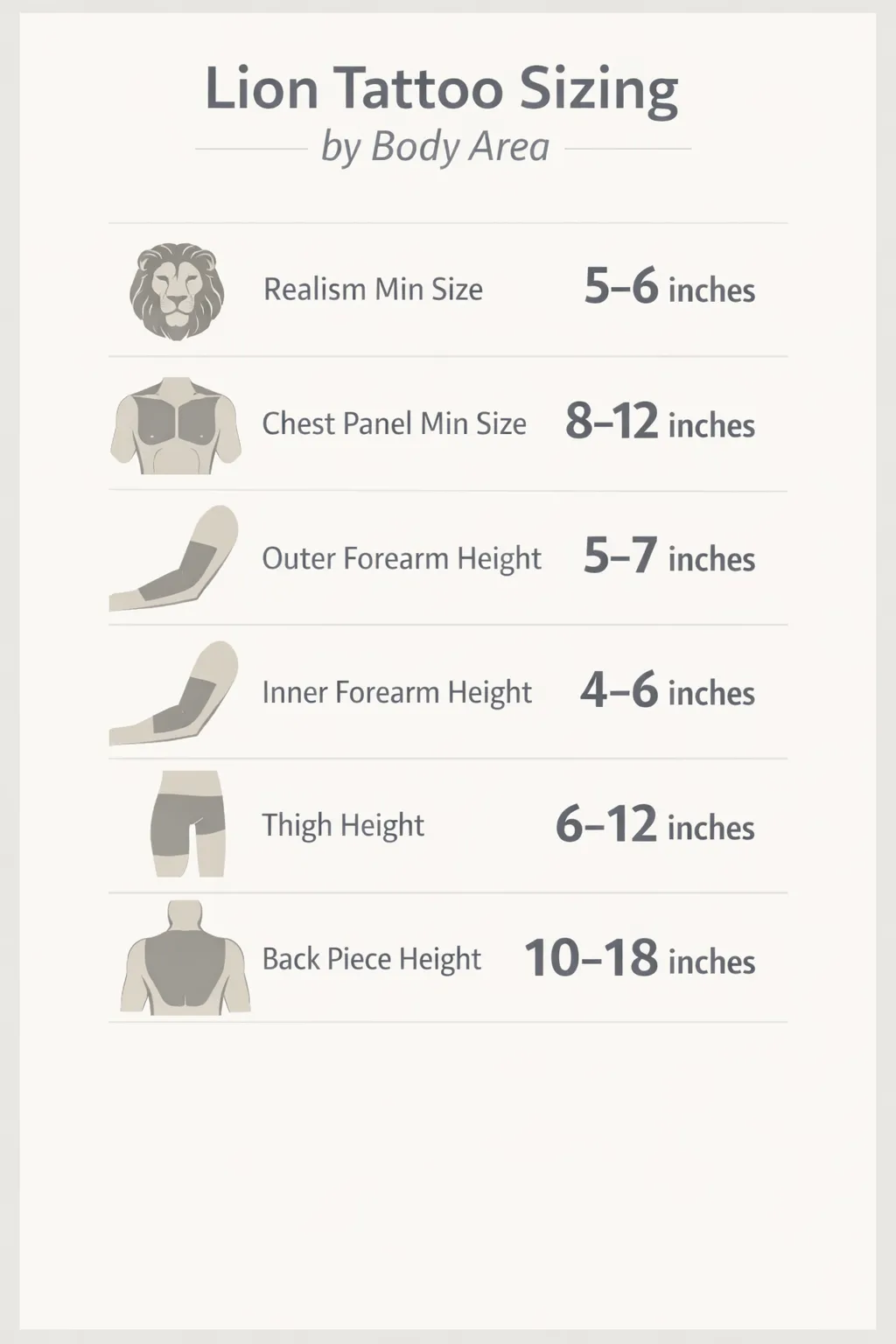 Sizing guidelines for lion tattoos by body area with minimum recommended sizes.
Chest and Sternum
A chest panel runs 8-12 inches (4) and suits roaring, forward-facing, or crowned compositions. A sternum piece sits at 5-8 inches, works best with symmetrical designs, and hurts more than a chest panel because of the bone underneath. Both keep the tattoo semi-private, visible mainly to people you choose.
Upper Arm and Shoulder
The upper arm and shoulder take 5-8 inches, and this is the most versatile placement going - ages well, hides easily. A shoulder cap suits a lion head with a mane that follows the curve of the deltoid. Pain is lower here than on the ribcage or sternum, since there’s more muscle and fewer nerve endings (7).
Forearm
Outer forearm runs 5-7 inches, inner forearm 4-6 inches. Stick to head-only or profile compositions - a full-body lion doesn’t work at this scale. This is a high-visibility spot, so think about how the design reads in professional settings before you commit.
Thigh and Calf
The thigh takes 6-12 inches - a large canvas that ages well and suits a lioness with cubs or a full-body composition. The calf works at 5-9 inches and is good for a roaring head or profile that follows the muscle curve naturally. Both are lower-pain areas with plenty of cushioning.
Back
A back piece runs 10-18 inches or larger and gives room for a full-body lion, a large portrait, or a lion integrated with landscape. Plan for multiple sessions if you’re going large-scale - shading and detail at that size take serious chair time.
One note on hands: hand tattoos are among the most prone to fading and blurring because of constant movement, frequent washing, and thin skin. Fine detail or portrait work won’t hold there. Only a simplified silhouette or a bold outline survives long-term.
Styles That Work Best for Lion Designs
Five styles carry lion designs well - black-and-grey realism, American traditional, neo-traditional, blackwork/geometric, and fine line - and your choice affects both how the piece reads and how long it holds up. Here’s how they compare:
Lion Tattoo Styles Comparison
| Black-and-Grey Realism | American Traditional | Neo-Traditional | Blackwork / Geometric | Fine Line | |
|---|---|---|---|---|---|
| Best Lion Type | Realistic portrait, lioness | Crowned lion, roaring lion | Crowned lion, lioness with florals | Geometric lion head, profile | Profile, minimalist lioness |
| Line Weight | Medium-heavy | Heavy | Bold | Heavy | Light-medium |
| Color or B&G | Black & grey | Limited palette | Color or B&G | Black only | B&G or minimal color |
| Minimum Size | 5-6 in | 4-5 in | 4-5 in | 3-5 in | 3-4 in |
| Longevity | High with aftercare | Very high | High | High | Moderate (spreads over time) |
Black-and-Grey Realism
Black-and-grey realism is the go-to for portrait-level detail and emotional weight, and the dominant choice for a realistic lion. It needs a high-contrast reference, because a mane contains both dark mass and bright highlight zones - flat tonal planning produces a flat tattoo. Give it at least 5 inches of height to hold eye and fur detail through healing and over time.
American Traditional
American traditional means thick black outlines and a limited saturated palette - black, gold, sometimes red or green. Two technical hallmarks define the style: those heavy outlines and the restricted color range. It works well for a crowned or roaring lion rendered as a bold, graphic piece. The common pitfall when artists do it badly is softening the outlines to chase a more “realistic” look, which undercuts the style’s main structural advantage. Those heavy lines resist spread far better than fine work, which is a big part of why American traditional holds up so well over decades.
Neo-Traditional
Neo-traditional pairs bold outlines with painterly shading and richer color gradients - a good middle ground between traditional and realism. It suits a lion with crown or a lioness with floral framing. The main risk is overcrowding. Keep the lion as the clear focal point and push the extra detail to background elements.
Fine Line and Geometric
Fine line and geometric keep the visual density low, which suits anyone who wants the symbolism without heavy saturation. Both work at smaller scales but need a slightly heavier line gauge than single-needle to hold over 5-10 years - very thin lines spread and soften in that window. A geometric lion head works well on the forearm, sternum, or ribcage at 3-5 inches.
Design Mistakes That Are Worth Avoiding
Most lion tattoo regret traces back to a handful of avoidable mistakes, and nearly all of them are about scale and clarity rather than concept.
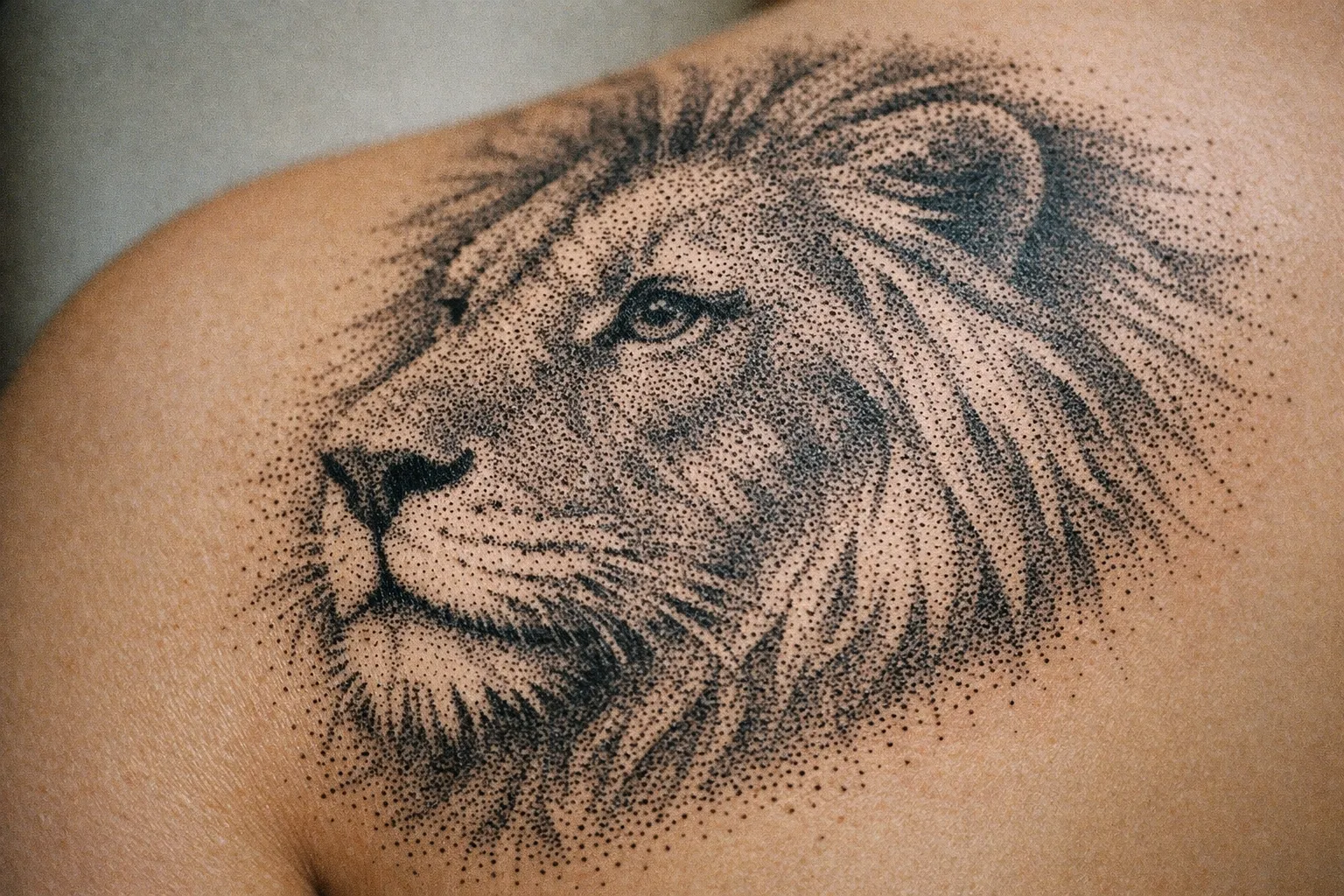
Underestimating size for realistic work. This is the single most common planning mistake I see in consultations. A detailed portrait under 3 inches heals muddy - small gradients and micro-lines merge, and the face loses definition faster than a simpler style would.
Overcrowding. Crowns plus roses plus cubs plus clocks plus scripture plus landscape in one piece kills readability at tattoo scale. Pick a clear focal point and separate your major motifs.
Expression mismatch. Choosing a roaring face when you actually mean calm leadership sets the body language against the meaning. Decide expression before anything else.
High detail on a narrow forearm. Hyper-detailed black-and-grey lines merge as they heal on a narrow, high-motion area. The issue is scale, not the idea - go bigger or simplify.
Low-resolution reference art. It leads to distorted muzzle proportions, awkward eye placement, and crown symmetry problems. Bring high-quality images.
Skipping aftercare on realism. Texture and contrast do the symbolic work in animal realism. Scabbing from over-dryness or softening from over-moisturizing flattens both.
Assuming lions are “only for men.” That framing limits your options for no reason - the design elements, not the animal, set the tone.
Planning - From Reference to Chair
Good planning is mostly about narrowing decisions before you sit down, so your artist can build a custom design instead of copying a single photo. Here’s the sequence that works.
How to Plan a Lion Tattoo Consultation
About 1 hourStep-by-step guide to prepare for your lion tattoo appointment
- 1
Decide your core meaning
Strength, family protection, royalty, or self-mastery; this determines pose and elements before anything else.
- 2
Choose expression
Roaring (assertive, outward) or calm (controlled, authoritative). Commit to this before selecting a style.
- 3
Pick your design type
Realistic portrait, crowned lion, lioness, geometric, or fine line.
- 4
Select placement and confirm minimum size
Discuss it with your artist. A realistic lion needs at least 5-6 inches; head-only forearm pieces work at 4-6 inches. What looks right on a phone screen is usually too small on skin.
- 5
Gather 2-5 reference images
Show pose, expression, style direction, and any companion elements like a crown, florals, or cubs. Include high-resolution animal photography for realism work.
- 6
Decide black-and-grey vs. color upfront
It affects reference selection, line density, and session length. Color realism usually runs longer or takes more sessions than comparable black-and-grey.
- 7
Book a consultation
Confirm the artist has your chosen style, especially animal realism, in their portfolio.
- 8
Plan aftercare before the appointment
Use fragrance-free soap, a light fragrance-free moisturizer, and sun-protective clothing for the healed tattoo. Surface healing runs weeks 1-2; full settling by weeks 2-4.
On healing: surface healing runs through weeks 1-2, when the outer skin closes and peels (2). Weeks 2-4 are continued settling as deeper layers repair and the final appearance stabilizes. Keep it clean and lightly moisturized, avoid soaking (baths, swimming) and direct sun through that whole window. Fine linework and portrait shading are most vulnerable here - and since texture and contrast carry the weight of animal realism, protecting both during healing is not optional.
Frequently Asked Questions
Frequently Asked Questions
- What does a lion tattoo symbolize?
- Courage, strength, power, leadership, royalty, protection, and wisdom are core meanings. Pose and elements shape the specific reading, with cultural layers adding depth.
- Is a lion tattoo good or bad?
- No negative symbolism exists. Tone depends on design choices like pose, expression, elements, and placement. The symbol is broadly positive across cultures.
- What is the most popular lion tattoo?
- Realistic black-and-grey lion portraits on chest or upper arm lead popularity. Crowned lions and lioness designs with florals follow closely.
- What are some lion tattoo designs to avoid?
- Avoid overcrowded compositions, hyper-detailed realism too small for placement, roaring expressions when calm strength is intended, and detailed hand tattoos.
- Does a lion tattoo have to mean masculinity?
- No. Lion tattoos are gender-neutral. Lioness designs emphasize femininity and strength. Design elements, not the animal, determine gendered reading.
- How big should a realistic lion tattoo be?
- Minimum 5-6 inches on the longest axis to maintain mane texture and eye detail. Chest, upper arm, back, and thigh accommodate this scale best.
- Can I add a crown to any lion design?
- Yes, if the crown is proportional and style-consistent. Fine-line crowns on bold traditional lions look mismatched. Without a crown often reads more grounded.
Getting It Right
Two decisions determine whether this tattoo holds up: expression and scale. Get the expression wrong and the body language fights the meaning every time someone looks at it. Get the scale wrong on a realistic lion and you’re looking at a muddy face within a few years - there’s no fixing a portrait that was too small to begin with.
The lion is one of the few subjects where a single choice - the eyes, the pose, the crown or its absence - flips the entire symbolic read. Match the expression to the meaning you actually want before you think about anything else. Then find an artist whose portfolio shows they can handle animal portraiture at the scale you’re planning. That’s the decision that determines whether this piece still reads clearly in ten years, not the symbolism.