White ink is the quiet trap in a hibiscus tattoo. It photographs beautifully on day one, but on most skin it settles into a raised, scar-looking line within a few years - so a white hibiscus is a very different bet than a red one, which reads as passion and holds its color. At roughly $500 for three hours, this is a piece to plan for year ten, not the reveal. Here’s how the color you pick drives both meaning and aging, and how to keep one reading clean.
What a Hibiscus Tattoo Actually Means
The core symbolism is beauty, femininity, love, and success, with strong ties to delicacy and the bloom-fast-fade-fast nature of the flower itself (1). In Hawaiian culture, hibiscus carries the weight of royalty, power, and respect, which is why you’ll see it built into so many island designs and family pieces (2).
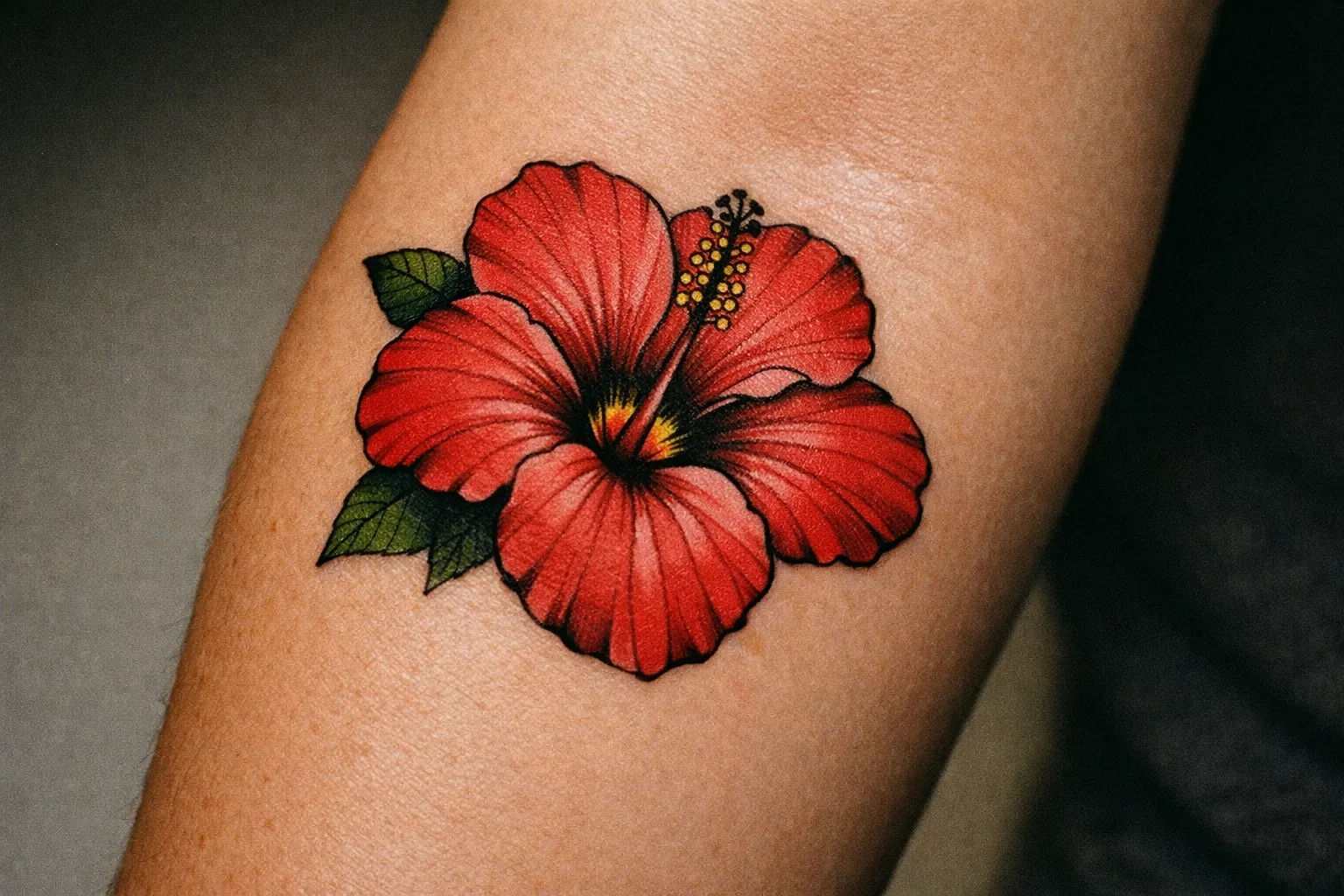
A few things worth flagging before you commit:
- The flower has no single fixed meaning across cultures. In Malay tradition the red hibiscus (bunga raya) is a national symbol tied to courage. In Mandarin contexts it leans toward fame and wealth. In modern Western tattoo culture it usually reads as “tropical, feminine, vacation, summer.”
- Color carries more meaning weight than the flower itself. A yellow hibiscus and a red hibiscus tell completely different stories on the same arm.
- If you want the Hawaiian reading specifically, make sure your artist knows - otherwise you’ll get the generic “pretty flower” treatment, which is fine but not what you asked for.
I’ve had clients come in with a saved pin, no cultural context, and a vague sense that hibiscus “feels Hawaiian.” Sometimes that’s enough. But if the cultural specificity matters to you, say so at the consult - not after the stencil is already on your skin.
Color Meanings, Mapped to Real Design Decisions
Color is where most clients spend the least time thinking and end up regretting it most. Here’s the working breakdown most artists use:
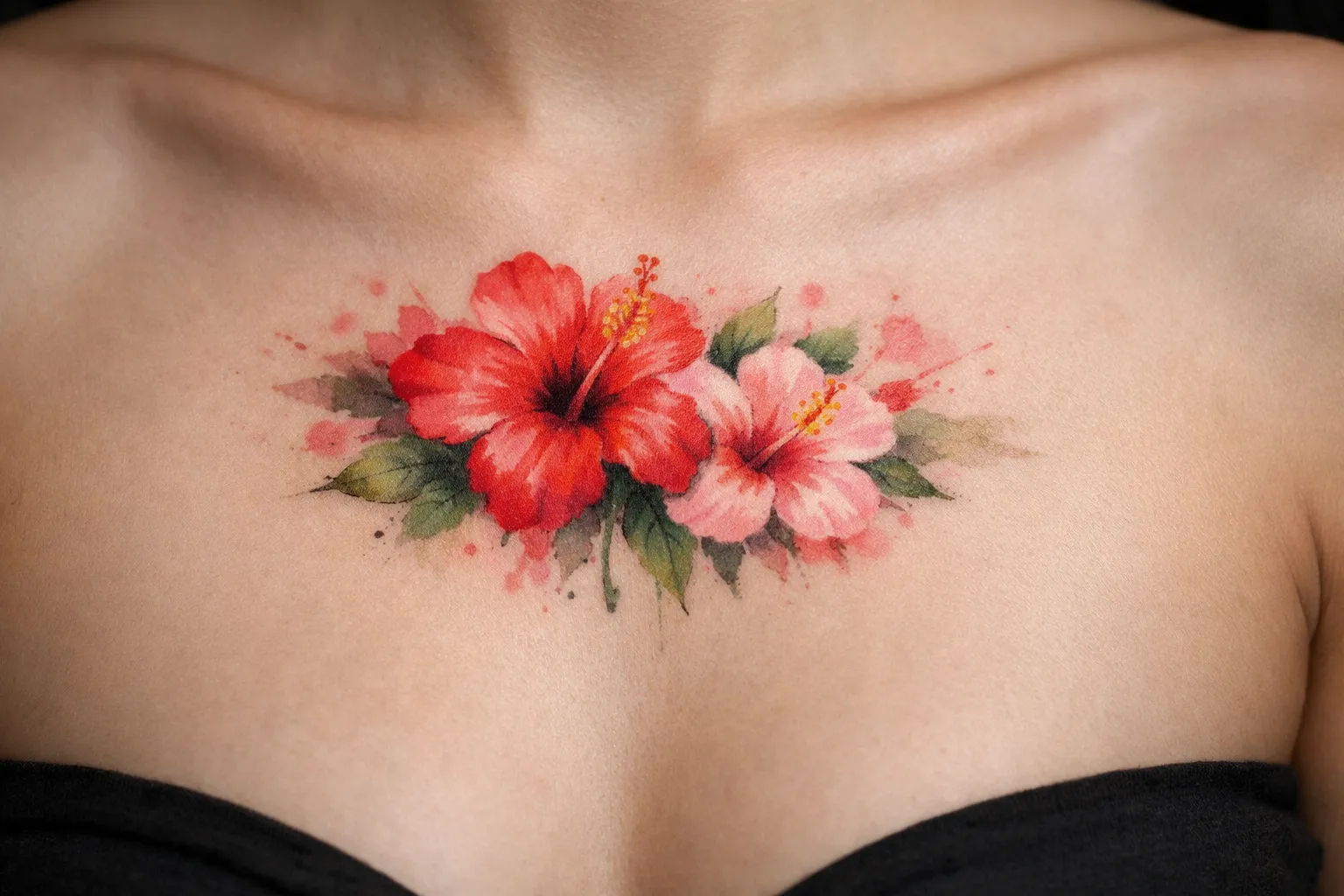
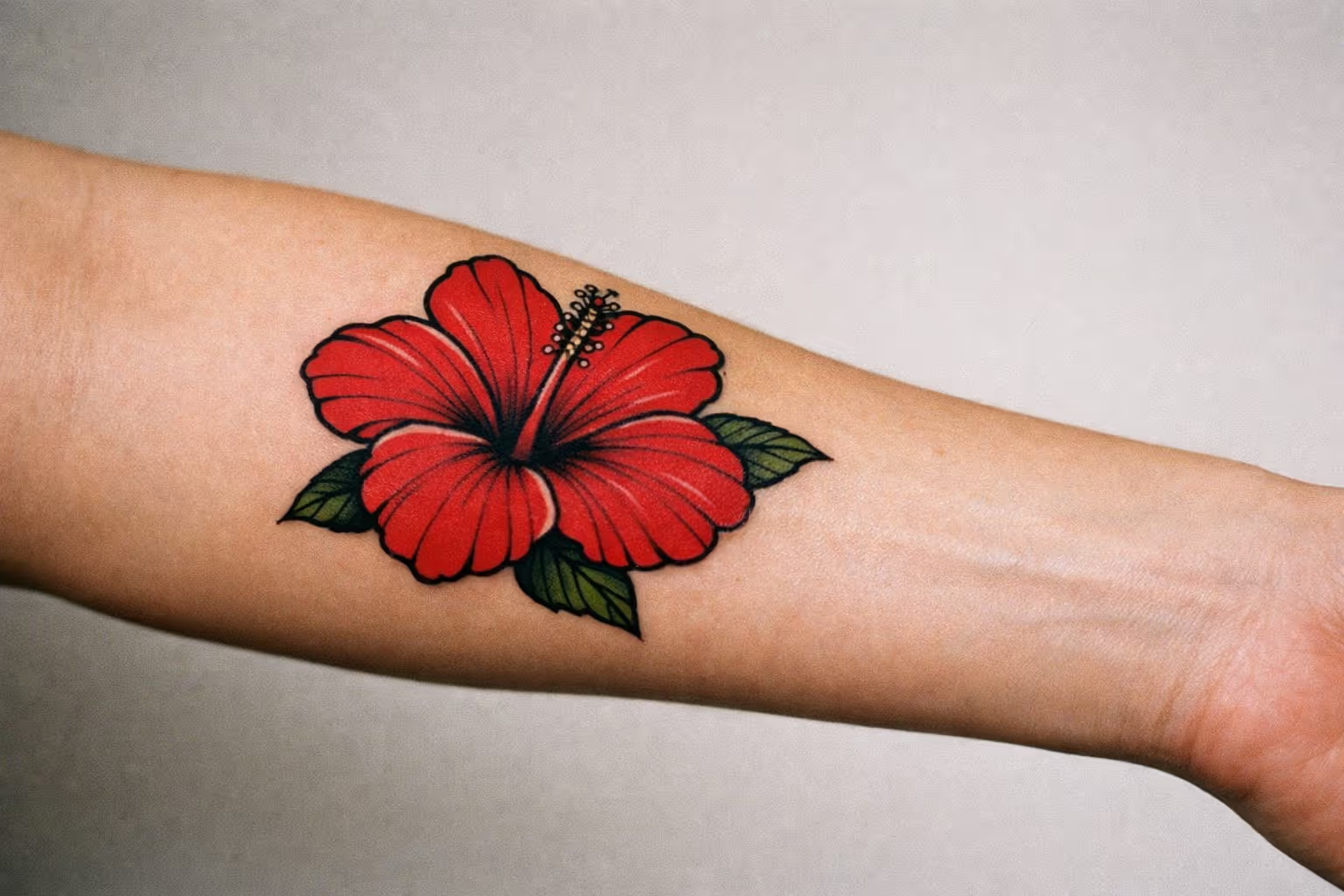
- Red hibiscus - passion, love, romance. Often chosen as an alternative to a partner’s name. Also reads as courage and national pride in Malay contexts.
- Pink hibiscus - friendship, gentle affection, softer femininity. Common for matching tattoos between close friends or sisters.
- Yellow hibiscus - joy, optimism, good luck, vitality. The state flower of Hawaii, so it carries extra weight on island-themed pieces.
- White hibiscus - purity, innocence, quiet strength. Hardest to execute well - white ink fades fast and often reads as scarred skin within 2-3 years. Better used as a highlight than a full color.
- Blue hibiscus - freedom, independence, serenity. Not found in nature in true blue, so this is purely a symbolic color choice.
- Orange hibiscus - vitality, hospitality, warmth, summer energy.
- Purple hibiscus - royalty, mystique, spiritual depth.
A practical tip I give clients who want matched pieces: use the same linework and shape but different colors - red for one, pink for the other - so the symbolism is paired without being identical. It photographs well and the pieces still read as a set.
Small Hibiscus: What Works at 0.5-2 Inches
A hibiscus small enough to fit behind the ear, on a wrist, or on the inner ankle has to be designed for that scale from the start. You cannot shrink a detailed 5-inch flower down to 1 inch and expect it to hold. I’ve seen it tried. It doesn’t work.
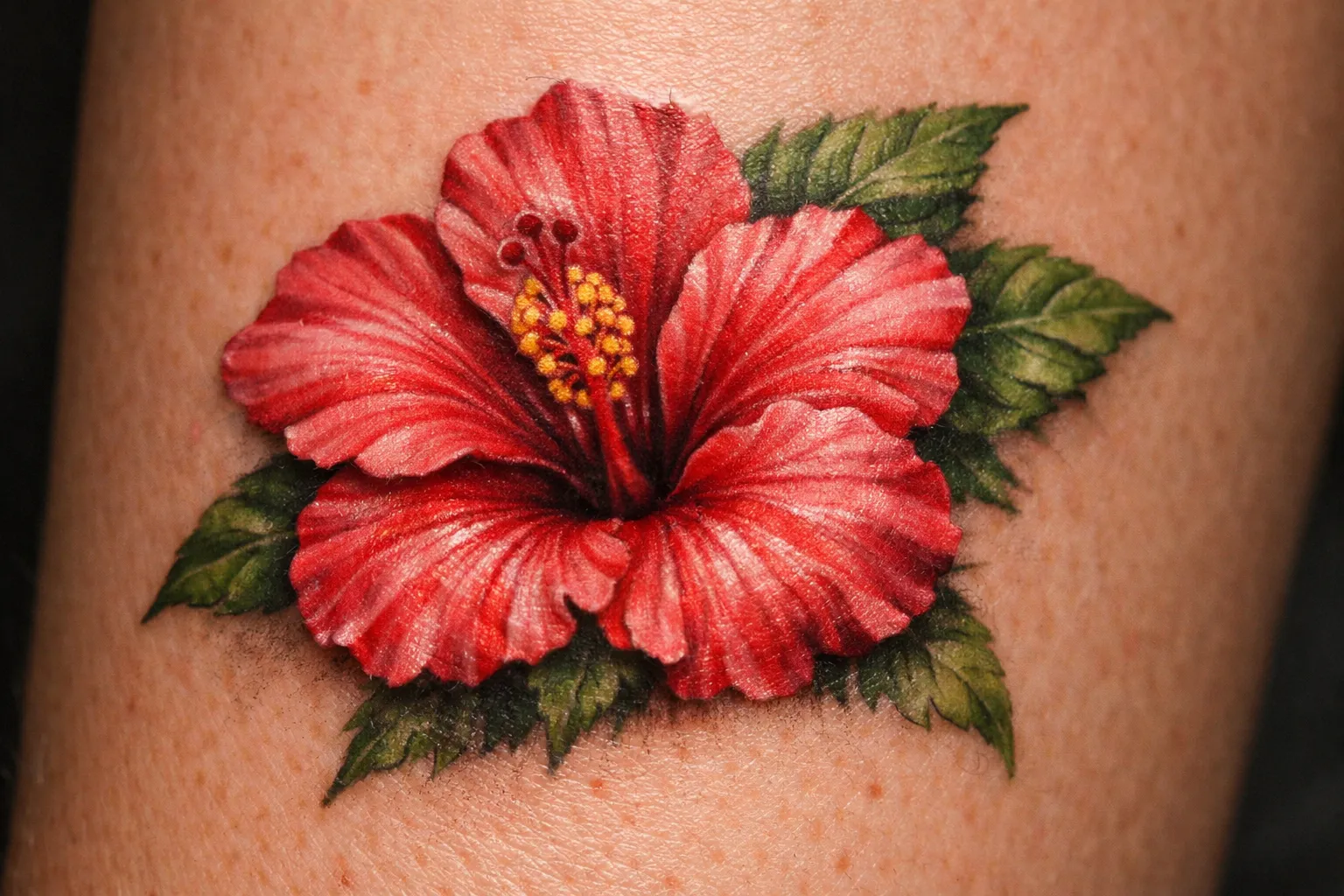
What actually holds at small sizes:
- Single-line or fine-line outline (no shading, no color, or one flat color)
- Black silhouette with a single negative-space accent
- Two-tone minimal - outline plus one wash of color in the center
What does not hold:
- Full-color realism under 2 inches. The petal gradients blur within 3-5 years.
- Tight petal vein detail under 1.5 inches. Lines merge as ink spreads slightly under the skin - this is normal aging, not a bad tattoo, but the detail still collapses.
- White-ink-only designs at any small size on most skin tones. They vanish.
Size and pricing for small pieces in a mid-range US shop:
- Outline-only, 1-2 in: $80-$150
- Small with one color, 1-2 in: $120-$250
- Most shops have a $80-$120 minimum regardless of size, so a tiny tattoo doesn’t actually save you money below a certain threshold.
Best small-hibiscus placements: behind the ear, inner wrist, outer ankle, back of upper arm, sternum. Avoid fingers, sides of feet, and palms unless you accept aggressive fade and are okay returning for touch-ups every few years.
Placement: Where Hibiscus Sits Well on the Body
Placement matters more than people realize because the hibiscus is a radial flower - it reads best on a surface that lets the petals fan out evenly. Wrap it around a curve that fights the shape and the whole design looks pinched.
- Shoulder cap (3-5 in) - the curve flatters the radial petal layout and gives a subtle 3D effect. Low-to-mid pain (shoulder beats ribs by a long shot).
- Outer forearm (3-7 in) - flat canvas, ages well, visible when you want it and hidden under a sleeve when you don’t. Probably the most forgiving placement I work with.
- Thigh (4-8 in) - the best spot for a large piece or a multi-flower cluster with palm leaves, turtles, or waves. Skin stays out of the sun, so color holds longer.
- Calf (3-6 in) - solid for medium pieces, decent pain level.
- Ankle (1-2 in) - great for small designs, but pain runs higher than people expect. Ankle is worse than forearm because the skin sits right on bone.
- Ribs or spine - only if you want a large dramatic piece and can sit through it. Ribs are harder than spine, both are harder than ankle, all of them are harder than forearm.
- Behind the ear or nape - perfect for a tiny silhouette, but the area sees a lot of friction from hair and collars during healing.
Spots I’d push back on: inner fingers, side of foot, bra-strap line. High friction, high fade, frequent touch-ups every 3-5 years.
Styles That Suit the Hibiscus
Two technical hallmarks define each style - and one common pitfall when the style is done badly.
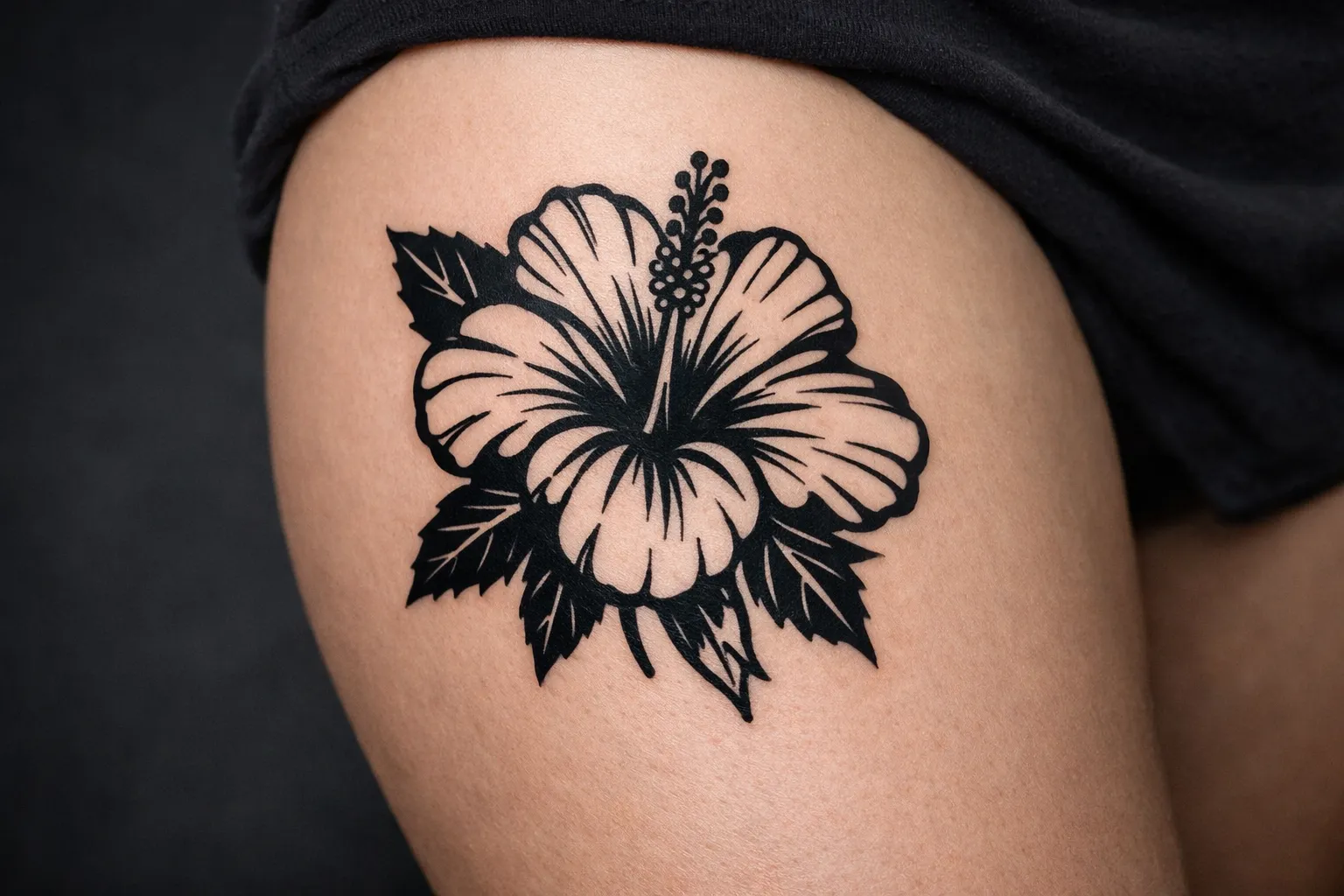
Fine-line / minimal
- Hallmarks: single-needle work, no shading, clean continuous outline.
- Pitfall: artists who don’t specialize in fine line often pack the ink too hard, causing blowouts (ink spreading under the skin into a fuzzy halo) within weeks.
Neo-traditional
- Hallmarks: bold black outlines, saturated limited color palette, slight stylization of petal shapes.
- Pitfall: weak outlines that don’t hold. Neo-traditional ages well only when the line weight is committed - half-hearted outlines blur into mush.
Color realism
- Hallmarks: smooth color gradients, soft edges, photo-reference accuracy on petal veins and stamens.
- Pitfall: undersized pieces. Realism needs at least 4 inches to hold its detail long-term. Smaller than that, the detail collapses.
Watercolor
- Hallmarks: no hard outlines, washes of blended color, splatter effects.
- Pitfall: the biggest one in my experience. Watercolor tattoos without any black anchor lines fade unevenly and lose shape within 5-7 years. Ask for at least a soft underlying linework structure even if it’s barely visible - it makes a real difference at the 5-year mark.
Polynesian-influenced / tribal
- Hallmarks: black geometric patterns combined with the floral element, designed to follow body contours.
- Pitfall: this is the one to be careful with. Traditional Polynesian patterns carry specific genealogical and cultural meaning. If you’re not Pacific Islander, get this design from an artist with cultural ties to the tradition - not a flash sheet copy. Pacific Islander tattoo artists have been increasingly vocal about casual appropriation of these patterns around floral motifs, and for good reason.
Hibiscus Combined With Other Elements
Hibiscus rarely lives alone. Common pairings and what they add:
- Hibiscus + turtle (honu) - longevity, protection, family. Strong in Hawaiian designs.
- Hibiscus + hummingbird - joy, energy, presence. The hummingbird brings movement to a static flower.
- Hibiscus + palm leaves - pure tropical aesthetic, vacation-coded.
- Hibiscus + waves - life cycles, resilience. Works well as a thigh or back piece.
- Hibiscus + mandala - meditative, balanced. The radial nature of both shapes plays nicely together. If you’re drawn to geometric spiritual symbolism, a sacred geometry tattoo explores similar territory with Flower of Life and Metatron’s Cube patterns.
- Hibiscus + name or date - memorial pieces. Use a smaller hibiscus and let the script breathe.
Three elements is usually the ceiling before a piece starts to look cluttered and lose its center of gravity. I’ve drawn four-element hibiscus compositions that worked, but they needed a lot of negative space to keep the flower readable. When in doubt, simplify.
How Big Should a $500 Tattoo Be?
Most US shops charge $120-$180 per hour, with major-city shops (NYC, LA, SF) running $200-$300/hr.
At $150/hr, $500 buys you roughly 3 hours of work. That translates to:
- One 5-7 inch detailed color hibiscus on the shoulder, forearm, or calf, with shading and a single accent element (a leaf or small bird), or
- A cluster of 2-3 smaller hibiscus (2-3 inches each) with simplified color, or
- One highly detailed 4-inch realism piece with full saturation and background shading.
In a major city, the same $500 might only get you 2 hours of chair time - so closer to a 3-4 inch piece with color. Ask for the time estimate upfront and confirm whether the price includes any necessary second-session touch-ups (some artists include one free touch-up at 6-8 weeks, others charge separately).
A $500 budget is not enough for a half-sleeve or a multi-flower thigh piece. Those run $800-$1,500+ and usually take 2 sessions.
Tattoos to Avoid (When You’re Going Hibiscus)
The regret patterns I see most often with hibiscus specifically:
- Tiny full-color hibiscus under 1 inch. Looks great fresh, blurs into a pink-and-green smudge within 3-5 years.
- White-ink-only designs. They almost always heal as faintly scarred skin rather than the elegant ghost-flower you saw on Pinterest.
- Copying a specific artist’s pin verbatim. Most professional artists won’t replicate another artist’s signature design - it’s an industry ethics line. Use pins as direction, not as the final stencil.
- Polynesian patterns around the flower without cultural context. Covered above, but worth repeating.
- Hibiscus on high-friction zones (inner fingers, side of foot, lip area) without accepting you’ll need touch-ups every 3-5 years.
- Matching tattoos with anyone you’ve known under six months. True for any tattoo, not just hibiscus - but the impulse vacation-tattoo version of hibiscus is a particularly common regret.
From Pinterest Pin to Real Tattoo: The Planning Steps
Most clients arrive with a saved pin and not much else. Here’s how to turn that into a clean brief:
Planning Your Hibiscus Tattoo from Pinterest Pin to Real Tattoo
2 hoursStep-by-step process to prepare your references, size, placement, and consultation.
- 1
Save Multiple References
Collect 5-10 pins showing different aspects you like: shape, color, line weight. This helps your artist understand your vision.
- 2
Note What You Don't Want
Identify dislikes in each reference (e.g., color, outline style) to avoid confusion and save time.
- 3
Decide Placement and Size
Measure and mark the intended tattoo area at home to bring accurate info to your consult.
- 4
Try a Temporary Tattoo
Test the design's visibility and comfort for 7-10 days using temporary hibiscus tattoo sheets.
- 5
Book a Consultation
Bring your references, size, and color symbolism choices. Expect a $0-$50 fee, often deducted from the final price.
- 6
Check Healed Photos
Ask the artist for healed tattoo photos (6+ months) to verify line clarity and color retention.
Aftercare: Day 1 Through Week 4
Color hibiscus tattoos - especially reds and pinks - lose pigment faster than blackwork if aftercare is sloppy. Sun is the biggest enemy.
- Day 1-3: Keep the bandage on as long as your artist instructed (usually 2-24 hours, longer for second-skin films). Wash gently with fragrance-free cleanser and lukewarm water 2-3 times a day. Pat dry, do not rub. Apply a thin layer of fragrance-free moisturizer or a petroleum-free aftercare balm.
- Week 1: Expect mild swelling, redness, and oozing of plasma/ink in the first 2-3 days. Continue washing twice daily, moisturizing 3-4 times daily. No swimming, no soaking, no gym sweat sessions if you can avoid it.
- Week 2-4: Peeling and itching phase. Do not scratch. The flaky bits coming off look like color is lifting - they aren’t, the pigment underneath is fine. Switch to lighter moisturizer if the area feels greasy. Still no pool, ocean, or hot tub.
- Week 4-6: Outer skin is healed but deeper layers are still settling. Sun-protective clothing or SPF 30+ on the area every time it’s exposed - UV is what bleaches red and pink hibiscus pigment the fastest. For a full breakdown of how UV damages ink and when to apply sunscreen, see the guide on sun protection for tattoo care.
Plan to wait 4-6 weeks before booking a touch-up if any patches look light. Reds especially often need a second pass.
Frequently Asked Questions
- Can I get a white hibiscus tattoo if I want a subtle design?
- White ink fades quickly and often looks like scarred skin within 2-3 years, especially on small tattoos. It's better used as a highlight in larger pieces rather than a standalone color.
- Is it okay to combine Polynesian patterns with hibiscus if I'm not Pacific Islander?
- No. Polynesian patterns carry specific cultural meanings and genealogical significance. Using them without cultural ties risks appropriation and disrespect. Always consult an artist with cultural connection if you want this style.
- How can I reduce fading on a hibiscus tattoo over time?
- Avoid high-friction placements, follow strict aftercare including fragrance-free moisturizers, and protect the tattoo from sun exposure with sun-protective clothing or SPF 30+ sunscreen.
- What size should I realistically choose for a color realism hibiscus tattoo?
- Color realism requires at least 4 inches to hold detail long-term. Smaller than that, the gradients and petal veins will blur and lose clarity.
- Are temporary hibiscus tattoos a good way to test placement?
- Yes. Temporary hibiscus sheets lasting 7-10 days help you see how the design looks and feels in the chosen spot before committing to a permanent tattoo.
- Why do some hibiscus tattoos look blurry or smudged after a few years?
- Small full-color hibiscus tattoos under 1 inch often blur as ink spreads under the skin and colors fade, especially on high-friction areas or with poor aftercare.
What Actually Matters Before You Book
Three things decide whether your hibiscus tattoo looks good in ten years: size honest enough to hold the detail you want, placement that suits a radial flower, and an artist whose healed work - not just fresh photos - you’ve actually looked at.
Pick the color for what it means to you, not just what looks good in the chair. Budget realistically - a $500 piece is a 5-7 inch shoulder or forearm, not a thigh sleeve. And if you’re nervous about placement, run a temporary version in the exact spot for a week before committing. The flower will still be there when you’re sure.