A cactus tattoo says something specific depending on the species you pick - resilience, protection, endurance, a desert you have history with - and that’s a choice most people skip straight past. It’s also one of the trickier motifs to age well: get the linework wrong and it merges into a dark shape within a few years. Here’s what the different cactus designs mean, the styles that survive, and prices from $80.
What a Cactus Tattoo Actually Means
A cactus tattoo is one of those motifs that works at almost any size, but it ages very differently depending on how you build it. A thin, single-needle saguaro on your wrist and a full-color desert scene on your forearm are two completely different commitments - in cost, in healing, and in how they’ll look five years out. This guide walks through what cactus tattoos actually mean, the styles that hold up over time, realistic prices, placement and pain, and the questions people ask before booking. You’ll find specifics on cactus flower Tattoo options, saguaro cactus Tattoo placements, minimalist cactus Tattoo linework, and cactus Tattoo designs by budget and skill level.
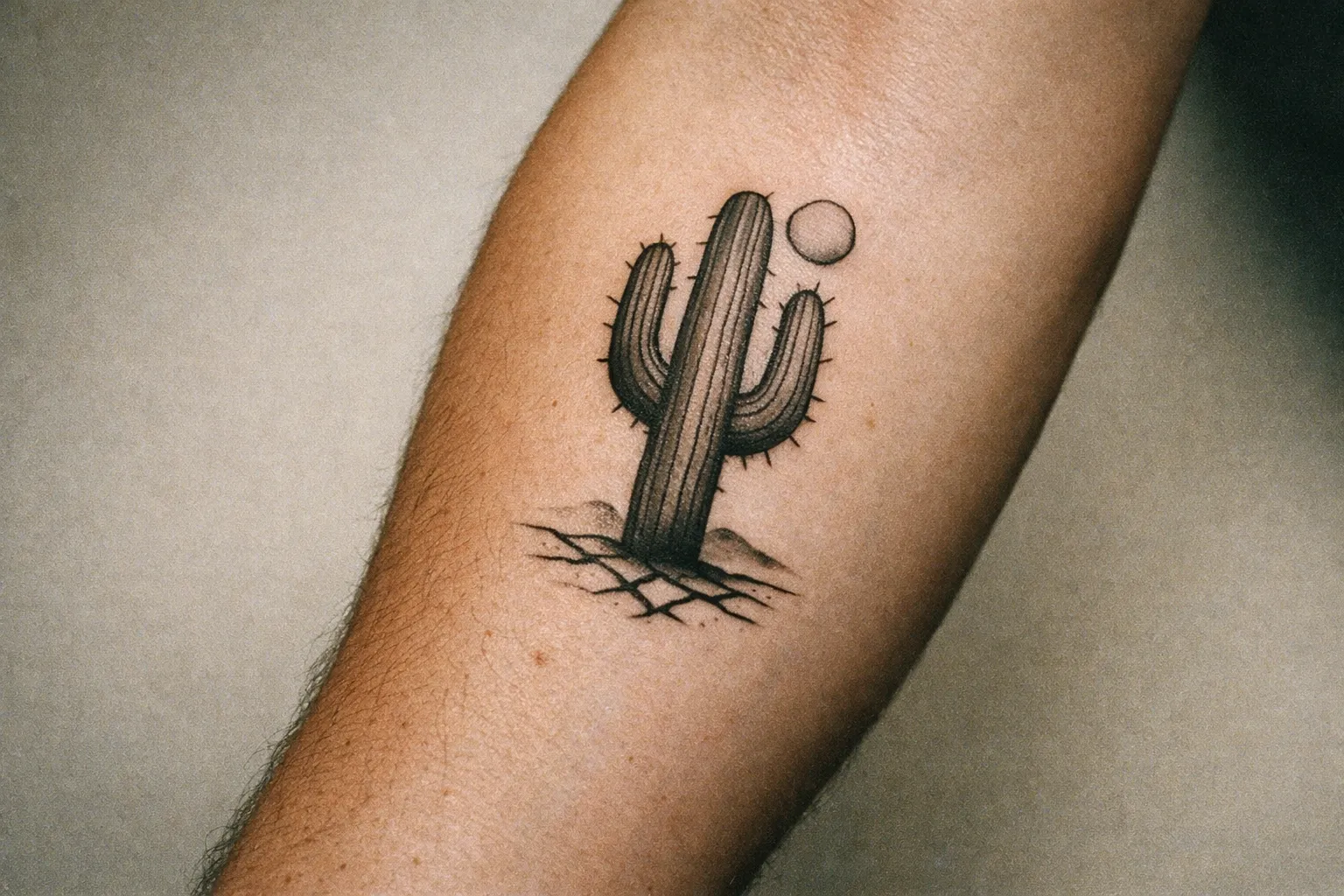
A cactus survives where most plants die - scarce water, brutal sun, temperature swings between scorching days and cold nights. That’s the source of nearly every meaning attached to the motif: resilience, endurance, adaptability, and protection. The spines read as boundaries, keeping people at a distance, while the plant itself stores water and stays alive. A common reading is “hard exterior, soft interior,” which is why people drawn to this design often describe themselves as guarded but not cold.
The meaning shifts depending on the species you choose, and this matters more than most people realize:
- Saguaro: Strongly tied to the Sonoran Desert and Arizona identity. It carries road-trip nostalgia and a Southwest sense of place more than abstract symbolism.
- Prickly pear: Associated with persistence and practicality - it grows almost anywhere and produces edible fruit.
- Cactus flower: Adds meanings of late blooming, beauty in harsh conditions, and feminine strength (3). The bloom is brief and unexpected, which is the whole point.
One honest caveat: a cactus flower tattoo reads as romantic or feminine in a lot of Western tattoo contexts. If that’s not the message you want, lean toward a bare saguaro or a geometric form instead. The plant you pick says more than the style you wrap around it.
✓ Pros
- Symbolizes resilience and adaptability with species-specific meanings
- Works well in various sizes and styles, from minimalist to full-color scenes
- Blackwork and geometric styles age better over time
- Multiple placement options depending on size and pain tolerance
✗ Cons
- Fine-line minimalist tattoos on high-movement areas like wrist fade quickly
- Color fades faster than black ink, especially without UV protection
- Large desert scenes require multiple long sessions and higher budgets
- Placement on curved areas can distort vertical cactus shapes
The Saguaro Cactus Tattoo Silhouette of the Southwest
The saguaro is the tall, armed cactus you picture when you think “desert.” Its vertical silhouette is instantly recognizable, which makes it a strong central subject - but that same verticality creates a placement trap. Wrapped around a curved area like the wrist, those long straight lines warp and look bent. You want flat real estate.
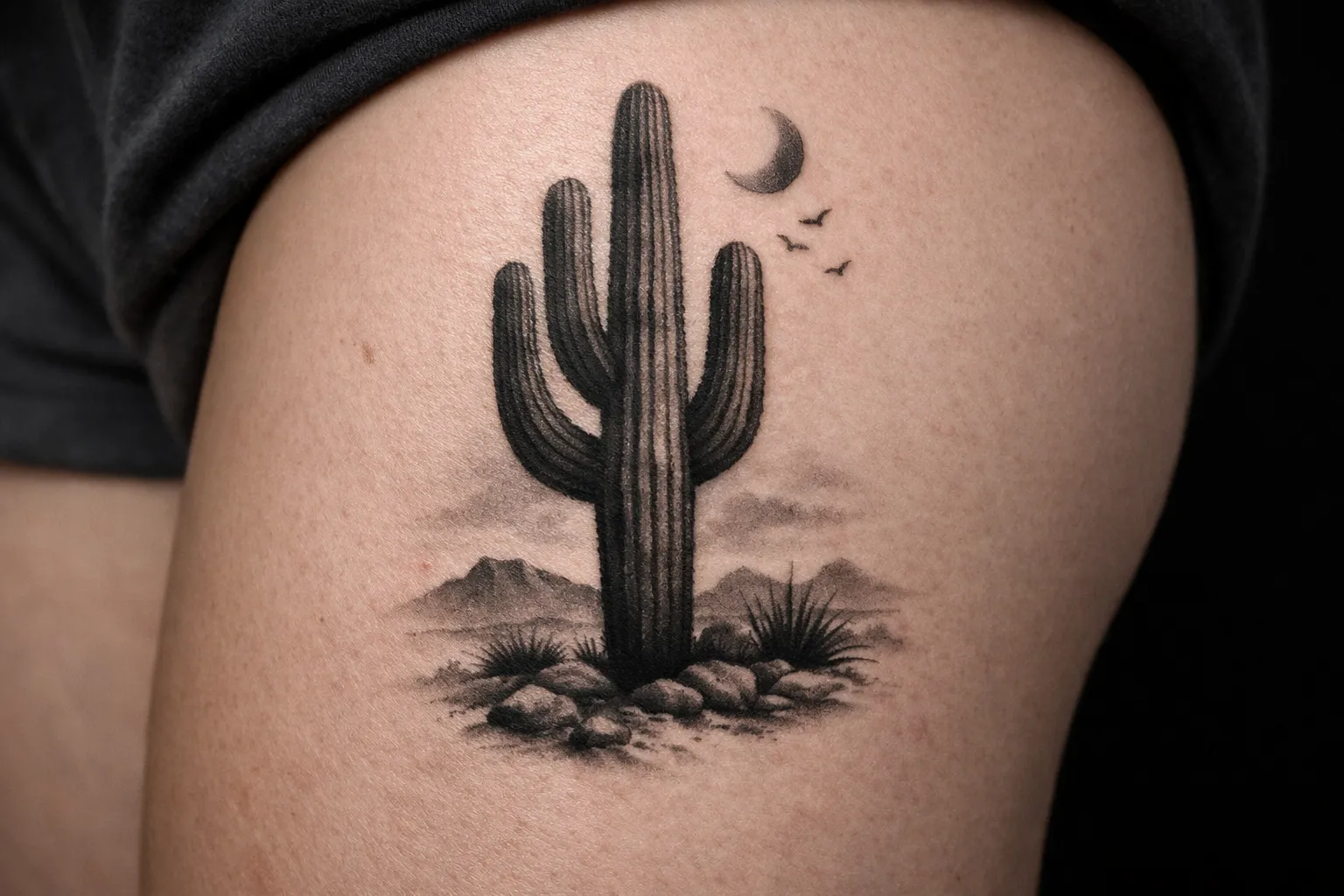
Best placements: forearm (running vertically with the limb), outer calf, or the spine for a larger single piece. A saguaro that follows the natural line of the forearm sits at roughly 4 to 6 inches (10-15 cm) and usually takes one 2 to 4 hour session.
Saguaros rarely travel alone in good designs. I’ve seen too many single-cactus forearm pieces that just float there with nothing around them - they look unfinished within a year. Artists who know desert imagery fill the surrounding space with smaller cacti, rocks, and a sun or moon, background work that adds 1 to 3 hours but stops the composition from reading like a sticker (4). If you want color, a sunset gradient behind the silhouette is the most-requested version right now (5). Just know that the oranges and pinks fade faster than the black outline, so the silhouette will outlive the sky behind it.
Blooming Beauty in Harsh Conditions
A cactus flower tattoo puts the bloom front and center: a brief, bright flower on top of a spiny, unglamorous plant. The contrast is the message - beauty showing up in a place that shouldn’t support it (6). Like a daffodil tattoo that leans into new beginnings, the cactus flower rewards those who look for meaning in unexpected resilience.
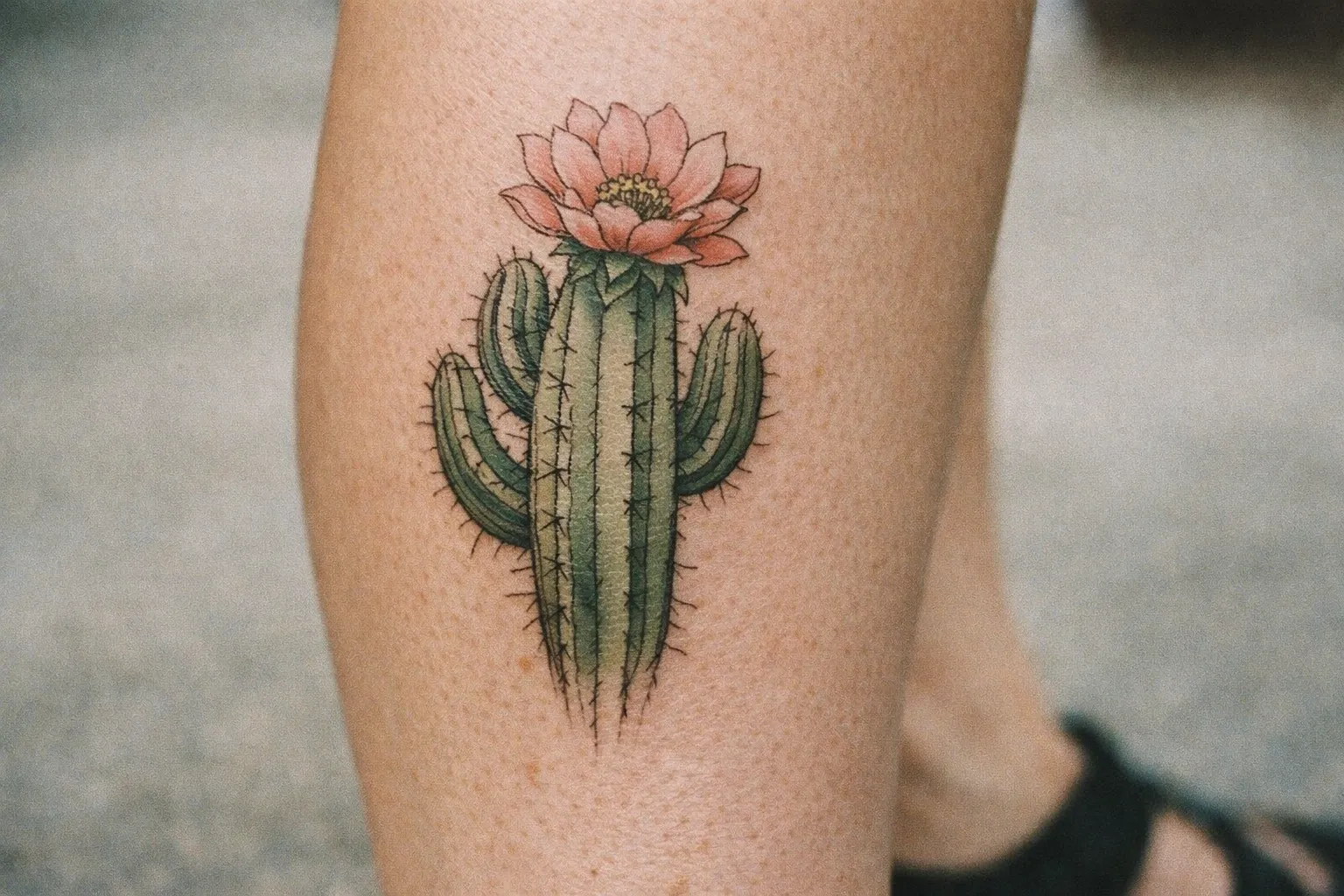
This design suits watercolor, neo-traditional, and illustrative styles. Placement-wise it favors flowing real estate: upper arm, outer thigh, or the ribs, where a stem can curve naturally. Ribs and sternum deliver the most dramatic composition but also the most pain - ribcage > thigh > upper arm in terms of how rough the session feels, since there’s almost no padding over bone.
A technical note worth taking seriously: skip the full rainbow palette. A limited palette of two or three colors holds up better, shortens your session by 30 to 60 minutes, and puts less trauma into the skin. Greens and yellows in particular fade noticeably over 3 to 5 years without UV protection, so a black-heavy linework base with selective color accents will look sharper a decade in than an all-color piece. Expect $250 to $700 depending on size and how much color goes in.
Minimalist Style: Clean Lines That Last
A minimalist cactus tattoo strips the plant down to a thin black outline - no shading, no color, often a single potted cactus or a bare saguaro silhouette. It’s the most popular entry point for first tattoos, and for good reason: quick, affordable, and low-regret.
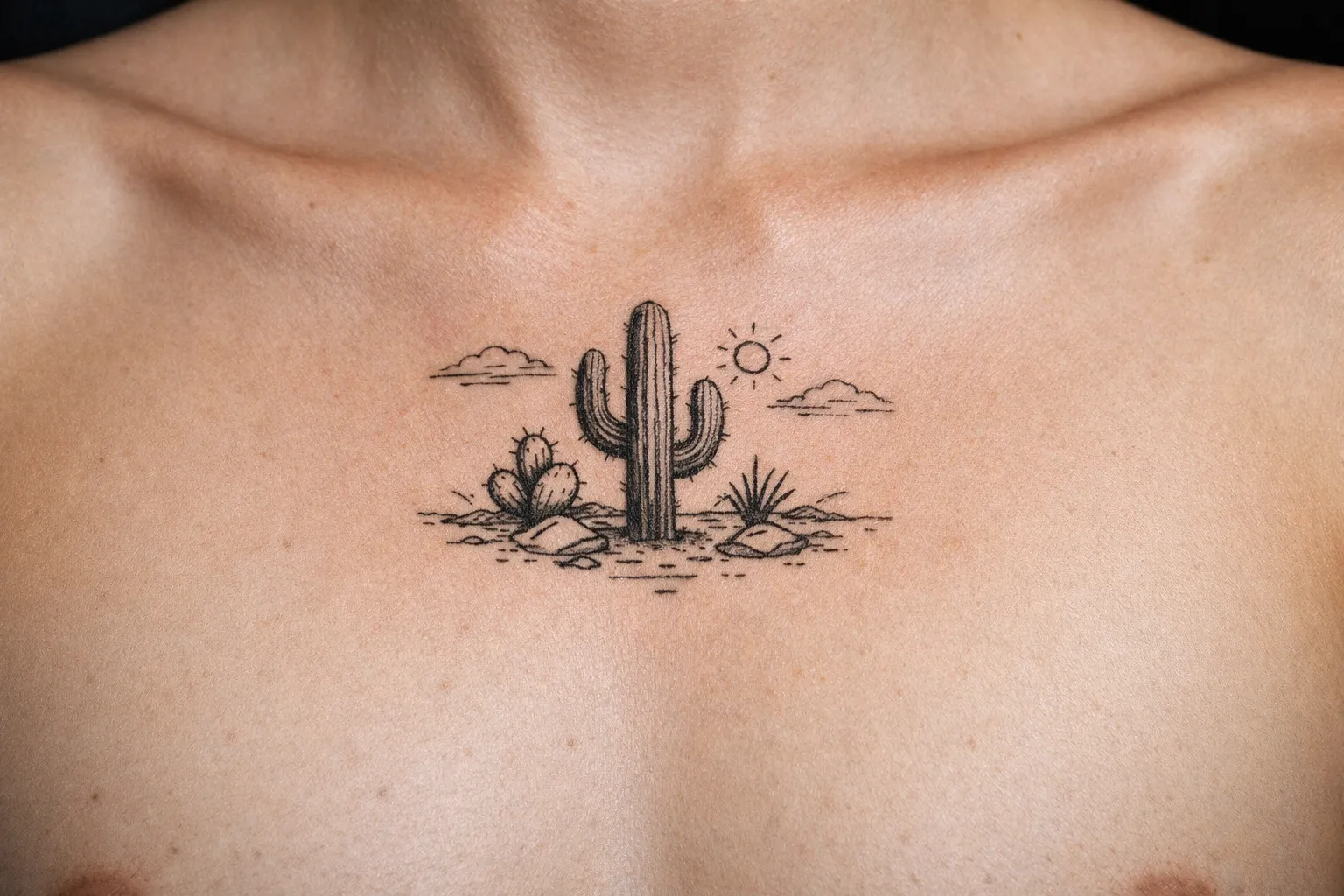
Size and placement: 1 to 3 inches (2.5-7.5 cm), ideal on the inner wrist, ankle, behind the ear, or the side of a finger. Most of these run $80 to $250 and under an hour in the chair.
Here’s the pitfall, and it’s the one I flag most often when clients come in with reference photos of ultra-fine linework: single-needle lines on tiny tattoos blow out and fade. Ink spreads under the skin over years, and a hairline cactus on the wrist can turn into a soft gray smudge by year three. If you want a minimalist cactus that still reads clean at five to ten years, ask for slightly thicker lines - a 5RL instead of the finest single needle. It costs you nothing extra and saves the design.
Finger and wrist placements age the worst because the skin moves and regenerates fast. They’re not off the table, but go in knowing you’ll likely need a touch-up.
Geometric and Blackwork Styles for Cactus Designs
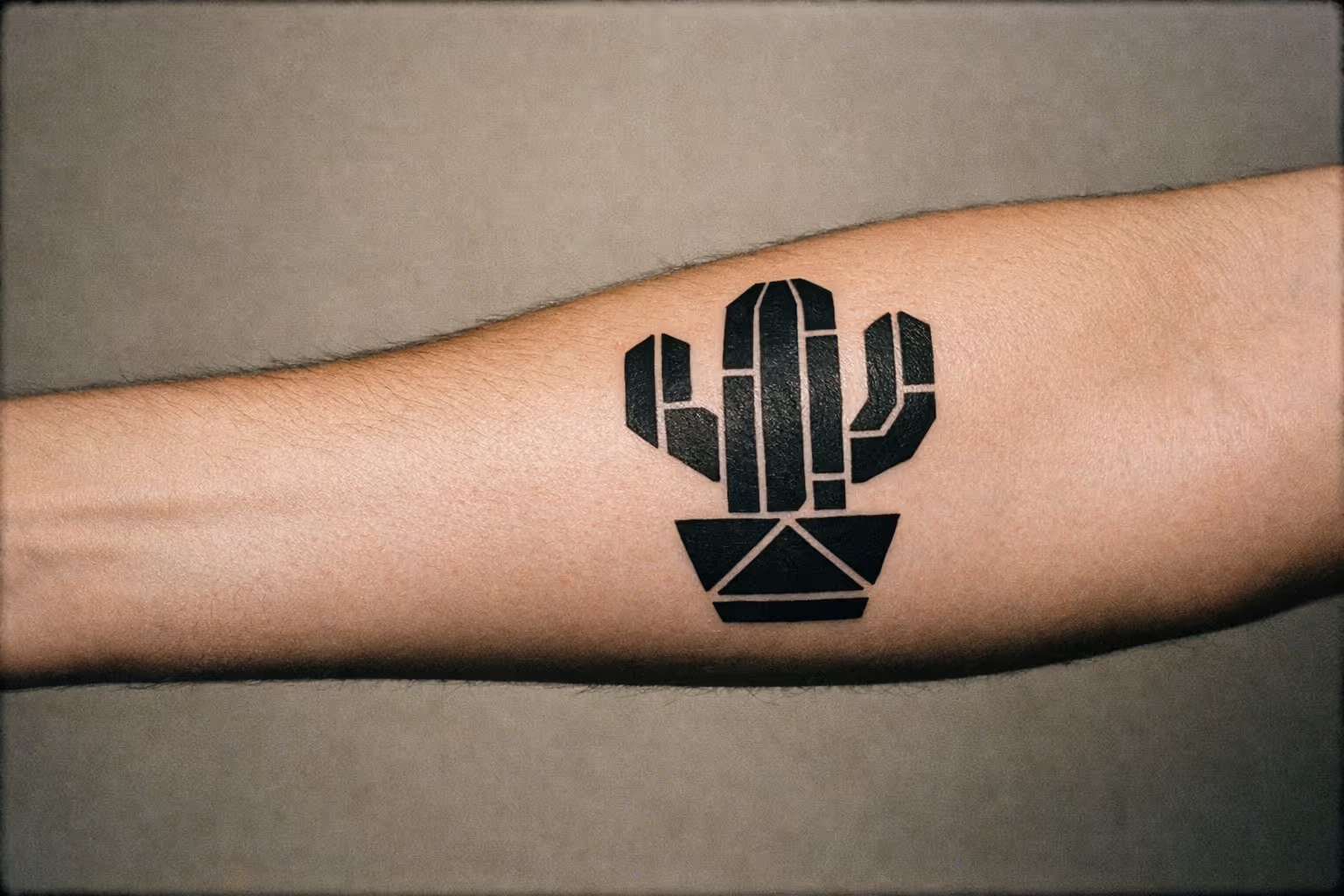
If you want modern without the fragility of fine line, geometric cactus tattoos build the plant from triangles, circles, and bold linework. Blackwork versions use solid fill and dot shading instead of color, which sidesteps the fade problem entirely - black and dotwork outlast every color in the palette. This same durability is why memento mori tattoo designs so often lean on blackwork skulls and hourglasses to stay sharp for decades.
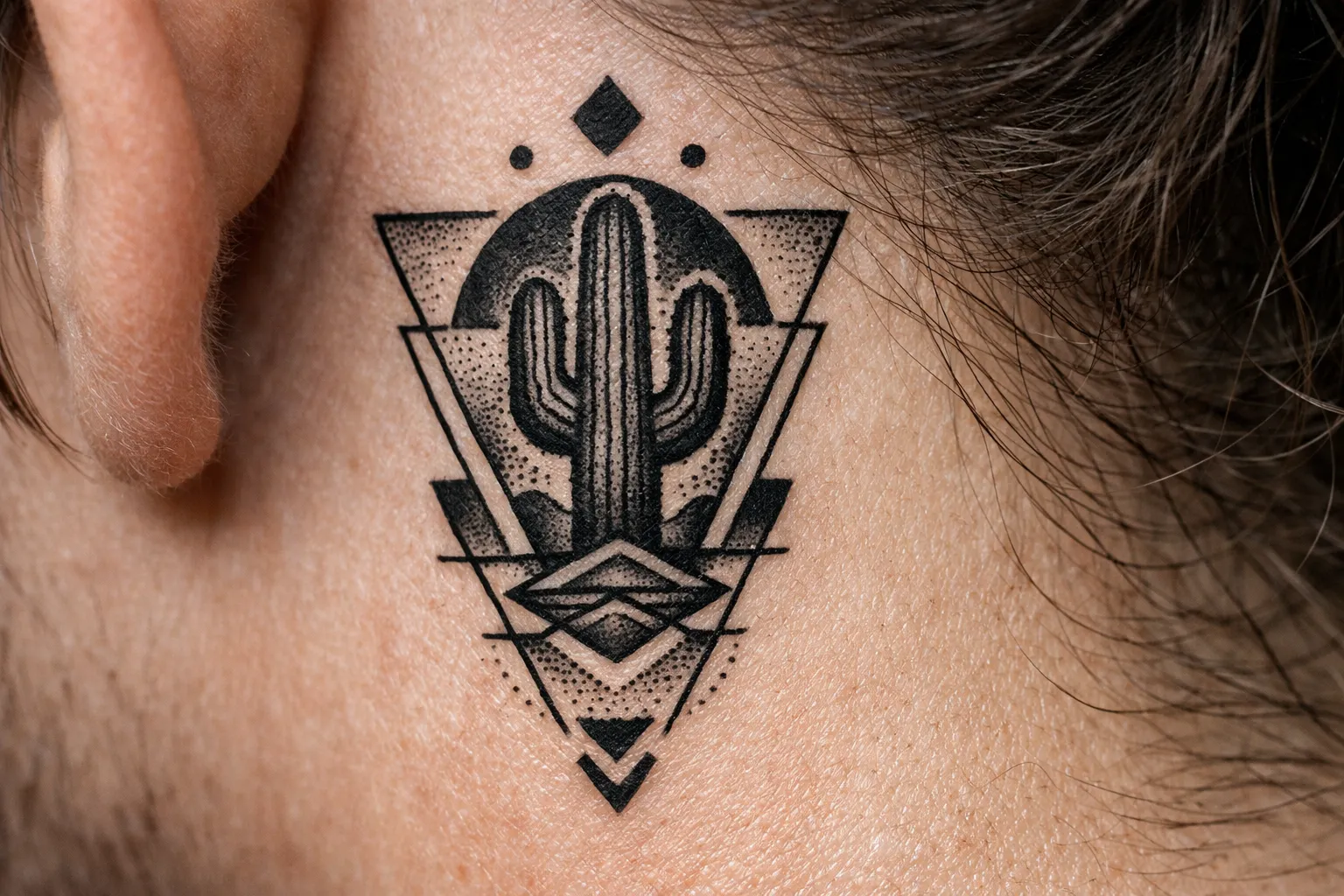
These sit comfortably on the forearm, calf, or upper arm at 3 to 5 inches, usually in the $200 to $500 range. They’re also the style best suited to the robotic tattoo systems that have advanced recently - those machines currently excel at fine-line minimalism and dotwork and struggle with large color scenes (7). For a small geometric or dotwork cactus silhouette, a robotic system is a real option now. For a color desert sleeve, it isn’t.
Matching Designs to Your Budget and Experience
Match the design to where you are, not to the most impressive thing on the inspiration board.
- First tattoo: One minimalist cactus or a small cactus flower, limited linework, under $250. Heals fast, low risk of regret, and tells you how your skin handles ink before you commit to anything large.
- Intermediate: A forearm saguaro scene with shading or limited color, $400 to $1,000. Multiple cacti, a gradient, some background.
- Advanced: A desert-themed half-sleeve or back piece combining several cactus species, a sunset, and wildlife. $1,500 to $3,000+, split across multiple sessions.
A budget tip that saves real money: consolidate ideas into one larger piece instead of collecting small walk-ins. A single $400 to $600 session almost always beats four separate $150 shop minimums. And ask about flash - pre-drawn cactus designs run 10 to 30% cheaper than fully custom work because the design time is already done.
Turning a Saved Pin Into a Real Design Brief
Most cactus tattoo inspiration lives on Pinterest and Instagram reels, and the gap between “I saved this pin” and “I booked this tattoo” is where a lot of disappointment happens. Stock libraries alone list over 8,000 cactus tattoo images and vectors, and AI design galleries catalog 4,600+ cactus tattoo ideas - so the problem isn’t finding images, it’s knowing what you actually like about them.
When I’m consulting with a client who brings in a folder of saved pins, the first thing I ask is what specifically caught their eye. Nine times out of ten they can’t answer that immediately, which means we spend the first fifteen minutes of the appointment just figuring out the brief. You can skip that entirely.
When you save a cactus pin, write down four things in the description:
- Line weight - thin and delicate, or bold and graphic?
- Color style - black only, limited palette, or full watercolor?
- Composition - single cactus, or a full scene with background?
- Placement - where on the body is it sitting in the reference?
This stops you from handing your artist a pile of contradictory images and saves 10 to 15 minutes of consultation. Just as important: don’t ask your artist to copy another tattoo exactly. Bring references for the elements you like and let them build something that fits your body. Real desert landscape photos help too - it helps the artist distinguish a saguaro from a prickly pear from a barrel cactus and avoid generic shapes.
What a Cactus Piece Costs
Price depends on size, detail, artist reputation, and city. Current US ranges:
- Shop minimum (small minimalist cactus): $80 to $150 in mid-tier studios; $150 to $200 in major-city shops for any design.
- Minimalist linework (1-3 in): $100 to $250.
- Saguaro cactus tattoo with shading or limited color: $250 to $600.
- Cactus flower tattoo or desert scene (forearm/upper arm): $400 to $1,000+.
- Large back or side pieces: $1,000 to $3,000+, usually over multiple sessions.
Renowned artists charge more, and the work is usually worth it. Check healed portfolios, not just fresh photos - healed work tells you how the lines settle, and that’s the version you’ll actually be living with. Most studios take a $20 to $50 design deposit that applies to the final price. Wait times for in-demand artists run 2 to 12 weeks; a walk-in minimalist cactus may be same-day.
Don’t forget aftercare in the budget. A fragrance-free healing ointment and an SPF 30+ sunscreen are small but real costs that protect what you paid for.
Placement and Pain Considerations
Placement affects both how the tattoo ages and how much the session hurts.
Where the design wants to go:
- Forearm - high visibility, flat surface, ideal for vertical saguaros and scenes.
- Calf - large flat area, good for desert landscapes, heals well.
- Ribs / sternum - dramatic for flowing cactus flowers, but the most painful.
- Wrist, ankle, behind the ear, fingers - discreet, best for small minimalist pieces.
Pain, in relative terms: bony, low-padding areas hurt most. Ribs, sternum, and spine sit at the top; the ankle and inner wrist are sharp but brief because the pieces are small. Forearm and outer thigh are among the more tolerable spots. There’s no point in a numbered scale - what matters is that the ribcage will test you in a way the forearm won’t, and you should know that before booking a long session there.
Size note: bigger means more detail but also longer sessions and more cost. A tall saguaro needs vertical flat space; cramming it onto a curved wrist warps the lines. Talk through it with your artist before committing to a placement.
Caring for a Healing Cactus Piece
The aftercare routine determines whether your greens stay green and your lines stay crisp. Here’s the timeline:
Day 1-3: Leave the initial wrap on for the time your artist specifies - usually 2 to 4 hours for a traditional bandage, or the manufacturer’s window for a second-skin dressing. Removing it early raises infection risk. Wash gently with fragrance-free soap and warm water two to three times a day, then apply a pea-sized amount of fragrance-free ointment. Over-moisturizing clogs pores and causes pimples around the linework - thin layers only.
Week 1: Light flaking and itching are normal. Don’t pick or scratch; you’ll pull out ink and create patchy spots. Switch from ointment to a fragrance-free moisturizer as the surface dries.
Week 2-4: The surface heals over roughly 2 to 3 weeks for a small cactus; a larger shaded or color piece takes 4 to 6 weeks for full healing. Keep moisturizing and keep it out of the sun.
Long term: Once healed, use SPF 30+ sunscreen on the tattoo whenever it’s exposed. UV is the single biggest enemy of cactus greens and yellows - black linework outlasts color, but sun fades everything. Sun-protective clothing over a fresh piece during the first month is even better than sunscreen, since you shouldn’t put SPF on broken skin.
Watch clothing lines too. High-waist pants or a bra band rubbing a healing hip or rib tattoo can slow healing by days. And if you see spreading redness, heat, or pus, that’s infection, not normal healing - see a doctor.
Meaning and Tipping Questions
What does a cactus tattoo mean?
A cactus tattoo most commonly symbolizes resilience, endurance, adaptability, and protection - survival in harsh conditions. The exact meaning shifts by species: a saguaro leans toward Southwest and desert identity, a cactus flower toward late blooming and beauty in hard conditions, and the spines generally read as personal boundaries. Flower-based motifs that carry layered meaning by color - like a carnation tattoo where pink signals gratitude and red signals love - follow a similar logic to the cactus flower’s message of beauty earned through hardship.
Is $50 a good tip for a $500 tattoo?
Standard US tipping for tattoos runs 15 to 25% of the price. On a $500 cactus tattoo, a $50 tip is 10% - acceptable but on the low end. A strong tip would be $75 to $125. If money’s tight, $50 won’t offend anyone, but it reads as modest rather than generous. Cash is appreciated, and tipping at the end of the final session is normal for multi-session work.
Choosing the Right Artist and Approach
The artist matters more than the design. Cactus work spans clean minimalism to color realism, and not every artist does both well. Look at healed cactus pieces in their portfolio - fresh photos hide blowout and patchy color that only show up weeks later. Studios that build their identity around desert imagery, like Electric Cactus Tattoo, tend to have deep reference libraries for cactus species and the experience to render them accurately rather than as generic green blobs.
A few approach notes:
- For large desert scenes, split the work into outline first, then shading and color in a second session. It makes 5 to 8 hour projects manageable and reduces inflammation per visit, which helps healing.
- For a tiny dotwork or minimalist cactus, a robotic tattoo system is a viable, precise option now. For anything with color or scale, you want a human.
- Semi-permanent inks that fade in 1 to 3 years exist if you’re unsure about commitment, though they cost roughly 20 to 50% more and long-term skin data is still thin.
Pick the species first because it carries the meaning. Pick a placement with flat space for vertical saguaros. Ask for slightly thicker lines on anything small so it survives a decade. Budget for sunscreen, because UV - not time - is what fades a cactus tattoo. Get those four right and the design takes care of itself.
Frequently Asked Questions
- Can I get a cactus tattoo if I have sensitive skin or allergies?
- Discuss any skin sensitivities or allergies with your artist beforehand. They can recommend ink types and aftercare products that minimize irritation.
- How often will I need touch-ups on a minimalist cactus tattoo?
- Minimalist tattoos on high-movement areas like fingers or wrists often require touch-ups every 3 to 5 years due to ink spreading and fading.
- Are robotic tattoo machines better for cactus designs?
- Robotic machines excel at fine-line minimalism and dotwork cactus tattoos but struggle with large color scenes. For complex color work, a human artist is preferred.
- What should I avoid during the healing process of a cactus tattoo?
- Avoid picking scabs, excessive moisture, direct sun exposure, and tight clothing rubbing the tattoo area to prevent fading and infection.
- How can I make sure my cactus tattoo ages well?
- Choose thicker lines for small tattoos, avoid placing fine-line work on high-movement areas, and protect your tattoo from UV exposure with sunscreen or sun-protective clothing.