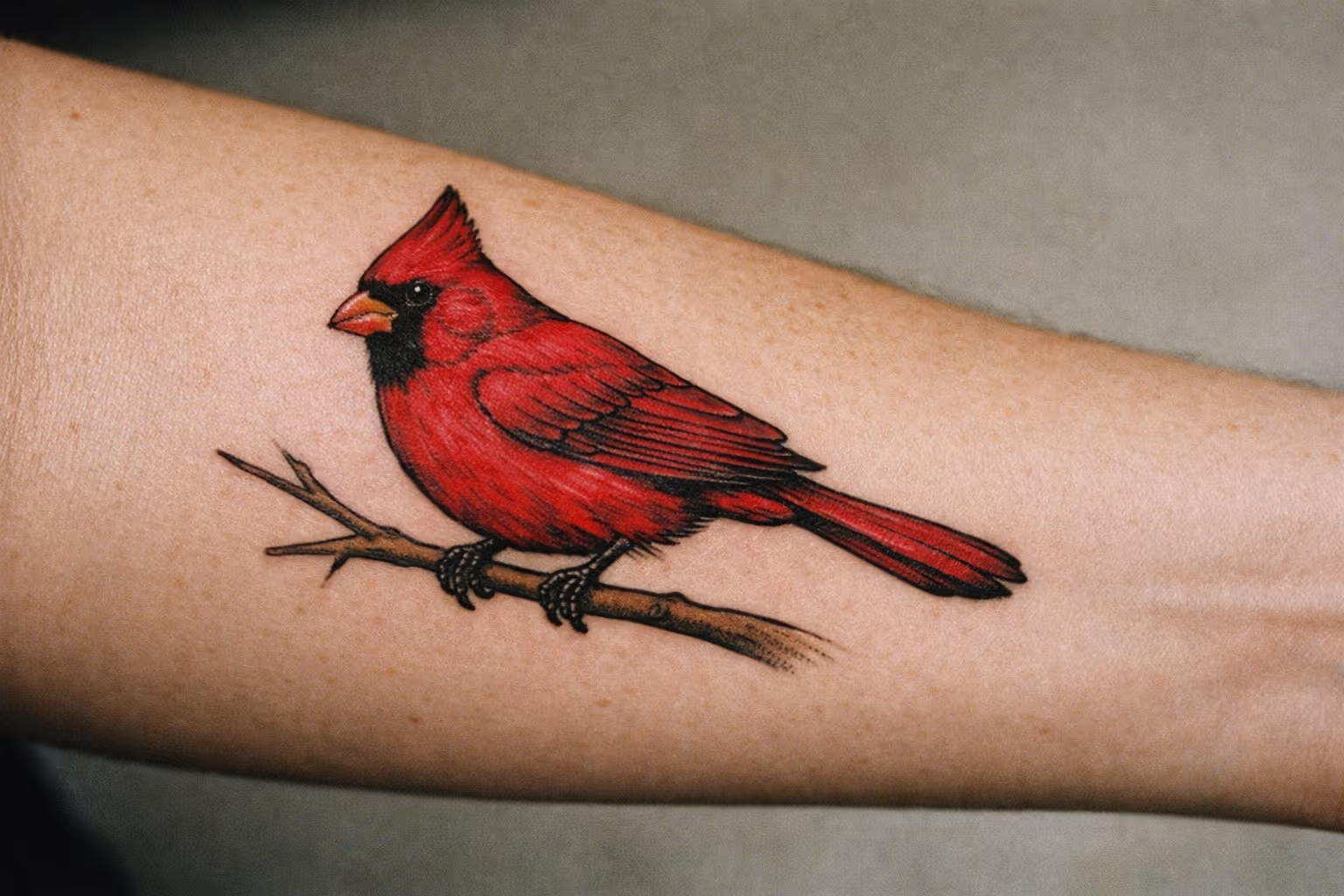
A cardinal bird tattoo lives and dies by its color. That signature bright red is the whole point - and also the fastest part to fade, dulling years ahead of a black-and-gray version and asking for touch-ups to stay vivid. The meaning is rich and shifts by tradition, but the pigment choice is what decides the upkeep. Here’s how color, size, and placement play out, from an $80 small piece to $1,500 florals.
Cardinal Bird Tattoo Meaning Across Cultures
The cardinal bird tattoo meaning isn’t one fixed idea. It shifts depending on which tradition you’re drawing from, and modern Western tattoo culture has layered its own reading on top of all of them.
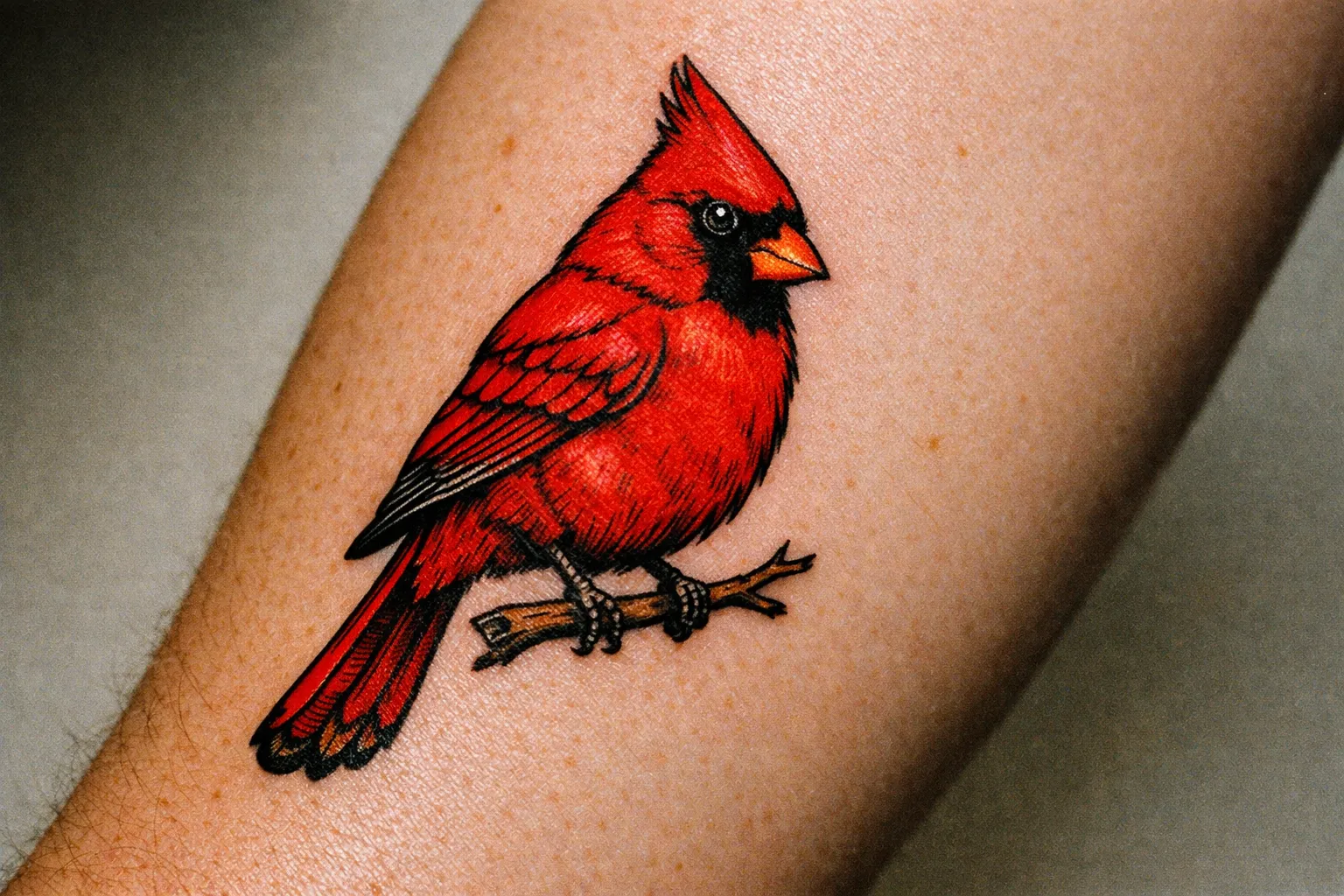
The spiritual messenger reading. The most common interpretation today is the cardinal as a “visit” from someone who has passed. The belief - popular in contemporary spiritual-but-not-religious circles - holds that a red cardinal appearing signals a departed family member is near (2)(3). This is why cardinal tattoos make up such a large share of memorial work; the bird does the talking without requiring any text. Recent social content leans hard into this “guardian” or “spirit guide” framing, usually paired with personal grief stories (2)(3).
Hope and resilience. In North America, the cardinal stays bright through winter when most birds have gone south or dulled out. That red against bare branches reads as endurance, which translates into tattoo themes of strength, vitality, and personal transformation - getting through a rough stretch and coming out the other side (1).
Love and devotion. Native American lore associates cardinals with monogamy, courtship, and loyal relationships (4). Cardinals do pair-bond strongly, so a pair of birds - or one cardinal beside a wedding date - works as a relationship piece rather than a memorial one.
A caveat on meaning. Don’t assume a cardinal reads as exclusively Christian or exclusively memorial. It carries secular meanings too - passion, courage, rebirth. If the meaning matters to you, decide which thread you’re pulling on and let the design reflect it. A sunrise for hope, a name and date for remembrance, a second bird for love. These aren’t interchangeable.
✓ Pros
- Strong, recognizable silhouette that works at many sizes
- Rich cultural and personal symbolism with multiple interpretations
- Aging well when designed with proper scale and detail
- Versatile for memorial, resilience, or relationship themes
✗ Cons
- Bright red ink fades faster than black, requiring touch-ups
- Highly detailed small designs blur over time if too tiny
- Watercolor styles without black anchors tend to soften quickly
Small Cardinal Tattoos for Females
Small cardinal tattoos for females are the most-requested version of this design, usually as a discreet memorial or a first tattoo. The popularity makes sense: a cardinal is recognizable even when shrunk down, and the placement options are forgiving.
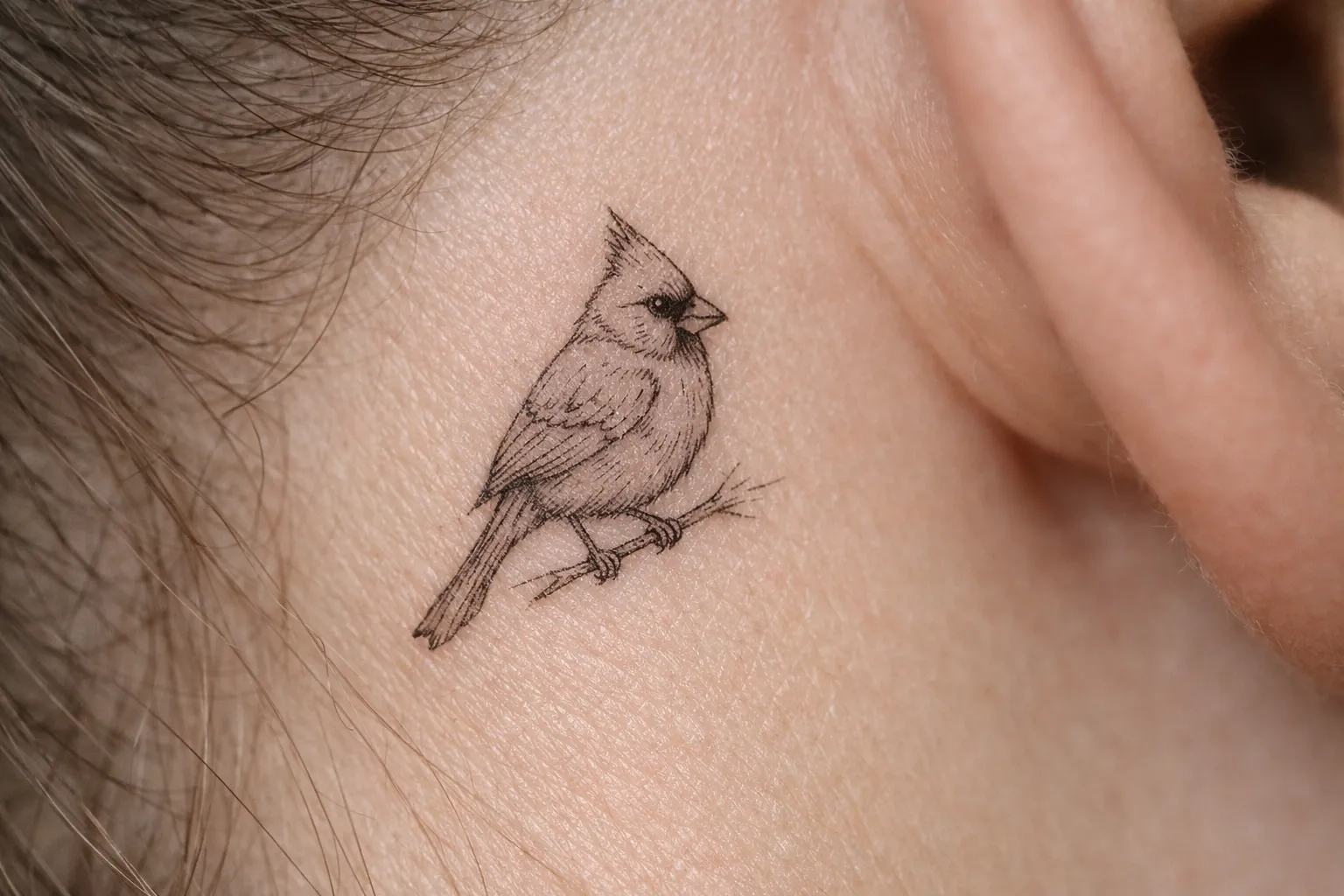
Realistic size range: 1-3 inches (2.5-7.5 cm). That’s the sweet spot where the bird stays clear without demanding a large flat canvas.
Good placements:
- Inner wrist - high visibility, but expect some fade over years on a high-friction spot
- Collarbone / clavicle - flat, low-distortion, holds detail well
- Behind the ear - discreet, but very small scale means you must simplify the design
- Forearm - easy to tattoo, ages nicely, plenty of room at 2-3 inches
- Ankle - looks clean, but sun exposure and bone proximity make it fade faster
One honest constraint: a highly detailed realistic cardinal under about 1.5 inches will blur over time. Tiny feathers and a fine beak bleed together as the ink settles into the skin. At that scale, go with simplified linework or a single-color accent instead of trying to cram in realism.
A trick that works well for a small cardinal bird tattoo: keep the linework black and add just one red accent - the crest, or the breast. That single pop of color keeps the bird readable at 1-2 inches without the whole thing turning to mush. It’s the cleanest way to get the cardinal’s identity into a micro piece, and I’ve used this approach on clients who wanted something discreet but still unmistakably a cardinal.
Pain-wise, these spots range from mild to moderate. The forearm and outer wrist are easy. The collarbone and ankle sit over bone and run sharper. As a rough comparison: ribcage > ankle > collarbone > forearm.
Cardinal Tattoo Black and White
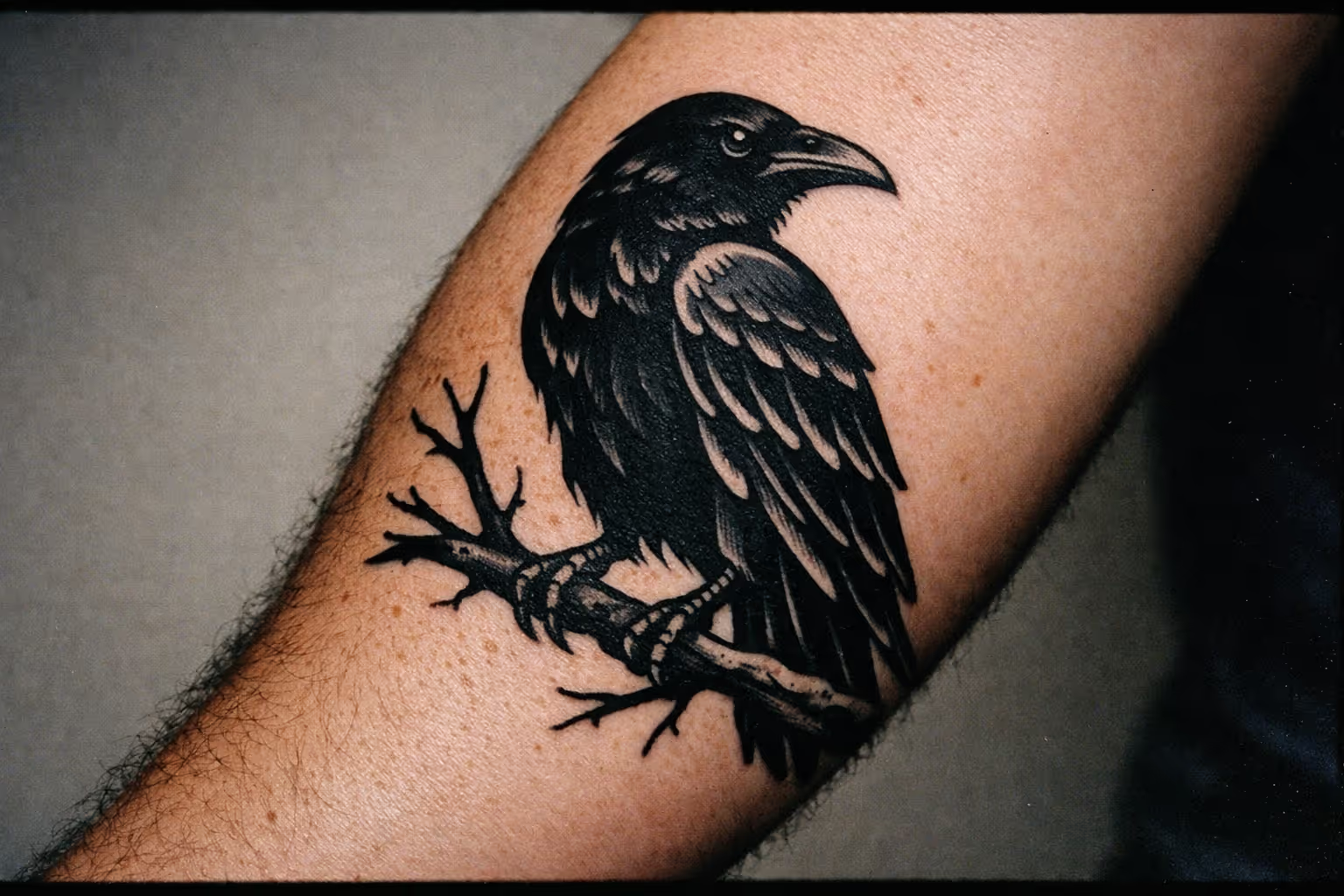
A cardinal tattoo black and white drops the signature red and leans on linework, shading, and negative space instead. Demand for these has climbed alongside the broader fine-line and minimalist trend, and stock libraries reflect it - Shutterstock alone lists around 926 cardinal tattoo-related images, many of them black-and-white stencils and perched silhouettes (5).
Why go monochrome? A few real reasons:
- It reads as more understated and ages predictably - black and gray hold up better than bright red over decades
- It works cleanly across a wider range of skin tones, where vivid vermilion can shift once healed
- It fits geometric, woodcut, and fine-line compositions that color would clutter
The challenge is conveying a cardinal without its defining color. The bird’s identity is in the red, so without it, the design has to work harder. A good artist compensates with:
- Strong silhouette - the pointed crest and triangular beak do the identifying work
- Varied line weights - thick outlines, thinner interior lines for feather direction
- Gray washes at staggered values (roughly 20%, 40%, 60% black) for depth, or clean stippling
- Negative space to suggest the breast and wing without filling everything in
The common pitfall: an artist who renders a black-and-white cardinal with uniform line weight and no shading hierarchy ends up with a generic bird that could be anything. The crest and posture have to carry the recognition load.
Size and placement: these translate well from 2 inches up to larger sternum or forearm pieces. Because there’s no bright pigment to maintain, a black and gray cardinal needs fewer touch-ups long-term than its red counterpart - which is a practical argument worth considering if you’re not into sitting for color refreshes every few years.
Realistic Color Cardinal Tattoos
A realistic color cardinal is where the bird gets its full treatment - accurate anatomy, layered feathers, the glossy black mask around the beak. This is the version for medium and large memorial pieces, and it’s the most technically demanding of the lot.
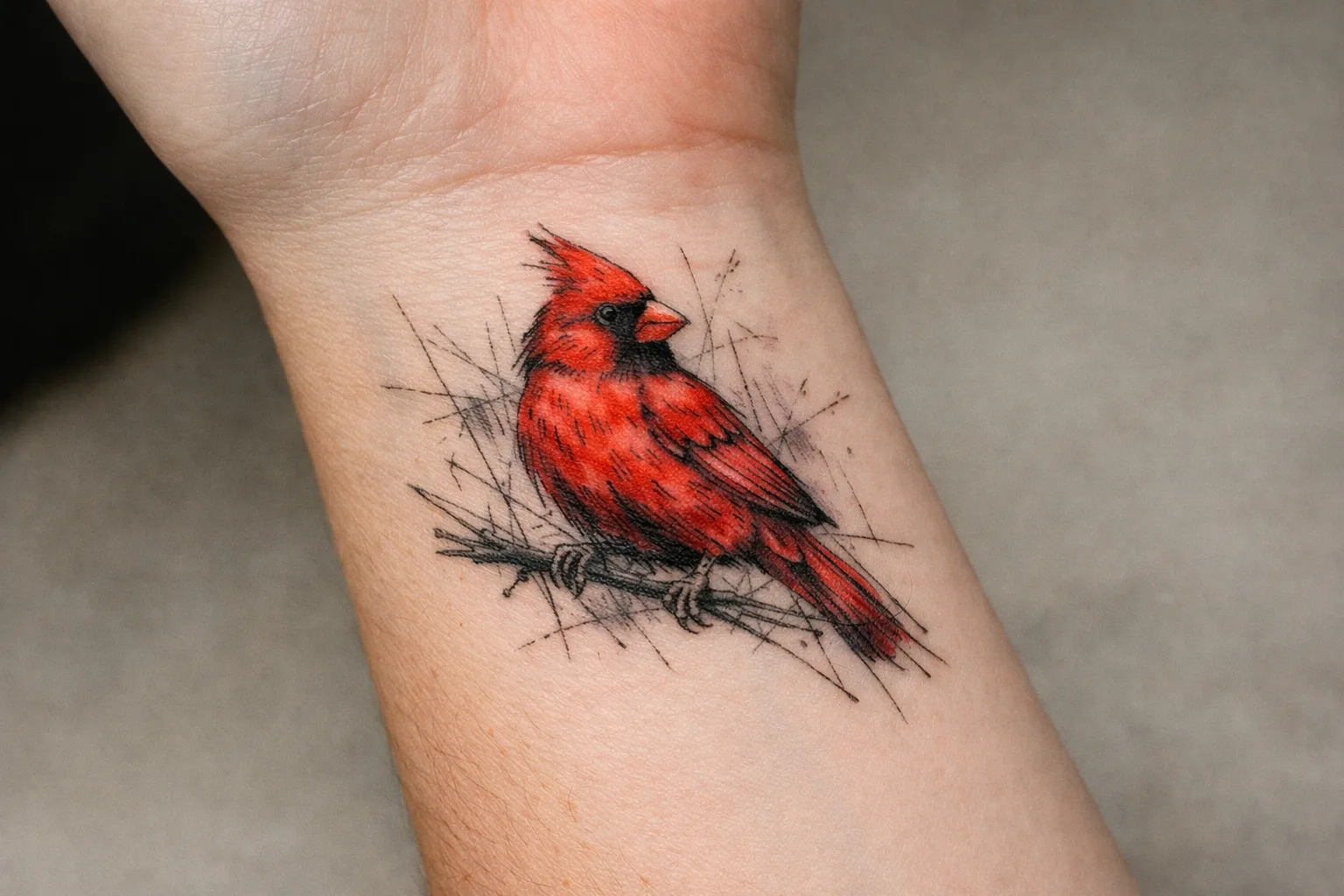
Good color work here uses two to four red tones: a bright red for the body, a deeper crimson for shadowed feathers, sometimes a muted red-brown for the wings, plus black lining and white highlights for dimension (1). A single flat red looks like a sticker. The depth comes from building those tones the way light actually hits feathers - and that’s where you see the difference between a competent tattooer and someone who really knows bird anatomy.
Size: plan for 3-6 inches minimum to do realism justice. The upper arm, calf, thigh, and shoulder blade all give you the flat real estate that detailed feather work needs.
Pick your artist on the strength of their healed color work, not just fresh photos. Fresh tattoos always look sharp. Healed ones tell you whether the saturation and linework survived the skin settling.
For memorial pieces, some clients bring a photo or an object belonging to the person they’re honoring, which helps the artist capture a specific pose or expression (2). I’ve seen this make a real difference - a particular tilt of the head, a branch the person’s family recognized. Worth doing if you have something like that.
Watercolor Cardinal Tattoos
Watercolor cardinals trade hard outlines for splashes and bleeds of red that scatter around a simplified bird shape. The style suits people who want something looser and more painterly than a clean traditional piece.
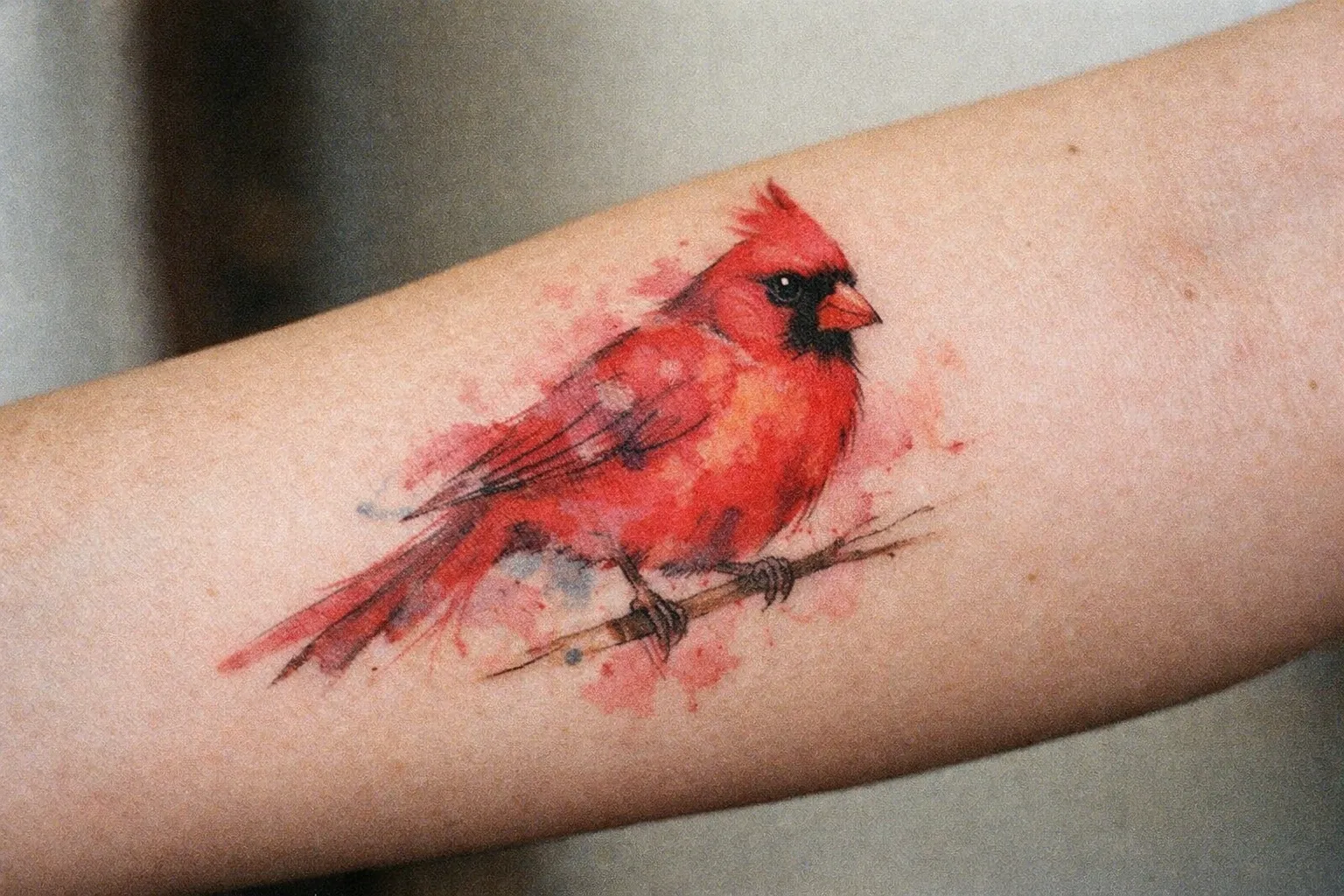
The look is built on intentional color placement - bright reds blooming outward from the body like pigment hitting wet paper, often with the bird mid-flight or perched lightly. It reads as expressive rather than literal.
One honest note on longevity: watercolor styles without a solid black anchor tend to soften faster than designs with strong outlines. If you love the watercolor look but want it to last, ask your artist to include some grounding linework or a darker base so the piece doesn’t go hazy in a few years. Size 3-6 inches on the forearm, shoulder, or thigh gives the color room to spread without losing the bird shape entirely.
Neo-Traditional and Memorial Cardinals
Neo-traditional cardinals use thick, confident outlines and saturated reds, usually built out with florals or banners. This is a strong choice for memorial work because the bold lines age well and the format easily absorbs added elements without the whole thing collapsing visually.
Common memorial additions:
- A name and date in script beneath or beside the bird
- A short line like “Always with me” on a banner
- Native flowers - dogwood, magnolia, roses - wrapping the composition
- A state outline or a personal object that meant something to the person being honored
- Angel wings layered behind the cardinal to reinforce the guardian theme (4)
The thick black outlines and limited, saturated palette are the hallmarks of this style. The pitfall when it’s done badly is overcrowding - cram too many elements around a small bird and nothing reads. Give the design room to breathe, even if that means scaling up to make it work.
Placement: memorial neo-traditional pieces work well at 4-7 inches on the upper arm, forearm, or shoulder. Avoid putting fine-line memorial cardinals on high-distortion zones - inner elbow, sides of fingers - where they fade and warp faster than you’d expect.
Cardinal Bird Tattoo Cost and Session Time
Meaning guides almost never tell you what this actually costs or how long you’ll sit. Here’s the practical breakdown from mid-market US studios.
Pricing by size and detail:
- Small cardinal tattoo (1-3 in): $80-$250, depending on city, artist, and whether it’s color or black and gray
- Medium color cardinal with detail (3-6 in): $250-$600
- Large detailed cardinal with florals or background (half-sleeve or large thigh): $600-$1,500+
Session time:
- Small linework cardinal: 30-60 minutes
- Small full-color cardinal with shading: 1-2 hours
- Medium detailed color piece: 2-4 hours
- A collector’s piece - multiple cardinals worked into a sleeve - can total 10-20+ hours across sessions
Before you book: bring solid reference. One realistic cardinal photo plus one or two tattoo-style examples from a portfolio gives the artist the most to work with. Disclose any allergies, blood conditions, or skin issues up front. In most US states you’ll need to be 18+, though some allow 16-17 with parental consent - check your local rule.
One more thing: don’t hand an artist an exact screenshot from Instagram and ask for a carbon copy. Many won’t do it, and the good ones will want to adapt the design to fit your body and placement anyway. That’s not them being difficult - that’s them doing their job.
Aftercare and Longevity for Red Ink
Bright red pigment and fine linework are the two things most likely to fade on a cardinal tattoo, so aftercare matters more here than on a heavy blackwork piece.
Day 1-3: Your artist will likely send you home in a protective film like Saniderm for the first 24-48 hours. Once it’s off, wash gently with clean hands and unscented soap, pat dry, and apply a thin layer of fragrance-free moisturizer. Expect some plasma and a little color weeping onto the bandage - that’s normal.
Week 1: Keep washing twice a day and moisturizing lightly. It’ll start to flake and look dull - don’t pick. Picking pulls pigment out, and on a red cardinal that means patchy color you’ll be paying to fix later.
Week 2-4: Top-layer healing wraps up around two weeks, but full healing under the surface runs 4-6 weeks. Stay out of pools, avoid soaking, and skip heavy abrasion on the area.
Long-term: This is the part people skip. Vivid reds fade faster than black, especially on sun-exposed spots like the wrist, ankle, and forearm. Wear sun-protective clothing or use sunscreen over the healed tattoo once it’s fully settled. Color cardinals often need a touch-up every 5-10 years to keep the reds reading bright. Black and white cardinals need that maintenance far less often - one of the practical arguments for going monochrome if low upkeep matters to you.
A note on skin tone and red ink: on deeper skin tones, bright vermilion can read as a muted brick red once healed, because the pigment sits under a layer of melanin that shifts the apparent hue. If that concerns you, ask your artist to test a small patch or look at healed examples of their red work on comparable skin. Some artists compensate by using a slightly warmer, more orange-leaning red that pops better once settled - worth the conversation before you commit to a full color piece.
Frequently Asked Questions
- What does a cardinal tattoo mean?
- It most often stands for hope, love, and remembrance - frequently as a memorial for a loved one who has passed, based on the belief that a cardinal's appearance signals their presence (2)(3). It also carries secular meanings of strength, resilience, and personal transformation (1).
- What does a cardinal symbolize?
- Across traditions, the cardinal symbolizes vitality and passion (its red color), enduring connection beyond loss, and - in Native American lore - devotion and monogamy in relationships (4). Modern Western tattoo culture leans heavily on the "messenger from departed loved ones" reading, though that's far from the only thread available.
- Can you get a cardinal tattoo without the red color?
- Yes. A black and white cardinal relies on a strong silhouette, varied line weights, and gray washes or stippling to convey the bird without color (5). It ages predictably, works across more skin tones, and needs fewer touch-ups than bright red ink.
- How small can a cardinal tattoo be?
- Around 1-1.5 inches is the practical floor for a recognizable design. At that size, simplify - use clean linework with a single red accent rather than attempting full realism, which blurs as it heals.
- Where should I put a small cardinal tattoo?
- Flat, low-distortion areas hold detail best: collarbone, forearm, and inner wrist are popular. Behind-the-ear and ankle work for discretion but fade faster, so factor in future touch-ups before you commit.
Choosing Your Cardinal
Start with the meaning you’re actually carrying - memorial, love, or resilience - because that decides the design more than any trend does. A name and date calls for neo-traditional space. A quiet personal reference fits a 2-inch fine-line piece. These aren’t the same tattoo.
Then be realistic about scale and color. Detailed realism needs at least 3-6 inches and a flat placement. Anything tiny should be simplified with a single red accent. If low maintenance matters, black and gray will outlast bright red and ask for fewer touch-ups over the years.
Pick your artist on their healed work, keep it out of the sun while it settles, and the cardinal will read clearly for a long time.