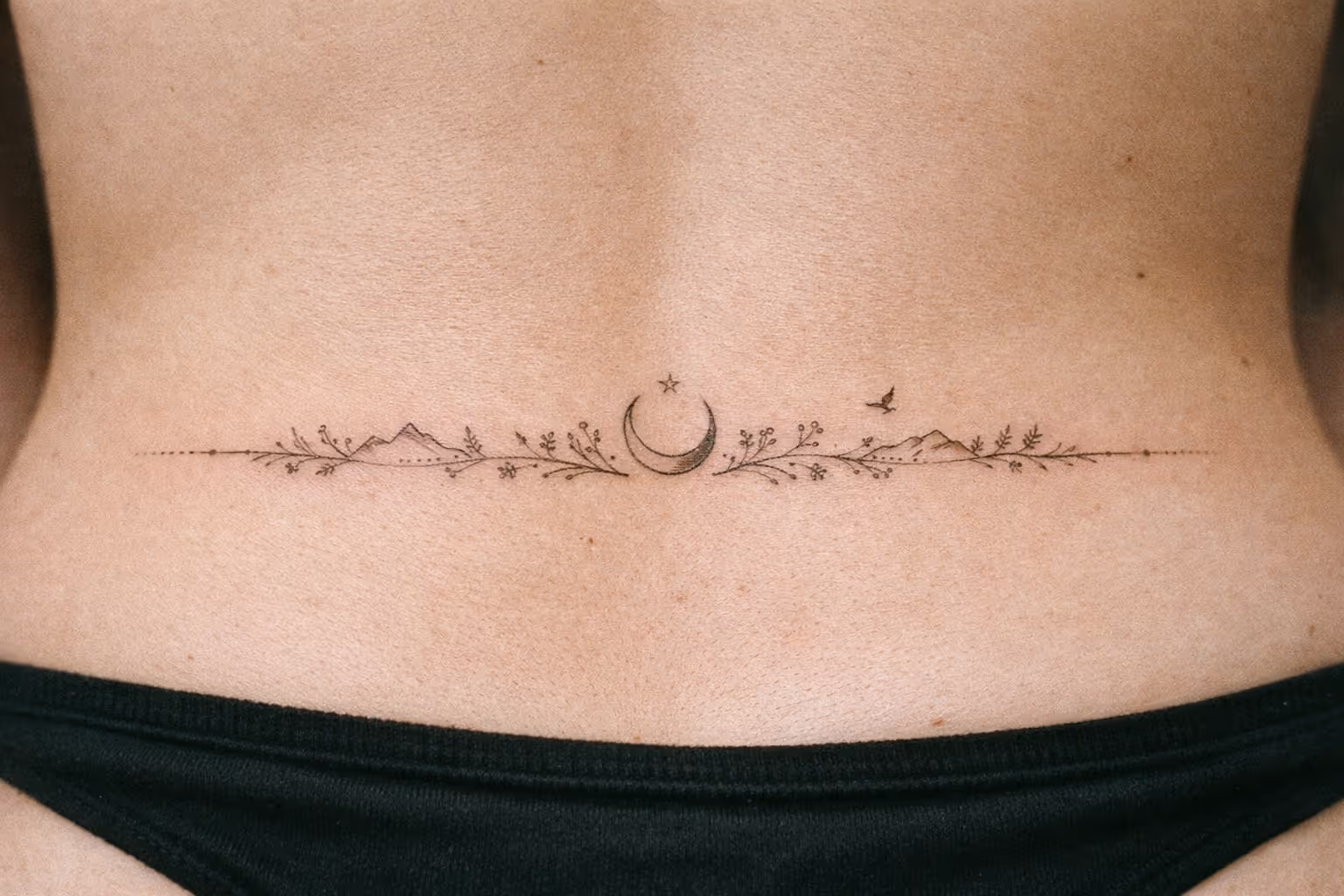
A tramp stamp tattoo is a lower-back tattoo that sits as a horizontal band centered between the waistline and the top of the buttocks, typically 10 to 25 cm wide. The name is loaded. The placement is genuinely practical for concealment. And the designs run from dated early-2000s clip-art to considered fine-line work that holds up a decade out.
The same tattoo that got mocked in a 2004 SNL skit is now all over Gen Z’s TikTok feeds - #TrampStamp has cleared 22 million views. That whiplash is worth understanding before you commit to needle in skin. This guide covers what the placement actually is, where it came from, which designs hold up over time, and what to know before you book.
✓ Pros
- Highly concealable under mid-rise jeans and most workwear - fully hidden when you want it hidden
- Naturally follows the lumbar curve, which suits symmetrical and wide horizontal designs
- Visible in swimwear, low-rise clothing, and social contexts where you want it seen
- Less painful than ribs or sternum - the lower back sits at a moderate level on the pain scale
- Strong design flexibility: works for fine-line, tribal, bold graphic, and script
✗ Cons
- The term "tramp stamp" carries persistent misogynistic baggage - expect unsolicited comments
- Tight waistbands and high-friction clothing complicate healing
- Highly geometric designs can appear warped when the spine flexes
- Designs wider than roughly 75% of hip width risk visual distortion with weight changes
- Some early-2000s peak-era designs date badly and read as a specific cultural moment
What a Tramp Stamp Tattoo Actually Is
A tramp stamp tattoo is a lower-back tattoo placed horizontally between the hips, sitting vertically between the waistline and the top of the buttocks, with widths commonly running 10 to 25 cm (1).
“Tramp stamp” is colloquial and widely considered derogatory. In my experience, most clients who come in asking about this placement use the term themselves but appreciate it when I switch to “lower-back tattoo” during consultation - it keeps the conversation focused on design rather than baggage. The term carries a specific history of slut-shaming that has nothing to do with the tattoo itself.
The placement became female-coded in Western tattoo culture through what the 1980s-1990s scene called the “chick spot” (2). Women wanted tattoos that stayed hidden under work clothes but could be shown off in social settings, and the lower back delivered exactly that. Fully hidden under mid-rise jeans and a longer shirt; visible with low-rise pants, a bikini, or a crop top. That concealment-plus-visibility logic is still the strongest practical reason to choose this placement.
None of this is anatomically gendered. Men get lower-back tattoos too - there’s no technical reason the placement favors one body over another. The cultural associations remain strongly female-coded, but that’s a matter of history and stereotype, not skin.
On pain: the upper, middle, and lower back rate moderately because the skin is thick with relatively few nerve endings, with discomfort rising the closer you work toward the spine. Keep the linework off the bony spinal column and the lower back stays in manageable territory - more than the forearm, less than the ribcage or sternum.
The History Behind the Lower-Back Tattoo
Lower-back tattooing on women predates the Y2K craze by more than three thousand years. Egyptian mummies carried protective motifs on the lower back long before Britney Spears made the placement famous.
Reporting on work by archaeologists Anne Austin and Marie-Lise Arnette, Greek Reporter describes dark zigzag patterns along the lower back of an Egyptian mummy dated over 3,000 years old. These were interpreted from associated medical texts as motifs linked to cooling waters used to relieve pain from menstruation and childbirth, and connected with protective imagery of the deity Bes. A 2022 culture report summarizing the same findings notes that tattoos around the hips and lower back on at least two female mummies were likely used as protective amulets during childbirth and the postpartum period. The scholars linked the placement to figurines depicting women with Bes tattoos on the lower back and upper thighs, reading these patterns as references to women as sexual partners, mothers, and midwives in protective rituals.
Fast-forward to the Western rise. Tattoos became more socially acceptable in the late 1980s, but women still wanted concealable placements - hence the “chick spot” era documented by tattoo historian Anna Felicity Friedman, who describes the lower back as a spot women chose for easy concealment under clothing while it stayed culturally coded as feminine.
Peak popularity ran mid-1990s to early 2000s, driven by tattoo magazines and celebrities - Britney Spears, Christina Aguilera, Jessica Alba, Kate Moss. Tribal arcs and butterflies dominated. Then came the name. “Tramp stamp” entered mainstream US culture around 2004, strongly tied to a Saturday Night Live skit, and the Oxford English Dictionary notes widespread use by 2010 (2). After the 2008 backlash, stigma and misogynistic jokes drove the placement out of fashion.
The current moment (2024-2026) is a deliberate reclamation. Gen Z is folding the aesthetic back into Y2K nostalgia, #TrampStamp has cleared 22 million TikTok views, and mainstream outlets from Teen Vogue to The Times have reframed the placement - The Times ran the phrase “from tramp stamp to high art”(4).
What the Lower-Back Placement Symbolizes
A tramp stamp tattoo has no single fixed meaning - the symbolism depends entirely on the motif you choose and why you chose it. The placement is a location, not a message.
Protection and fertility. The Egyptian precedent ties lower-back motifs directly to protection, fertility, and childbirth, with zigzag lines and Bes imagery read as safeguards during pregnancy and postpartum rituals. Some modern wearers deliberately cite that tradition when choosing protective symbols for the same area.
Transformation. Butterflies and phoenixes remain the go-to for marking a turning point - a divorce, a graduation, recovery. The lower back reads well as a before-and-after placement precisely because it’s private enough to be personal.
Reclamation of sexuality. Recent feminist commentary in Teen Vogue frames choosing a lower-back tattoo in the 2020s as an act of reclaiming sexuality, arguing that embracing the “tramp stamp” label can function as a statement against slut-shaming and body policing rather than an uncritical revival of the stereotype (5).
Aesthetic nostalgia. For many Gen Z wearers the meaning is primarily Y2K cultural. Vice has noted that lower-back pieces often reference early-2000s pop culture more than a personal biographical narrative - the design points at an era, not a life event.
One piece of context worth knowing going in: a 2013 behavioral experiment published in Personality and Individual Differences found that men were more likely to ascribe promiscuity to women with visible lower-back tattoos. That finding is evidence of observer bias, not a verdict on the placement - but it’s the social reality you’re walking into, and clear eyes beat surprise.
Design Ideas - From Y2K Revival to Modern Fine-Line
The smart way to think about lower-back designs is by style category, not motif - because style is what determines whether a piece ages well or dates hard. Here’s the full range, with the width, line weight, and healed-look details that actually matter.
Y2K Revival - Tribal, Barbed Wire, and Stars
The tribal tramp stamp tattoo is the original aesthetic: thick black linework, symmetrical, typically 15 to 25 cm wide across the lumbar region. 15 to 20 cm pieces are commonly classified as “large,” which is exactly where a classic tribal arc lands. These are now being reclaimed deliberately as a Y2K reference rather than worn ironically.
Barbed wire and stars use thinner lines and limited color, usually 12 to 20 cm. They age better than dense tribal if the line weight is adequate - avoid single-needle on wide pieces or the linework fades patchy within years.
Honest caveat: copying early-2000s tribal clip-art without updating the composition can look dated within 5 to 10 years. A tribal design ages badly when it’s a generic stencil; it ages well when an artist reworks the flow to your body. I’ve seen clients come in with printouts of the exact same tribal arc that was popular in 2003, and my job at that point is to talk them through why the proportions need updating even if the aesthetic stays the same. One upside for the future - Removery notes that solid black ink breaks down more easily under laser than saturated color, so a black tribal arc is easier to remove or cover later than a multicolored piece.
Butterfly Tramp Stamp Tattoos
The butterfly tramp stamp tattoo is the single most iconic motif of the placement’s peak era, and it’s being reinterpreted now in fine-line, blackwork, and neo-traditional styles.
Two directions. Cute, delicate versions in fine-line run 8 to 15 cm. Bold graphic versions with thick outlines and saturated color run 15 to 20 cm. The symbolism stays constant - transformation, freedom - which is why it works well for marking a life transition.
Sizing note that saves regret: fine-line butterflies under 10 cm risk blurring on the lower back’s flexing skin. Single-needle fine-line work is especially prone to softening over 5 to 10 years, and very small designs are best avoided on high-movement zones. Aim for at least 10 to 12 cm if you want it crisp a decade out.
Floral and Vine Designs
Scrollwork, roses, peonies, and botanical vines suit the horizontal lumbar curve naturally - the design follows the body instead of fighting it. 10 to 15 cm is a medium size appropriate for the upper back and abs, which is a solid reference for floral work that hugs the lower back without wrapping onto the flanks.
Works in blackwork, black-and-grey, or color. Black-and-grey ages most predictably - the epidermis heals by roughly one month, after which black-and-grey botanicals appear smoother and more integrated than high-contrast color. Width range: 10 to 20 cm, extending toward the flanks only if the design is built to wrap intentionally. Modern fine-line florals in single-needle style, 10 to 15 cm, are the dominant trend for this category right now.
Script and Word Tattoos
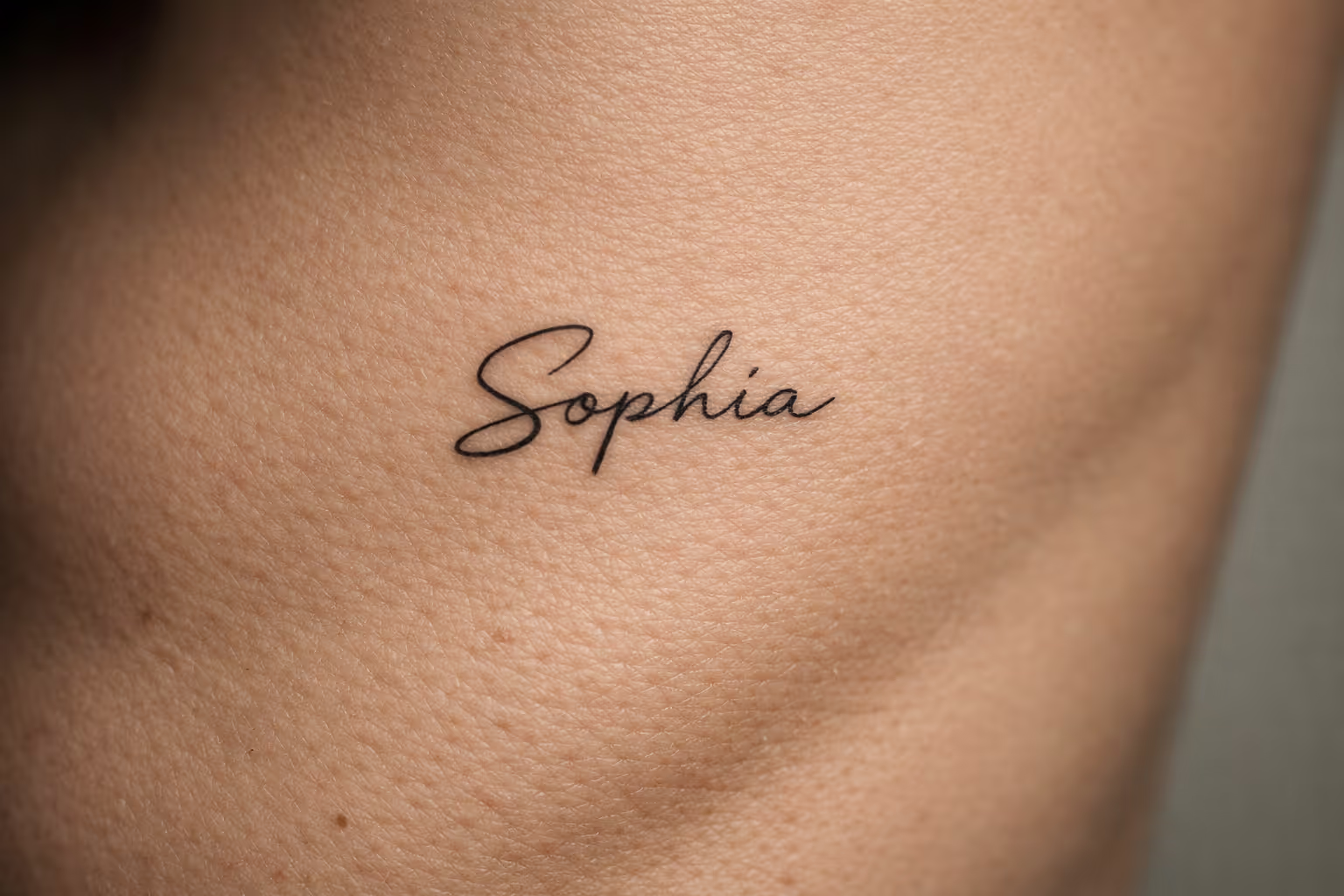
Short quotes, names, or single words in script or clean serif fonts. Keep it to roughly 15 words maximum before readability degrades. Width range 10 to 18 cm, and a single line of horizontal text suits the placement naturally.
Font warning: avoid early-2000s “tribal” typefaces - they date as badly as the tribal arcs themselves. Clean serif or minimal script holds up. Placement note: script on the lower back flexes with every bend and twist, so skip very long phrases that distort when you move. Long text near the spine also pushes into higher-pain territory, another reason to keep it short.
Bold Geometric and Mandala Work
Symmetrical mandalas or geometric compositions extend 20 to 30 cm wide, sometimes reaching the flanks - a range generally considered large full-back or chest work. This is technically demanding work that needs a specialist, because the lower back’s curvature can warp straight lines across a wide piece.
Best kept under 20 cm width to minimize distortion, and centering on the spinal midline is critical. The lower back runs moderate on fleshy areas but climbs near the lumbar spine - relevant when you’re relying on perfectly straight lines, because flinching during the higher-pain sections can visibly break symmetry. Black-and-grey geometric work ages more predictably than color-saturated versions.
The Reverse Tramp Stamp - What It Is and How It Differs
A reverse tramp stamp is an informal term for a tattoo placed on the upper chest or sternum - the front-body mirror of the lower-back placement. Some people also use it to describe a piece on the upper back between the shoulder blades. The term isn’t standardized, so clarify which you mean in a consultation.
The logic is the same as the lower back: hidden under most clothing, visible in swimwear or a low neckline. Some wearers pick the sternum specifically as a deliberate inversion of the tramp stamp aesthetic - same visibility strategy, different cultural associations.
Design overlap is high. Symmetrical florals, script, and geometric arcs all work in either spot. The critical difference is pain. The sternum is significantly more painful than the lower back - you’re working directly over bone, which is a different experience entirely from the fleshy lumbar area. If you’re weighing the two, our sternum guide covers that pain and healing in more depth.
Is the Lower-Back Tattoo Back? The Stigma Question Answered
Lower-back tattoos are not trashy - the stigma is a product of misogyny and body policing, not anything inherent to the tattoo. The 2013 bar-experiment study in Personality and Individual Differences found men were significantly more likely to approach a woman and offer her a drink, and more inclined to attribute promiscuity to her, when she had a visible lower-back tattoo. That’s a measurement of observer bias, not a quality rating on the placement.
Culturally, yes - and it’s documented. Gen Z is actively choosing this placement as a feminist reinterpretation, sometimes embracing the term precisely because of its baggage rather than despite it. Teen Vogue’s 2024 coverage put #TrampStamp at over 22 million TikTok views, framing the adoption as deliberate nostalgia and reclamation (6). Vice’s 2024 feature described contemporary lower-back work moving “from tramp stamp to high art,” documenting professional artists producing fine-line and ornamental pieces in the placement.
Tattoo historian Anna Felicity Friedman offers useful perspective: she compares historical lower-back trends to the current popularity of rib-cage tattoos for women, arguing that gendered “hot spots” in tattoo culture cycle over decades, and that placement stigma reflects broader patterns of misogyny rather than the designs themselves.
Here’s the practical reality, though. Some wearers report ongoing comments and jokes years after getting the tattoo - and that social friction can outlast the fashion cycle. The recommendation isn’t to be deterred; it’s to go in clear-eyed. Frame the piece as a “lower-back tattoo” in consultations so you’re not internalizing derogatory language, and set explicit boundaries with friends and partners about the “tramp stamp” punchline early. Deciding in advance how you’ll handle the comment is more useful than hoping it won’t come.
Cover-Up Ideas and Removal Planning for Lower-Back Work
If you’re carrying an early-2000s tribal arc or butterfly you’ve outgrown, the most workable tramp stamp tattoo cover-up options are larger florals, bold mandalas, or blackwork panels. The hard constraint on any cover-up is simple: it has to be larger and darker than what’s underneath.
Some choices at the design stage make future cover-ups far easier. Clean linework, staying under 20 cm width, and avoiding dense saturated color - especially bright reds and blues - all keep your options open. Black-and-grey work is the easiest thing to build over.
On removal: laser on the lower back typically runs 6 to 10 sessions spaced 6 to 8 weeks apart, per Removery, with multicolored tribal designs landing on the higher end due to ink density. Black-and-grey tribal or floral motifs respond better to laser than saturated color, which is worth weighing if you’re choosing between color and monochrome right now.
Partial laser reduction - fading rather than full removal - is the underrated move. A few sessions to lighten the original opens up far more cover-up design options than trying to bury a dark, dense piece intact. Time it carefully: wait until a tattoo is fully healed, at least 4 to 6 weeks, before starting laser or cover-up work, since treating compromised skin raises the risk of scarring.
One artist-selection rule for cover-ups specifically: ask to see healed photos of previous cover-up work, not fresh ones. Fresh cover-ups always look cleaner than they will six months out, and healed results are the only honest measure of whether an artist can actually bury an old design.
Pain, Healing, and Aftercare for the Lower Back
Lower-back pain during tattooing is medium to high - more than the forearm, less than the ribs or sternum, with proximity to the spine and nerve-rich tissue as the main factor. The lower back rates as “manageable,” with discomfort climbing during longer sessions.
Session duration depends on scale. A small, simple design around 5 to 10 cm typically fits in one 1 to 2 hour session. A medium detailed piece around 15 to 20 cm with shading commonly runs 2 to 4 hours, occasionally split across two sittings for comfort.
The Healing Timeline
- Day 1-3: Redness, swelling, and soreness. Wash with mild unscented soap 2 to 3 times a day, apply a thin layer of healing ointment 2 to 3 times a day, and avoid tight waistbands entirely.
- Week 1: Scabbing begins. Switch to a fragrance-free moisturizer, do not pick, and avoid bending and twisting where you can.
- Week 2-4: Peeling and flaking. Surface healing usually resolves by day 10 to 14; full dermal healing takes roughly 4 to 6 weeks. Keep avoiding tight waistbands and high-friction clothing the whole time.
The catch specific to this placement: the lower back flexes constantly with sitting, bending, and twisting. It carries more movement stress on healing skin than the upper arm or calf, which is exactly why the clothing rules below matter more here than almost anywhere else.
Aftercare Conflicts Specific to This Placement
- Tight waistbands and shapewear are the single biggest healing risk. Wear loose, high-waisted or low-rise clothing that doesn’t cross the tattoo for the first 2 to 3 weeks. Tight clothes sticking to a healing tattoo irritate the skin.
- Sports and gym: Weight belts, running (waistband friction), and twisting movements should wait at least 2 to 3 weeks.
- Sitting for long periods: Car seats and office chairs press directly on the lower back. Use a clean cloth barrier if you can’t avoid long sits in the first week.
- Sun exposure: The lower back is often bare in summer clothing. Keep it covered with sun-protective clothing through healing, then apply mineral SPF 30+ once fully healed - shield a new tattoo for the first 4 to 6 weeks before switching to sunscreen.
Sizing, Composition, and Design Decisions That Age Well
Width-to-hip ratio is the composition decision that matters most. Artists typically keep the tattoo width at 40 to 70% of hip width to avoid the design “wrapping” onto the flanks; anything wider than 75 to 80% of hip width can distort symmetry when weight fluctuates by even 5 to 10 kg.
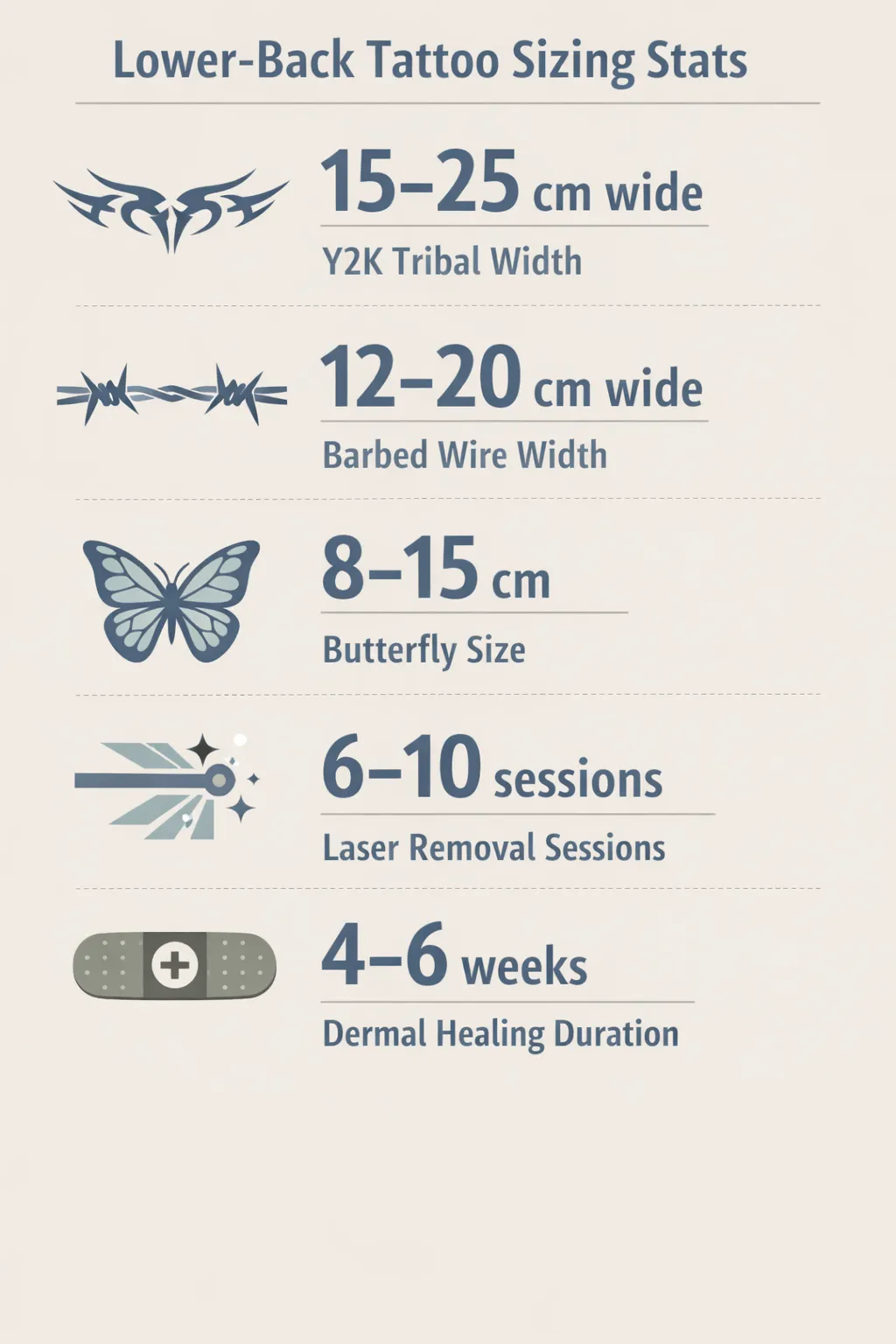 Sizing ranges, healing times, and design widths for lower-back tattoos.
Centering on the spinal midline is the second rule. Subtle symmetry - mirrored wings, a balanced floral arc - reads well even when your body is slightly rotated or your weight shifts over the years. An asymmetric design centered off the midline will look crooked the moment you stand differently.
Line weight decides longevity. Single-needle linework is best avoided on pieces wider than about 12 cm in high-movement areas, with sturdier line weight recommended for long-term clarity. All tattoos soften noticeably over the first 4 to 6 weeks as skin remodels, and finer lines show that change more dramatically than bold ones - which is why fine-line on a constantly flexing lower back needs a skilled hand and realistic expectations about 5 to 10 year softening.
Color strategy ties straight back to future-proofing. Black-and-grey tribal or floral motifs age more predictably and are simpler to remove or cover than saturated color; Removery flags black and grey as easier to break down with laser than bright reds and blues, which are the hardest inks to clear.
Movement is the last consideration. Highly geometric designs with many straight lines can appear warped when the spine curves, especially over 20 cm widths - flag this with your artist at consultation so they can adjust the composition to sit on a curved surface rather than fighting it.
For quick reference on size by style: Y2K revival tribal runs 15 to 25 cm, modern fine-line florals 10 to 18 cm, bold mandalas 20 to 30 cm, and script 10 to 18 cm.
Frequently Asked Questions
- What does a tramp stamp symbolize?
- Depends entirely on the motif - butterflies signal transformation, tribal arcs are often purely aesthetic or Y2K-nostalgic, and some wearers explicitly choose protective symbols referencing the ancient Egyptian tradition of lower-back tattoos tied to the deity Bes. The placement itself has been reframed by many wearers as a reclamation of bodily autonomy.
- Are lower back tattoos trashy?
- The stigma is rooted in misogyny, not the tattoo. A 2013 behavioral study found men were more likely to ascribe promiscuity to women with lower-back tattoos - that's evidence of bias, not a verdict on the placement. Mainstream outlets have actively reframed the lower-back tattoo as legitimate art since 2024.
- Are tramp stamp tattoos ok now?
- Culturally, yes - Gen Z is actively reclaiming the aesthetic as part of the Y2K revival, and the placement has over 22 million TikTok views. Practically, some wearers still report unsolicited comments years later. Going in clear-eyed about that social reality is more useful than pretending the stigma has fully dissolved.
- What is a reverse tramp stamp tattoo?
- Informally, a tattoo on the upper chest or sternum - the front-body mirror of the lower-back placement. Sometimes also used to describe a tattoo between the shoulder blades on the upper back. Same visibility logic applies: hidden under most clothing, visible in swimwear or low necklines. The sternum version is significantly more painful than the lower back.
- How long does a lower-back tattoo take to heal?
- Surface healing - scabbing and flaking - typically resolves in 10-14 days. Full dermal healing takes approximately 4-6 weeks. The lower back flexes constantly with sitting and bending, so tight waistbands and high-friction clothing need to be avoided for the full healing period.
- What designs age best on the lower back?
- Black-and-grey florals, clean symmetrical arcs, and bold blackwork with adequate line weight. Fine-line pieces under 10 cm can soften noticeably within 5-10 years on a placement that moves this much. Saturated color - especially bright reds and blues - is the hardest to laser off if you change your mind later.
- Can men get lower-back tattoos?
- Yes. The placement is female-coded in Western tattoo culture - it was called the "chick spot" in the 1980s-1990s - but there's no anatomical or technical reason men can't use it. Bold geometric or script designs work well. The cultural associations are worth knowing, but they don't dictate your choices.
Before You Book: The Decisions That Actually Matter
Three decisions carry almost all the long-term weight.
Placement precision. Get the width-to-hip ratio right at consultation - ask the artist to measure and physically mark the design before stenciling. A piece that sits at 50 to 70% of hip width and centers on the spinal midline will still read clean after a weight change.
Design longevity. Choose black-and-grey with clean linework over saturated color, and stay under 20 cm if you want easier removal or cover-up options down the line. Adequate line weight beats delicate fine-line on a placement that flexes this much.
Social reality. Decide in advance how you’ll handle the “tramp stamp” comment, because you will get it. Setting that boundary early with friends and partners is more useful than hoping nobody says it.
The term is loaded, the placement is functional, and the designs range from dated to genuinely considered. The quality of the outcome depends almost entirely on the artist you choose and how specific the brief is that you bring them.